
Parking Lot Snow Removal Winnipeg: Equipment & Staging
A plow truck, a pusher and a loader do three different jobs, and the pile you start in November is still there…
Read the article →
Winnipeg's freeze-up isn't one date on the calendar. A first light frost in mid-to-late September doesn't freeze a pond basin, so use it as your signal to start monitoring, then complete water-related winterization before a sustained hard freeze, usually through October. Here's the coordination checklist for pergolas, custom fireplaces, and water features together, with the pergola hardware and fabric guidance that hasn't had its own dedicated guide until now.
A basic fall cleanup, raking, a last mow, gutter clearing, covers the yard in general terms. It doesn’t cover the specific structures and features that represent the larger investments in a Winnipeg backyard: a pergola or pavilion, a custom fireplace, a water feature. Each of these has its own winterization requirements, and doing them out of sequence or too late in the season creates avoidable problems and avoidable cold-weather labour.
This guide is the coordination layer: what needs to happen in September versus October, and where to find the detailed instructions for each specific feature. It intentionally doesn’t repeat the fireplace or water feature winterization steps in full, those are already covered thoroughly elsewhere. What it adds is the pergola and structural side, which hasn’t had a dedicated winterization guide yet, and the overall sequencing across all three.
Winnipeg’s freeze-up isn’t a single date; it’s a transition. A first light frost typically arrives around mid-to-late September, but a brief dip below zero overnight doesn’t freeze a pond basin or buried plumbing. What actually threatens water systems is a sustained hard freeze, which generally arrives later in October. The practical implication for a winterization checklist: treat the first frost as your signal to start monitoring and planning, and complete water-related work before a sustained hard freeze sets in, typically through October rather than mid-September. Work that’s purely mechanical, hardware inspection, structural checks, can extend a bit later into October if needed, but pushing it into November means doing it in genuinely difficult conditions.
| Task Category | Target Window | Why This Timing |
|---|---|---|
| Water feature and fireplace water systems | Before sustained hard freeze (typically through October) | Any water left in plumbing or a basin freezes and can crack components |
| Pergola and structure hardware and fabric elements | September through mid-October | Cold-weather work on fasteners and fabric is slower and more failure-prone |
| Gas line and pump electrical shutoffs | Before sustained hard freeze | Moisture in electrical or gas components can freeze and cause spring startup issues |
| General structural inspection | Anytime before snow accumulation | Visual inspection doesn’t require warm weather, but is easier without snow cover |
Pergolas, pavilions, and gazebos are built for Winnipeg’s freeze-thaw cycle structurally, footings to frost depth, appropriate timber sizing, but the hardware and any seasonal fabric or shade elements benefit from specific fall attention.
Bolted connections, particularly at post-to-beam and beam-to-rafter joints, can loosen slightly over a season of wind load and thermal movement. A fall inspection and re-tightening pass, before the joints are dealing with snow load on top of everything else, catches minor loosening before it becomes a bigger problem over winter. This is a straightforward visual and hand-tool check, not a specialized task, and it’s easiest to do while the structure is fully accessible and the weather is still cooperative.
Any shade sail, retractable canopy, or fabric element integrated into a pergola should be removed or properly stowed for winter if it isn’t rated for snow load and winter exposure. Fabric left in place through a Winnipeg winter is subject to both UV degradation over an extended exposure period and, more urgently, potential damage from snow accumulation weight if the fabric isn’t designed to shed it.
For pergolas integrated with an outdoor kitchen or fireplace structure, the structural winterization above is separate from, and in addition to, the appliance and utility winterization covered in those features’ own guides. See our covered outdoor kitchen guide for how a roof structure’s ventilation and clearance considerations interact with the appliances underneath it.
Know before the first significant snowfall how snow will be managed around and, for a solid-roof structure, on top of the pergola or pavilion for the season. A structure engineered for Winnipeg’s snow load doesn’t need active snow removal from the roof itself in most cases, but confirm this specifically for your structure’s engineering if you’re uncertain, particularly for any structure with reduced roof pitch or unusual geometry.

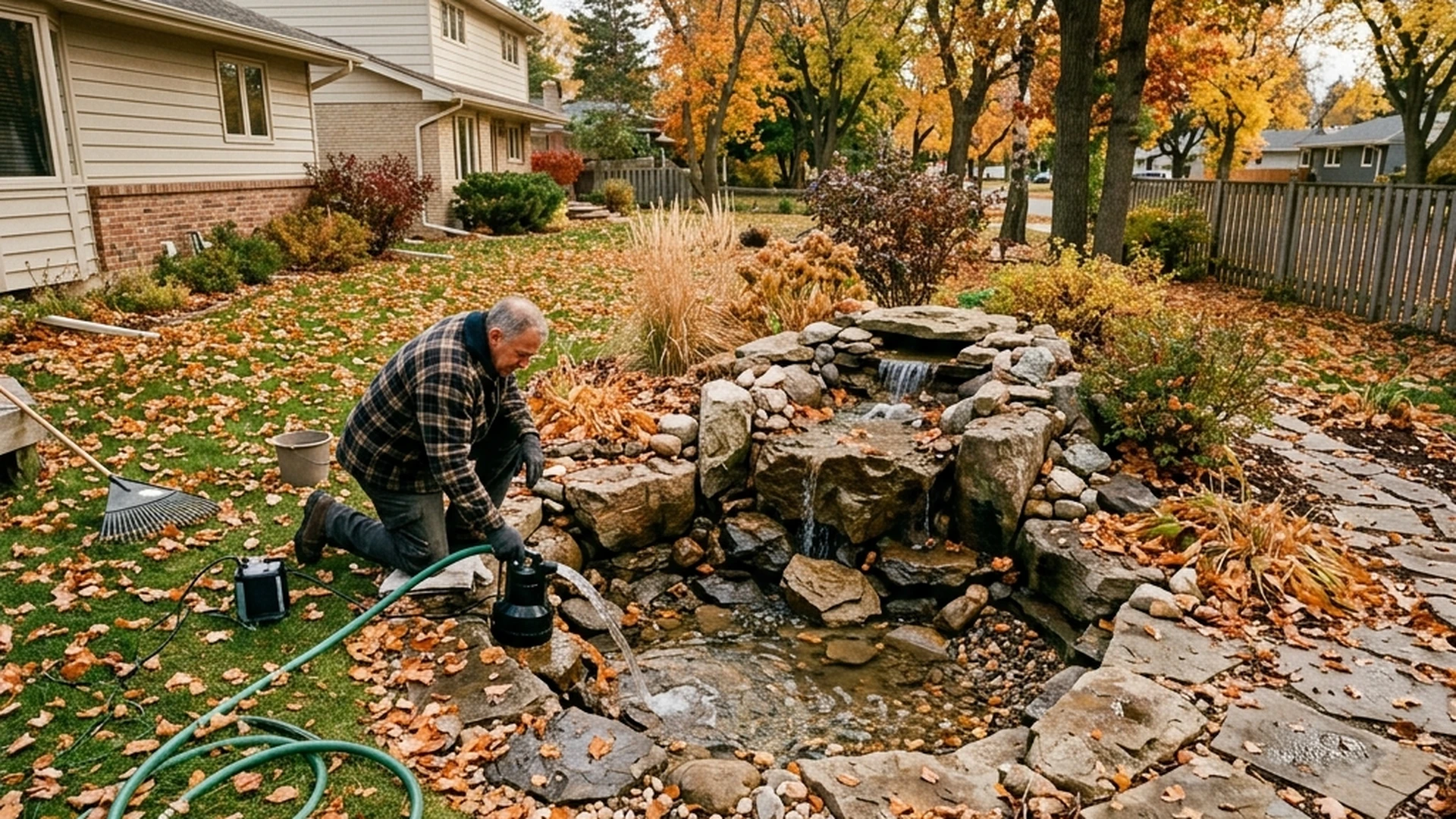
Both custom fireplaces with integrated water elements and standalone water features (ponds, pondless waterfalls, fountains) have winterization requirements that are detailed enough to warrant their own complete guides. Rather than repeat that detail here, this checklist tells you what needs to happen and points to the full instructions.
For a custom fireplace with an integrated water feature, water drainage from the basin and plumbing, pump electrical shutoff, gas line component protection from moisture, and any tender plant material relocation are all covered in detail in our custom outdoor fireplace guide. All of this needs to happen before the first hard freeze.
For a standalone water feature, ecosystem pond, pondless waterfall, or fountain, the winterization approach differs by feature type, particularly around fish and plant management for an ecosystem pond. See our water feature installation guide for the complete winterization protocol for each feature type.
What this checklist adds beyond those guides: coordinate the timing. If your property has both a fireplace water feature and a separate standalone water feature, or a fireplace integrated with a pergola, doing the water-related winterization for all of them in the same pre-frost window, rather than piecemeal over several weekends as the weather gets progressively colder, is both more efficient and lower-risk.
For a property with multiple features, a sensible sequence through September and into October:
Late September: monitor forecasts once first frosts begin, and plan the water system shutdown while weather is still comfortable to work in.
Late September into October: complete all water-related winterization (drainage, pump shutdown, electrical) ahead of a sustained hard freeze, watching the forecast rather than a fixed date.
September through mid-October: pergola and structure hardware inspection, fabric element removal or storage.
Ongoing through fall: general yard cleanup, gutter clearing, and other standard fall maintenance can continue alongside this schedule.
The coordination principle: treat first frost as the signal to start, not the deadline to finish. Water-related work needs to be done before a sustained hard freeze, generally through October. Structural and hardware work has slightly more flexibility but is easiest done while the weather still cooperates.
What happens if I miss the ideal window and it’s already frozen?
For water-related winterization missed until after a hard freeze, the priority becomes damage assessment rather than prevention: check for cracked plumbing, fittings, or pump housings once things thaw enough to inspect safely, since freezing water in a closed system can cause damage that isn’t visible until spring startup. For structural hardware inspection, a missed fall window means waiting for a milder winter day or spring, since working on fasteners in deep cold is both less effective and less comfortable, though it’s not urgent in the way water system draining is.
Do I need to winterize a pergola that doesn’t have any built-in features?
A basic pergola structure with no integrated lighting, fireplace, or fabric elements has minimal specific winterization needs beyond the hardware inspection covered above. It’s engineered to handle Winnipeg’s freeze-thaw and snow load as a permanent structure. The winterization checklist becomes more involved as more features, lighting, fabric, integrated appliances, are added to the structure.
Can I do all of this myself, or does it need a professional?
Much of this checklist, hardware inspection, fabric removal, general visual assessment, is reasonable for a homeowner to handle directly. Water feature and fireplace winterization involving pump systems, gas line components, and drainage is often worth having done by the team that installed the feature, particularly in the first few years when you’re still learning the specific system, or if any part of the process is unclear.
Lawn ‘N’ Order can walk your property before freeze-up and confirm every feature is properly prepared for winter.
Use the Free Calculator Book a Free ConsultationSend the address and a rough idea of scope. We'll walk it, take levels, and give you a written number you can compare line for line.
Keep reading
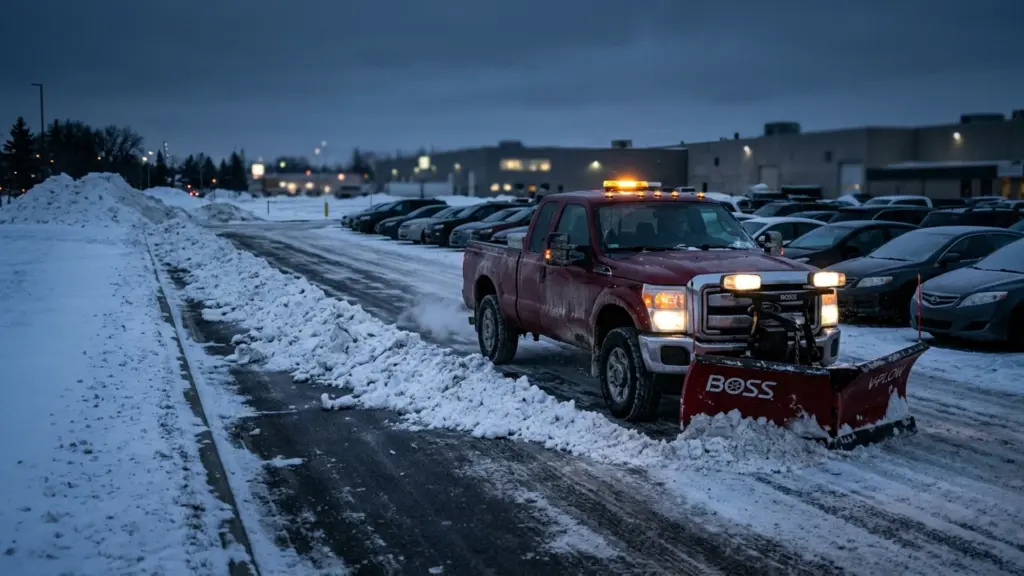
A plow truck, a pusher and a loader do three different jobs, and the pile you start in November is still there…
Read the article →
Holiday Light Installation Winnipeg: Book Before the Ground Freezes Quick Takeaways Holiday light installation in Winnipeg has a short window: crews install…
Read the article →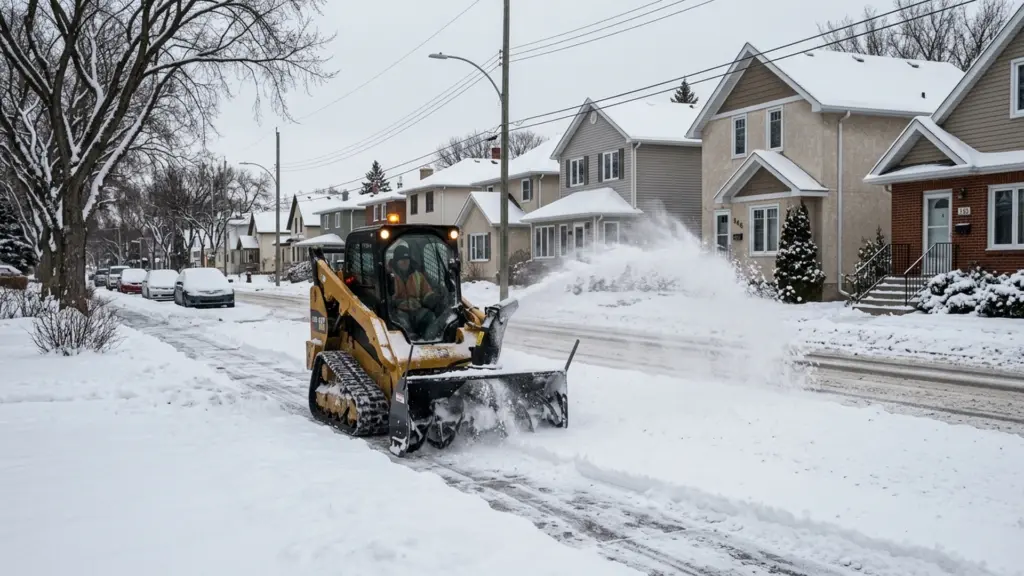
Who Clears the Sidewalk in Winnipeg? What the City Does and What You’re Responsible For Quick Takeaways Winnipeg is one of the…
Read the article →