Spring cleanup in Winnipeg: what’s included & when to book
What spring cleanup in Winnipeg includes and when to book.
Read the article →
Opening & closing · Winnipeg
Spring cleanup to get the property out of winter, and fall cleanup to put it away properly — debris and leaf removal, power raking, bed reset and cutbacks, irrigation blowout, and everything hauled off site.
Every property in this city goes through the same two transitions: coming out of five months under snow, and getting ready to go back under it.
Done properly, those two visits set the standard for the entire year. A spring cleanup that lifts the matted thatch, resets the bed edges and clears the winter mess gives the lawn an actual chance before the growing season starts — and it is short here. A fall cleanup that gets the leaves off before they mat, cuts back what should be cut back, and blows out the irrigation means April starts from a clean property instead of a repair list.
Done badly — or skipped — you spend the next twelve months catching up. Matted thatch smothers new growth. Leaves left on a lawn under snow come out as dead patches. Water left in an irrigation line splits it.
Most clients book the two together, which is why we price and schedule them as a pair.
April – May
The goal is simple — give the lawn and beds light, air and a clean edge before the growing season starts, because in Zone 3b that season is short and there is no second chance at it.
Everything winter dropped and buried: branches, blown litter, gravel thrown onto the lawn by plows, and the general mess under the snow.
Lifting the matted layer of dead grass that smothers crowns after melt. Done where matting warrants it — not as a default upsell.
Beds cleared, edges recut to the original line, and mulch levelled or topped up so the shape reads the way it was designed.
Salt burn along walks, plow scrapes on curbing, lifted caps, broken irrigation heads, snow-mould patches — found now, reported with a fix.
The first cut at a higher height plus a full edge, so the property looks finished the day we leave rather than a week later.
All of it removed from site and disposed of. Nothing bagged and stacked at the curb for you to deal with.
September – November
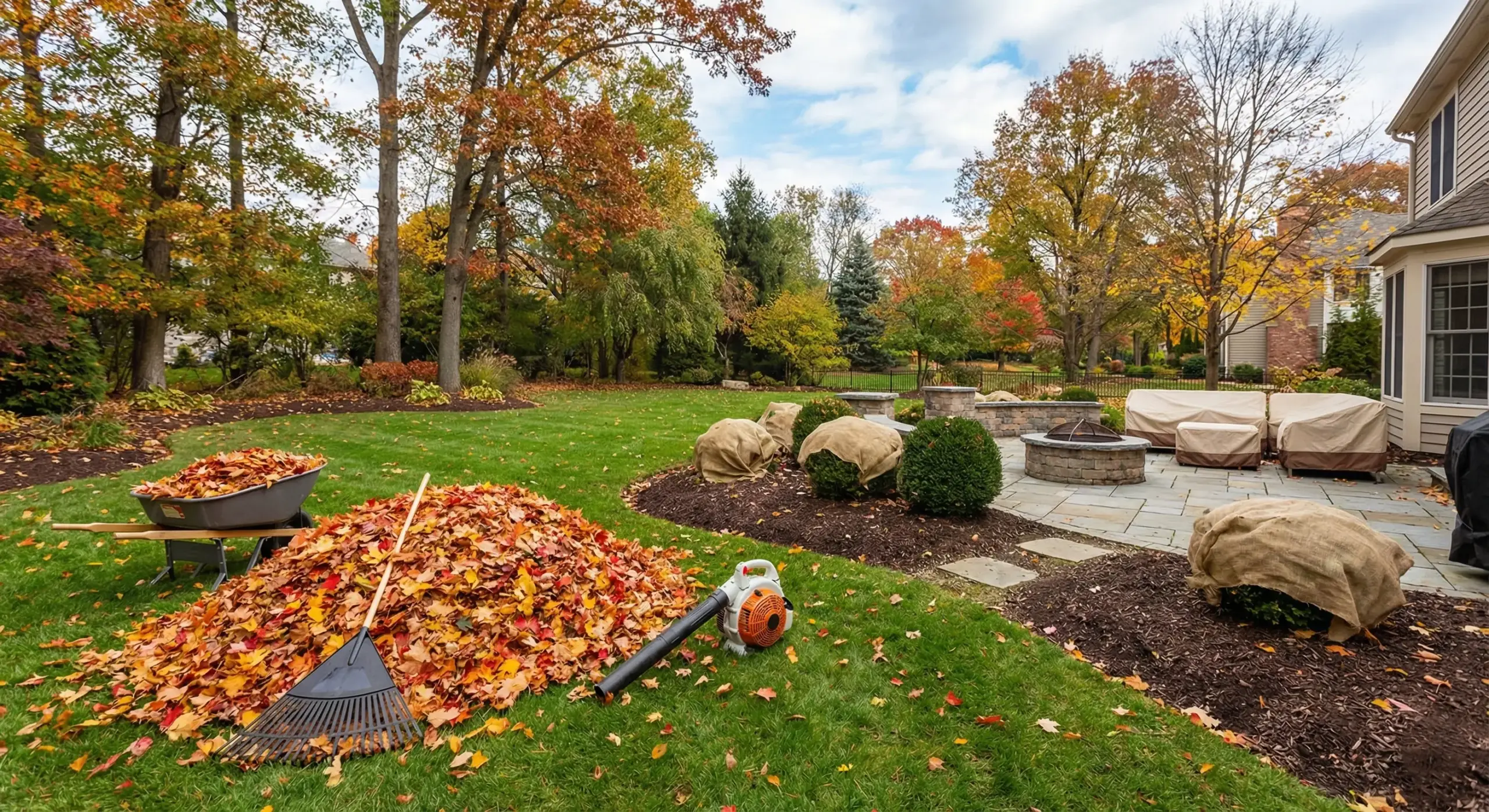
This is the visit people are most tempted to skip, and the one that costs the most to skip. Everything left on the property in November is still there in April — just wetter, heavier and dead underneath.
Leaves off lawn and beds before they mat down and go under snow. A matted leaf layer is the most common cause of dead patches in spring.
The lawn taken down to the right height for dormancy — long enough to protect the crown, short enough not to mat under snow.
Perennials and grasses cut back where they should be, and deliberately left standing where winter structure and snow-catch are worth more.
Lines compressed out and the system shut down. Water left in a line here splits it, and that is a spring dig rather than a fall hour.
Wraps and guards on vulnerable plantings, tender material protected, and anything that snow load would break dealt with in advance.
Bed edges, curbing and lighting marked so snow equipment can see the boundaries — whoever is clearing the driveway in January.
Book them as a pair
The two visits are one system. When the same team does both, the fall visit is deliberately set up so the spring visit is short — and the spring visit reports back what the fall visit should change.
Leaves and debris off before snow means no matted dead patches to repair, no power raking emergency, and a lawn that greens up two weeks earlier.
Salt burn, plow scrapes and a split irrigation line are all cheap in April and expensive in July. The spring visit exists partly to catch them.
The same crew closing and opening the property knows what it looked like in October — so nobody has to guess what the bed line was supposed to be.
One call sets the spring date and the fall date for the same property, at a price quoted for the pair.
Word of mouth
“We’ve used them for 5 years for snow removal and lawn maintenance. Always reliable, always professional. Best landscaping company in Winnipeg!”
“Lawn ‘N’ Order transformed our backyard into an amazing outdoor living space. Their attention to detail and professionalism is unmatched. Worth every penny!”
“The team designed and built our patio last summer. It survived the harsh winter perfectly. Their expertise in Manitoba’s climate really shows.”
Cleanup questions
Once the ground has dried enough to work without damaging the lawn — usually April into May. Too early and equipment tears soft turf; too late and matted thatch has already smothered new growth. We schedule by conditions rather than by a date, and we’ll tell you if your week needs to move.
It lifts the matted layer of dead grass and debris left after melt so light, air and water reach the crowns. Worth doing where there’s visible matting or thatch build-up; unnecessary on a lawn that came through clean. We’ll tell you which you have rather than raking everything by default.
Leaf and debris removal, final cuts, bed cutbacks, irrigation blowout, winter protection on vulnerable plantings, and staking the bed edges for snow equipment. The point is that April starts from a clean slate.
Yes — spring and fall only, while you handle the mowing, is one of our most popular plan shapes. It covers the two jobs that genuinely need equipment and a crew.
Yes. Debris, leaves and cuttings leave with us and are disposed of properly. Nothing is bagged and stacked at the curb for you to sort out.
The rest of the care year
Related reading
What spring cleanup in Winnipeg includes and when to book.
Read the article →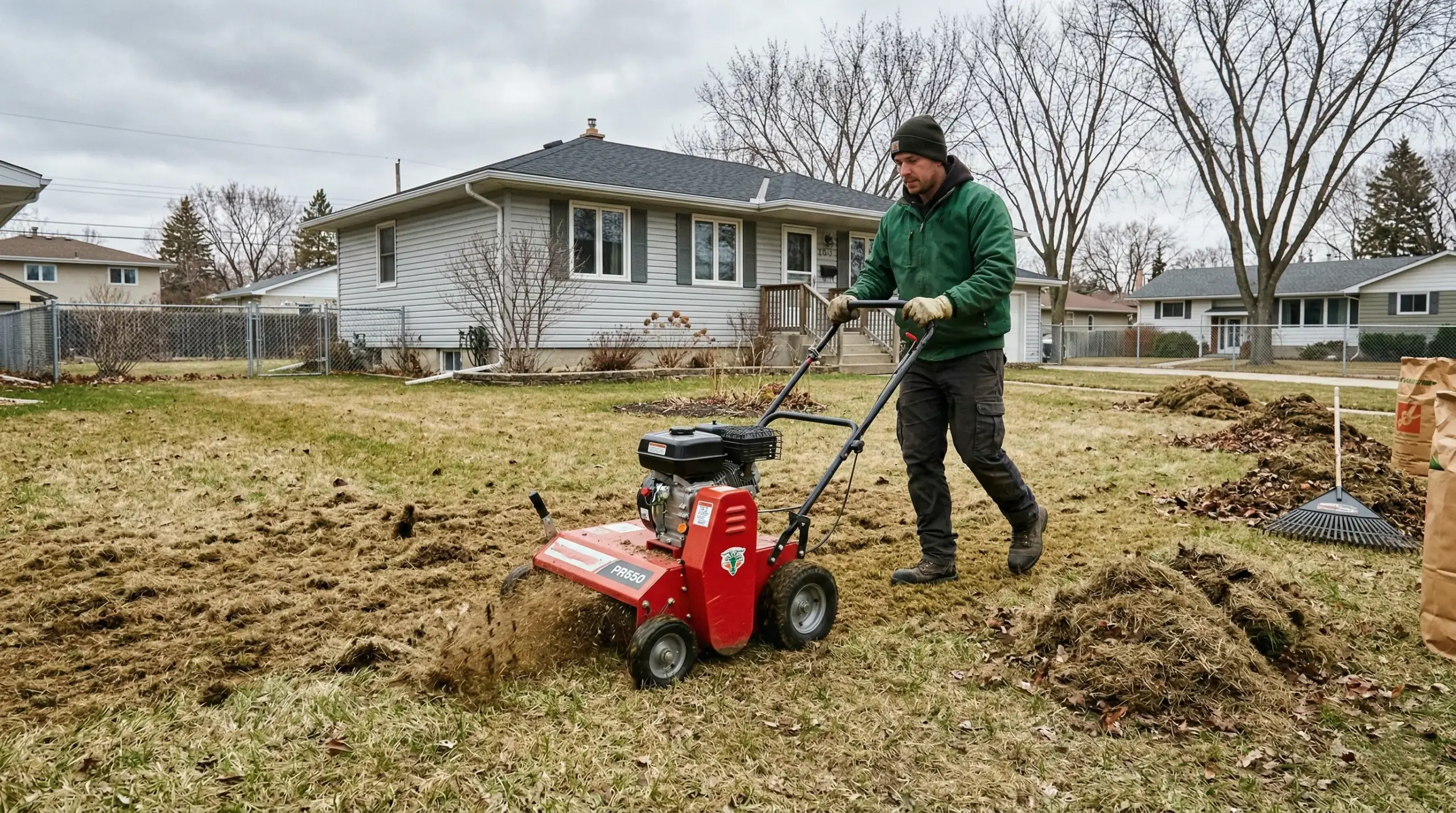
Complete spring yard recovery guide after Manitoba winters.
Read the article →
How to recover from snow mold on Winnipeg lawns.
Read the article →Send us the address and we’ll quote the spring and fall visits together, then book them before the season fills.