
Parking Lot Snow Removal Winnipeg: Equipment & Staging
A plow truck, a pusher and a loader do three different jobs, and the pile you start in November is still there…
Read the article →
Holiday lighting is a December product installed on an October or November schedule, and the gap between those two facts is where most of the frustration in this category comes from.
The constraint is physical. Installing along a roofline means working on a roof, and a Winnipeg roof in December is a different surface than a Winnipeg roof in October. Ice, snow load, and cold-stiffened materials all make the work slower, harder, and less safe. Ground-level work has its own version of the same problem: stakes for pathway lighting and yard features go into soil, and frozen Manitoba clay doesn’t take a stake.
Installers work backward from that. Crews start in October so the bulk of the work is done while conditions are still workable, which means the calendar fills from October forward. A call in early December is a call into whatever capacity is left in the hardest part of the season.
Before anything goes up, the installation needs a plan: which rooflines, which trees or shrubs, whether pathways and entry features are included, and what the overall effect should be. Measuring the runs determines how much material the job needs, which is what turns a vague idea into an actual quote.
Design also means matching the lighting to the house rather than applying a template. A steep multi-gable roofline reads differently than a simple bungalow front, and a display that suits one looks wrong on the other.
This is the part homeowners most often underestimate, and it’s worth understanding whether you hire it out or do it yourself.
Rooflines, gutters, peaks, and eaves each attach differently, and clips are chosen for the surface rather than driven in universally. The goal is a secure attachment that survives a Manitoba winter of wind and freeze-thaw without damaging the roofing or the gutters.
Trees, shrubs, pathways, and entry features are the other half of most installations, and they hold the display together visually. A roofline alone can read as a floating outline; ground-level lighting anchors it.

Things fail over a Winnipeg winter. A section goes dark, a clip lets go in a wind event, a connection ices up. A full-service installation includes coming back to fix it, which is the difference between a display that looks good in December and one that still looks good in January.
The end of the cycle matters more than people expect. Lights left up into spring degrade in UV and weather, and the clips that held fine through winter come off harder once they’ve been in place for six months. Professional installations include removal, and materials are stored for reuse the following season.
Florensic Unit is Lawn ‘N’ Order’s seasonal décor department, and light installations are part of the Winter and Holiday service. The service is full-cycle: design matched to your home, all materials provided, professional installation, maintenance visits through the season, and removal and storage at the end of it. Scope varies by property, so the consultation is where the specifics for your home get settled.
Three levels are offered, and the difference is largely scope and how bold the finished effect is.
Subtle, tidy. Clean lines, minimal elements.
Organic and layered. Natural textures and warmer tones.
Bold and dramatic. Multiple elements, statement impact.
Final pricing depends on the size of the property, the complexity of the installation, materials, and access. Commercial properties are quoted individually. Quotes are free and itemized.
Lights are one part of a winter display. For the wider seasonal décor service, winter planters, garlands, wreaths, and the fall-to-holiday transition, see our seasonal décor service page.
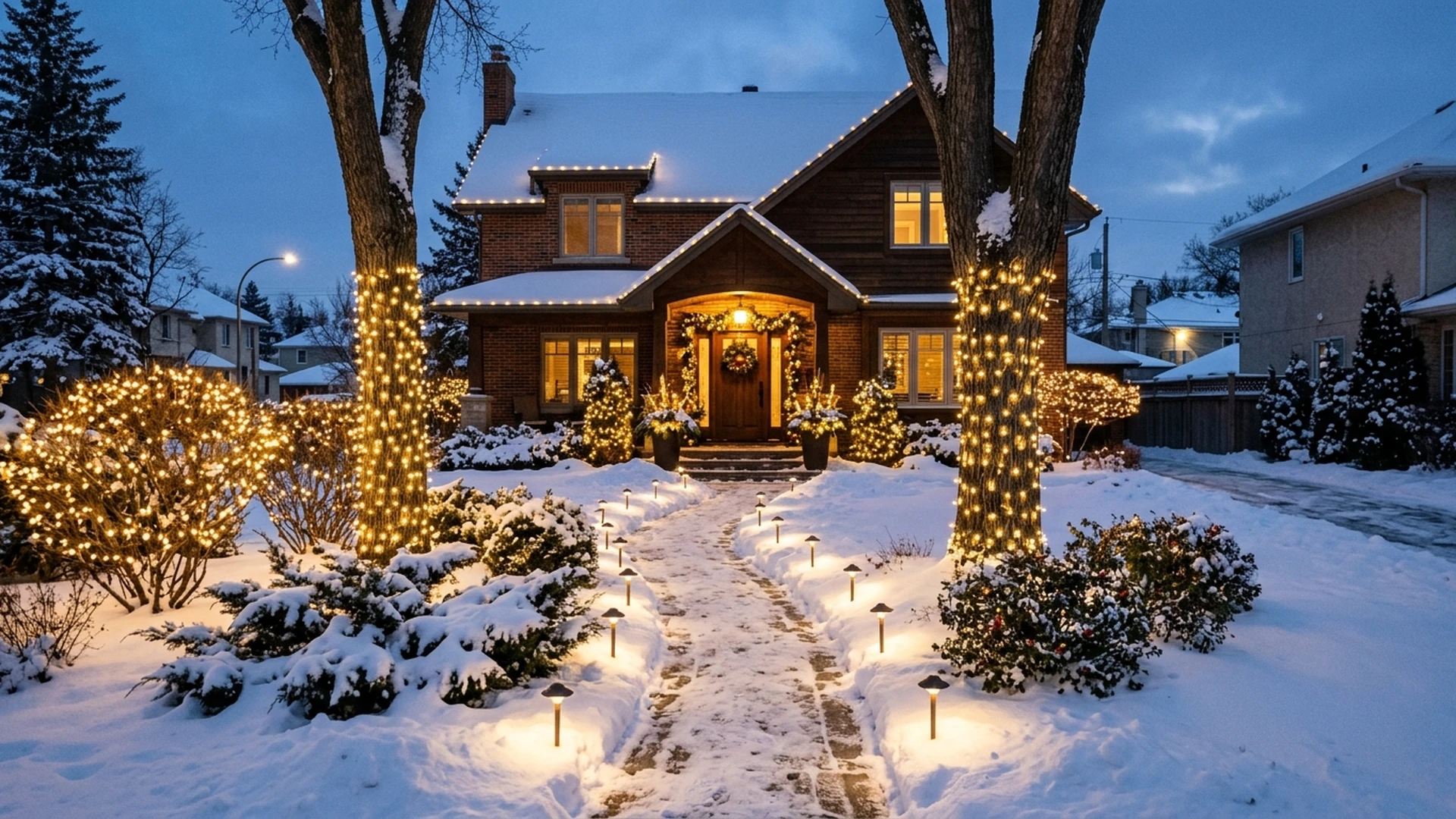
A single-storey home with a straightforward roofline and an accessible ladder position is a reasonable DIY project for someone comfortable on a ladder, with the power planning above sorted out in advance.
How early is too early to install?
Installation and illumination are separate. Crews install through October and November while conditions allow, and the display simply isn’t switched on until you want it. Having the lights up and dark through November is normal and is what makes a safe install schedule possible.
Do I need to supply anything?
No. All materials are provided as part of the service, and they’re stored for reuse the following year rather than returned to you in a box.
What happens if something stops working mid-season?
Maintenance visits are part of the service. Winnipeg winters take a toll on outdoor installations and some failures are expected over a full season, so being able to have them fixed rather than living with a dark section is a meaningful part of what a professional installation buys.
When do the lights come down?
Removal happens after the season, and materials go into storage. The timing is coordinated rather than left to whenever the weather cooperates, which is the usual reason DIY displays stay up until spring.
Florensic Unit installs holiday lighting for Winnipeg homes and businesses. Booking in October means installation happens while conditions are still workable.
See Past Work Book a ConsultationSend the address and a rough idea of scope. We'll walk it, take levels, and give you a written number you can compare line for line.
Keep reading
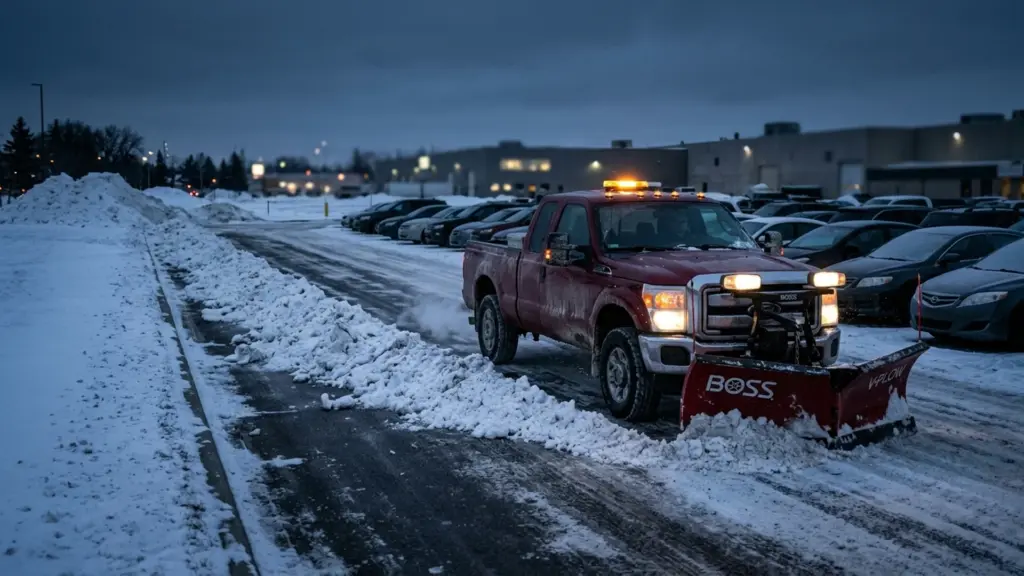
A plow truck, a pusher and a loader do three different jobs, and the pile you start in November is still there…
Read the article →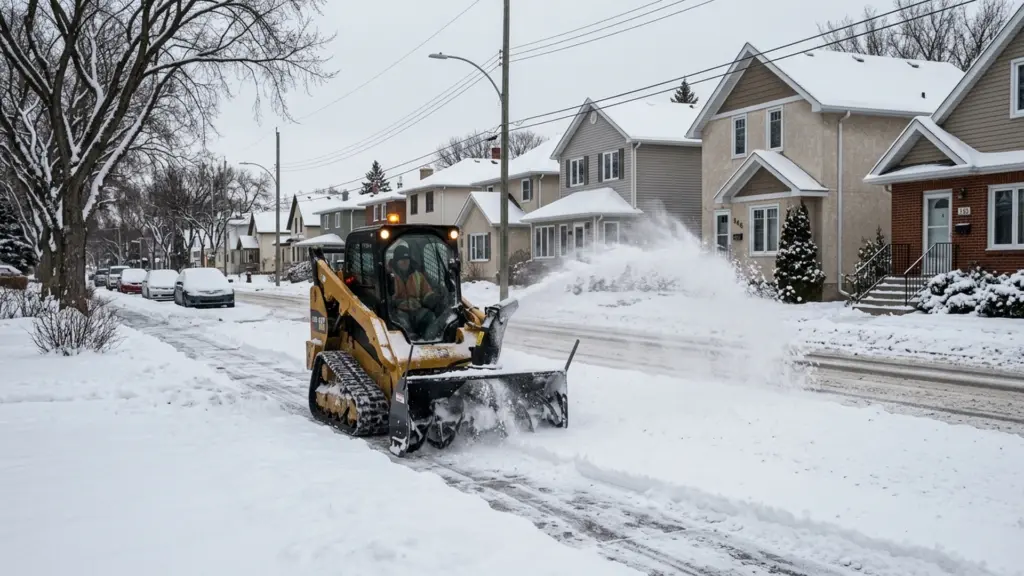
Who Clears the Sidewalk in Winnipeg? What the City Does and What You’re Responsible For Quick Takeaways Winnipeg is one of the…
Read the article →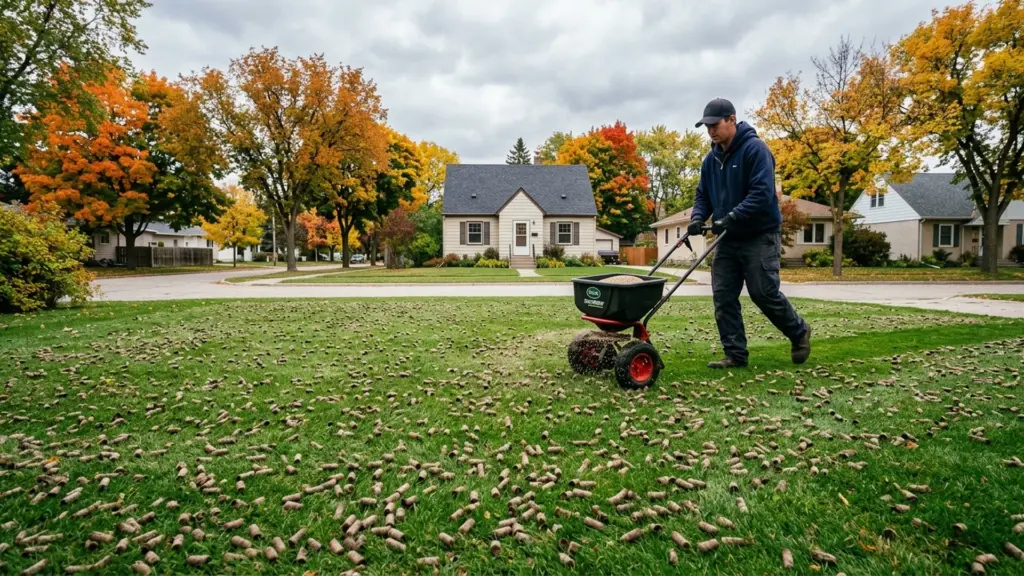
These three get sold as a package but solve three different problems: compaction, thinness, and poor soil. Working out which one your…
Read the article →