
Parking Lot Snow Removal Winnipeg: Equipment & Staging
A plow truck, a pusher and a loader do three different jobs, and the pile you start in November is still there…
Read the article →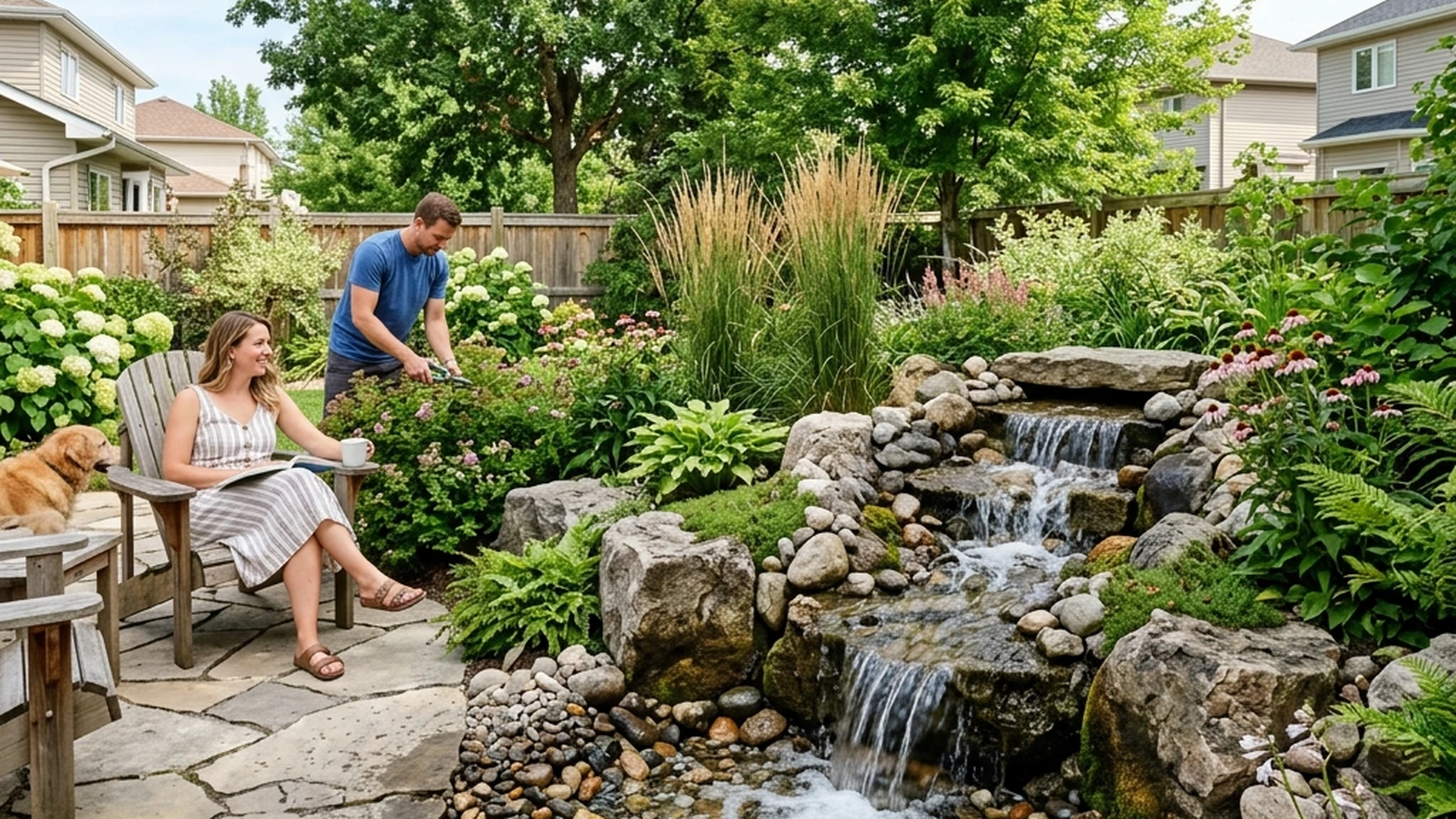
Six months of winter and a 120-day growing season seems like a lot of effort for a water feature. The counter-argument is the payoff: sound, movement, and visual complexity that nothing else in a Winnipeg landscape replicates, done right with Winnipeg's freeze cycle in mind from the start. Here is the comparison between ecosystem ponds, pondless waterfalls, and standalone fountains, and the winterization steps that let any of them run for decades.
The immediate reaction to “water feature in Winnipeg” is often: why? Six months of winter, a frost depth of 4 feet, and a growing season barely 120 days long. It seems like a lot of effort for a short payoff.
The counter-argument is the payoff itself. A pondless waterfall running from late April through October delivers sound, movement, and visual complexity that no planting or hardscape element can replicate. It masks street noise, attracts birds, and changes the character of the backyard in a way that is disproportionate to the space it occupies. Done right, it also does not require significantly more effort to maintain in Winnipeg than it does in milder climates: the winterization process is defined and repeatable.
The key phrase is “done right.” A water feature installed without Winnipeg’s freeze cycle in mind creates problems every spring. Properly designed and installed, the same feature runs for decades.
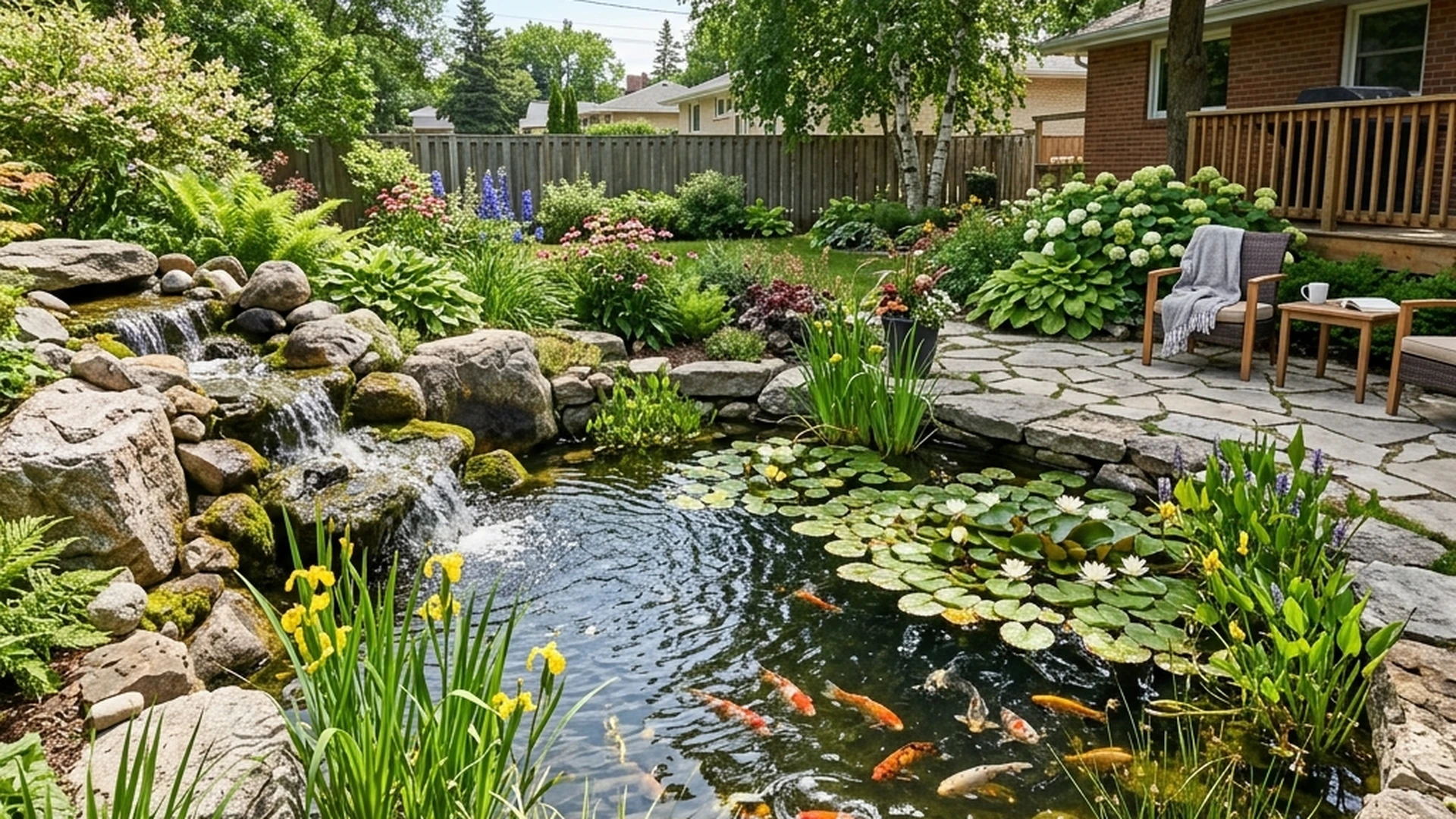
A lined depression in the ground filled with water, planted with aquatic vegetation, and typically stocked with fish. The biological system, plants, beneficial bacteria, and fish, works together to maintain water clarity without the need for chemical treatment. A well-balanced ecosystem pond can be largely self-sustaining through the season, with the main inputs being top-up water during dry periods and routine debris removal.
The appeal is the experience: a living water garden with depth, reflection, plant life at the margins, and fish movement below the surface. The demands are real: fish require management during freeze-up and spring startup, aquatic plants need division and thinning, debris accumulation requires periodic cleanouts, and the pond requires appropriate safety consideration for properties with young children.
Uses the same liner, pump, and rock construction as an ecosystem pond’s waterfall feature, but instead of flowing into an open pond, the water disappears into a gravel-filled basin below grade. The basin holds the water reservoir, and the pump cycles it back up through the waterfall continuously during operation. From the surface, you see and hear a waterfall tumbling over rocks; below grade, the reservoir is entirely contained.
Pondless installations have become the most commonly requested water feature for Winnipeg residential properties with children. There is no standing water above grade, maintenance is significantly reduced compared to an ecosystem pond (no fish, no aquatic plant management), and winterization is straightforward: drain the basin, remove or protect the pump.
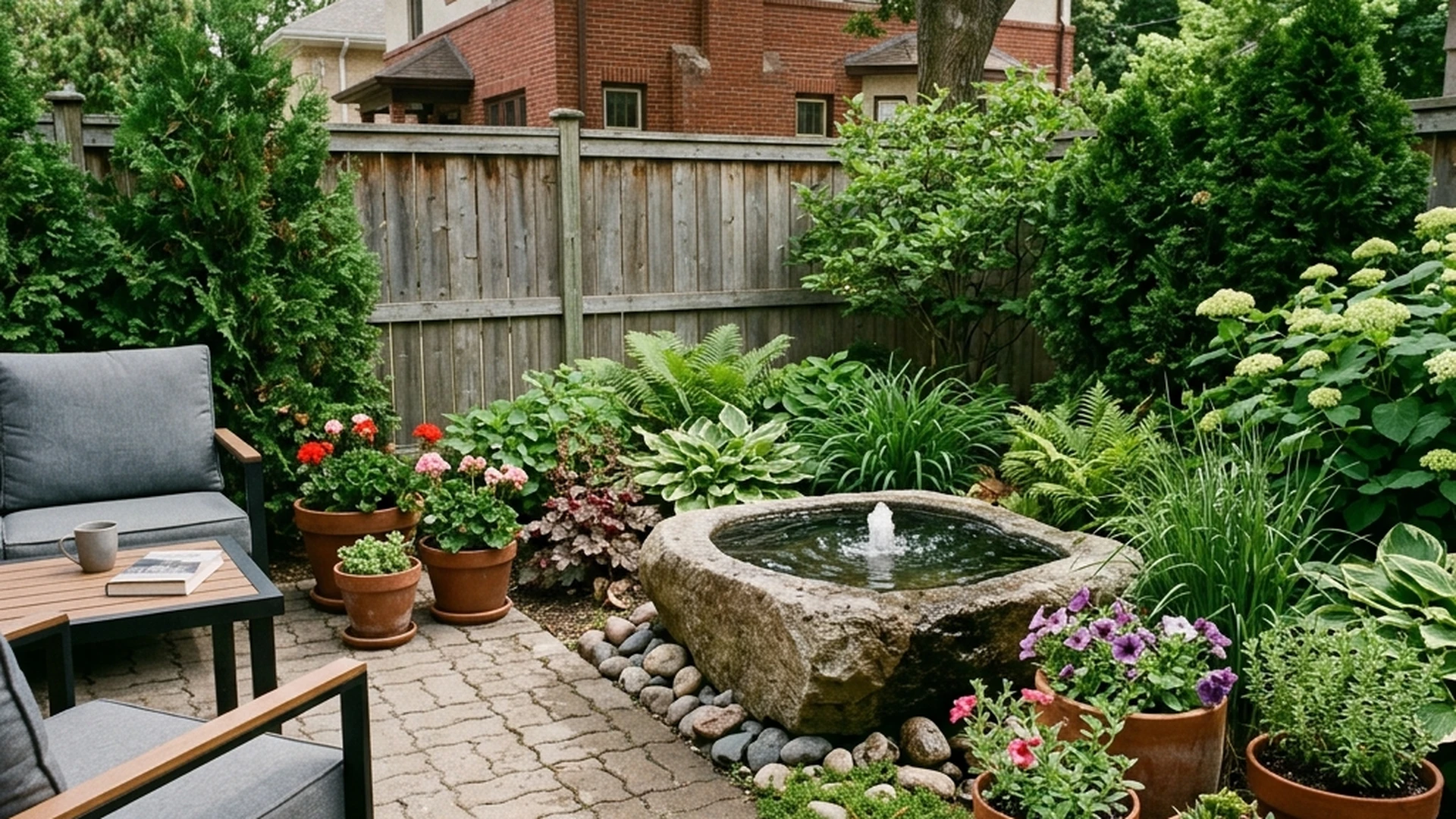
A precast or custom stone basin with an integrated pump and spray head. There is no excavation, no liner, no waterfall rock work. The fountain sits on a prepared base, connects to a power supply, and runs. Fountains work well as accent features in a courtyard, patio corner, or formal garden bed, and are the easiest to winterize: drain the basin, remove the pump, and store or cover the fountain. The limitation: a fountain’s scale is inherently smaller than a waterfall, and if the goal is masking street noise across a larger yard, a waterfall installation is more effective.
| Factor | Ecosystem Pond | Pondless Waterfall | Standalone Fountain |
|---|---|---|---|
| Maintenance level | Highest | Moderate | Lowest |
| Safety (children) | Standing water present | No standing water above grade | Small basin, minimal risk |
| Sound impact | High with waterfall element | High | Moderate to low |
| Winterization complexity | Most involved (fish, plants) | Straightforward | Simple |
| Installation complexity | High | Moderate to high | Low to moderate |
| Visual impact | Highest | High | Moderate |
Any water-carrying plumbing that is not drained before freeze-up will crack. For all three water feature types, the pump supply and return plumbing must either drain completely by gravity or be fully removed for winter. Designing the plumbing with a positive drain slope toward the reservoir is the professional standard; a plumbing layout that traps water anywhere in the system will fail within a few winters.
The liner for an ecosystem pond or pondless installation needs to reach below the freeze line on the sides of the feature. A liner that terminates above grade creates a zone where frost action can lift and shift the edge rocks, degrading the finished look over time and potentially compromising the liner seal.
Submersible pumps in pondless and ecosystem pond installations need to be removed from the water before freeze-up or, in some ecosystem pond configurations, kept running through the winter to maintain a small area of open water for gas exchange. The approach depends on whether the pond contains fish. A pond without fish can be fully drained and the pump stored; a fish pond requires a different winterization protocol. For pump storage: drain the pump of all water before storing in a frost-free location. A pump stored with water in the housing will crack on the first hard freeze.
Drain completely. All water-carrying plumbing must be fully drained or removed before the first hard freeze. No exceptions across all three feature types.
Protect the pump. Remove and store in a frost-free location, drained of all water. A pump stored with water in the housing will crack on the first hard freeze.
Open the basin drain where applicable, so any residual moisture does not pool and freeze against the liner or basin structure.
The winterization protocol for a water feature that is integrated with other outdoor elements, such as a custom fireplace with flanking water bowls, involves additional steps for gas line components and pump electrical shutoffs. For that context, see our custom outdoor fireplace and integrated water feature guide. For standalone water features, the core requirement is straightforward: drain completely, protect the pump, and ensure no water is trapped in plumbing before the first hard freeze.
The best residential sites for waterfall-style water features in Winnipeg are properties with grade change, a slope from the back of the yard toward the house, or a natural low point that can be developed into a basin area. Grade change allows a multi-tier waterfall to look genuinely natural rather than constructed on a flat site.
Flat sites can still support excellent water features, but the rockwork that creates the waterfall visual needs to be elevated above grade, which requires more structural consideration. A flat-site waterfall installation that looks natural requires thoughtful integration with surrounding planting, boulder placement, and hardscape so that the grade change appears to be part of the yard’s composition rather than a pile of rock on a flat lawn.
| Water Feature Type | Typical Installed Range |
|---|---|
| Compact pondless waterfall (under 10 ft) | $5,000 to $12,000 |
| Standard pondless waterfall (10 to 20 ft) | $10,000 to $25,000 |
| Ecosystem pond with waterfall | $12,000 to $35,000+ |
| Standalone fountain (precast) | $1,500 to $6,000 |
| Custom stone fountain | $4,000 to $15,000+ |
Can I have fish in my Winnipeg pond year-round?
Yes, with proper depth and winterization. For hardy goldfish, a depth of at least 30 inches at the pond’s lowest point is the practical Winnipeg floor. Koi need 3 feet minimum, and 4 feet is preferable. Depth alone does not prevent a fatal freeze-out: a de-icer or aerator that keeps a small area of open water at the surface is what allows gas exchange through the ice and is the critical protection element. Fish go into semi-dormancy as temperatures drop and should not be fed once water temperatures fall below 10 degrees Celsius. This is a significant commitment: if year-round fish are the goal, the pond design and maintenance protocol need to account for it from the start.
How long does water feature installation take?
A compact pondless waterfall installation typically takes 2 to 4 days for the excavation, liner, pump, and rockwork. A larger ecosystem pond with waterfall can take 5 to 10 days. Standalone fountain installation is typically one day or less. The landscape integration around the feature, planting and lighting, adds time depending on scope.
Is the sound loud enough to mask street noise?
A waterfall feature in the 10 to 20-foot range with a 1 to 2 foot drop produces sound that is audible across a typical residential backyard and provides meaningful ambient noise that softens street sound at patio distance. The volume can be adjusted by the pump flow rate. A standalone fountain is quieter and more suitable as a close-proximity accent than a yard-wide ambient sound source.
Lawn ‘N’ Order designs and installs ecosystem ponds, pondless waterfalls, and custom fountains across Winnipeg. Book a free consultation to discuss your site, your safety requirements, and which water feature type fits what you are trying to create.
Use the Free Calculator Book a Free ConsultationSend the address and a rough idea of scope. We'll walk it, take levels, and give you a written number you can compare line for line.
Keep reading
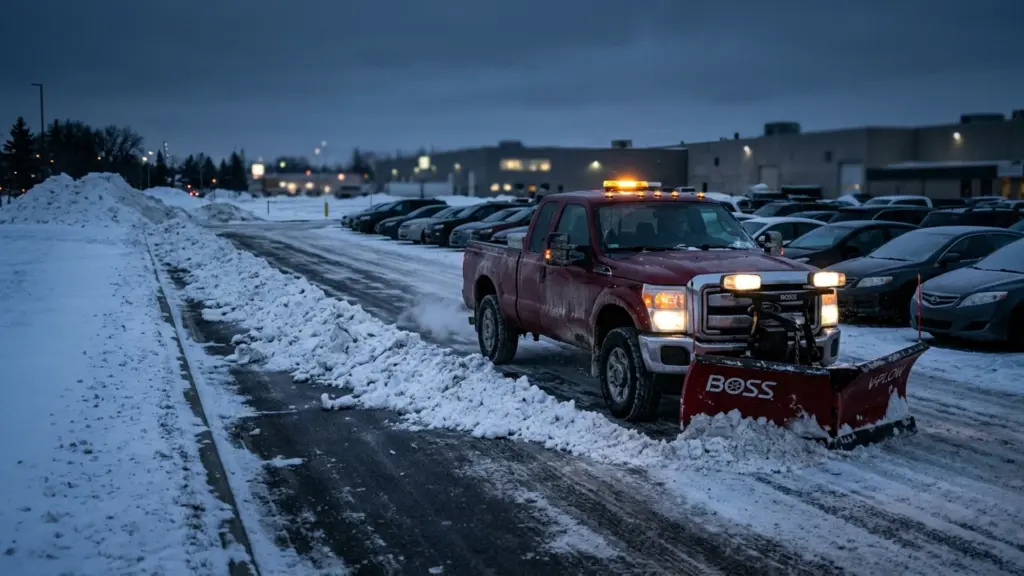
A plow truck, a pusher and a loader do three different jobs, and the pile you start in November is still there…
Read the article →
Holiday Light Installation Winnipeg: Book Before the Ground Freezes Quick Takeaways Holiday light installation in Winnipeg has a short window: crews install…
Read the article →
Who Clears the Sidewalk in Winnipeg? What the City Does and What You’re Responsible For Quick Takeaways Winnipeg is one of the…
Read the article →