
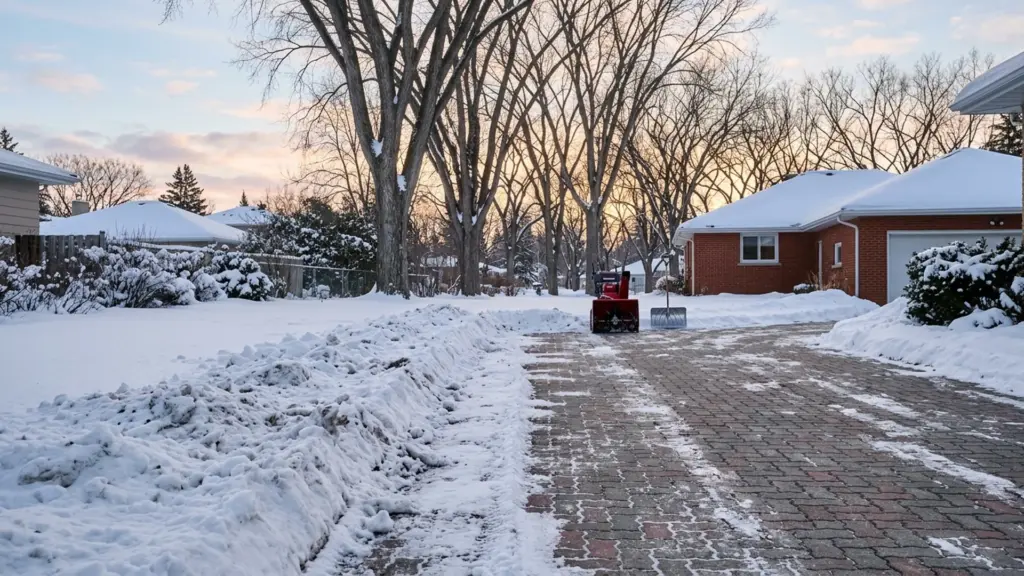
Snow Blowing vs Plowing in Winnipeg: Which Suits Your Driveway
Compare snow blowing and plowing for a Winnipeg driveway, including snow storage, driveway layout and the surface beneath the snow.
Read the article →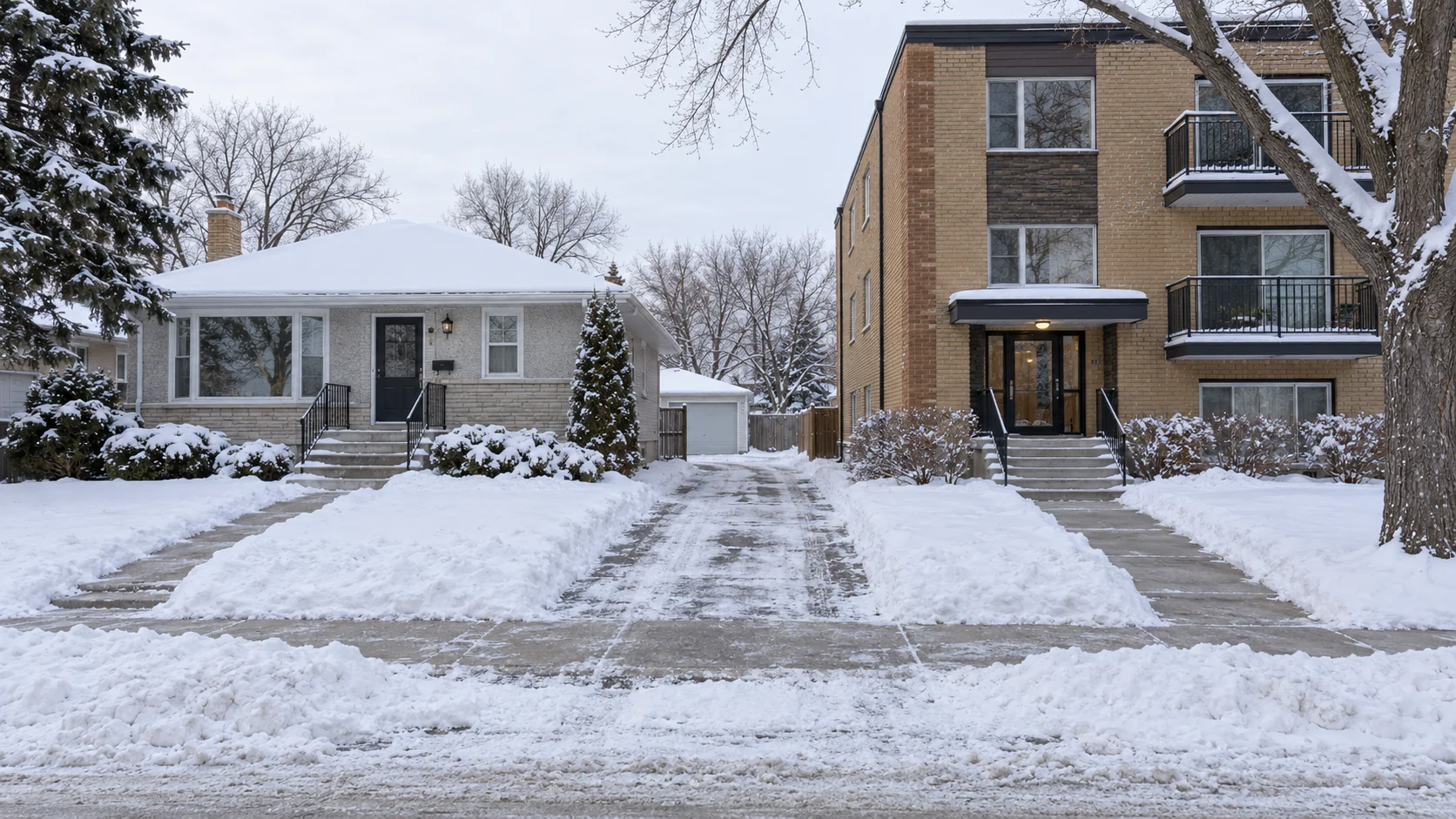
Who shovels snow at a Winnipeg rental depends on the property type and tenancy agreement. Understand the Manitoba defaults for houses, shared walks and parking access.
Most people assume the landlord always handles the snow. In Manitoba, that is only true for some rentals. The Residential Tenancies Branch (RTB) policy guide splits the answer by property type, and for a rented house it points the other way:
Below is what the RTB actually says, in its own words, and what it means if you own or manage rentals.
Section 4.6 of the RTB Policies and Procedures Guidebook (Outdoor Maintenance i.e. Grass, Snow, Gardens) starts with a definition:
"Routine yard maintenance: includes cutting grass, shovelling snow, weeding flowerbeds and gardens, trimming shrubs and controlling weeds in uncultivated areas."
The policy then says:
"A tenant who lives in a single-family dwelling is responsible for routine yard maintenance."
Put those two lines together and the default for a rented house is clear: the driveway, the front walk and the steps are the tenant's to shovel. That surprises a lot of tenants, and a lot of first-time landlords too.
For attached and small multi-unit homes, the test is exclusive use:
"A tenant living in a townhouse, duplex or triplex, who has exclusive use of the yard or part of the yard, is generally responsible for routine yard maintenance for that part of the yard. A landlord and tenant may agree to other arrangements under the terms of the tenancy agreement."
In practice, that means looking at each surface. A walk or driveway that only one unit uses points toward that tenant. A path that every unit shares is not exclusive to anyone. If you can't say clearly who has exclusive use of a surface, that is the surface to spell out in writing before winter.
For apartment buildings and other multi-unit residential complexes, the RTB puts the shared areas on the landlord:
"A landlord is responsible to clear snow from the sidewalks and stairs in a multi-unit residential complex, except in areas where tenants have exclusive use of the area."
The same section also says: "A landlord is responsible for routine yard maintenance in the common areas of multi-unit residential complexes."
The one carve-out is space a tenant uses exclusively, such as a private entrance or patio. The common walks, the steps into the building and the routes everyone uses are the landlord's job.
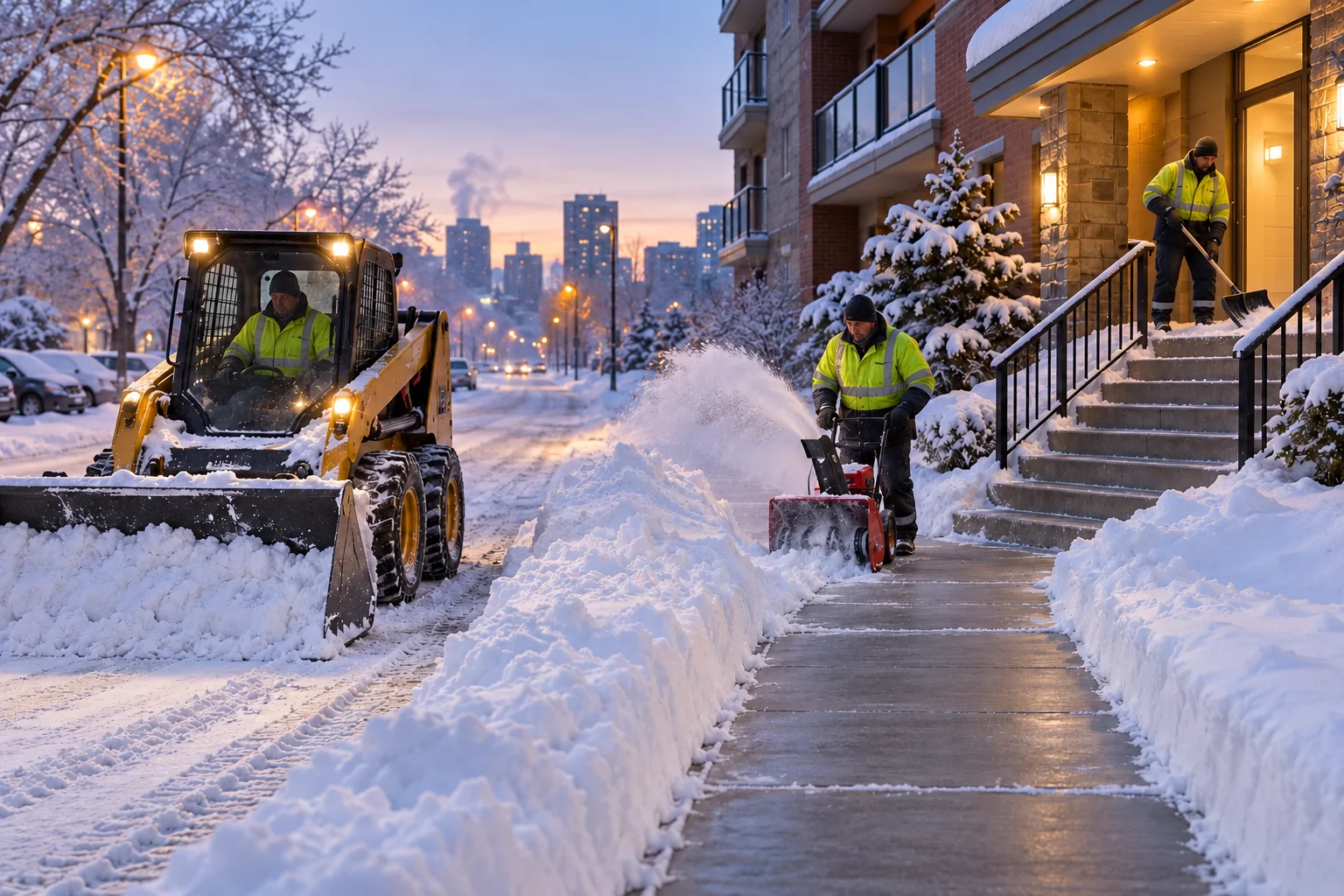
Parking is where landlords and tenants most often talk past each other. The RTB draws a specific line:
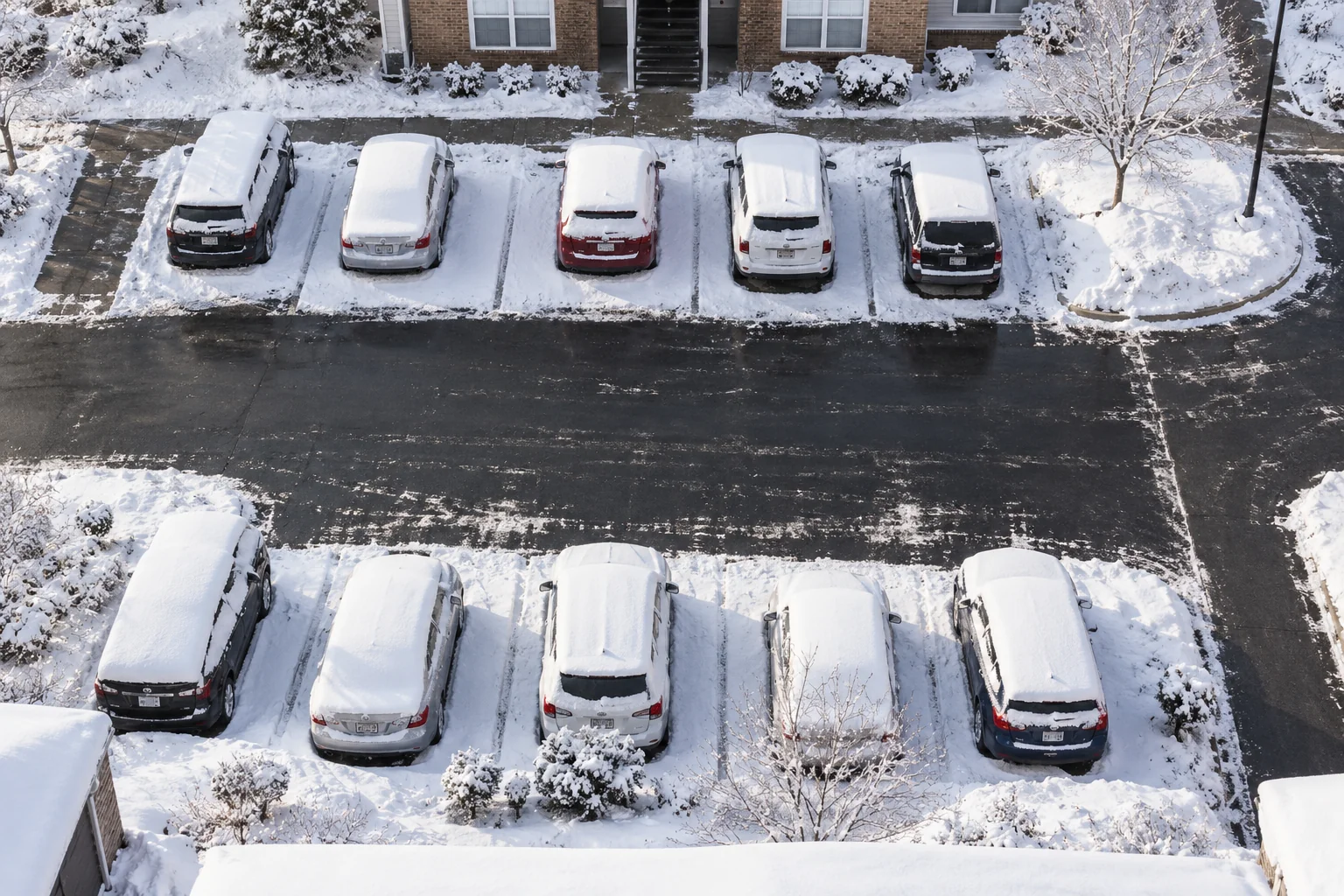
"A landlord is responsible for clearing snow in multi-unit complexes, when necessary, to give tenants access to their parking stalls. The landlord doesn't have to remove snow from individual parking stalls, unless the tenant and landlord have agreed that the landlord will provide this service."
Section 2.5 of the guidebook (Parking & Vehicle Insurance) says the same about outdoor lots. So the drive aisles and the route to the stalls are the landlord's. Digging out an individual stall is not, unless you have agreed to do it. If your building clears the stalls as a courtesy, decide whether that is a promise and put the answer in writing.
This is the part that matters most if you own rentals. The rules above decide who is responsible. They don't make the snow go away, and they don't make the problem stop being yours.
If you own a multi-unit complex, clearing the shared sidewalks, stairs and parking access is your default responsibility under the RTB guide. It isn't a one-time task. It comes back with every snowfall, at every building you own. With two or three buildings, you are running a small winter operation whether you planned to or not.
That is what a seasonal contract is built for. One written scope per building covers which walks, which stairs, the parking access, the trigger depth and what records you get after each visit. Our commercial snow removal guide covers how contracts handle trigger depth, response time and documentation. If your property is a condominium, our condo and strata snow removal guide covers common elements and multi-building clearing priority.
If you rent out a house, the RTB default puts the shovel in the tenant's hands. That is convenient on paper. In practice:
Some landlords keep the clearing themselves and write that into the tenancy agreement. A seasonal contract makes that a known cost and gives you a record of when the property was serviced. For what a residential season contract typically covers (driveway, walks, steps, windrows and trigger depth), see our residential snow removal guide.
The RTB defaults are a starting point. The guide says landlords and tenants "may agree to other arrangements under the terms of the tenancy agreement," and the parking rule also changes if the landlord has agreed to clear stalls.
Note how broadly the RTB defines that agreement:
"Tenancy agreement: a contract between a landlord and a tenant that sets out the basic rules for living in a rental unit. It can be written, oral or implied."
So a handshake deal counts. The trouble comes in a dispute. Proving what was said in September is hard once it's February and the walk hasn't been touched. If you want a different arrangement from the default, write down:
On timing: the RTB text doesn't set a time limit for clearing snow. Some articles online mention a 24 to 48 hour rule. That rule is not in the RTB policy. If you want a deadline, put it in the agreement.

Section 4.6 says: "If a tenant and landlord aren't able to solve a problem with routine yard maintenance on their own, they can ask the Branch for help." The steps are:
That last step matters for landlords. Under the Landlord's Responsibility for Repairs procedure (Section 4.3), an officer can issue an Order to Repair. If the landlord doesn't appeal the order and doesn't make the repairs by the date on it, the RTB says "the officer orders the tenant who asked for the repairs to pay the rent to the Branch. This is called redirecting rent." It goes on:
"In some cases, other tenants in the complex will also be asked to pay rent to the Branch."
So at a multi-unit building, a snow problem on the shared walks and stairs can reach more than one tenant's rent, not just the rent of the tenant who complained. The Branch can then hire a contractor and pay for the work out of the redirected rent, and the landlord pays an administration fee when it does.
Everything above is about private surfaces at the rental: driveways, walks, steps and parking. The public sidewalk along the street is a different matter. In Winnipeg, the City clears public sidewalks, including on residential streets. For how that works, what the City's priority system means and what you are still responsible for, see Who Clears the Sidewalk in Winnipeg?
Not by default. The RTB guide says "A tenant who lives in a single-family dwelling is responsible for routine yard maintenance," and defines routine yard maintenance to include shovelling snow. A landlord can still take it on by agreement, and many do.
The landlord, for the shared areas. The RTB says "A landlord is responsible to clear snow from the sidewalks and stairs in a multi-unit residential complex, except in areas where tenants have exclusive use of the area."
Not unless you have agreed on it. The landlord has to clear snow "when necessary, to give tenants access to their parking stalls," but "doesn't have to remove snow from individual parking stalls, unless the tenant and landlord have agreed that the landlord will provide this service."
The RTB policy text doesn't set a time limit. If timing matters to you, write it into the tenancy agreement.
Generally, you do for any part of the yard you have exclusive use of. The RTB adds that a landlord and tenant "may agree to other arrangements under the terms of the tenancy agreement."
The RTB defines a tenancy agreement as something that "can be written, oral or implied," so yes, it can count. It is much harder to prove in a dispute, so put snow arrangements in writing.
Talk to them first. If that doesn't work, either side can ask the Residential Tenancies Branch for help. An officer will first encourage you to reach an agreement, then decide whether the request is reasonable.
The City of Winnipeg clears public sidewalks, including residential ones. See our guide to who clears the sidewalk in Winnipeg for details.
If you own a multi-unit building, or several, and want the shared walks, stairs and parking access handled on a written scope, Lawn 'N' Order provides seasonal snow removal for residential and commercial properties, primarily in West Winnipeg and surrounding areas. If you're outside that area, call and we'll confirm whether we can service your address.
Lawn 'N' Order · 2929 Sturgeon Rd, Suite A, Winnipeg, MB R2Y 2L9 · (431) 816-1387
This article is for general information only and is not legal advice.
Send the address and a rough idea of scope. We'll walk it, take levels, and give you a written number you can compare line for line.