
Parking Lot Snow Removal Winnipeg: Equipment & Staging
A plow truck, a pusher and a loader do three different jobs, and the pile you start in November is still there…
Read the article →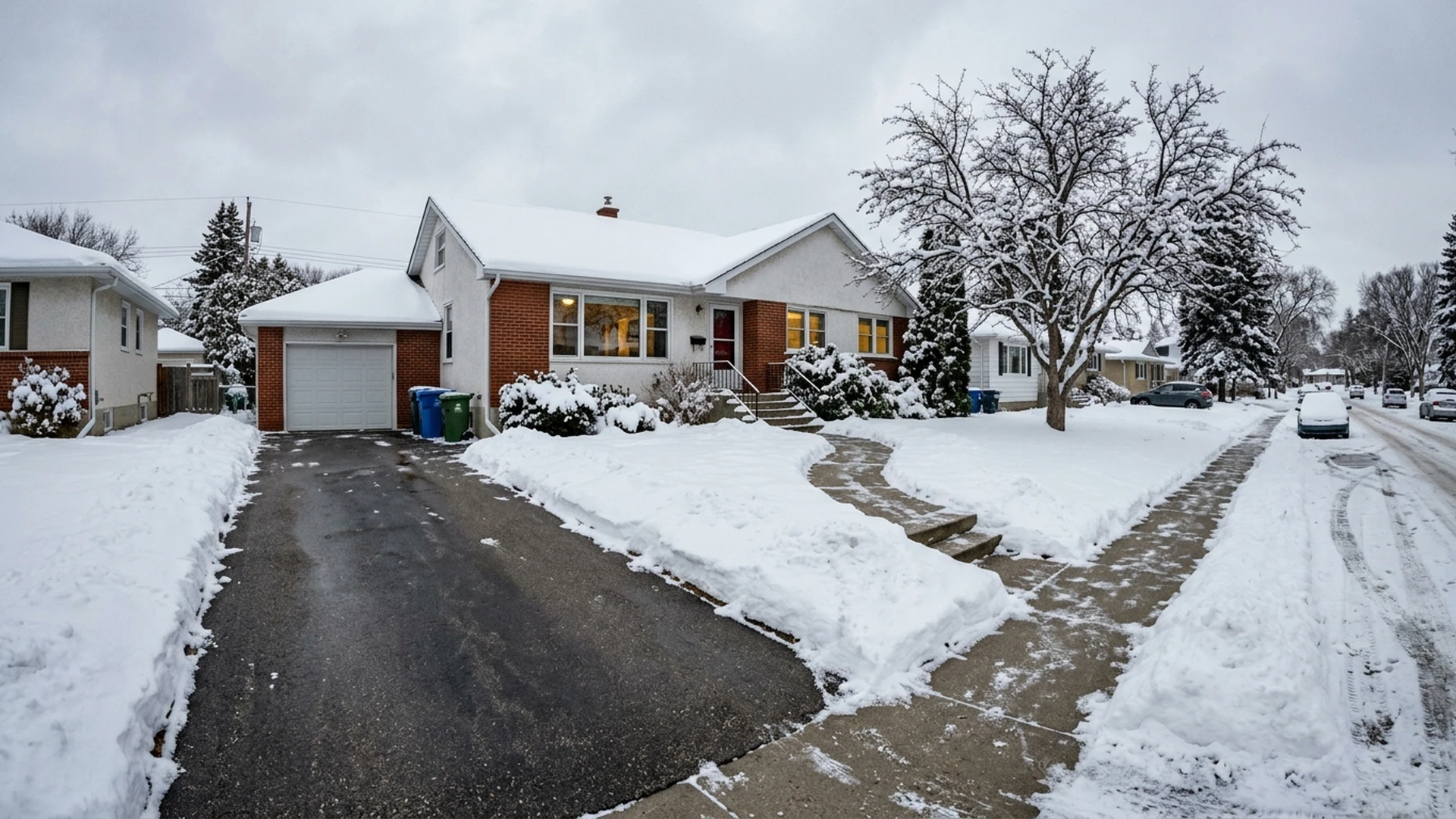
The most important question before signing a residential snow contract in Winnipeg: is the city windrow included? A contract that clears your driveway but leaves the windrow is doing what it promised while leaving you unable to get out. Here's what a season contract actually covers, what's excluded, and what drives the price.
Most residential snow removal contracts in Winnipeg are built around three surfaces: the driveway, the walkway from the driveway or street to the front door, and the front steps. That’s the standard package, and for most single-family properties it covers what actually needs clearing to get out the door and get the car onto the street.
Where contracts differ is in the details around those three surfaces, and those details are worth reading closely before you sign.
Clearing the driveway surface itself is straightforward. The question worth asking is how far the clearing extends at the street end, and whether the contract covers the approach where the driveway meets the road. That’s where the windrow lands, and it’s a different job than clearing the driveway surface.
Walkway clearing is usually included but the width matters. A contract may specify clearing a path of a certain width rather than the full walkway surface. For a wide front walk, that’s a meaningful difference in the finished result. Steps are typically included, though the level of finish on steps varies, some services clear them fully, others clear a path.
Residential contracts are almost always triggered by accumulation depth rather than by a fixed schedule. Service happens when snowfall reaches a defined threshold, not after every dusting. This is the part homeowners most often misunderstand: a season with many small snowfalls that never reach the trigger will generate fewer visits than a season with fewer, larger events.
When comparing contracts, the trigger depth and the visit count need to be read together. A contract with a lower trigger depth will generate more visits in the same winter than one with a higher trigger. Neither is inherently better; a lower trigger means more frequent service, and that’s reflected in the price.
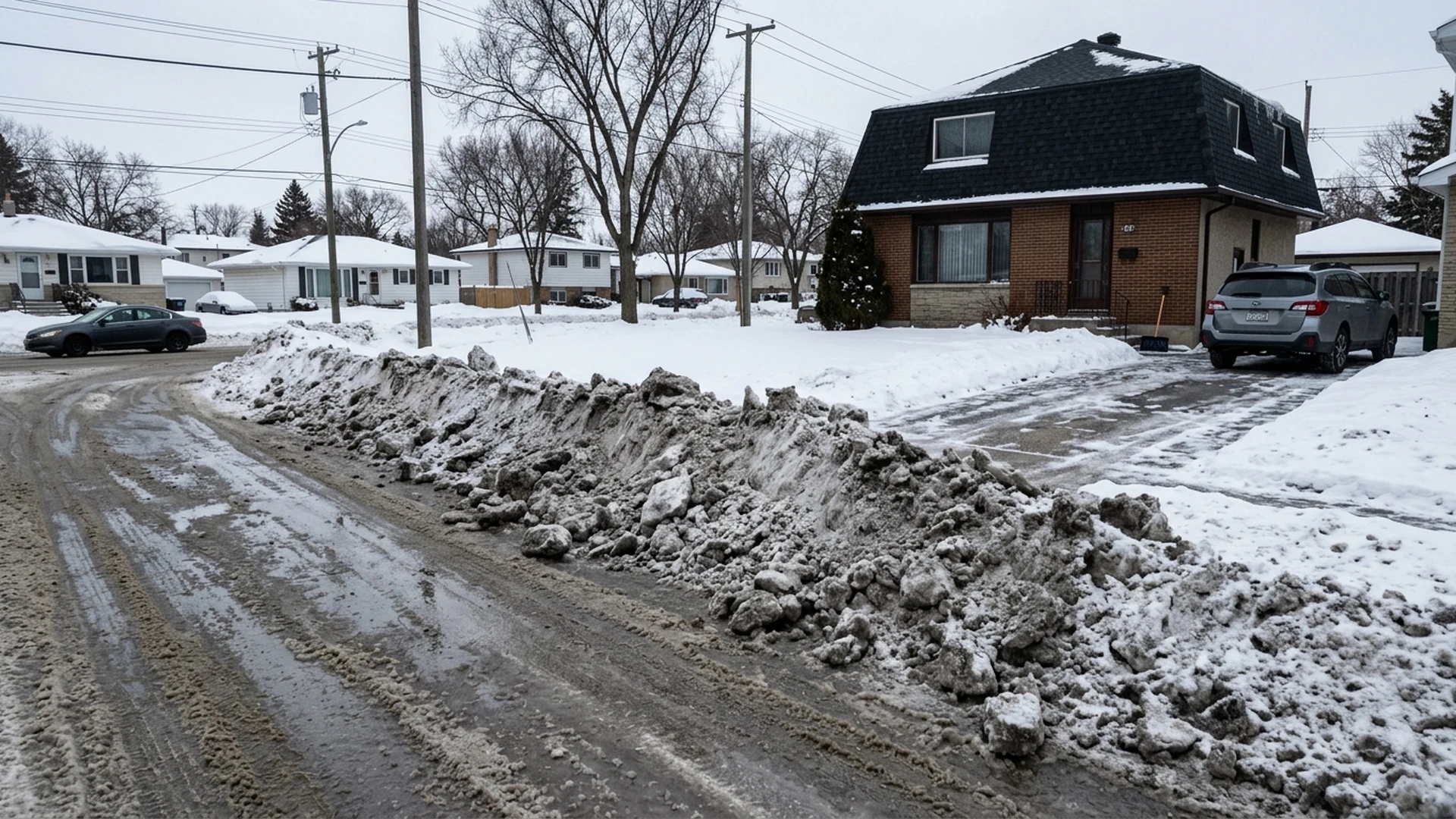
When City plows clear your street, they leave a ridge of packed, compacted snow across the end of your driveway. That windrow is denser and heavier than fresh snowfall, and it’s often deposited hours after your driveway was cleared, which means it can appear after your service visit has already happened.
A contract that clears your driveway but leaves the windrow is technically doing what it promised while leaving you unable to get the car out. That’s not a bad-faith service, it’s a scope gap, and it’s entirely avoidable by asking the question upfront.
For what homeowners can practically do about windrows themselves, and why they behave differently from regular snowfall, see the Windrow Survival Guide from our sister company Ditchfield.
Knowing what falls outside a standard residential contract prevents the mid-winter surprise of discovering something you assumed was covered isn’t.
| Not Typically Included | Why |
|---|---|
| Roof and eave clearing | A different service with different equipment and safety requirements |
| Ice chipping on established ice buildup | Clearing snow is different from removing bonded ice; often a separate call |
| Decks, patios, and rear yards | Outside the standard driveway-walkway-steps scope |
| Rear lanes | Lane clearing is a City responsibility on most properties |
| Snow hauling off the property | Residential contracts push snow to piles on site; hauling is a separate operation |
| Ice control materials | Sanding or salting is usually a separate service or add-on |
None of these are unreasonable exclusions. They’re just worth knowing about before winter rather than during it.
Residential snow removal isn’t priced as a flat rate per house, because properties differ enough that a flat rate would be unfair in both directions. The variables that determine what a specific property costs to service:
Driveway size. Both length and width. A single-car driveway and a double-wide driveway with a turnaround are meaningfully different amounts of surface to clear.
Walkway length. A short walk from a driveway to a front step is different from a long front walk running the width of the property to a public sidewalk.
Trigger depth. A lower trigger means more visits per season, which is reflected in the seasonal rate.
Windrow inclusion. Whether the windrow is part of the contract or billed separately materially affects the total.
Access and obstacles. Tight turns, parked vehicles, low-hanging obstructions, and where snow can be piled all affect how long a property takes to service.
Add-ons. Ice control, extra surfaces beyond the standard scope, or a lower service trigger than the standard offering.
When comparing quotes between providers, the useful comparison is scope-for-scope. A lower price with a higher trigger depth and no windrow inclusion isn’t necessarily cheaper in practice, it’s a different service.
Lawn ‘N’ Order primarily serves West Winnipeg and surrounding communities for residential snow removal. If your property is outside those areas, call and we’ll confirm directly whether we can service your address rather than leaving you to guess either way.
Is a season contract better than calling for service after each snowfall?
A season contract puts you on a route, which means you’re serviced as part of a scheduled run rather than fit in around existing commitments. Pay-per-visit gives more flexibility if you only want service occasionally, but during a significant snowfall the demand for one-off service spikes and the wait is longer. For most homeowners who want reliable clearing through the winter, a contract is the more practical arrangement.
What happens if it snows and my driveway isn’t cleared right away?
Route-based service means properties are cleared in sequence, not simultaneously. A defined response window in your contract, the time from when snowfall stops to when clearing is complete, is what to look for, rather than expecting immediate service. Larger snowfalls extend the route time for everyone on it.
Do I still need to shovel anything myself?
Depends on the contract scope. Anything outside the included surfaces, a back step, a deck, a path to a shed, is yours. Some homeowners also do a light clearing of the walkway between service visits during extended snowfalls, since a contract triggers on accumulation rather than clearing continuously.
Lawn ‘N’ Order primarily serves West Winnipeg and surrounding communities for residential snow removal. Discuss scope and pricing for your property before the season starts. Outside our service area, call and we’ll confirm whether we can cover your address.
Request a Snow Removal Quote Explore Snow Removal ServicesNeed traction on icy surfaces? See our winter sanding and ice control guide and ask whether sanding is included in your quote.
Send the address and a rough idea of scope. We'll walk it, take levels, and give you a written number you can compare line for line.
Keep reading
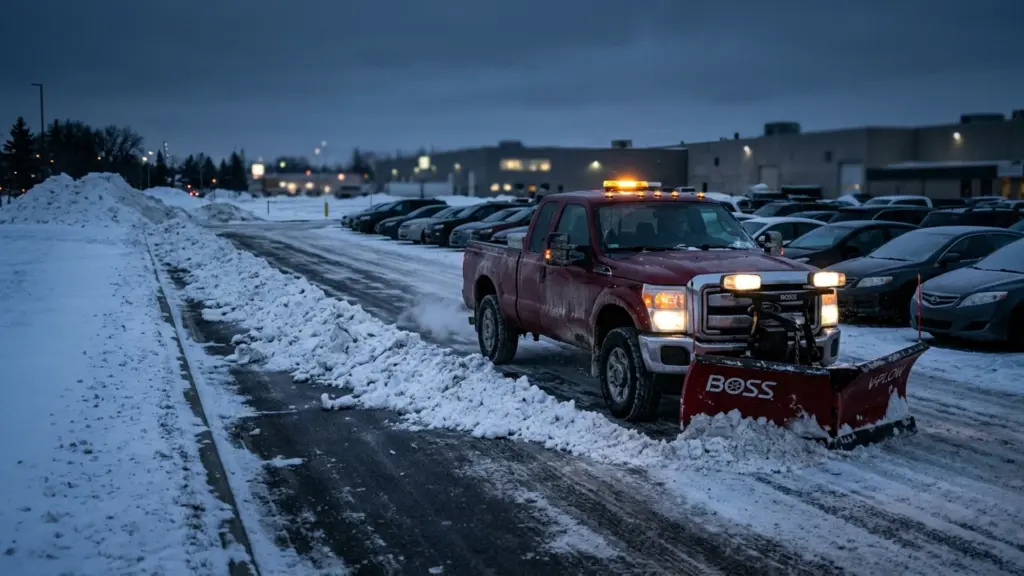
A plow truck, a pusher and a loader do three different jobs, and the pile you start in November is still there…
Read the article →
Holiday Light Installation Winnipeg: Book Before the Ground Freezes Quick Takeaways Holiday light installation in Winnipeg has a short window: crews install…
Read the article →
Who Clears the Sidewalk in Winnipeg? What the City Does and What You’re Responsible For Quick Takeaways Winnipeg is one of the…
Read the article →