
Parking Lot Snow Removal Winnipeg: Equipment & Staging
A plow truck, a pusher and a loader do three different jobs, and the pile you start in November is still there…
Read the article →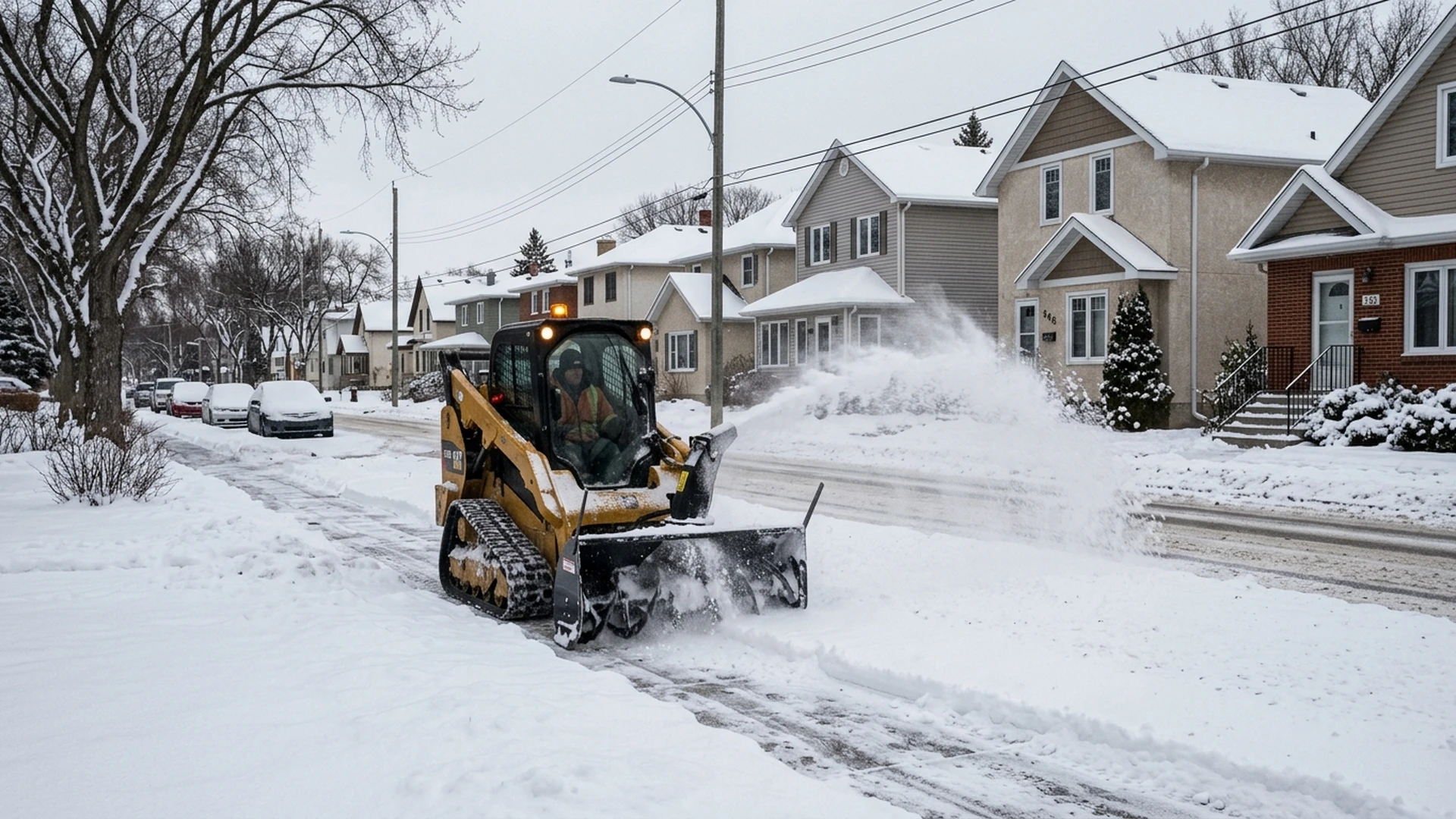
There’s a persistent belief in Winnipeg that homeowners are legally required to shovel the public sidewalk in front of their house. It comes up every winter, and it’s how most other Prairie cities work. Calgary, Edmonton, Regina and Saskatoon all place sidewalk clearing on the adjacent property owner.
Winnipeg is different. The City clears public sidewalks here, and that includes sidewalks running alongside residential streets.
The City of Winnipeg’s Snow Clearing and Ice Control Policy runs sidewalks on the same three-tier priority system as streets, and each tier explicitly includes the sidewalks adjacent to those streets.
| Priority | What It Covers | Sidewalk Standard |
|---|---|---|
| Priority 1 | Regional streets and major routes, plus adjacent sidewalks | Plowed within 36 hours of more than 5 cm accumulation |
| Priority 2 | Bus routes and collector streets, plus adjacent sidewalks | Plowed within 36 hours of more than 5 cm accumulation |
| Priority 3 | Residential streets, plus adjacent sidewalks | Work begins only after P1 and P2 sidewalks are complete, then targets 36 hours from the start of that work |
Sidewalks are generally cleared to a compacted snow surface rather than down to bare pavement. The City has explained the reasoning publicly: ice and other hard or dense snow accumulation can damage sidewalk plows and take them out of operation for lengthy periods. Downtown sidewalks are the exception, cleared to the paved surface whenever conditions allow.
The timing difference between tiers is bigger than the table suggests. P1 and P2 sidewalks target 36 hours from the end of the storm. Residential sidewalk work only commences once P1 and P2 sidewalks are finished, and weekend and holiday work is limited, so the real-world wait on a residential street after a significant snowfall can run well past what the headline figure implies.
The practical implication: a sidewalk that hasn’t been cleared yet on a residential street isn’t a bylaw problem for the adjacent homeowner. It’s a City operation that hasn’t reached that priority level yet, and residential sidewalks sit at the back of the queue by design.
The City clearing the public sidewalk doesn’t mean a Winnipeg homeowner has nothing to shovel. The responsibility line falls at the boundary between public and private surfaces.
Everything on your own property is yours: the driveway, the walk from the sidewalk to your front door, steps, and any private path. The City does not clear these and never has.
This is the most-asked question of a Winnipeg winter, and the answer isn’t the same for every ridge of snow across your driveway. What matters is which operation produced it and how big it is.
So a large ridge left by a street plow across your front driveway should normally be cleared by the City in the same shift. A ridge left by the sidewalk plow, or by the lane plow behind your house, is yours to deal with.
If a residential plowing operation shows as complete on the City’s snow clearing status map but a windrow over 20 cm at your approach was missed, 311 has an online form for reporting the location.
Either way, clearing a windrow sooner beats clearing it later. Compacted plow snow sitting through a cold night sets hard, and at Winnipeg temperatures it stops being a shovelling job fairly quickly.
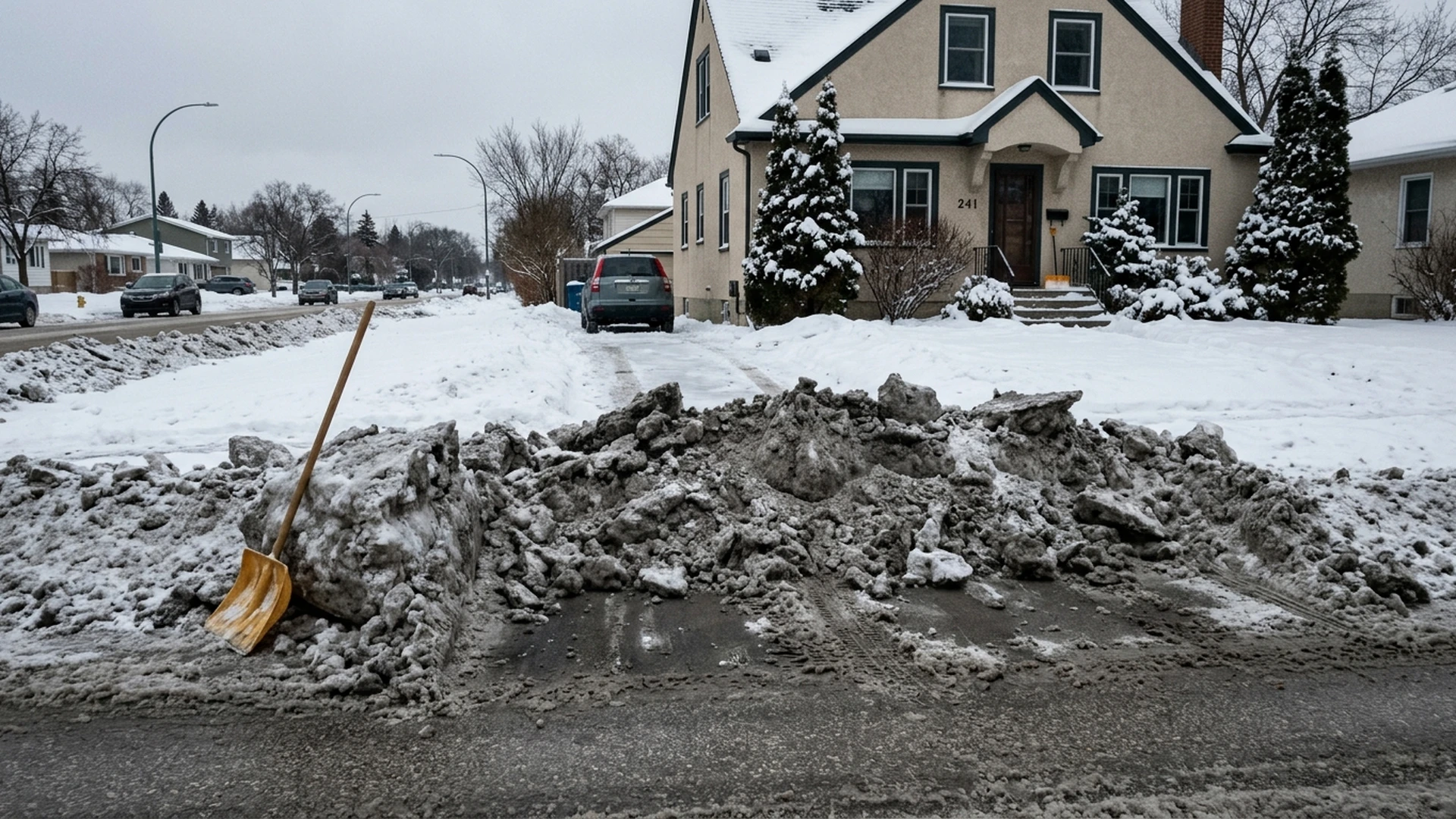
If you want a cleared path across the boulevard from the sidewalk out to the street, maintaining it is your responsibility. The boulevard is also where the City stores plowed snow, so a path you clear there may be filled in again by a subsequent street operation.
Under the Snow Clearing and Ice Control Policy, private crosswalks between the sidewalk and the curb are cleared to a width of 1.5 metres by City forces after street clearing operations are complete, but only for property owners or occupants who sign a declaration on an annual basis. The policy conditions are an accessibility issue making the person physically incapable of shovelling, no other able-bodied person in the household, and inability to arrange it due to financial circumstances.
The City’s snow FAQ adds administrative detail, including a medical certificate for new applicants and that properties with front driveways do not qualify, so confirm the current requirements with 311 rather than relying on a summary. If that describes your situation, 311 is the place to start. For everyone else, the boulevard path is a shovelling job like any other.
Snow you clear has to stay on your own property. Pushing it onto the street, the sidewalk, or a neighbour’s property isn’t permitted, and doing so can undo the City’s clearing work or create a hazard in a place someone else is responsible for.
For a commercial property, the analysis shifts, and it shifts toward more responsibility rather than less.
Manitoba’s Occupiers’ Liability Act (C.C.S.M. c. O8), section 3(1), requires an occupier to take reasonable care to ensure that people on the premises are reasonably safe. On a commercial property that covers the surfaces the public actually uses: the parking lot, the drive aisles, the walkways from parking to the entrance, and the entrance itself.
Manitoba courts have generally approached this as a question of whether a reasonable snow and ice management system was in place and actually followed, rather than whether any ice existed at any moment. The practical protection is a documented, responsive maintenance program, not perfection.
For how commercial snow contracts are structured to support that, including trigger depth, response time commitments and the documentation that matters, see our commercial snow removal contracts guide.
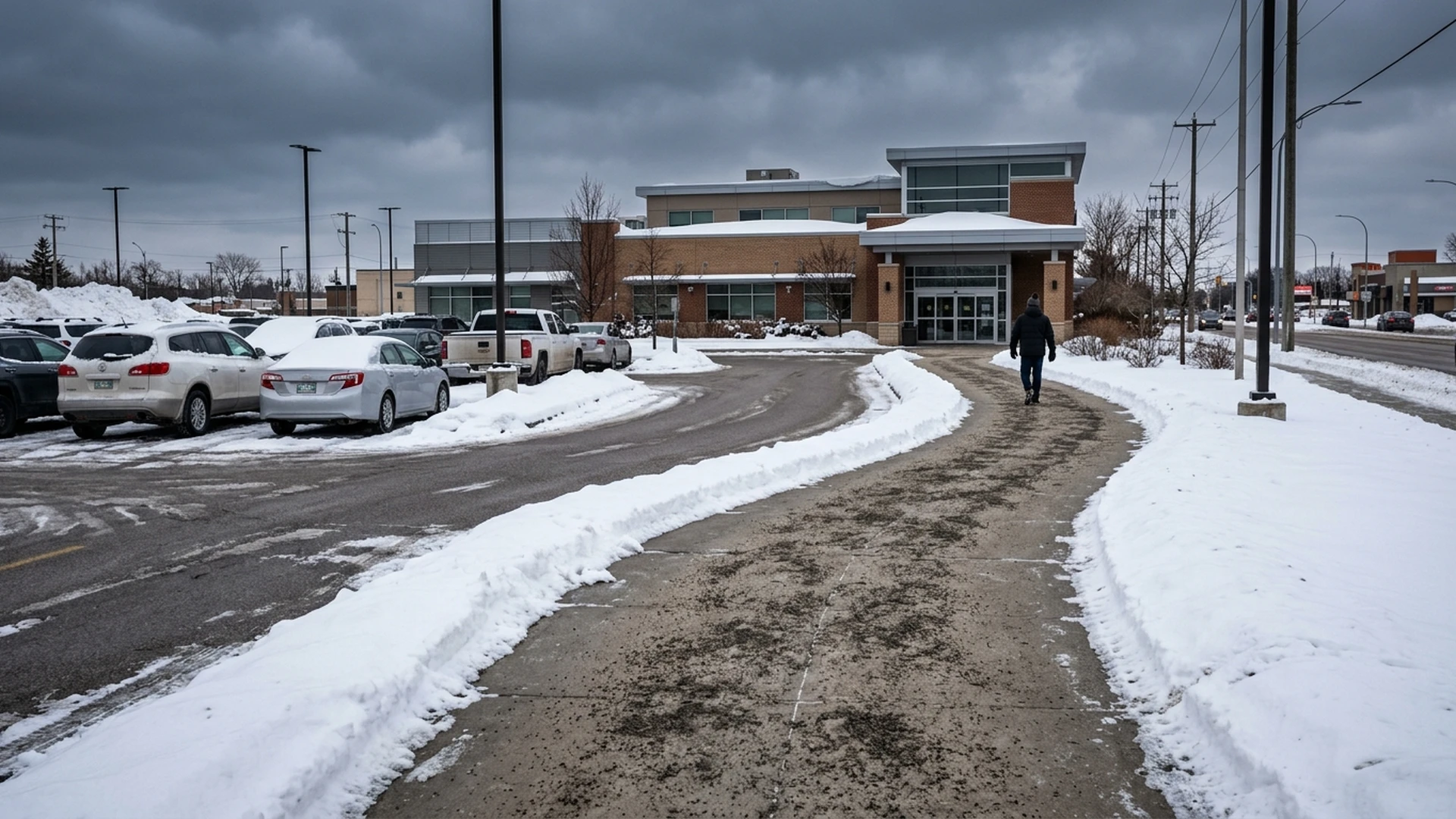
The Occupiers’ Liability Act speaks to occupiers, and in a leased commercial property the question of who occupies which surfaces is answered by the lease rather than by the statute.
Triple net leases in Winnipeg frequently transfer property maintenance obligations, including snow clearing and ice control, to the tenant. In other arrangements the landlord retains common-area maintenance and the tenant is responsible only for their own entrance. Both structures are common, and a tenant who assumes the landlord handles snow, or a landlord who assumes the tenant does, is a scenario that surfaces after an incident rather than before.
Read the allocation before the season. If the lease is ambiguous, that ambiguity is worth resolving in writing with the other party rather than leaving it to be argued later.
Winnipeg’s relevant property maintenance regulation is the Neighbourhood Liveability By-law, which requires properties to be maintained to a minimum standard. If you’re checking requirements for a specific property, that’s the by-law to look at, and 311 can confirm how it applies.
Knowing who is legally responsible for a surface is a separate question from what a snow removal contract actually covers. For what a residential season contract typically includes, see our residential snow removal guide. For condominium and strata properties, where common elements and limited common elements complicate the picture further, see our condo and strata snow removal guide.
Can I be fined for not clearing the public sidewalk in front of my house?
No. The City clears public sidewalks in Winnipeg, including residential ones, so the situation that generates fines in Calgary or Edmonton doesn’t map here. The City has stated publicly that it has no intention of issuing fines over snow clearing on roadways, sidewalks and pathways, and that it appreciates Winnipeggers who shovel their public sidewalk voluntarily, explicitly confirming no property owner will be fined for doing so. If you have a question about a specific notice you’ve received, 311 is the direct route to an answer for your property.
The sidewalk on my street hasn’t been cleared in days. What do I do?
Residential sidewalks are Priority 3, so they’re cleared after major routes and collector streets, and a multi-day wait after a significant snowfall is consistent with how the system is designed. If the City’s snow clearing status map shows your area as complete but your sidewalk was missed, 311 has a snow removal request form for reporting the location.
If someone slips on the sidewalk in front of my house, am I liable?
Liability in any specific incident depends on the facts, and it’s a legal question rather than a landscaping one. What’s relevant here is that the public sidewalk is a City-maintained surface in Winnipeg, which is a different situation from the private walkway on your own property. For a specific concern, talk to a lawyer rather than relying on general guidance.
Does this change if my property is a rental?
The public sidewalk position is the same. What changes is the allocation of private-surface clearing between landlord and tenant, which the tenancy agreement should address. For commercial tenancies in particular, that allocation is often more consequential than people expect.
Lawn ‘N’ Order provides snow removal for residential and commercial properties, primarily in West Winnipeg and surrounding areas. Outside that area, call and we’ll confirm whether we can service your address.
Discuss scope for your property before the season starts.
Use the Free Calculator Book a Free ConsultationSend the address and a rough idea of scope. We'll walk it, take levels, and give you a written number you can compare line for line.
Keep reading
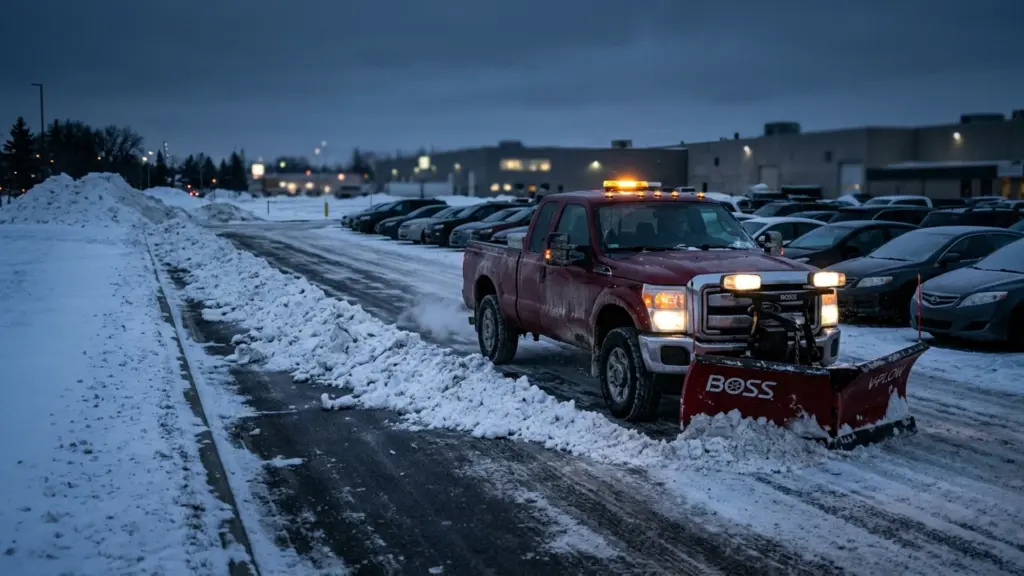
A plow truck, a pusher and a loader do three different jobs, and the pile you start in November is still there…
Read the article →
Holiday Light Installation Winnipeg: Book Before the Ground Freezes Quick Takeaways Holiday light installation in Winnipeg has a short window: crews install…
Read the article →
These three get sold as a package but solve three different problems: compaction, thinness, and poor soil. Working out which one your…
Read the article →