
Parking Lot Snow Removal Winnipeg: Equipment & Staging
A plow truck, a pusher and a loader do three different jobs, and the pile you start in November is still there…
Read the article →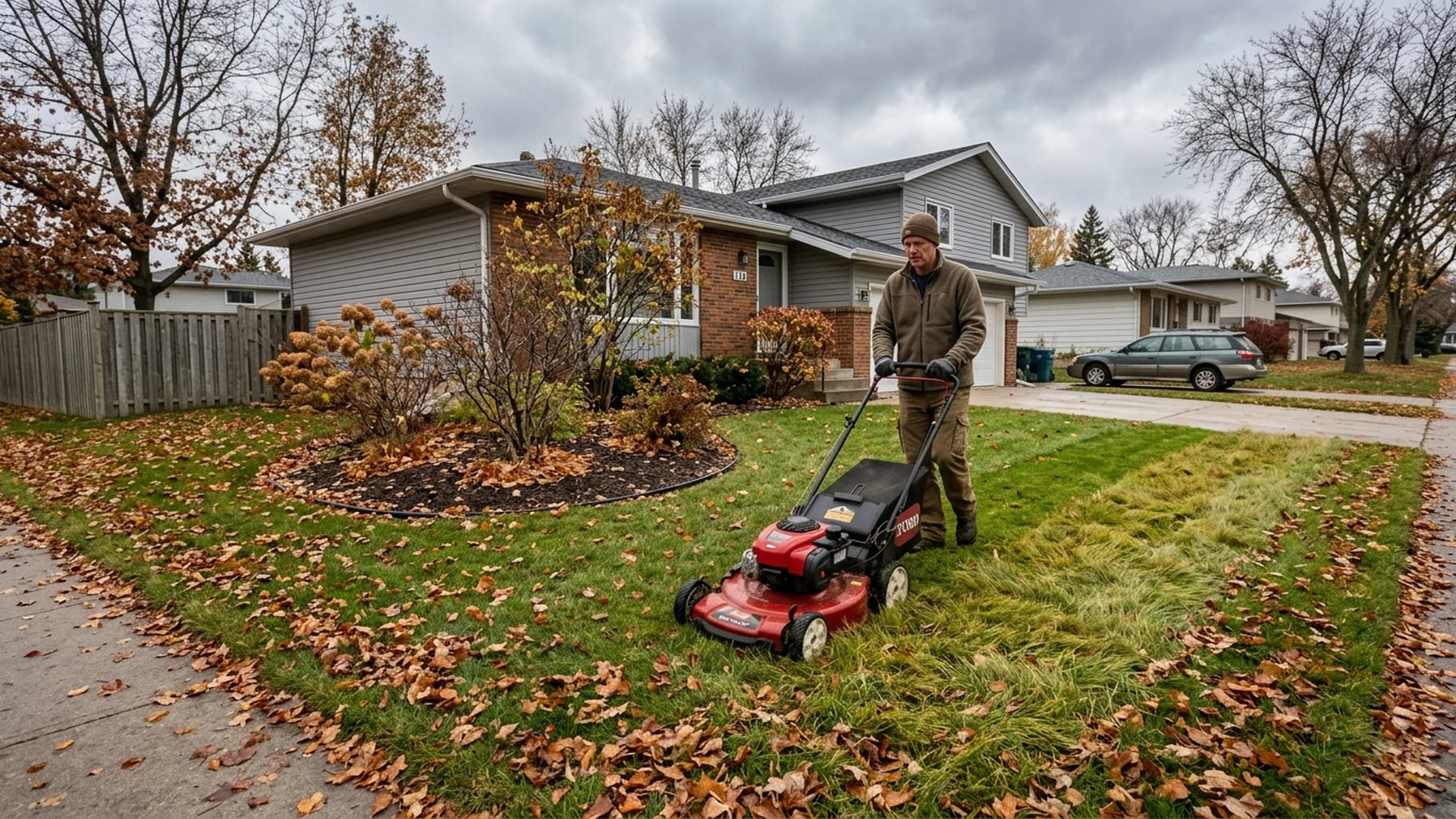
Most people stop watering the lawn weeks too early, and take the last cut at the wrong height. Both decisions are made by the lawn rather than the calendar. Here's the 2 to 2.5 inch target for the final cut, why that range is the compromise between snow mold and crown exposure, and when watering actually stops mattering.
Fall lawn care ends with two questions that get asked every September: when do I stop watering, and when do I take the last cut? Both have the same underlying answer, which is that the lawn tells you rather than the date.
The mistake in both cases is stopping too early. Cool weather feels like the end of the growing season well before the lawn actually stops growing, and both watering and mowing get abandoned while the turf is still active and still benefiting from them.
The lawn keeps needing water as long as it’s actively growing and the soil isn’t frozen. In Winnipeg, that’s typically well into the fall, often later than the point where most people have already put the hose away.
Two conditions together: top growth has essentially stopped, and the ground is approaching or at freeze-up. Cool air temperatures alone aren’t the signal. Soil stays warm enough to support root activity for weeks after the air turns cold, and roots continue developing during that window, which is exactly when a lawn benefits from consistent moisture.
Practical approach: continue watering as needed through the fall, adjusting for rainfall, until growth has visibly stopped and the ground is beginning to freeze. Once the soil can no longer absorb water, watering has no function and should stop.
The other direction is worth noting: fall in Winnipeg is often wetter than midsummer, and continuing a summer irrigation schedule into September can leave the lawn sitting in more moisture than it needs. The right approach is watering to actual need, checking whether the soil is genuinely dry rather than running a fixed schedule.
If you have an in-ground irrigation system, the blowout and shutdown needs to happen before hard freeze regardless of whether the lawn could still use water. Water left in the lines freezes and damages the system. Schedule that separately from the lawn’s actual watering needs, since the system’s deadline comes from freeze risk rather than turf requirements.
The last cut is one of the higher-consequence fall lawn decisions, because both getting it too short and leaving it too long cause real problems that show up in spring.
For the cool-season grasses that make up Winnipeg lawns: Kentucky bluegrass, fescues, and perennial ryegrass. Shorter than the 7 to 8 cm ideal through the growing season, and that reduction is deliberate. But it’s not a scalping, and the difference matters.
Grass left long going into winter mats down under snow cover. Matted turf holds moisture against the crown for months and restricts air movement, which is precisely the condition snow mold needs to establish. A lawn that goes into winter at 4 inches is significantly more likely to come out of winter with snow mold damage than one at 2.5 inches.
Cutting too short, taking the lawn down to an inch or scalping it entirely, removes the leaf tissue the plant uses to produce and store energy heading into dormancy, and it exposes the crown to cold and drying wind without any canopy protecting it. A scalped lawn is more prone to winter injury and slower to recover in spring.
Snow mold is the specific reason the last cut height matters. For what it looks like, how it develops over winter, and how to handle a lawn that has it in spring, see our snow mold guide.
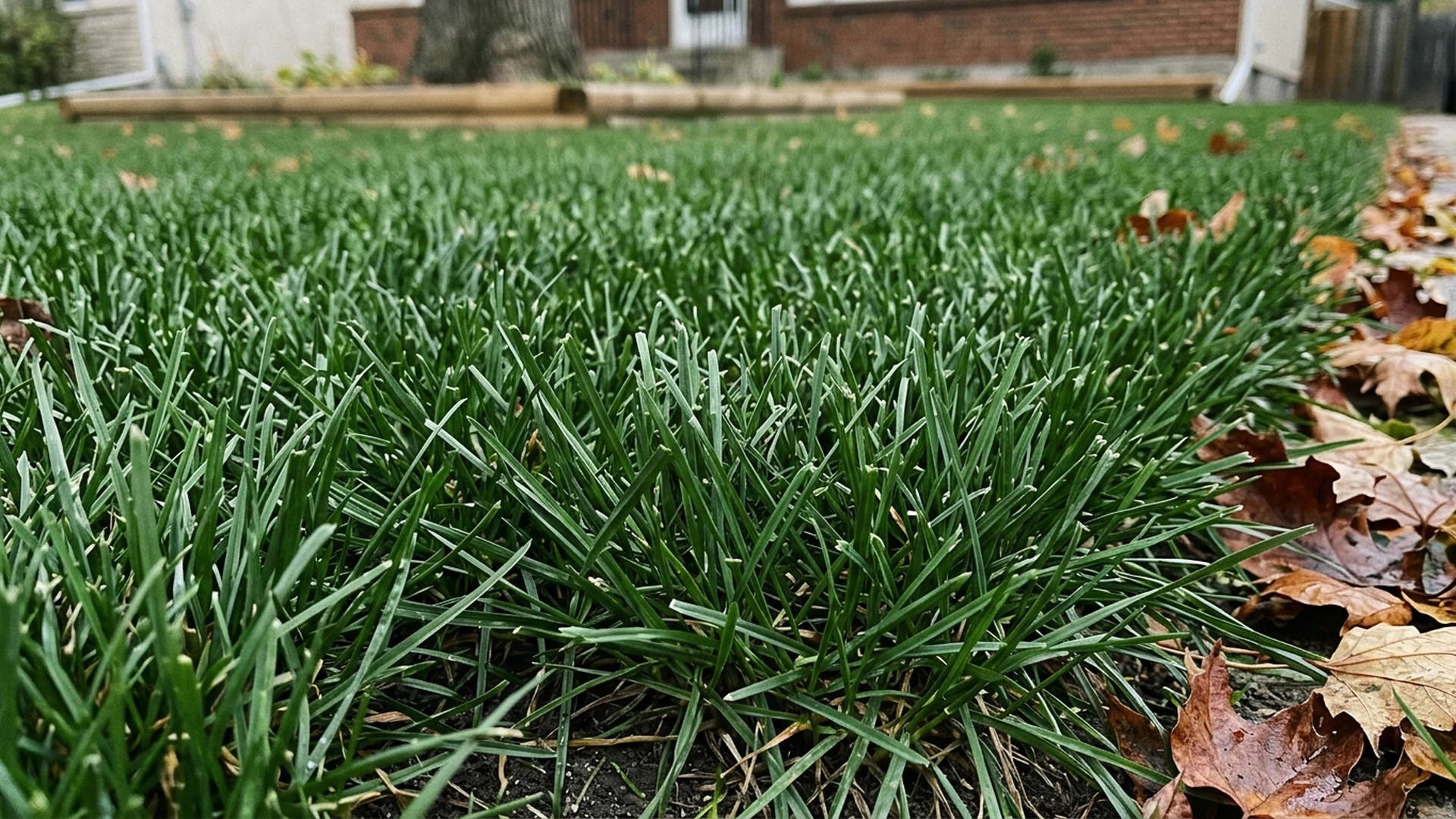
The reduction from summer height to final height should happen over the last several mows of the season, not in a single aggressive cut. Lower the deck by one setting at a time across the final few passes. The general one-third rule still applies: never remove more than a third of the blade height in a single mow.
Dropping a lawn from 3.5 inches to 2 inches in one pass removes far more than a third of the blade, which stresses the turf at exactly the point in the season when it has the least capacity to recover.
Keep mowing as long as the grass is actively growing. Growth slows substantially once temperatures consistently drop, and stops entirely as freeze-up approaches. The last cut is the one taken when growth has essentially stopped, which is later in the fall than many people assume.
Two things to avoid: mowing frozen grass, which damages the blades, and mowing when the lawn is saturated, which compacts soil and tears turf rather than cutting cleanly. Pick a dry day when the grass isn’t frozen.
Deal with the leaves. Heavy leaf cover left on the lawn through winter smothers turf and creates the same trapped-moisture conditions as long grass. Either mulch them into the lawn with the mower if the volume is light, or remove them.
Consider bagging clippings on the final pass. Through the season, mulching clippings back into the lawn is beneficial. On the final cut specifically, bagging reduces the organic material sitting on the turf surface over winter.
Don’t apply high-nitrogen fertilizer late. Excess nitrogen late in the season pushes soft growth that doesn’t harden off and is more susceptible to snow mold.
For the fall cleanup tasks that surround the last cut, including what’s worth hiring out and what’s straightforward to do yourself, see our fall cleanup guide.
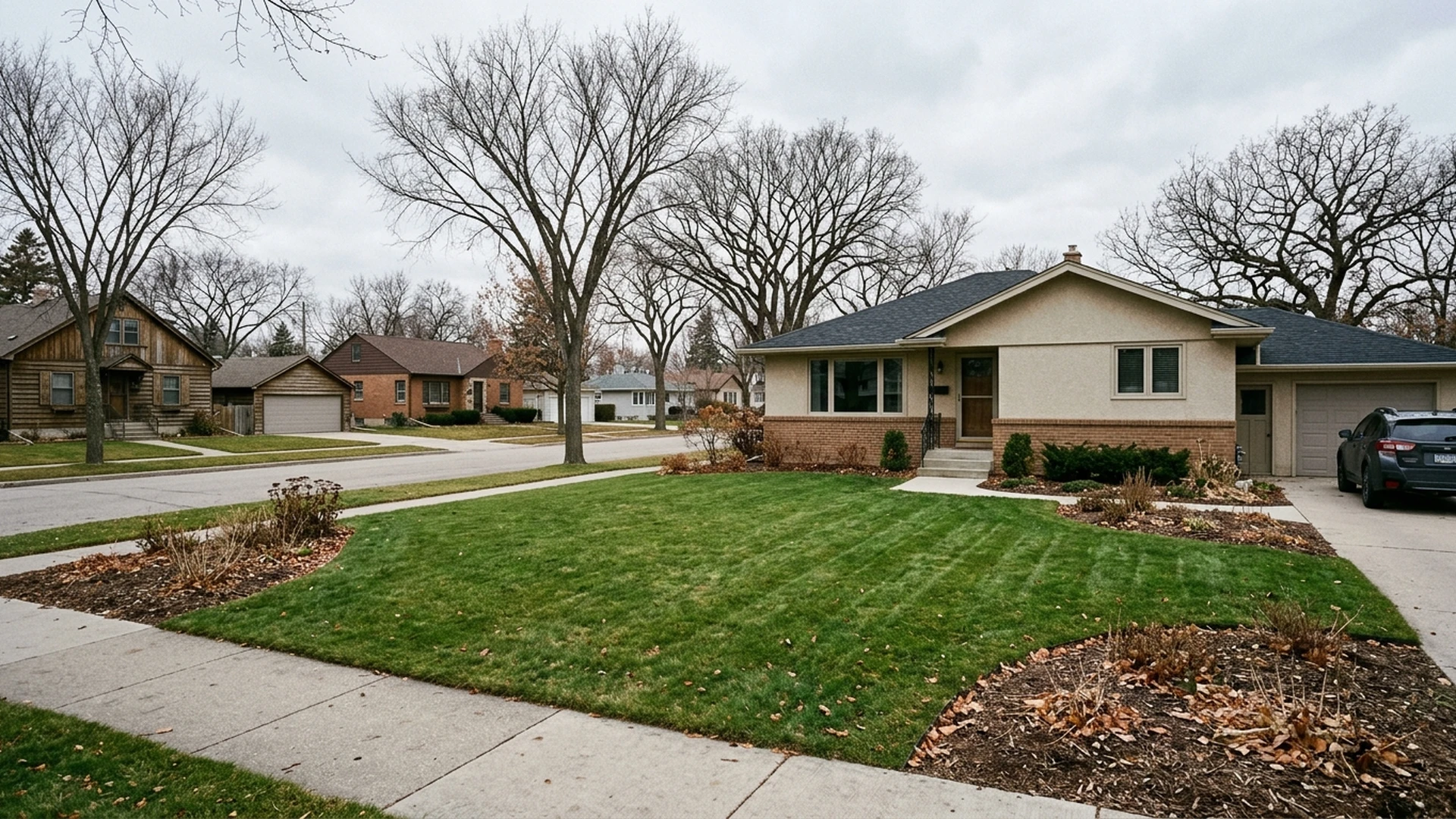
A note on trees and shrubs: the watering guidance above is specific to turf. Newly planted trees and shrubs have a different requirement: they need consistent watering right up until the ground actually freezes, which runs later than the lawn’s needs and matters more because the root systems aren’t established. If you planted anything this fall, see our fall tree and shrub planting guide for that side of it.
What if I already stopped watering weeks ago?
If the lawn is still green and the ground isn’t frozen, resume. Fall root development continues after top growth slows, and moisture supports it. A lawn that went into a dry fall without water isn’t ruined, but it goes into winter with less root development than it could have had, which shows up as slower spring green-up.
Should I fertilize at the last cut?
A fall fertilizer application is beneficial, but timing matters and it’s not tied to the last cut. Fall feeding is best applied while the lawn is still actively growing so the nutrients are taken up, not after growth has stopped. Avoid high-nitrogen products late in the season, since soft growth going into winter increases snow mold risk.
How short is too short?
Below about 2 inches is where you start losing the protective canopy over the crown. Scalping, taking it to an inch or less, is the failure to avoid. If your mower’s lowest setting is well below 2 inches, the last cut isn’t the time to use it.
Lawn ‘N’ Order handles fall lawn care across Winnipeg, including final mowing at the right height and the seasonal tasks that go with it.
Use the Free Calculator Book a Free ConsultationSend the address and a rough idea of scope. We'll walk it, take levels, and give you a written number you can compare line for line.
Keep reading
A plow truck, a pusher and a loader do three different jobs, and the pile you start in November is still there…
Read the article →
Holiday Light Installation Winnipeg: Book Before the Ground Freezes Quick Takeaways Holiday light installation in Winnipeg has a short window: crews install…
Read the article →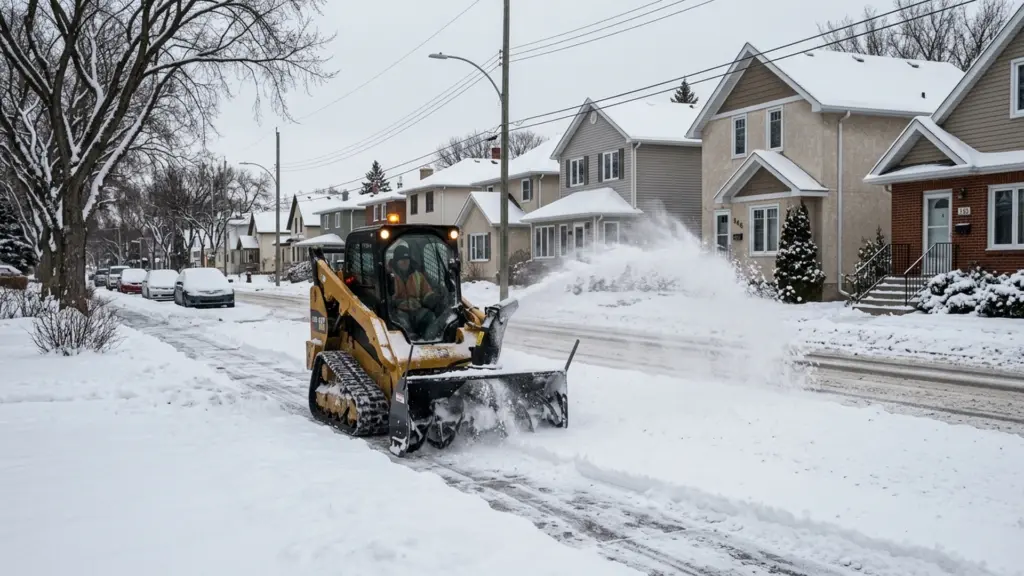
Who Clears the Sidewalk in Winnipeg? What the City Does and What You’re Responsible For Quick Takeaways Winnipeg is one of the…
Read the article →