
Parking Lot Snow Removal Winnipeg: Equipment & Staging
A plow truck, a pusher and a loader do three different jobs, and the pile you start in November is still there…
Read the article →
Found weird circular patches on your lawn after snow melt? 85% of Winnipeg lawns with snow mold recover naturally with no treatment. Learn to identify gray vs pink snow mold, understand recovery timelines, and implement fall prevention strategies that actually work.
It’s mid-April. Snow finally melted. You walk outside expecting green, and instead, there are weird circular patches—some grayish-white, some pinkish—scattered across your lawn.
Don’t panic. This is snow mold. It happens to Winnipeg lawns every spring.

Real questions: will your grass recover, what should you do now, and how do you prevent it next year?
Snow mold is a fungal disease growing under snow cover. Unlike most lawn diseases requiring heat, snow mold thrives in cold, humid conditions under snow.
Why Winnipeg gets it badly:
Research data: University of Manitoba research identifies snow mold as Manitoba’s most common spring lawn disease, affecting 60-70% of residential lawns annually to some degree.
Two distinct fungi create “snow mold” symptoms with different severity:

Most Winnipeg lawns recover fully without intervention.
When to worry: Over 30% of the lawn is severely affected, areas are completely bare 4 weeks after melt, or progressive browning rather than greening as spring progresses.
Canadian Turfgrass Research Foundation studies show that over 85% of Manitoba lawns with April snow mold symptoms fully recover by June with no treatment beyond normal spring maintenance.
Use a leaf rake (not a metal garden rake) to gently separate matted grass in affected areas. This improves air circulation and allows sunlight to reach the crowns.
Don’t use: Power rakes, dethatching machines, or aggressive raking. Snow mould-affected grass is fragile.
Timing: Start once the ground is firm enough to walk on without muddy depressions (mid-to-late April in Winnipeg).
Sunlight and air movement are best “treatments.” Fungus requires humidity—breaking that stops disease.
Patience is the correct response for most snow mold. Grass begins active growth when the soil hits 10°C consistently, typically early to mid-May in Winnipeg.
Watch for: Small green shoots from affected area centers (usually 2-3 weeks after melt).
How long: Give 3-4 weeks of growing temperatures before concluding natural recovery won’t occur.
By late May, you’ll know if areas need intervention.
Method: Light scarification, quality grass seed, keep moist for 2-3 weeks until germination. Ditchfield Soils 4-way topsoil provides excellent growing medium—spread 1-2 inches over bare areas.
If soil compaction contributes (common in high-traffic or clay-heavy areas), core aeration improves air and water movement.
Timing: May through early June, when grass is actively growing.
Spring treatment addresses symptoms. Fall prevention tackles causes.
Cut grass to 2-2.5 inches before winter (last mowing, typically late October). Shorter than summer, but don’t scalp below 2 inches.
Why: Long grass blades bend under snow, creating dense mats trapping humidity. Shorter grass stands more upright with better air movement.
Fallen leaves create a moisture-trapping layer under snow—perfect snow mold conditions.
Target: Clean lawn before first permanent snow (usually late November). Multiple cleanups better than one late cleanup.
Late nitrogen (October) promotes tender growth susceptible to winter damage and snow mold.
Better: Slow-release winter fertilizer formulations if fertilizing in the fall. Or fertilize September through early October, not late October/November.
Low-lying areas holding moisture are snow mold magnets. The same spots show problems year after year.
Solutions: Core aeration helps modestly. Adding topsoil to fill depressions creates better surface drainage. Severe cases need subsurface drainage.
Preventively: Yes. Late fall application (just before permanent snow) can reduce severity.
Cost-benefit: Fungicides run $50-150 for residential treatment. Given that most snow mold recovers naturally, hard to justify economically for typical lawns.
After infection: Once you see snow mold in spring, fungicides don’t help. Can’t reverse existing damage.
Bottom line: For most Winnipeg homeowners, improved fall practices (proper mowing, leaf removal, drainage) provide 80% of benefit at 10% of cost versus fungicides.
Lawn ‘N’ Order spring lawn assessment includes snow mold damage evaluation and recovery recommendation. We identify whether natural recovery is likely or intervention needed, and provide site-specific solutions for chronic problem areas.
Our fall lawn preparation services implement proven prevention strategies: proper mowing height, leaf removal, drainage improvements, and aeration where beneficial.
Contact Lawn ‘N’ OrderSnow mold looks alarming. But in most cases, it’s not a disaster. Most grass recovers. Most lawns are fine by June.
Best “treatment” is usually patience plus normal spring maintenance. Invest effort in fall prevention and fixing chronic problem sites, not spring interventions that rarely provide additional benefit.
We also work with Ditchfield Soils for quality topsoil when overseeding is needed and EcoBins for yard cleanup and debris removal during spring lawn renovation.
Snow mold is Winnipeg reality, not catastrophe. Understanding recovery timelines and implementing fall prevention creates lawns that bounce back quickly every spring.
Send the address and a rough idea of scope. We'll walk it, take levels, and give you a written number you can compare line for line.
Keep reading
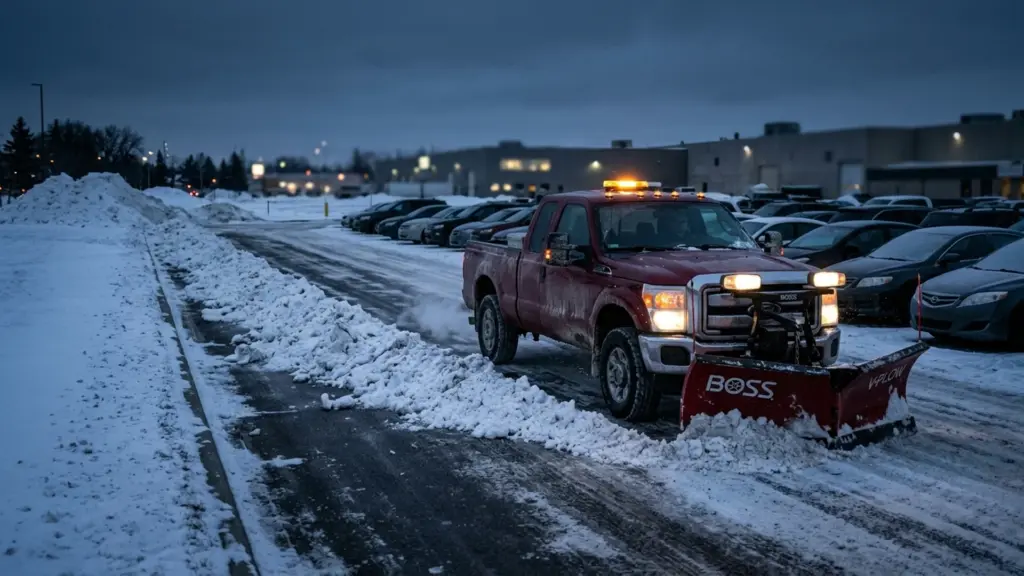
A plow truck, a pusher and a loader do three different jobs, and the pile you start in November is still there…
Read the article →
Holiday Light Installation Winnipeg: Book Before the Ground Freezes Quick Takeaways Holiday light installation in Winnipeg has a short window: crews install…
Read the article →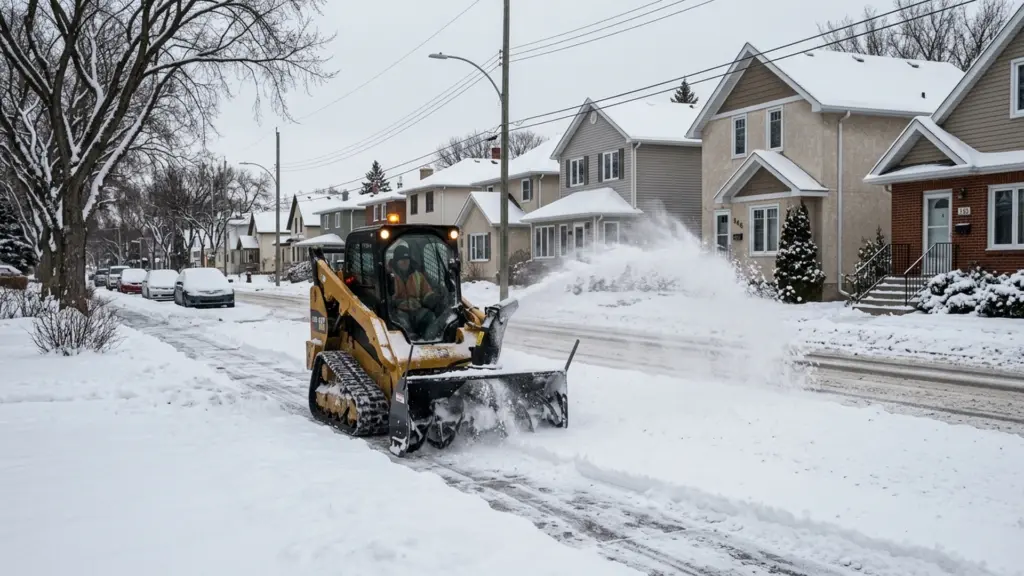
Who Clears the Sidewalk in Winnipeg? What the City Does and What You’re Responsible For Quick Takeaways Winnipeg is one of the…
Read the article →