
Parking Lot Snow Removal Winnipeg: Equipment & Staging
A plow truck, a pusher and a loader do three different jobs, and the pile you start in November is still there…
Read the article →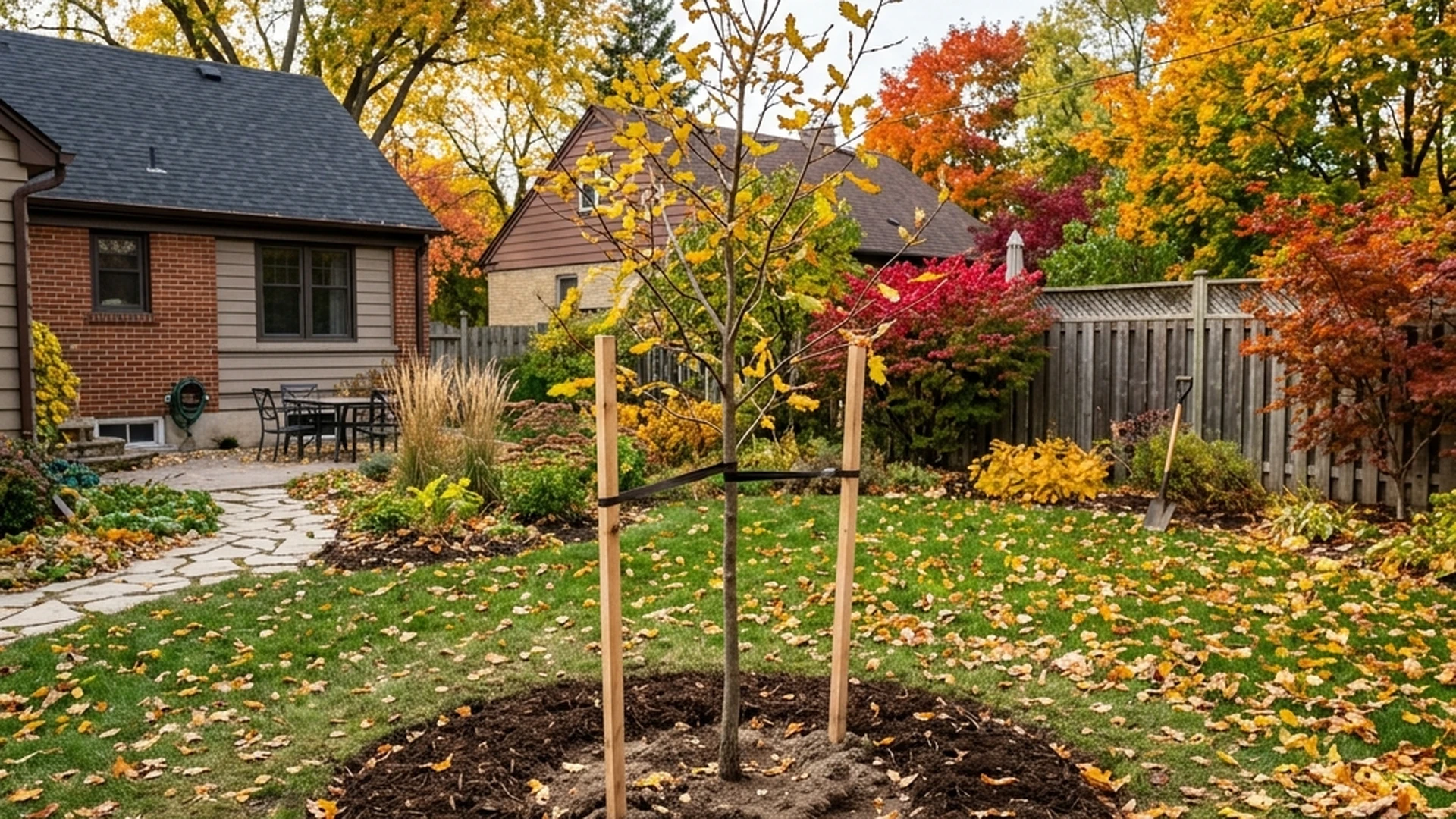
Roots need about 6 weeks in unfrozen soil before the ground freezes solid, which puts the deadline for most deciduous material around early October and evergreens earlier still, since they lose moisture through their needles all winter. Watering is the step most people stop too early: newly planted material needs consistent water right up until the ground actually freezes, not just the first week or two.
Fall planting has real advantages in Winnipeg: cooler air temperatures reduce transplant stress compared to summer planting, and soil temperatures remain warm enough well into the season to support root development even after air temperatures have dropped. A tree or shrub planted in September has a head start on root establishment that a spring-planted equivalent won’t have until the following fall.
The advantage only holds if the plant gets enough time to actually establish roots before the ground freezes solid. Plant too late, and you have a specimen with an unestablished root system going into winter, which significantly increases the risk of winter injury or outright failure by spring. This is why fall planting has a real, non-negotiable deadline rather than just a loose seasonal guideline.
The generally accepted standard for fall planting is that roots need approximately 6 weeks of active establishment time in unfrozen soil before the ground freezes solid. Working backward from Winnipeg’s typical ground-freeze timing, this puts the practical planting deadline for most deciduous material around early October in a typical year. Planting later than this doesn’t guarantee failure, since Manitoba winters and freeze-up timing vary year to year, but it meaningfully increases risk with less room for a colder-than-average fall to cut the establishment window short.
This deadline applies to the planting date itself, not to when you started thinking about the project. If you’re planning fall planting, treat early October as the real cutoff and work backward from there, rather than treating it as a soft guideline you can push into late October if the weather still looks reasonable.
Deciduous material, trees and shrubs that drop their leaves, goes fully dormant once temperatures drop and leaf drop is complete. Dormant deciduous plants aren’t actively losing significant moisture through their above-ground structure the way evergreens continue to through winter, which is why deciduous material has more flexibility at the later end of the fall planting window.
Even with more flexibility, the 6-week root establishment rule still applies. A deciduous tree planted in early October still needs its 6 weeks before hard freeze to develop the root contact and initial establishment that gets it through winter successfully.
Evergreen trees and shrubs, spruce, cedar, pine, and similar species, don’t go fully dormant the way deciduous plants do. Their needles continue to lose moisture through transpiration throughout the winter, even while the plant is otherwise in a slowed winter state. This means an evergreen is managing two demands simultaneously through its first winter after fall planting: establishing new roots in freezing soil, and continuing to lose moisture through its foliage that those still-establishing roots need to replace.
This is why evergreens are more vulnerable to winter desiccation, needle browning and dieback caused by the plant losing more moisture than its root system can replace, particularly in a plant that wasn’t well-established before winter. The practical implication: push evergreen planting earlier in the fall window than deciduous material, ideally completed by mid-September rather than pushing toward the early October deadline that applies to deciduous plants.
For which evergreen species are actually reliable in Winnipeg’s Zone 3 conditions, see our evergreens for Winnipeg landscapes guide, which covers cold-hardy picks suited to this climate specifically.
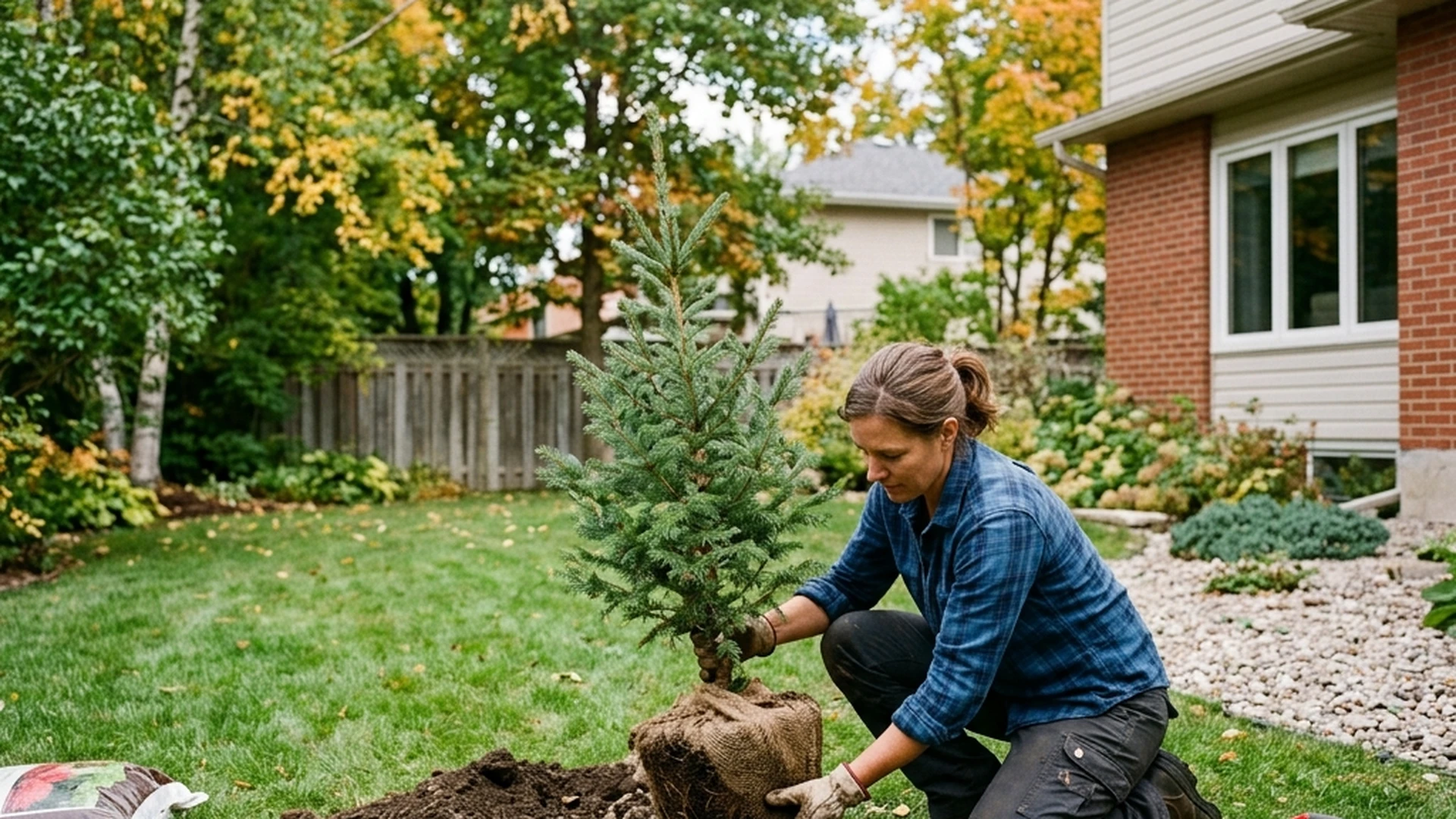
This is one of the most commonly missed requirements in Manitoba fall planting, and it’s specific enough to call out clearly: newly planted trees and shrubs need consistent watering all the way until the ground actually freezes, not just for the first week or two after planting.
The instinct for many homeowners is to water thoroughly at planting and for a short period after, then taper off as the weather cools, treating watering as a spring-and-summer task. In Winnipeg’s fall, this stops too early. The plant’s roots are actively establishing through September and into October, and they need consistent soil moisture to do that. Watering should continue on a regular schedule, adjusted for rainfall, right up until the ground is genuinely frozen and can no longer absorb water, not just until temperatures start to feel cool.
Continue watering deeply once or twice a week (adjusting for rainfall) through September and into October for newly planted material, and don’t assume a few cool days means the plant’s water needs have stopped. The ground freezing, not the calendar or the air temperature, is what actually ends the watering requirement.
Timing only matters if you’re planting the right species in the first place. Before finalizing what to plant this fall, confirm the species is genuinely suited to Winnipeg’s growing conditions. See our growing zone Winnipeg guide for Manitoba’s hardiness zone classification and what that means for species selection, and our evergreens guide specifically for cold-hardy evergreen options.
| Plant Type | Ideal Planting Window | Hard Deadline |
|---|---|---|
| Evergreen trees and shrubs | Late August through mid-September | Mid-September; earlier is safer |
| Deciduous trees | September through early October | Early October, working backward 6 weeks from typical freeze-up |
| Deciduous shrubs | September through early October | Early October, same 6-week rule applies |
| Watering (all fall-planted material) | Continuous from planting | Until the ground is genuinely frozen, not a fixed calendar date |
Is it too late to plant if we’re already into October?
For deciduous material, early October is generally still within the window in a typical year, though later in October carries more risk as the 6-week establishment clock runs shorter. For evergreens, October planting is meaningfully riskier and generally not recommended; if you’re past mid-September for evergreen material, it’s usually better to wait for spring than push a fall planting that likely won’t have enough establishment time.
Should I fertilize newly planted trees and shrubs in fall?
Avoid high-nitrogen fertilization at fall planting, since it can promote soft new growth that doesn’t have time to harden off before winter, increasing winter injury risk. A phosphorus-focused starter application at planting to support root development is more appropriate than a general nitrogen feed. Save nitrogen fertilization for spring once the plant is establishing into its first growing season.
Do I need to wrap or protect newly planted trees for winter?
This depends on species and site exposure. Some newly planted evergreens on exposed, windy sites benefit from burlap wind screening for their first winter to reduce desiccation stress while roots are still establishing. Thin-barked deciduous trees are sometimes wrapped to prevent sun-scald injury on their south-facing bark through winter freeze-thaw cycling. Not every planting needs this; it depends on the specific species and site conditions, which is worth confirming for your specific planting.
Lawn ‘N’ Order plants trees and shrubs across Winnipeg with species selection and timing suited to this climate.
Use the Free Calculator Book a Free ConsultationSend the address and a rough idea of scope. We'll walk it, take levels, and give you a written number you can compare line for line.
Keep reading
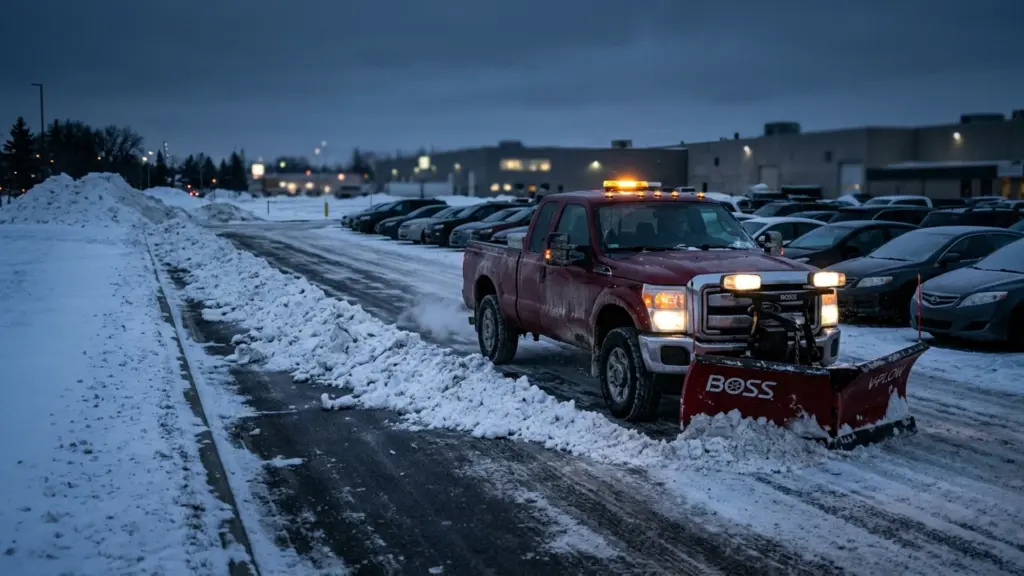
A plow truck, a pusher and a loader do three different jobs, and the pile you start in November is still there…
Read the article →
Holiday Light Installation Winnipeg: Book Before the Ground Freezes Quick Takeaways Holiday light installation in Winnipeg has a short window: crews install…
Read the article →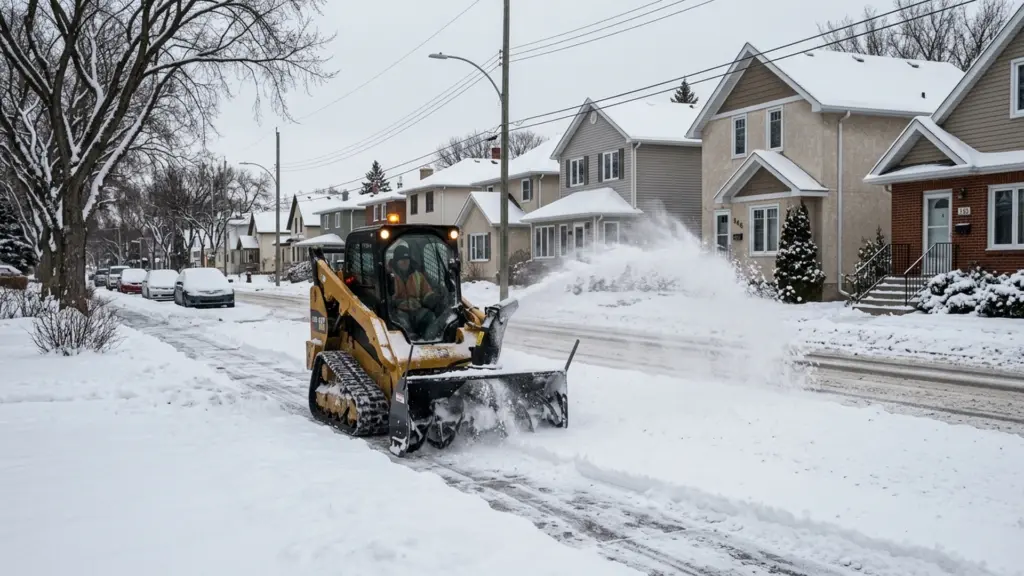
Who Clears the Sidewalk in Winnipeg? What the City Does and What You’re Responsible For Quick Takeaways Winnipeg is one of the…
Read the article →