
Finish Fall Cleanup Before Winnipeg’s Yard Waste Collection Ends
Finish fall cleanup before Winnipeg's last yard waste pickup. Check your collection area, clear leaves, protect turf and plantings, keep streets clear.
Read the article →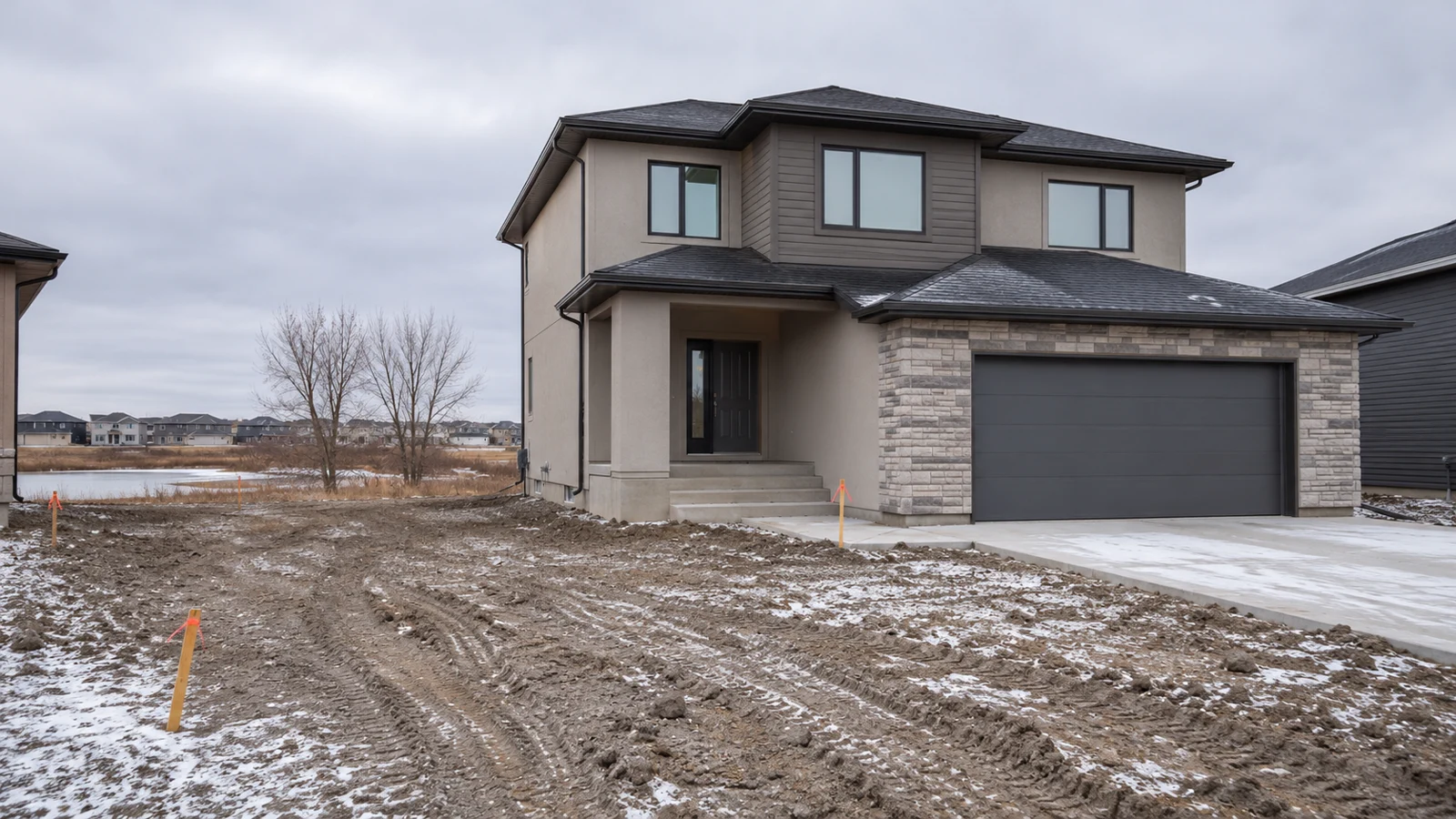
New build landscaping Winnipeg: what lot grading means for your yard, why backfill settles, sod or seed, and what to plan over winter for a spring start.
You have the keys, and the yard is a field of packed clay with survey stakes still in it. If you took possession in the fall, nothing will be built until spring. That is not lost time. A new-build yard has its own problems, and almost all of them are easier to solve on paper in January than on site in June.
Every builder and purchase agreement is different, so start by reading yours. What is fairly common on a new lot:
The City's guidance is direct about who finishes the job: as the homeowner, you are responsible for the final grading and placement of topsoil and sod, and the City suggests checking the contract between you and your builder to confirm who is responsible for that part of the work. Find that clause before you plan anything else.
Winnipeg requires a Lot Grading Permit before a new house is built. After the rough grading is done, it has to be certified by a qualified surveyor, either a professional engineer or a Manitoba Land Surveyor. The building permit applicant, which is generally the builder, hires the surveyor. The City also sets a deadline: once a lot grade permit has been obtained, rough grading must be completed within 12 months. If your builder holds the permit, that tells you whether they are still on the clock.
For you, that means two things:
If you have questions about recently certified grading or a drainage problem, the City directs you to your builder or the surveyor. Getting the certificate, and ideally the approved lot grading plan, is a phone call you can make in December.
Construction traffic on Winnipeg's Red River clay leaves a dense, slow-draining surface. Our sod installation guide lists new construction sites as a case where the soil has been disturbed and needs significant preparation, and warns that sod laid on compacted, unamended clay tends to decline after its first season. That guide calls for a minimum of 3 to 4 inches of quality amended soil over the prepared subgrade.
If you are sourcing that soil yourself, our sister company Ditchfield Soils supplies screened topsoil blends such as Four-Way Mix by the bag, half yard or full yard, for pickup or delivery. See their soil and landscape products.
That fits the City's allowance of roughly 100 mm between rough and finished grade. The space for topsoil was designed in, so fill it with the right material rather than piling soil on top and raising the yard above its approved elevations.
The soil against a new foundation was dug out, then pushed back once the walls were in. The City's definition of rough grading includes backfilling around the foundation and "perching" that backfill so there is positive slope away from the house.
Backfill is looser than undisturbed ground and can settle over the first seasons, especially through spring thaw and heavy rain. When it does, a low band forms along the wall and the slope can flatten or tip back toward the house.
What to plan for:
Your lot was designed to drain a specific way. The City describes patterns such as rear-to-front drainage, where water runs to side-yard swales and out to the street, and split drainage, where the high point sits mid-lot and water flows both to the street and to a lane or rear-yard swale. City rules that shape new-build landscaping:
On the landscape side, our build standard uses a 2% minimum runoff slope away from the house, and our landscape drainage planning guide explains how grading, downspouts and hardscape elevations get designed together. Our designs comply with Winnipeg's Lot Grading Bylaw 7294/98.
Sod
Seed
Either way, the soil and grade underneath matter more than the choice. Fixing the grade under an established lawn means removing it and starting again.
Winter is when the design work happens. Our design and build process page puts it plainly: "Design work runs year-round, and the projects designed over winter are the ones that break ground first when the ground opens."
Use the cold months to line up:
Once the ground is workable, the order of work is fairly predictable:
The City of Winnipeg's guidance is to add final landscaping (topsoil, sod or other decorative material) only after your lot has been certified by the surveyor. Ask your builder for a copy of the signed lot grade certificate first.
The City describes rough grade as typically about 100 mm (4 inches) below finished grade to allow for topsoil and sod. Our sod guide calls for at least 3 to 4 inches of amended soil over a prepared subgrade. Confirm your final grade with your builder or surveyor before ordering.
Sod gives instant cover and works best from late July to mid-September, or in spring with steady watering. Seed costs less and does best from late August to mid-September, with mid-May to early June as a second option. Good soil and correct grade underneath matter more than the choice.
Over winter. Design work runs year-round, and the projects designed over winter are the ones that break ground first in spring.
Get your design done this winter so your new yard is ready to build next spring. Book a free on-site design consultation and we will look at your grades, drainage and soil before anything is built.
Send the address and a rough idea of scope. We'll walk it, take levels, and give you a written number you can compare line for line.
Keep reading
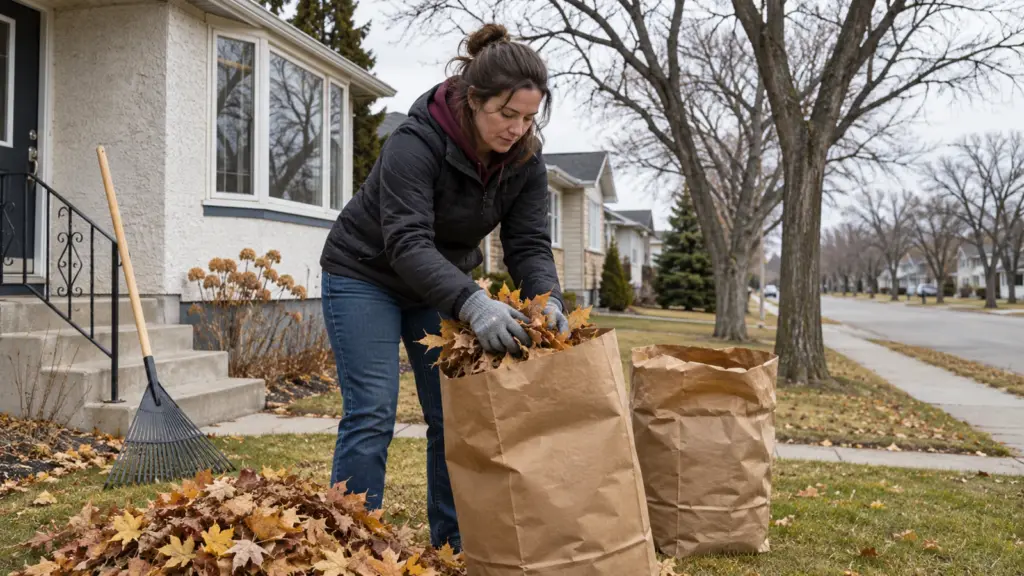
Finish fall cleanup before Winnipeg's last yard waste pickup. Check your collection area, clear leaves, protect turf and plantings, keep streets clear.
Read the article →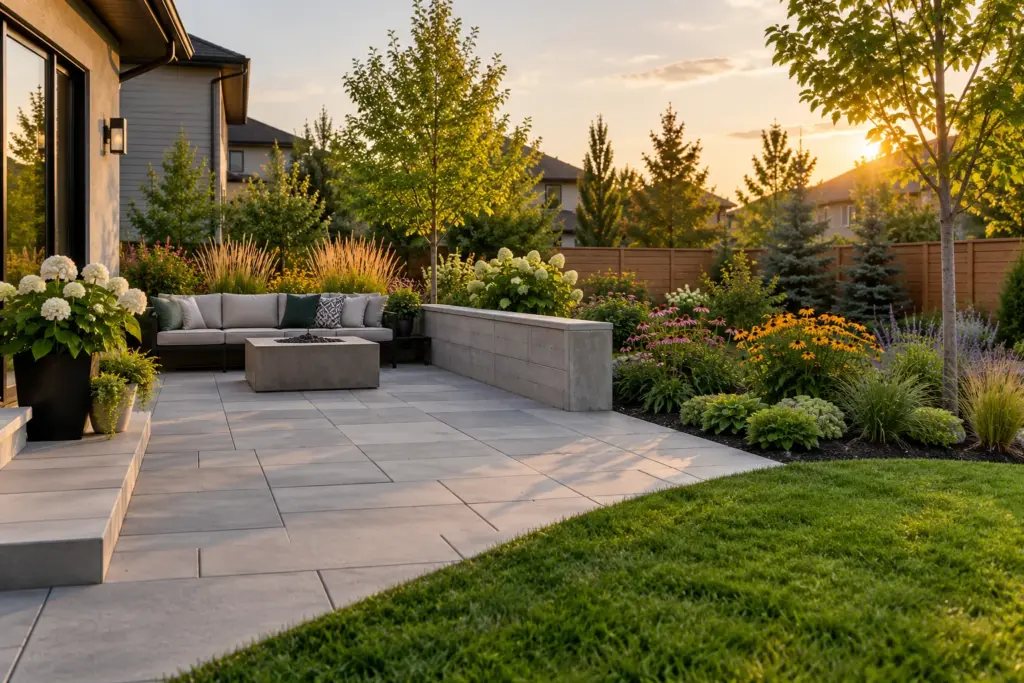
Hardscaping is the built part of a yard. Compare patios, paths and walls with softscape, and learn why base preparation matters in…
Read the article →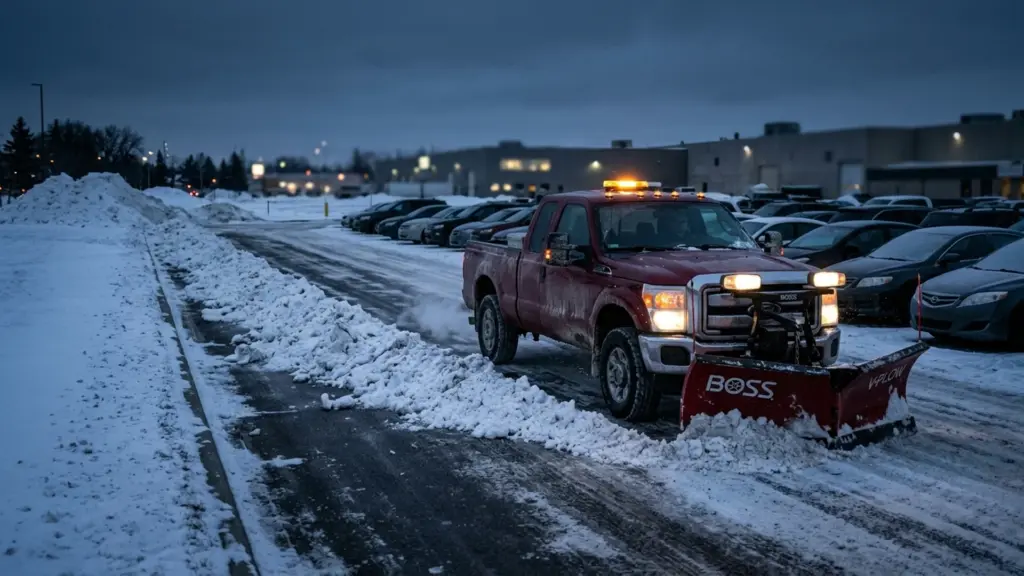
A plow truck, a pusher and a loader do three different jobs, and the pile you start in November is still there…
Read the article →