
Parking Lot Snow Removal Winnipeg: Equipment & Staging
A plow truck, a pusher and a loader do three different jobs, and the pile you start in November is still there…
Read the article →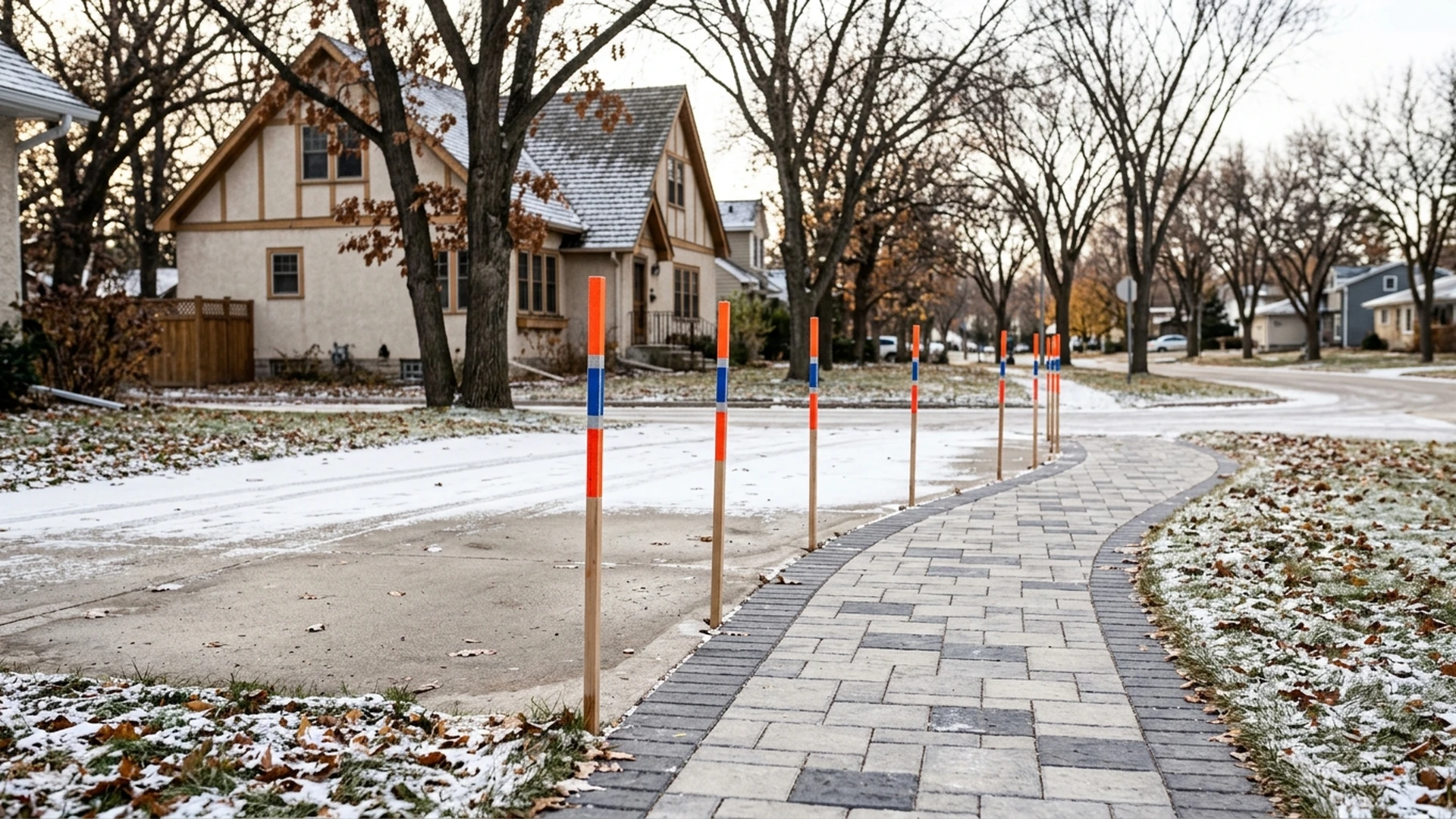
Snow removal damage on a residential property has an awkward characteristic: it happens under snow cover, in the dark, in conditions where nobody is inspecting the result closely. A plow blade catching the edge of an interlocking patio or a snowblower auger clipping a lawn margin doesn’t announce itself. It shows up in April, when the snow comes off and there’s a chipped paver edge, a gouged strip of turf, or a section of concrete curbing with a fresh chunk missing.
Most of this is preventable with preparation that takes an afternoon in November. What follows is the residential version of that preparation.
Snow stakes are the highest-value, lowest-cost preventive measure for residential snow removal damage. Once there’s meaningful snow cover, the operator, whether that’s you with a snowblower, a service crew, or a neighbour helping out, is working from memory and guesswork about where the hard edges are.
Place stakes at the actual edge, not offset inward, and use stakes tall enough to stay visible above accumulated snow through the season, which in Winnipeg means taller than they initially look necessary. Place them close enough together that the line between them is clear, particularly on curves. Bright colours help in low light and blowing snow.
Put them in before the ground freezes hard. Driving stakes into frozen Winnipeg clay in December is significantly harder than pushing them in during a mild November afternoon.
Snow has to go somewhere, and where it goes has consequences that show up in spring.
Heavy, compacted snow piled on a garden bed compresses the soil beneath it, and the weight can break or deform shrubs and perennials underneath. Compacted snow also takes considerably longer to melt in spring than loose snow cover, which keeps that bed cold and wet well past when the rest of the yard has dried out.
A large snow pile is a concentrated volume of water waiting to release in spring. A pile positioned uphill of the house, or in a spot where meltwater runs toward the foundation, creates a drainage problem at exactly the point in the year when the ground is still frozen and can’t absorb it. Pile snow where meltwater will run away from the house and away from any area that already has drainage issues.
Snow piled against or on top of evergreen shrubs and small trees can break branches under the weight and deform the plant’s shape permanently. Cedars are particularly susceptible to splaying open under snow load piled against them. Keep piles clear of the plants themselves rather than using shrub lines as a snow boundary.
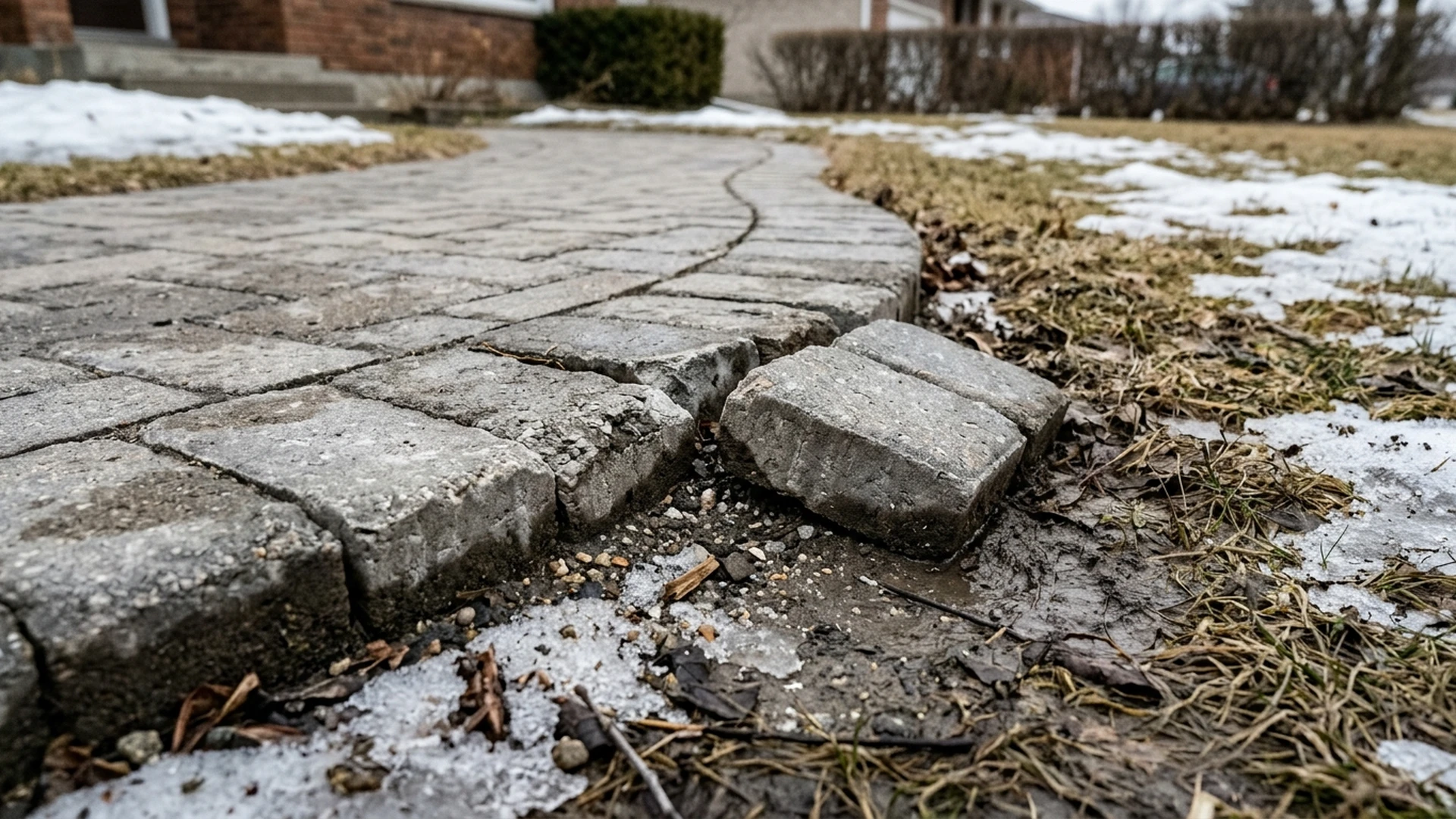
Interlocking paver installations have an edge restraint holding the outermost course in place. A plow blade or snowblower catching that edge can dislodge pavers or damage the restraint, which then allows the edge to migrate over subsequent seasons. This is the most consequential form of mechanical snow removal damage on a residential property, since it compromises the structural integrity of the installation rather than just the appearance.
Concrete curbing along bed edges sits at exactly the height a blade or auger catches. Chips and cracks from equipment impact are common and, once the concrete surface is broken, freeze-thaw cycling works into the damage and expands it over subsequent winters.
The strip of turf immediately alongside a driveway or walkway takes the most damage from snow removal, both from equipment gouging and from the pile of snow and debris that ends up sitting on it all winter. Turf damage along these margins is common enough that spring repair to these strips is a routine part of many properties’ spring cleanup.
For homeowners running their own snowblower, setting the skid shoes correctly for the surface makes a real difference. Set too low on an interlocking or concrete surface, the auger housing contacts the surface directly. On a gravel driveway, the setting needs to be higher still to avoid picking up and throwing stone.
Salt used for ice control on driveways and walkways doesn’t stay on the hard surface. It dissolves, runs off with meltwater, and accumulates in the soil along the margins of the treated area, which is exactly where the plantings closest to the driveway are growing.
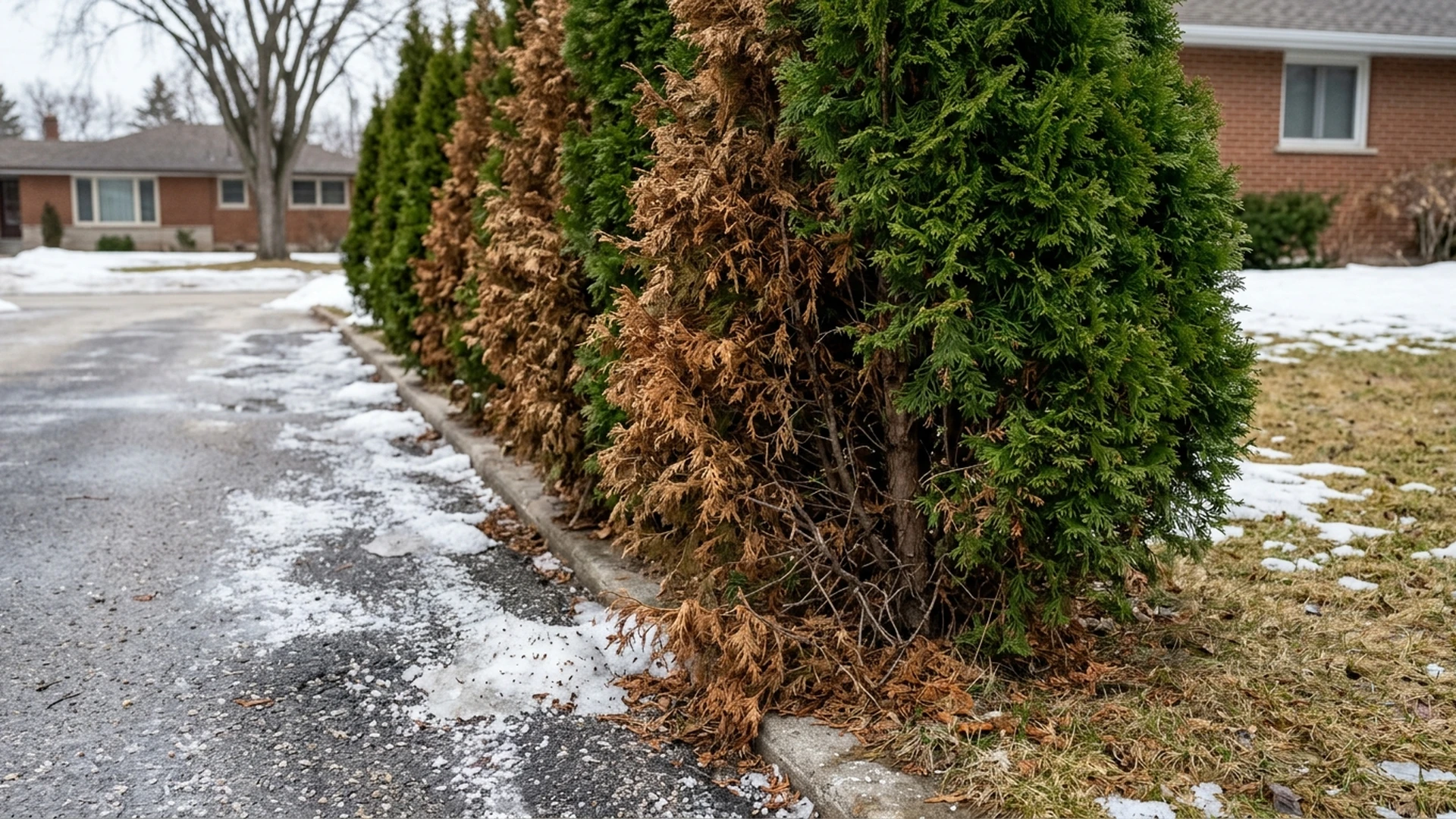
Evergreens along a driveway edge are particularly vulnerable, both to chloride accumulation in the root zone and to salt spray thrown by passing vehicles and equipment onto the foliage itself. The damage typically shows as browning needles and dieback on the side facing the treated surface, and it often doesn’t become fully visible until spring.
For the detail on how salt affects trees and shrubs specifically, and what can be done about it, see our winter tree care guide, which covers the salt, snow, and wind burn side of winter plant protection.
The practical alternative for surfaces adjacent to plantings: sand provides traction without any chloride going into the soil. It doesn’t melt ice the way salt does, but for a walkway running past a bed of evergreens, traction without chemical accumulation is often the better tradeoff. See our winter sanding service guide for how sand and salt compare and where each one fits.
Can damaged paver edges be repaired, or does the whole area need redoing?
In most cases, edge damage is repairable without redoing the full installation. Dislodged pavers can be reset and edge restraint replaced, provided the base underneath is still sound. The reason to prevent the damage rather than plan to repair it is that once the edge restraint fails, the edge continues migrating each season until it’s addressed, and a small early repair is much less work than a larger delayed one.
If I hire a snow removal service, is damage their responsibility?
This depends on the specific arrangement and what was agreed. A useful practice regardless of the contract terms: walk the property with the service before the season starts, point out hardscape edges and features, and confirm where snow should and shouldn’t be piled. Most damage happens because the operator didn’t know what was under the snow, not because of carelessness.
Is there any way to protect plants that are already close to a salted driveway?
Physical barriers, burlap screening on the side facing the driveway, can reduce salt spray reaching foliage. For chloride accumulating in the root zone, the more effective approach is switching to sand on that specific surface, or a deep spring watering to help flush accumulated chloride through the soil profile. Our winter tree care guide covers this in more detail.
Lawn ‘N’ Order can walk your property before winter and identify what needs marking, where snow should go, and which surfaces are better served by sand than salt.
Use the Free Calculator Book a Free ConsultationSend the address and a rough idea of scope. We'll walk it, take levels, and give you a written number you can compare line for line.
Keep reading
A plow truck, a pusher and a loader do three different jobs, and the pile you start in November is still there…
Read the article →
Holiday Light Installation Winnipeg: Book Before the Ground Freezes Quick Takeaways Holiday light installation in Winnipeg has a short window: crews install…
Read the article →
Who Clears the Sidewalk in Winnipeg? What the City Does and What You’re Responsible For Quick Takeaways Winnipeg is one of the…
Read the article →