
Parking Lot Snow Removal Winnipeg: Equipment & Staging
A plow truck, a pusher and a loader do three different jobs, and the pile you start in November is still there…
Read the article →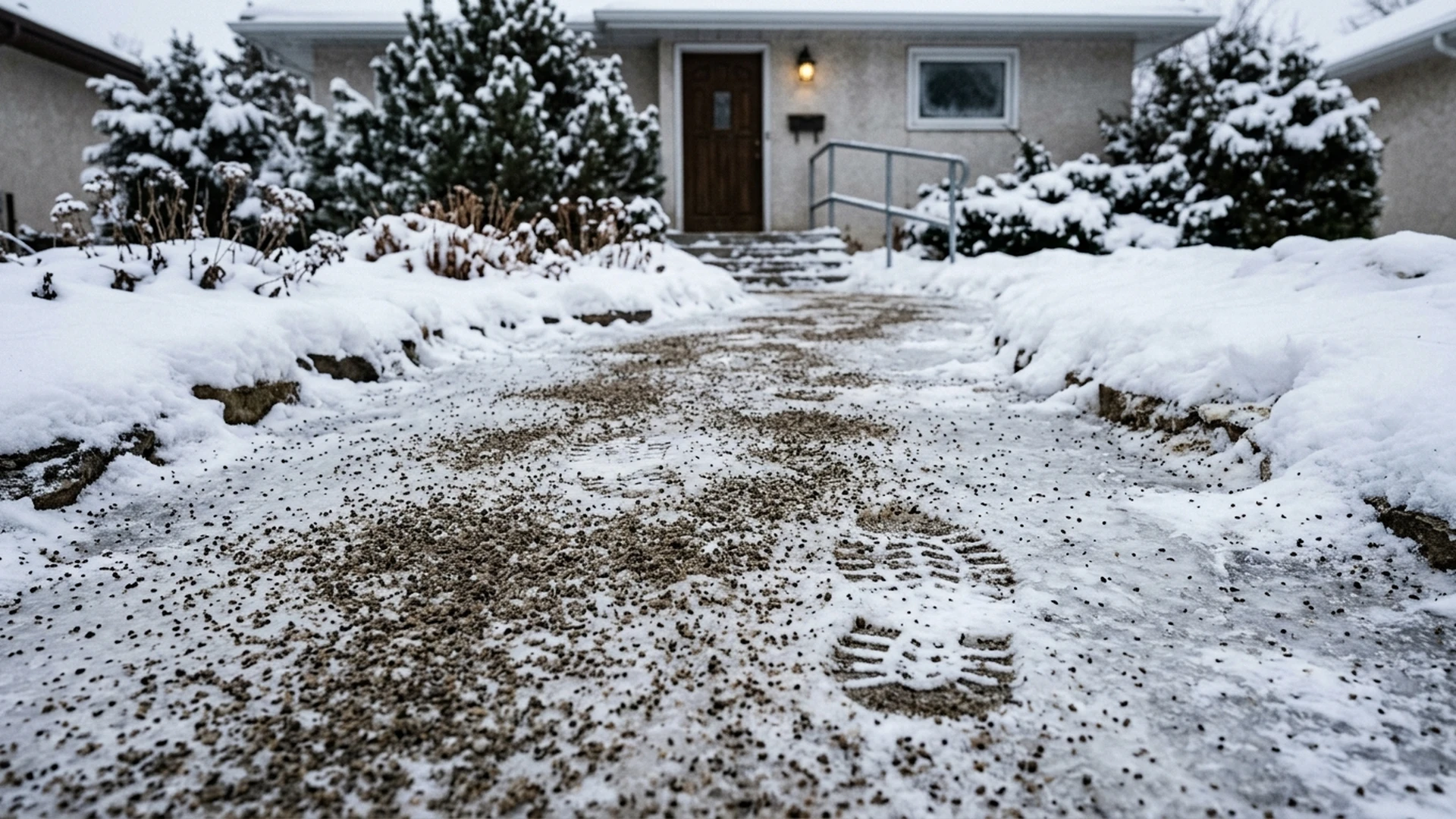
Sand and salt aren't interchangeable. Salt melts ice but loses effectiveness in Winnipeg's deep-cold stretches and puts chloride into the soil near your plantings. Sand provides traction at any temperature with no chemical effect on plants. Here's where each one fits, and how to get on the route before the first icing event.
Sanding is a traction solution, not a melting solution. Applied to an icy driveway, walkway, or parking area, sand creates a gritty surface layer that gives tires and boots something to grip. It doesn’t chemically change the ice the way salt does; it works mechanically, which is why it works at temperatures where salt has largely stopped being effective.
That distinction matters more in Winnipeg than in most Canadian markets. During the deep-cold stretches of a Manitoba winter, when temperatures sit well below the range where salt performs reliably, sand continues providing traction on surfaces that would otherwise be dangerous. It’s not a substitute for salt in every condition, but it’s the tool that keeps working when salt doesn’t.
Neither is universally better. Salt is the right tool when the goal is actually clearing an ice layer in temperatures where it will work. Sand is the right tool when the priority is immediate safe footing, when temperatures are too cold for salt to perform, or when the surface is adjacent to plantings, lawn edges, or evergreens where chloride accumulation is a concern.
| Sand | Salt | |
|---|---|---|
| What it does | Provides mechanical traction on top of ice | Chemically lowers the freezing point to melt ice |
| Deep cold performance | Works at any temperature | Effectiveness drops significantly in extreme cold |
| Effect on plants | No chemical effect on adjacent plantings | Chloride accumulation can damage plants and soil near treated surfaces |
| Effect on concrete | No chemical effect | Repeated chloride exposure contributes to surface scaling over time |
| Ice removal | Does not remove ice; improves grip on it | Actually melts and removes the ice layer |
| Cleanup | Requires spring sweep-up | No physical residue, but chloride remains in soil and runoff |
For the specific ways chloride affects trees and shrubs near treated surfaces, see our winter tree care guide.
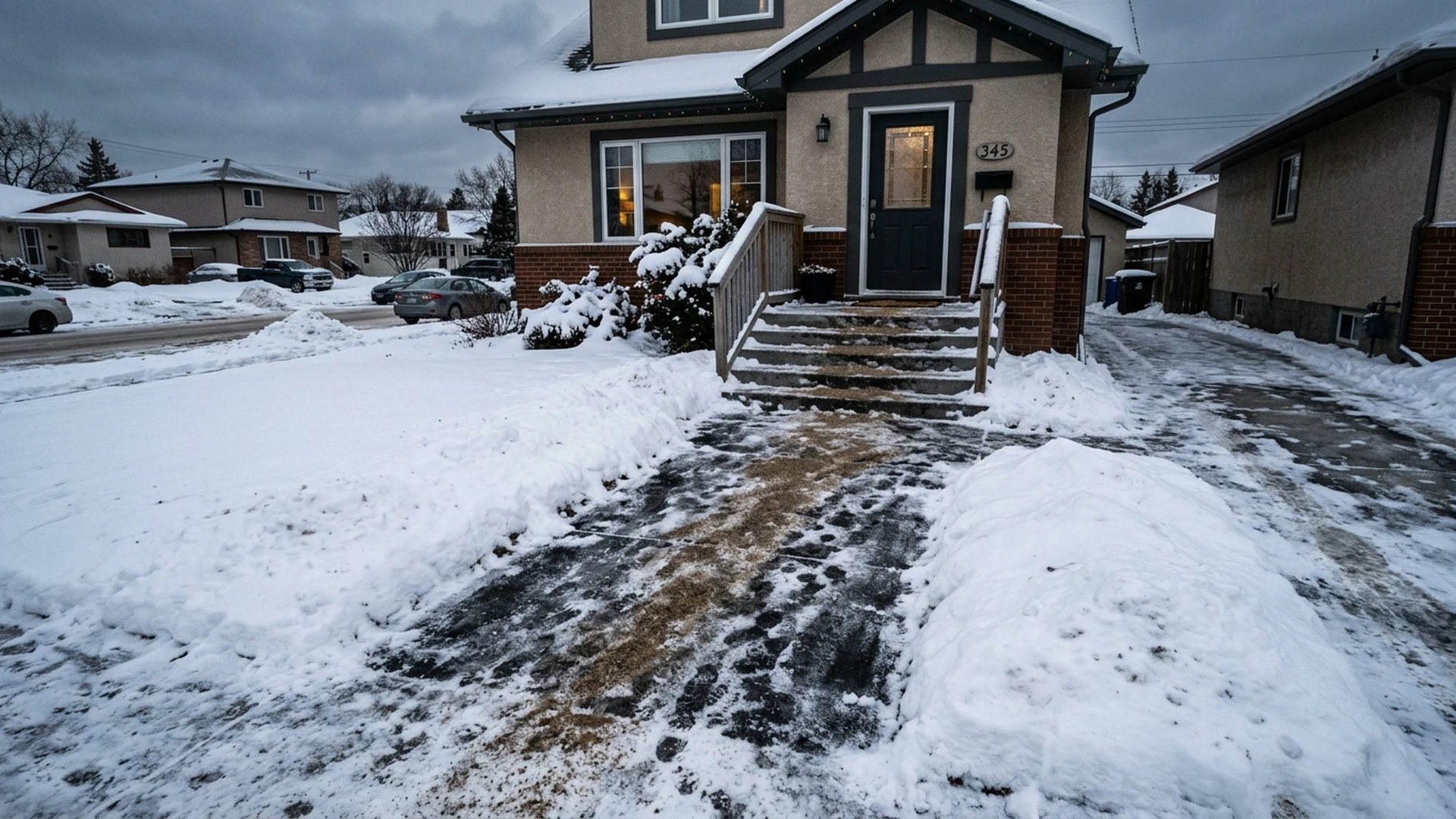
For a residential property, the highest-value sanding targets are the surfaces where a slip actually has consequences: the walkway from the street or driveway to the front door, exterior steps, and the driveway apron where vehicles and foot traffic meet.
Winnipeg’s freeze-thaw cycling creates a specific recurring hazard on residential properties: a surface that melts slightly during a sunny afternoon and refreezes overnight into a smooth, often nearly invisible ice layer. That refreeze layer is what causes most residential slip-and-fall incidents, and it’s exactly the condition sanding addresses well, since it provides grip on a surface that’s already frozen rather than trying to melt something that will refreeze anyway.
Properties with dogs, garden beds along the walkway, or evergreens near the driveway edge are particularly good candidates for sanding over salting, since none of the chloride concerns apply.
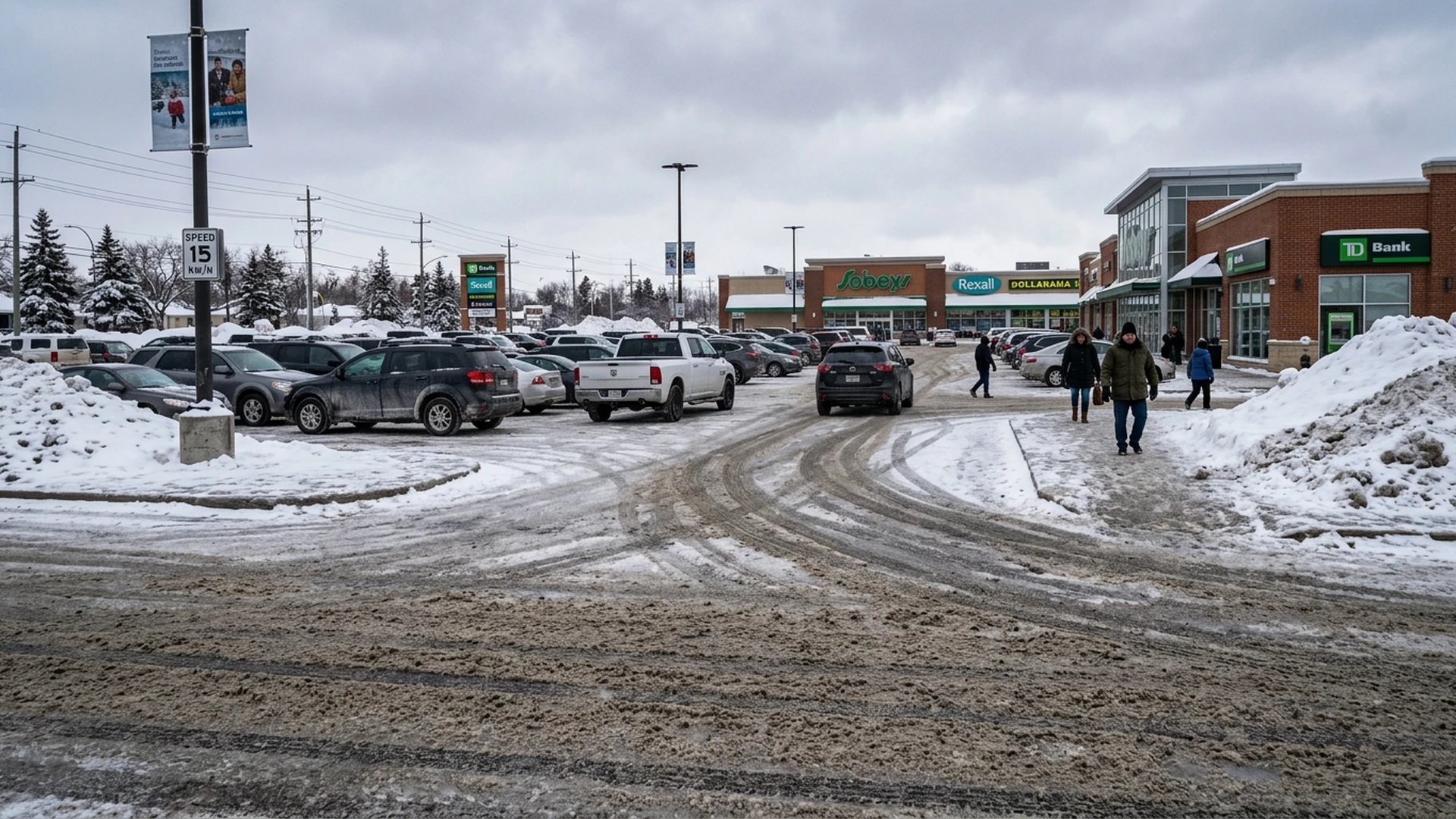
For commercial properties, sanding serves the same traction function at a larger scale, with the added dimension of liability management. A commercial parking lot, walkway, or building entrance where a slip-and-fall could occur represents real exposure for the property owner or manager, and a documented, responsive ice control program is the practical protection.
Sanding on commercial properties is often used alongside salting rather than instead of it: salt where the goal is clearing ice, sand where the priority is immediate traction, and sand alone during the deep-cold stretches when salt won’t do much. The right mix depends on the property, the surfaces involved, and how the site is used.
Lawn ‘N’ Order provides winter sanding service in Downtown Winnipeg and West Winnipeg.
If your property is outside those areas, call us. Depending on the specific location, scheduling, and route considerations, we may still be able to service it, but we’d rather confirm directly than have you assume either way. A quick call gets you a straight answer about whether we can cover your address.
The practical reason to arrange winter service before the season starts rather than during it: routes fill, and the first significant icing event of the season generates a lot of calls at once. A property already on the route gets serviced as part of the scheduled run. A property calling during the event is being fit in around commitments already made.
This isn’t a manufactured deadline, it’s just how route-based winter service works. Booking early is genuinely easier for both sides than booking mid-storm.
Does sand need to be cleaned up in spring?
Yes, sand remains on the surface after the ice melts and needs to be swept or blown off in spring. This is a real consideration compared to salt, which leaves no physical residue. Many properties handle it as part of spring cleanup. The tradeoff is that sand’s residue is a sweeping task, while salt’s residue is chloride in the soil and runoff, which is a different kind of cost.
Can I use both sand and salt on the same property?
Yes, and many properties do. A common approach is salting where ice removal is the goal and temperatures support it, and sanding on surfaces adjacent to plantings, on steps and walkways where immediate traction matters most, and during deep-cold periods when salt won’t perform. The combination is often more effective than committing to either one exclusively.
How often does sanding need to be reapplied?
Sand stays effective until it’s covered by new snow, blown off by wind, or displaced by traffic. In practice this means reapplication after significant snowfall events and periodically on high-traffic surfaces. Frequency depends on the property, exposure, and how the winter behaves, which is part of what a service arrangement sorts out for the specific site.
Lawn ‘N’ Order provides winter sanding for residential and commercial properties in Downtown and West Winnipeg. Outside those areas, call to confirm whether we can service your location. Arrange service before the season starts.
Use the Free Calculator Book a Free ConsultationSend the address and a rough idea of scope. We'll walk it, take levels, and give you a written number you can compare line for line.
Keep reading
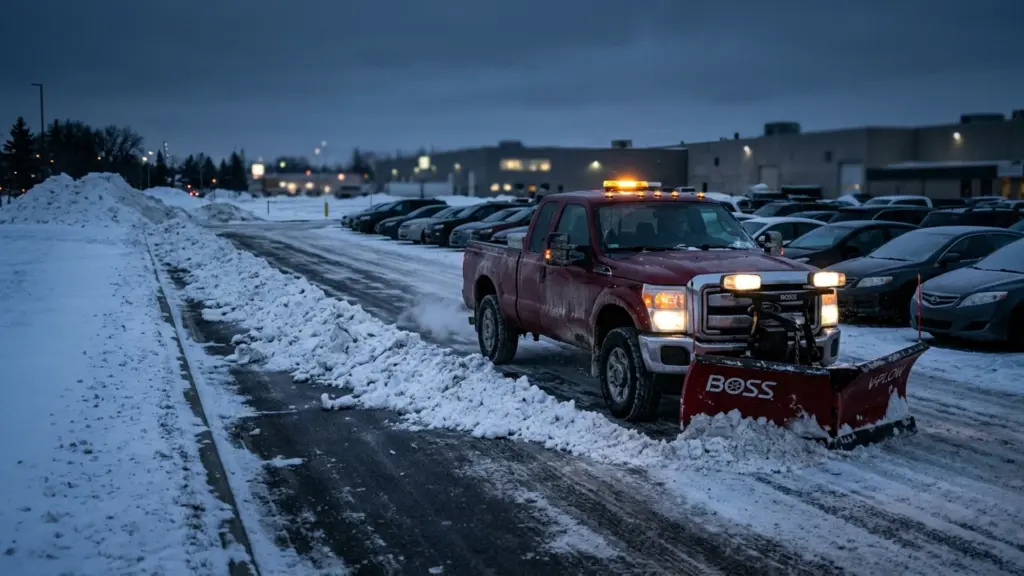
A plow truck, a pusher and a loader do three different jobs, and the pile you start in November is still there…
Read the article →
Holiday Light Installation Winnipeg: Book Before the Ground Freezes Quick Takeaways Holiday light installation in Winnipeg has a short window: crews install…
Read the article →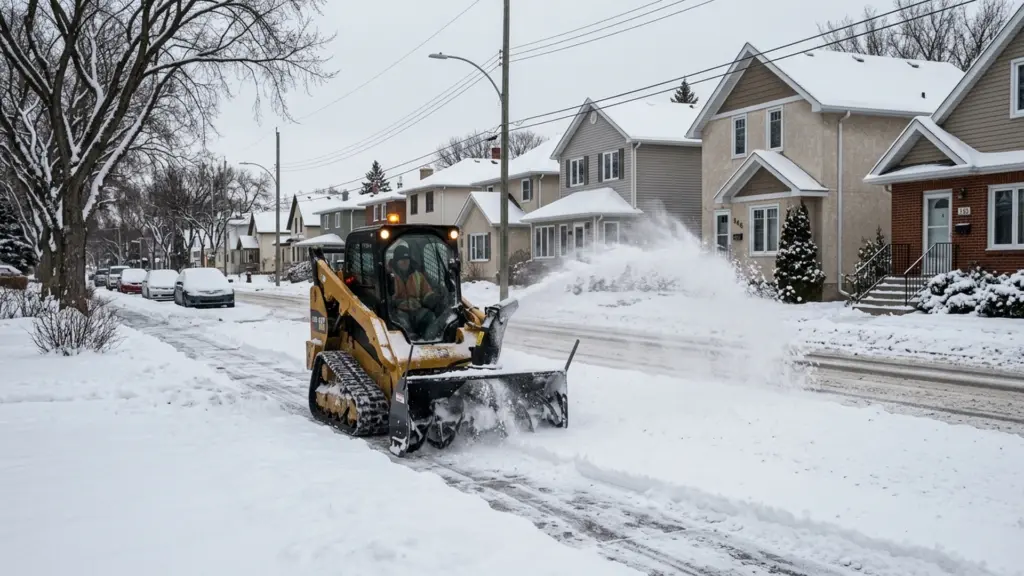
Who Clears the Sidewalk in Winnipeg? What the City Does and What You’re Responsible For Quick Takeaways Winnipeg is one of the…
Read the article →