
Parking Lot Snow Removal Winnipeg: Equipment & Staging
A plow truck, a pusher and a loader do three different jobs, and the pile you start in November is still there…
Read the article →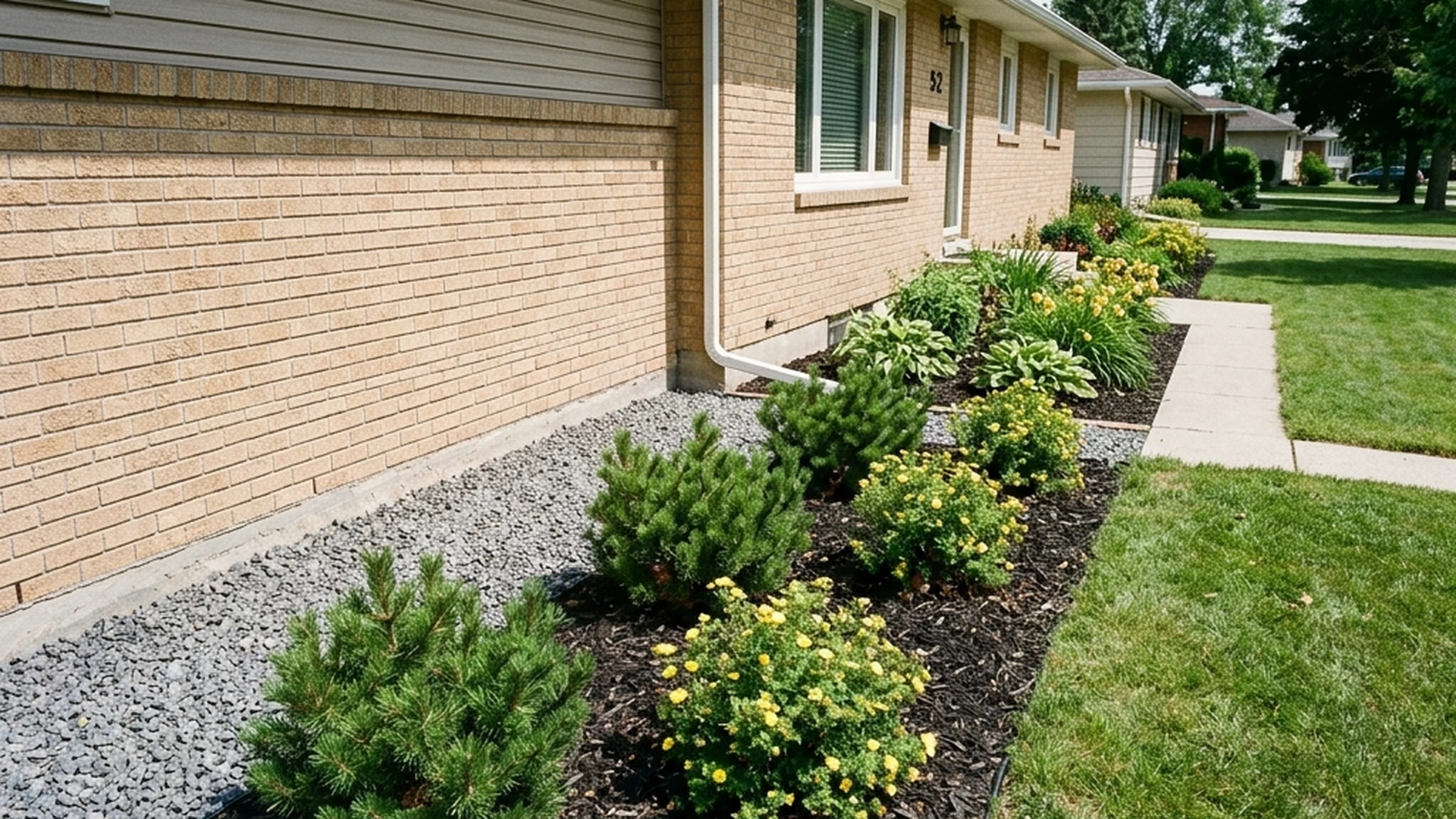
The critical rule for any Winnipeg foundation planting: 18-inch minimum gap between any plant's mature spread and the foundation wall. Not where it is at installation. Where it will be in 10 years. Here is the plant selection guide for south-facing and north-facing beds, the root system risks to avoid, and what not to do at the foundation regardless of exposure.
Foundation planting guides written for Pacific Northwest or mid-Atlantic climates address a different set of conditions than a Winnipeg house presents. A mild winter means plant establishment is forgiving, irrigation is less critical, and most plants have a long recovery window if they struggle. Winnipeg’s 120-day season, 4-foot frost depth, and aggressive freeze-thaw cycle mean that a plant placed against the foundation is immediately subject to conditions that stress it from multiple directions.
The roof overhang creates a rain shadow on a significant portion of most foundation beds. The foundation radiates heat in summer and cold in winter. The soil against most Winnipeg foundations is a mix of original backfill and whatever has been added over the years, often poorly structured. Getting foundation planting right means understanding all of these conditions before choosing a plant.
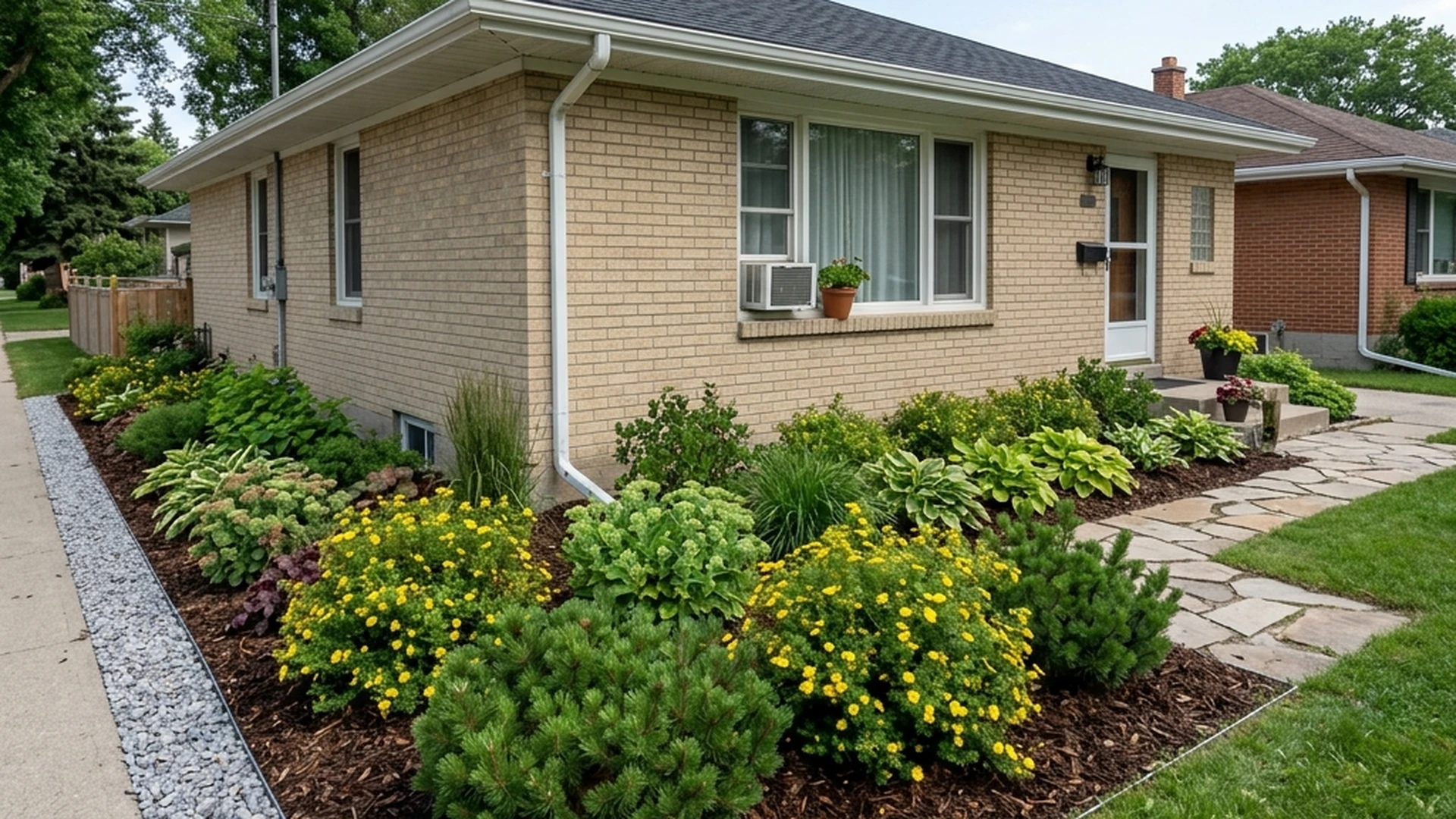
Maintain a minimum 18-inch gap between the outer edge of any plant’s mature spread and the foundation wall. This prevents root systems from reaching the foundation drainage system, allows airflow between the plant mass and the wall, provides access for foundation inspection and repair, and prevents the plant from trapping snow against the foundation in winter. Plant for where it will be in 10 years, not where it is at installation.
Trees and large shrubs with aggressive lateral root systems should not be planted within 10 to 15 feet of a foundation. In Winnipeg specifically:
Compact and dwarf shrub varieties, ornamental grasses, and shallow-rooted perennials are the safest foundation zone plants from a root perspective. Their root systems remain within the planting area and do not aggressively seek the drainage zone. Clump-forming plants that stay where they are planted are preferable to spreading varieties that colonize adjacent areas.
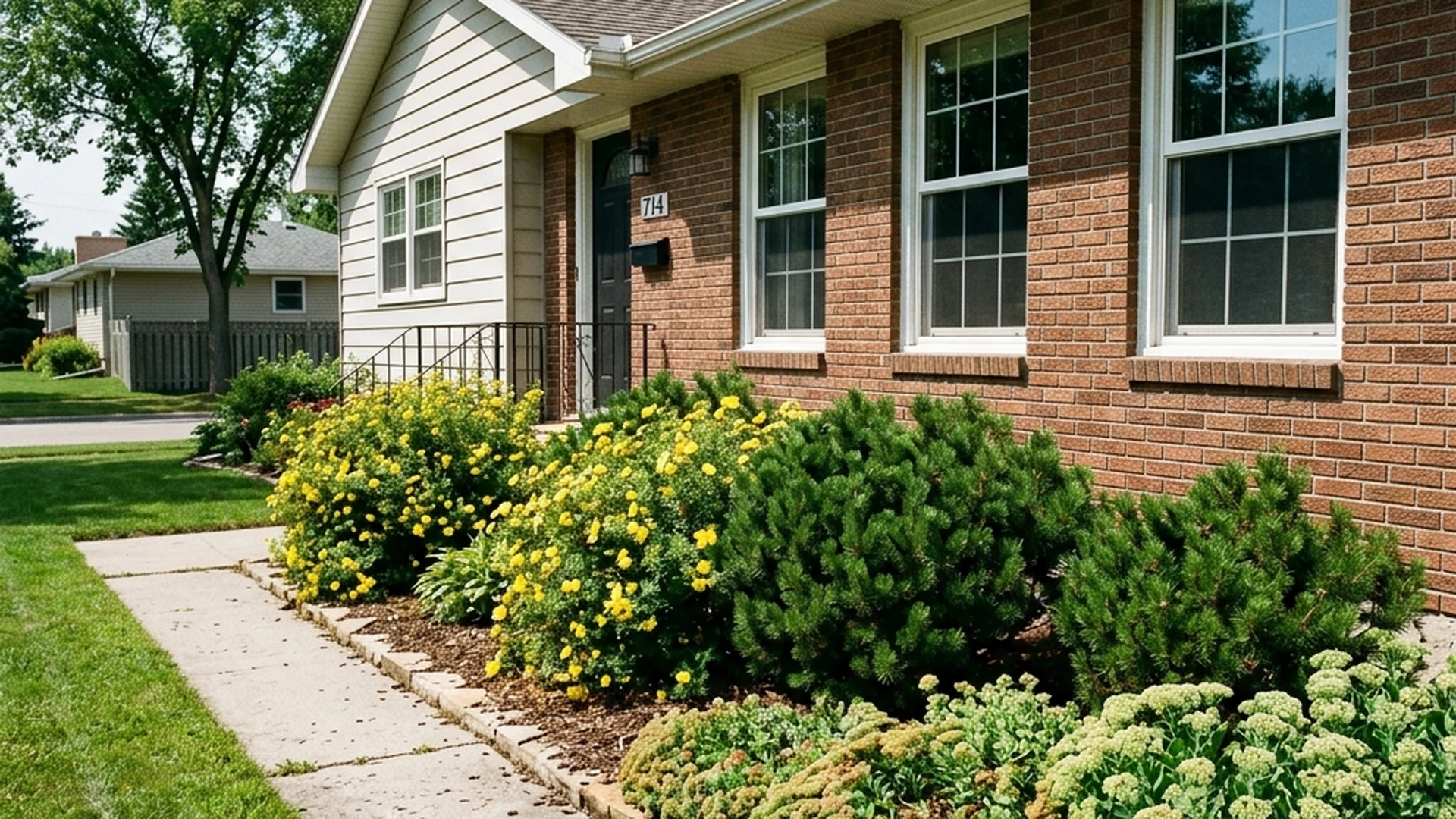
South and west-facing foundation beds receive maximum sun exposure and benefit from heat reflected off the wall. The roof overhang creates a drying zone immediately against the wall that extends 18 to 24 inches from the foundation. Plants in this zone need to be drought-tolerant, since rainfall reaches them less reliably.
Mugo Pine (Pinus mugo var. pumilio) — A compact evergreen that stays dense and low. Extremely cold-hardy, drought-tolerant once established, and provides year-round structure. Select compact or dwarf varieties explicitly: standard mugo pines grow larger than most homeowners expect.
Potentilla (Potentilla fruticosa) — A reliable, low-maintenance shrub that blooms from June through October in yellow, white, or pink. Tolerates heat, drought, and clay soil. Stays compact and does not spread aggressively.
Sedum (various) — Particularly taller varieties like ‘Autumn Joy’, which provide substantial visual mass with minimal water needs. Work well in front of taller shrubs as a low-maintenance foreground layer.
Daylilies (Hemerocallis) — Tough, drought-tolerant once established, available in a wide range of heights and colours. Avoid planting directly against the foundation due to their spreading habit; position them at or beyond the 18-inch gap.
Blue Oat Grass (Helictotrichon sempervirens) — An ornamental grass with attractive blue-grey colour, compact growth, and Zone 3 hardiness. Provides textural contrast against brick or stone.
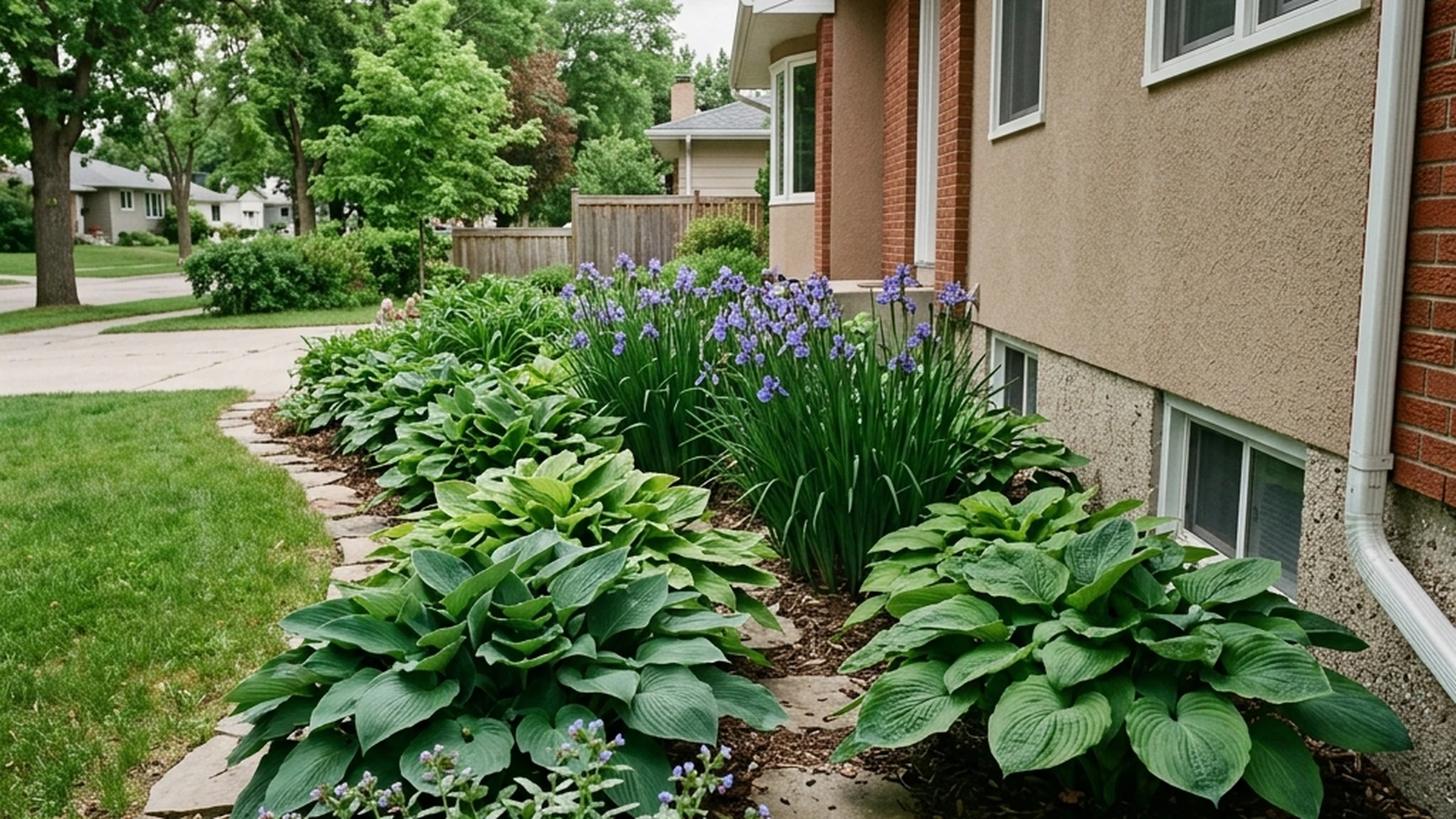
North and east-facing foundation beds are shaded for most or all of the day. Without the warming and drying effect of sun, moisture accumulates more readily. These beds require plants that tolerate consistent shade and periodic dry conditions near the wall.
Hosta (various) — The standard for shaded foundation beds. Hostas tolerate deep shade, come in a wide range of sizes and leaf patterns, and are fully Zone 3 hardy. Slug pressure is the main management issue. Choose sizes appropriate to the bed depth.
Siberian Iris (Iris sibirica) — Upright, architectural, and reliable in partial to full shade. Provides vertical structure that most shade-tolerant plants lack. More reliable in Winnipeg’s clay than bearded iris.
Astilbe — Feathery plumes in a range of colours from June to August. Prefers consistent moisture, which shaded north beds often provide. Select Zone 3 varieties.
Lungwort (Pulmonaria) — One of the earliest spring bloomers with attractive spotted foliage through the season. Tolerates dry shade better than most shade perennials, which is valuable given the roof overhang drying effect.
Dwarf Alberta Spruce (Picea glauca ‘Conica’) — Zone 3 hardy and provides evergreen structure in partial shade on north and east exposures. Grows slowly and maintains a tidy pyramidal form for years.
Foundation beds benefit from a defined edge that separates the planting area from the lawn. Concrete curbing provides the most permanent, frost-stable edge that prevents grass from migrating into the bed. Metal or steel edging installed at 4 inches or more deep is a good DIY alternative. The specific challenge for foundation beds is that they often wrap corners and follow irregular building profiles, where concrete curbing installed by a professional accommodates curves cleanly. See our landscape edging guide for a comparison of edging options appropriate for Winnipeg’s freeze-thaw conditions.
How close to the foundation can I plant a tree?
For any tree that will reach 15 feet or more at maturity, a minimum of 10 feet from the foundation is the starting point, with 15 feet preferred for larger species. The root radius of a mature tree typically equals or exceeds the drip line radius. Trees planted too close to foundations are a long-term liability that becomes an expensive removal project. If a tree effect is desired near the house, columnar varieties with compact, upright growth forms (columnar aspen, columnar crabapple) minimize root spread.
My foundation bed is dry even after rain. What should I plant?
The dry zone immediately under roof overhangs is a consistent challenge on Winnipeg properties. The best plants for this zone are drought-tolerant perennials and shrubs: mugo pine, potentilla, sedum, daylilies, and catmint all tolerate the dry zone. Supplement with deep watering during the first two establishment seasons. Once established, drought-tolerant species in this zone need little supplemental watering.
Should I remove existing foundation plantings before replanting?
Evaluate each plant individually. Overgrown shrubs that have been against the foundation for decades may have extensive root systems worth removing. Plants that have been consistently pruned, are healthy, and maintain the 18-inch gap can often be retained as anchors for a bed refresh rather than requiring full removal. The decision depends on whether the existing plant can be managed to fit the conditions or whether it has outgrown the space irreparably.
Lawn ‘N’ Order designs and installs foundation planting as part of full landscape builds and as standalone projects. Book a consultation to assess your foundation conditions and design a planting that works with your specific exposures and drainage context.
Use the Free Calculator Book a Free ConsultationSend the address and a rough idea of scope. We'll walk it, take levels, and give you a written number you can compare line for line.
Keep reading

A plow truck, a pusher and a loader do three different jobs, and the pile you start in November is still there…
Read the article →
Holiday Light Installation Winnipeg: Book Before the Ground Freezes Quick Takeaways Holiday light installation in Winnipeg has a short window: crews install…
Read the article →
Who Clears the Sidewalk in Winnipeg? What the City Does and What You’re Responsible For Quick Takeaways Winnipeg is one of the…
Read the article →