
Parking Lot Snow Removal Winnipeg: Equipment & Staging
A plow truck, a pusher and a loader do three different jobs, and the pile you start in November is still there…
Read the article →
No single grass species survives a Manitoba winter, germinates reliably in our short spring, and performs through a hot dry summer on clay soil. The right approach is a blend: Kentucky bluegrass, creeping red fescue, and perennial ryegrass. Here's the Zone 3 seed selection guide, the fall timing window that gives seed the best establishment odds, and the seedbed preparation that makes the difference between a thin patchy lawn and a dense one.
A thick, dense turf is the most effective weed suppression tool available for a Winnipeg lawn. Weeds establish in thin areas, bare patches, and stressed zones where the grass has died back. Overseeding fills those areas with desirable grass before weeds can claim the space.
Winnipeg’s 120-day growing season and clay soil create specific thinning pressures. Winter kill from disease or ice coverage, freeze-thaw heaving of shallow roots, summer drought stress, and the cumulative effect of foot traffic on clay all contribute to a lawn that needs periodic renovation to stay dense. Overseeding is how that renovation happens without a full sod replacement.
This post is the canonical reference for Zone 3 overseeding in Winnipeg: seed blend selection, timing, application rates, and establishment care. Related lawn posts, including our aeration, fertilization, and weed control guides, link here for the seed-specific recommendations.
Grass seed selection for Winnipeg requires understanding what survives a Manitoba winter, germinates reliably in our short spring, and performs through a hot dry summer on clay soil. No single species does all of this well. The right approach is a blend.
The backbone of quality Winnipeg lawns. Fully Zone 3 hardy, spreads by rhizomes to fill bare areas, tolerates moderate to heavy foot traffic, and produces a dense, fine-textured turf when properly established. It is slow to germinate, typically 14 to 28 days, and slow to establish, often taking two to three growing seasons to reach full density. Look for improved varieties rather than common Kentucky bluegrass: varieties like ‘Midnight’, ‘Blueberry’, and ‘Award’ have better disease resistance, heat tolerance, and overall performance in our climate than older common selections.
Fine fescues, and creeping red in particular, are the shade and drought tolerance component of a Winnipeg blend. They germinate faster than Kentucky bluegrass (7 to 14 days) and fill in quickly in the first season. They perform well under trees, along shaded foundation beds, and in dry areas where bluegrass struggles. Not as traffic-tolerant as Kentucky bluegrass and should not be the dominant species in a high-use area. In a balanced blend, it provides early coverage while the bluegrass establishes.
The quick-germination component of the blend: it sprouts in 5 to 10 days and provides early coverage that stabilizes the overseeded area while slower species establish. A critical distinction: perennial ryegrass is Zone 3 hardy and appropriate for Winnipeg. Annual ryegrass germinates even faster but does not overwinter. Avoid any seed blend that uses annual ryegrass as a filler; it provides first-season coverage and then dies, leaving bare patches the following spring.
| Species | Recommended Share | Role in the Blend |
|---|---|---|
| Kentucky bluegrass (improved variety) | 40 to 60% | Long-term density, rhizome spread, traffic tolerance |
| Creeping red fescue | 30 to 40% | Fast early coverage, shade and drought tolerance |
| Perennial ryegrass | 10 to 20% | Fastest germination, stabilizes area while others establish |
During this period:
Do not overseed after mid-September. Seed that germinates in late September or October has insufficient root mass to survive a Winnipeg freeze-up and will die before spring.
Soil temperatures above 10 degrees Celsius in mid-May support germination, and the growing season ahead provides establishment time. The challenges in spring:
Dormant seeding is the practice of broadcasting grass seed in late October or November after soil temperatures have dropped below the germination threshold. The seed lies dormant through the winter and germinates naturally in spring as soil temperatures rise, effectively getting a head start over spring-seeded areas.
This is an underused technique in Winnipeg despite being well-suited to our climate. The advantage: dormant-seeded lawns often germinate earlier in spring than hand-seeded spring applications because the seed is already in contact with warmed soil as temperatures rise, while spring applications wait for the soil to dry enough to be worked.
The considerations for dormant seeding in Winnipeg: seed needs good soil contact (broadcasting on frozen ground or heavy snow cover reduces contact); soil should be bare or lightly mulched, not heavily matted; germination timing is unpredictable and depends on spring conditions. Dormant seeding is most appropriate for bare or thin areas rather than an established lawn surface.
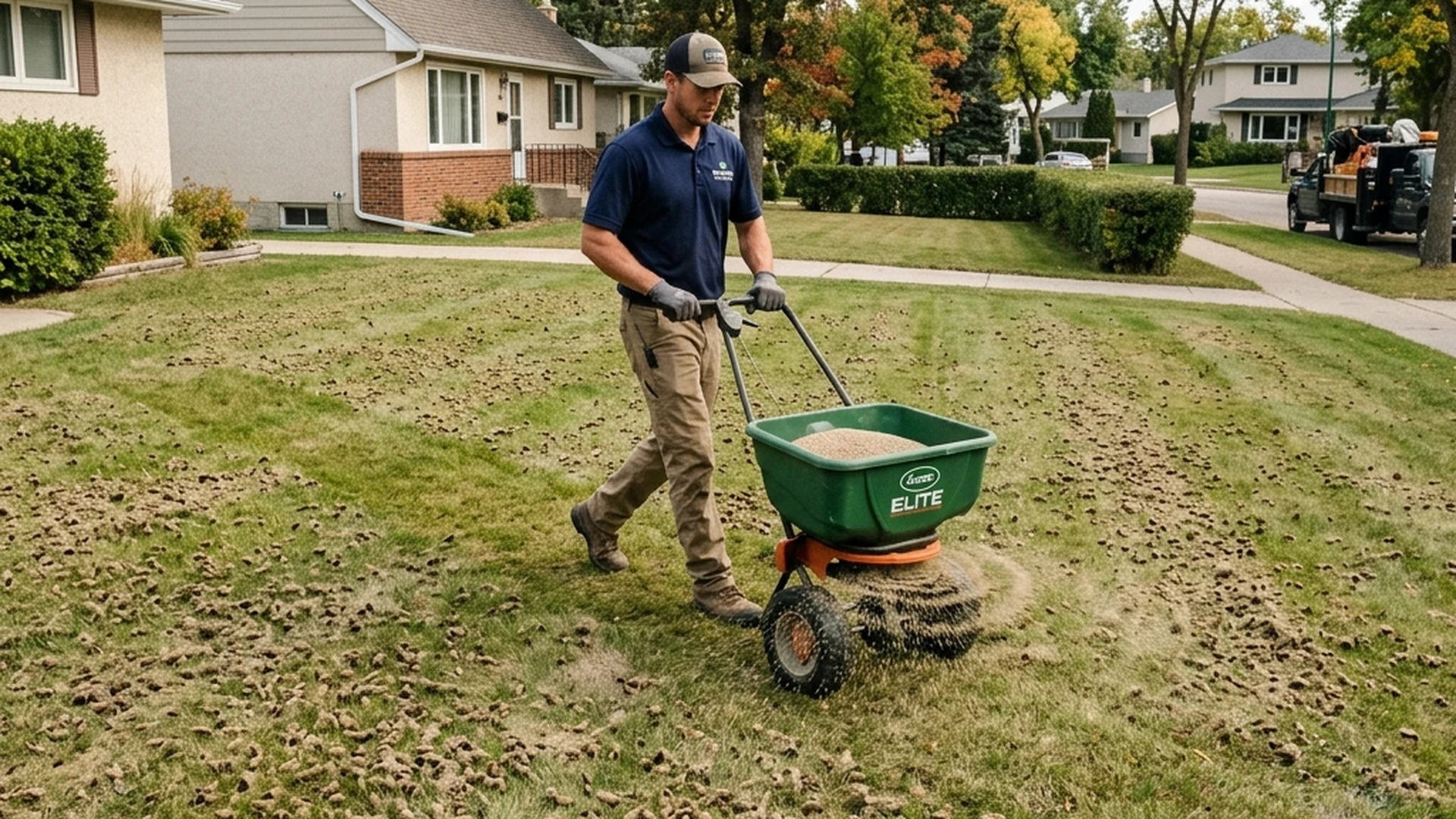
Overseeding thin areas: 35 to 45 grams per square metre. New lawn establishment from bare ground: 50 to 60 grams per square metre. Over-application does not produce better results and wastes expensive seed. Dense seedling germination creates competition among seedlings that reduces the quality of establishment. Apply at the recommended rate and manage the establishment period correctly rather than compensating with excess seed.
Core aeration immediately before overseeding is the single most effective seedbed preparation available for an established Winnipeg lawn. The open cores from aeration provide direct seed-to-soil contact in protected pockets with high moisture retention, channels through the compacted surface layer that seedling roots can follow into the soil below, and a disturbed soil environment that is more receptive to germination than the closed, thatchy surface of an unmodified lawn. See our Lawn Aeration Winnipeg guide for timing, process, and the difference between core and spike aeration on Winnipeg clay.
Mowing the lawn short before overseeding, to 3 to 4 cm rather than the normal 7 to 9 cm, increases light reaching the soil surface and improves seed-to-soil contact. Remove the clippings after scalp mowing rather than leaving them as a barrier between the seed and soil.
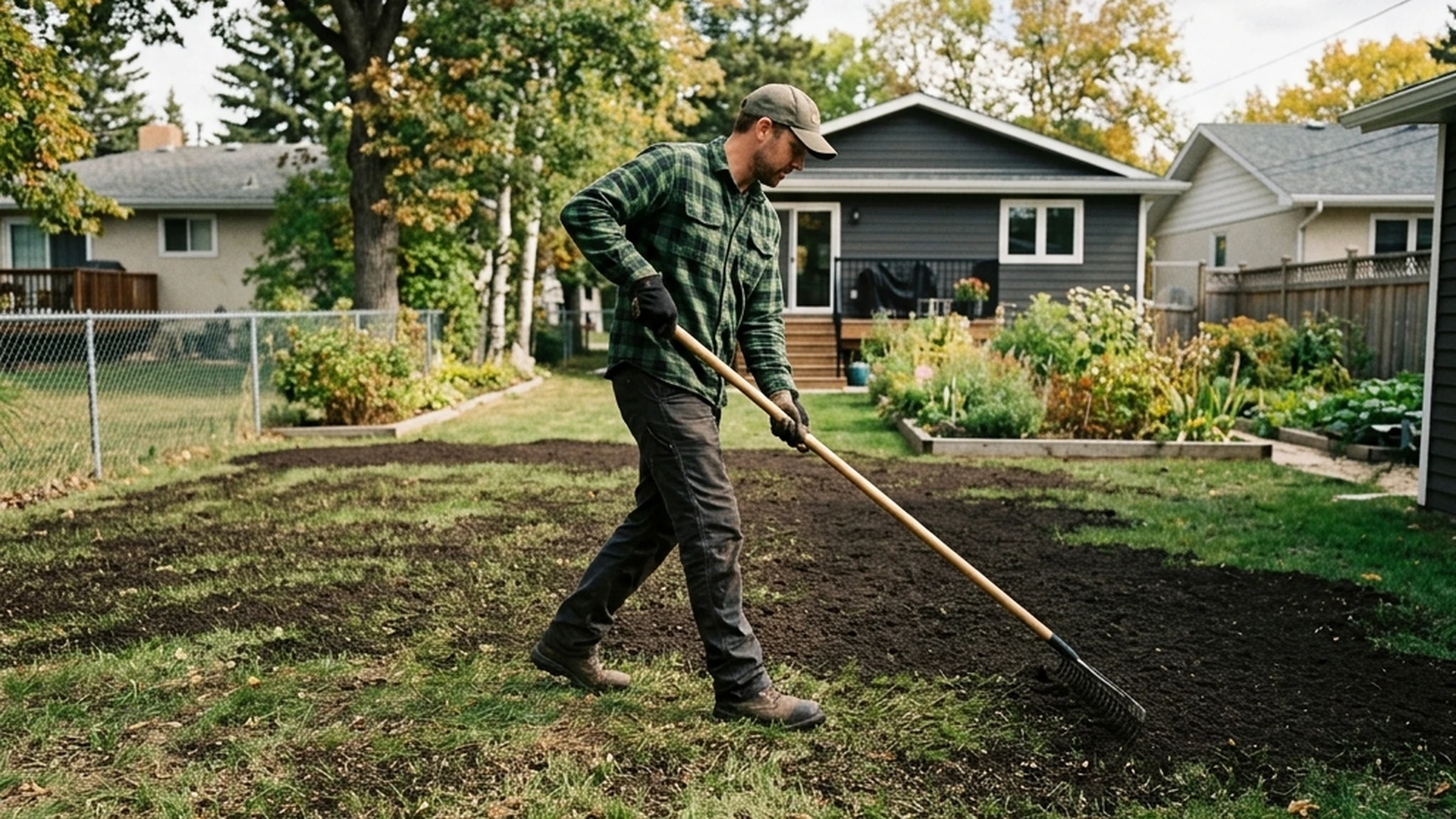
A thin application (3 to 5 mm) of compost or screened topsoil applied over the overseeded area after broadcasting seed improves germination rates by covering seed lightly, retaining moisture, and providing a fine growing medium for seedling roots. Topdressing after overseeding is a significant quality improvement over broadcasting seed on a bare lawn surface without any cover.
The germination period requires consistent moisture. Seed that dries out after germination begins will die before roots are established. Keep the seeded surface moist, not saturated, through the germination period. Light, frequent watering (two to three times daily during warm, dry weather) is better than deep infrequent watering that allows the surface to dry between applications. Once seedlings are visible and 2 to 3 cm tall, transition to less frequent but deeper watering to encourage root development.
Wait until new seedlings reach 8 to 10 cm before the first mowing. Mowing too early cuts seedlings before they have established root mass. Use a sharp mower blade: a dull blade tears rather than cuts, which dislodges seedlings that have not yet anchored firmly. Set mowing height to 7 to 8 cm for the first few mowings.
Keep foot traffic off overseeded areas for 4 to 6 weeks. New seedlings are fragile and concentrated foot traffic before rooting is complete pulls seedlings from the soil. Light foot traffic for watering purposes is acceptable; play, pets, and equipment are not.
Wait until new seedlings have been mowed two to three times before applying any fertilizer. Fertilizing too early promotes leaf growth before root systems are established, which weakens the seedlings. A light application of phosphorus-free nitrogen fertilizer 4 to 6 weeks after germination supports the establishment phase. See our lawn fertilization guide for Manitoba-compliant NPK ratios.
How long does grass seed take to germinate in Winnipeg?
Germination timing depends on species and temperature. At optimal soil temperatures of 15 to 20 degrees Celsius: perennial ryegrass germinates in 5 to 10 days, creeping red fescue in 7 to 14 days, and Kentucky bluegrass in 14 to 28 days. At cooler soil temperatures in early May or late September, all species germinate more slowly. The blended lawn appearance takes 4 to 6 weeks from seeding as different species emerge at different rates.
Can I overseed over existing lawn or do I need to remove it first?
Overseeding goes over existing lawn in most cases. The existing turf is scalp-mowed short, core aerated if possible, and seed is broadcast over the surface. Removing existing lawn is only necessary when the existing turf is so thin, diseased, or weed-dominated that it provides no value as a base, or when a complete species change is desired. For most renovation situations, overseeding the existing lawn is the right approach.
How many years does it take for an overseeded lawn to reach full density?
Kentucky bluegrass, which is the long-term density component, takes two to three growing seasons from seeding to reach full development. A lawn overseeded in fall year one will look significantly better in year two and reach its full potential in year three. Annual overseeding of thin areas combined with consistent aeration, fertilization, and mowing management accelerates this timeline. Expecting a fully mature lawn in one season leads to over-application and frustrated expectations.
Lawn ‘N’ Order provides professional overseeding as part of fall lawn care programs, paired with core aeration and fertilization for maximum establishment results.
Use the Free Calculator Book a Free ConsultationSend the address and a rough idea of scope. We'll walk it, take levels, and give you a written number you can compare line for line.
Keep reading
A plow truck, a pusher and a loader do three different jobs, and the pile you start in November is still there…
Read the article →
Holiday Light Installation Winnipeg: Book Before the Ground Freezes Quick Takeaways Holiday light installation in Winnipeg has a short window: crews install…
Read the article →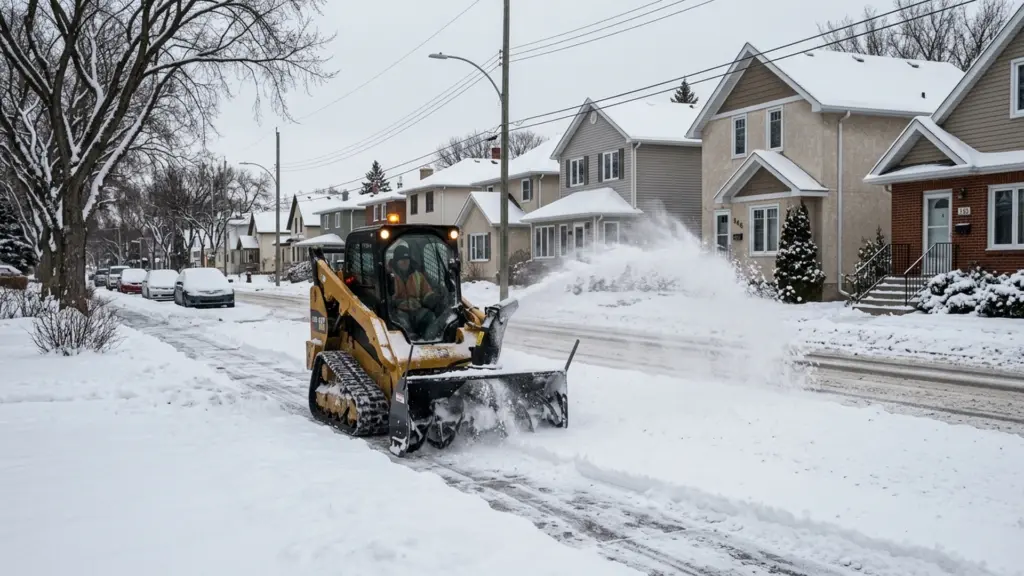
Who Clears the Sidewalk in Winnipeg? What the City Does and What You’re Responsible For Quick Takeaways Winnipeg is one of the…
Read the article →