Full-Service Landscaping Company Winnipeg
- The core difference isn’t quality of work. It’s who owns coordination: one full-service landscaping company managing every trade, or you personally coordinating a designer, excavator, hardscape crew, electrician, and planting crew
- A full-service model gives you one point of accountability for schedule, warranty, and anything that falls between two trades; a separately-coordinated project puts that coordination job on you
- Quote comparability is a real practical difference: quotes from a full-service company bundle coordination into the price, while separate contractor quotes usually don’t, which makes apples-to-apples comparison harder than it looks
- Drainage and grading coordination is the clearest place the two models diverge. It’s the work most likely to fall through a gap between two independently-hired trades
- This guide compares delivery models, not how to vet a specific contractor; for hiring questions on a specific trade, see our outdoor kitchen contractor questions guide
Two Ways to Get the Same Yard Built
Most homeowners planning a significant landscape project eventually face the same practical decision, usually without realizing it’s a decision at all: do you hire one company to manage the whole project, or do you personally hire and coordinate the designer, the excavation crew, the hardscape installer, the electrician for lighting, and the planting crew separately?
Both models can produce a great yard. The difference isn’t really about the quality of any individual trade’s work. It’s about who owns the coordination between those trades, who’s accountable when something falls in the gap between two of them, and how predictable the schedule and final cost end up being.
What “Full-Service” Actually Means
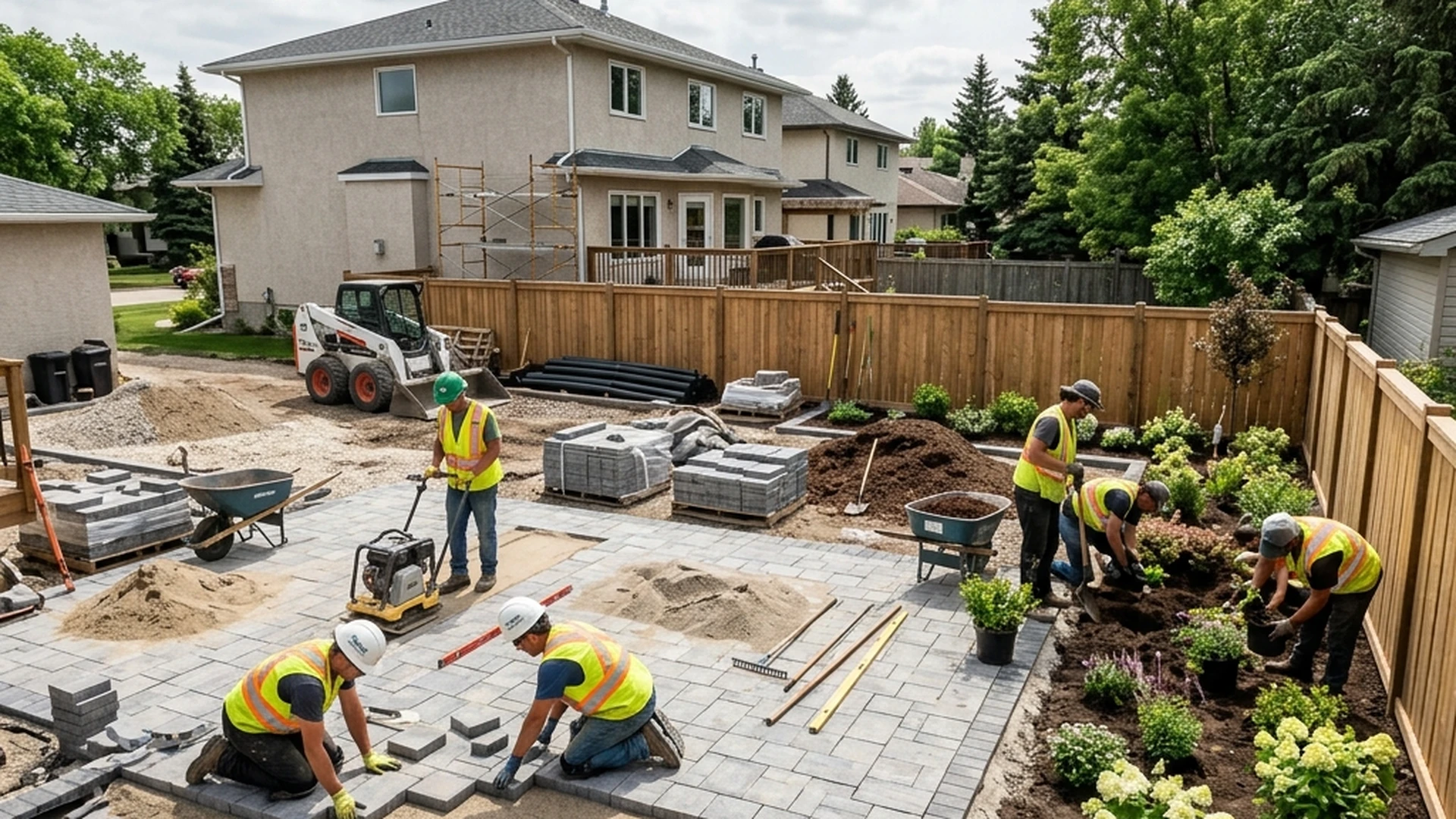
A full-service landscaping company manages design, construction, and often ongoing maintenance under one contract and one point of contact. When you hire this way, the company is responsible for sequencing every trade involved in your project, whether that trade is in-house staff or a subcontractor the company has an established relationship with.
This doesn’t mean one person personally pours your patio and wires your lighting. It means one company is accountable for making sure the excavation happens before the patio base goes in, the electrical rough-in happens before the patio is poured over it, and the planting happens after the hardscape is finished rather than before, with one team responsible if that sequencing goes wrong.
What Coordinating Separate Contractors Actually Involves
The alternative is hiring each trade directly yourself: a landscape designer for the plan, an excavation contractor for grading and removal, a hardscape company for the patio or walkway, an electrician for lighting, and a planting crew or nursery for the softscape. Each of these relationships is a separate contract, a separate schedule, and a separate point of accountability.
This can work well, and it’s a legitimate way to manage a project, particularly for homeowners who have the time to actively project-manage and who want direct control over selecting each specialist individually. What it requires is that you personally take on the coordination role that a full-service company would otherwise own: confirming each trade shows up in the right sequence, resolving disagreements about whose responsibility a specific detail is, and absorbing the schedule risk if one trade’s delay pushes back every trade after it.
Where the Two Models Actually Diverge
Accountability When Something Falls Between Trades
This is the single clearest practical difference. If a patio settles unevenly after two seasons, and the base was prepared by one contractor while the patio itself was installed by another, determining whose workmanship warranty applies, or whether it was a design specification issue instead, can become a genuine dispute. With a full-service company, that entire sequence sits under one warranty and one accountable party, regardless of which internal team or subcontractor actually did the work.
Quote Comparability
A full-service company’s quote for a project already includes the cost of managing sequencing, resolving scheduling conflicts between trades, and standing behind the whole result. A collection of separate trade quotes for the same physical scope of work often looks less expensive on paper, because none of those individual quotes include a line item for the coordination work you’d be doing yourself. Comparing a full-service quote against a stack of separate trade quotes isn’t really comparing like for like unless you also account for the coordination cost, whether that’s your own time or the risk of things going wrong without anyone specifically responsible for the handoffs.
Schedule Predictability and Change Orders
A full-service company builds the schedule around the sequencing it already knows its trades need. When something needs to change mid-project, whether it’s a design adjustment or a weather delay, one company adjusts the full sequence and communicates a single updated timeline. With separately-hired trades, a delay or change with one contractor doesn’t automatically get communicated to the others, and re-coordinating the sequence after a change becomes your job.
Drainage and Grading Coordination
Drainage and grading are the clearest example of work that needs to be right before anything else is built on top of it, and they’re also the work most likely to fall into a gap between two separately-hired trades. If the excavation contractor grades the site to one understanding of the drainage plan, and the hardscape contractor installs a patio to a different understanding, the result can be a patio that looks correct but doesn’t shed water the way the original design intended. A full-service company that designs and builds both pieces has a direct interest in making sure the grading and the hardscape agree with each other from the start. See our drainage solutions guide for what correct grading and drainage coordination actually requires on a Winnipeg property.
Warranty
A full-service company’s workmanship warranty typically covers the full scope of what it built, regardless of which internal team or subcontractor touched which part. With separately-hired trades, each contractor’s warranty covers only their own scope, and a problem that could plausibly be attributed to either trade’s work, like drainage or grading interacting badly with hardscape, can become a dispute about which warranty applies, if either does clearly.
When Coordinating Separate Contractors Makes Sense
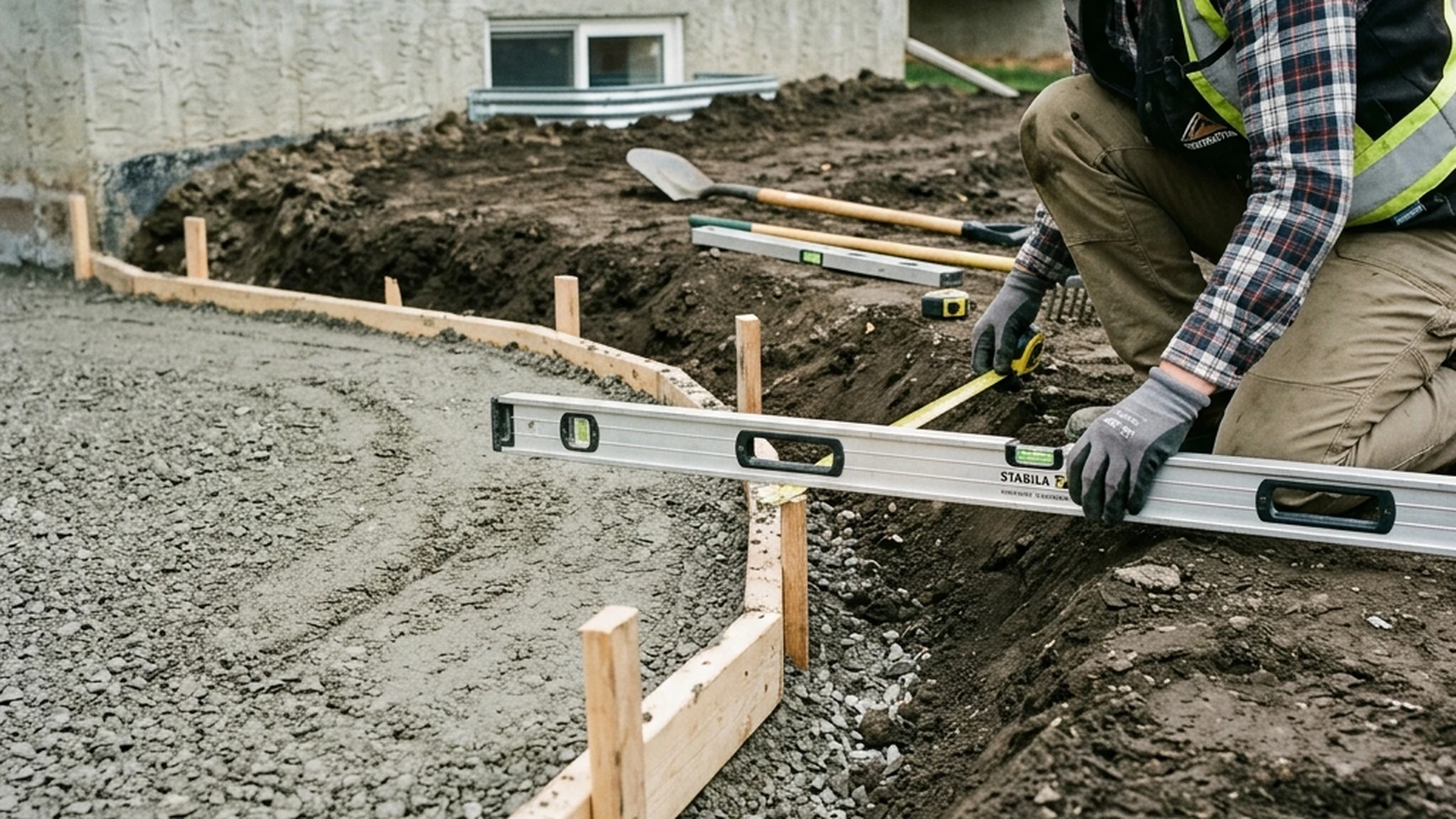
This model isn’t wrong for every situation. It tends to work best when the project can be cleanly divided into phases with minimal interdependency, when you have the time and interest to actively manage the schedule and the handoffs yourself, or when you specifically want a particular specialist for one piece of the project, a specific hardscape installer whose portfolio you like, for instance, and are comfortable managing the coordination around that choice.
It tends to create the most friction on projects where multiple trades genuinely depend on each other’s sequencing and specifications, which describes most significant landscape builds involving grading, hardscape, utilities, and planting together rather than any one of those in isolation.
How to Decide for Your Project
A few questions help clarify which model fits your specific situation better:
Does your project involve multiple trades that depend on each other’s sequencing (grading before hardscape, electrical rough-in before a patio is poured), or is it more cleanly divisible into independent phases?
Do you have the time and interest to actively manage schedule conflicts and handoffs between separately-hired trades?
How much does a single point of accountability for warranty and workmanship matter to you if something goes wrong after the project is finished?
Are you comparing quotes accurately, meaning have you accounted for the coordination cost that a full-service quote includes and a stack of separate quotes typically doesn’t?

FAQ: Full-Service vs Separate Contractors in Winnipeg
Is a full-service landscaping company always more expensive than hiring separately?
Not necessarily, once coordination is accounted for. The headline total on separate trade quotes is often lower because none of them include a price for managing the sequencing and handoffs between trades. Once you factor in the time cost of doing that coordination yourself, or the risk of a gap between trades causing a problem later, the actual cost comparison is closer than it first appears. It depends on your specific project’s complexity and how much your own time is worth to the comparison.
Can I use a full-service company for some parts of my project and hire separately for others?
Yes, this is common, particularly for a specific specialty piece where a homeowner has a strong preference for a particular installer. The key is being explicit with the full-service company about which parts of the project they’re not responsible for, so there’s no ambiguity later about whether a specific issue falls under their coordination and warranty or not.
Does a full-service company still let me be involved in design decisions?
Yes. Full-service doesn’t mean less input into design; it means one company is accountable for executing the design and coordinating the trades that build it. You’re still the one approving the design, material choices, and any changes along the way. The difference is in who manages the trades executing it, not in how much say you have over what gets built.
See What a Full-Service Project Looks Like
Lawn ‘N’ Order operates as a full-service landscaping company across Winnipeg: one team from design through construction.
See Our Winnipeg Projects Book a Free Consultation