
Parking Lot Snow Removal Winnipeg: Equipment & Staging
A plow truck, a pusher and a loader do three different jobs, and the pile you start in November is still there…
Read the article →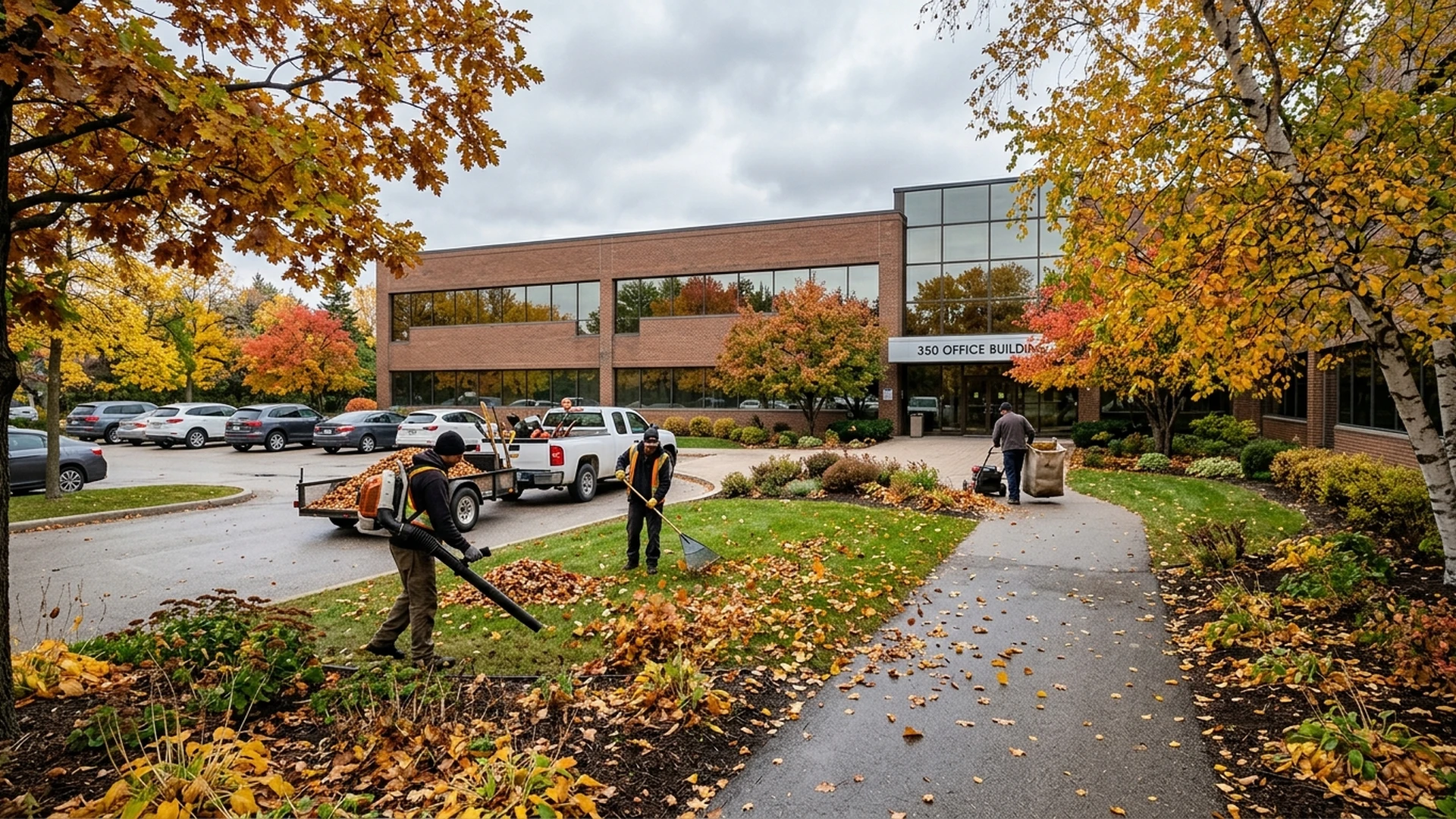
A year-round grounds contract buys continuity, not automatically a discount. The gap is usually the seam between seasons: fall cleanup, irrigation shutdown, and whether snow service starts on a fixed date or the first qualifying event. Plus why a milder winter isn't a cheaper one.
Commercial grounds maintenance contracts in Winnipeg typically cover two seasons of work that have almost nothing in common operationally: the growing-season side, mowing, bed maintenance, irrigation, fertilization, and the winter side, snow clearing and ice control.
What bundling them buys a property manager is mostly continuity. One contractor who knows the site, one point of contact through the year, one set of records, and no gap in coverage when the season turns. It doesn’t automatically buy a discount, and a bundled contract that’s priced worse than two separate ones is worth catching before signing rather than assuming the bundle is inherently better value.
The snow side of the contract, how per-event and seasonal pricing compare, trigger depth, response time commitments, and the documentation that supports liability management, is covered in detail in our commercial snow removal contracts guide. This post is about the year-round agreement and the seasonal seam.
The part of a year-round contract most likely to contain a gap is the transition period, because it falls between two clearly defined blocks of work and belongs to neither by default.
Whether fall cleanup is inside the growing-season scope, inside the winter scope, or priced as a separate event needs to be explicit. On a commercial property with significant tree canopy, the leaf volume is substantial enough that it’s a real line item rather than a rounding error.
Irrigation blowout has a hard deadline set by freeze risk rather than by convenience, and it’s frequently handled by a specialized subcontractor rather than the grounds crew. Confirm whether it’s in scope, and if so, who actually performs it and on what trigger.
A contract that says snow service runs from a fixed calendar date has a gap if the first significant snowfall arrives before it. A contract that says service begins with the first qualifying event doesn’t, but then the growing-season crew and the snow crew need a clear handoff so nobody assumes the other is covering the property.
The same seam exists in reverse. Spring cleanup, irrigation startup, and the first mow all need a defined trigger, and the point where snow service ends and grounds service resumes should be stated rather than assumed.
There’s an assumption worth challenging when budgeting a winter contract: that a milder winter is a cheaper winter. For a commercial property in Winnipeg, it often isn’t.
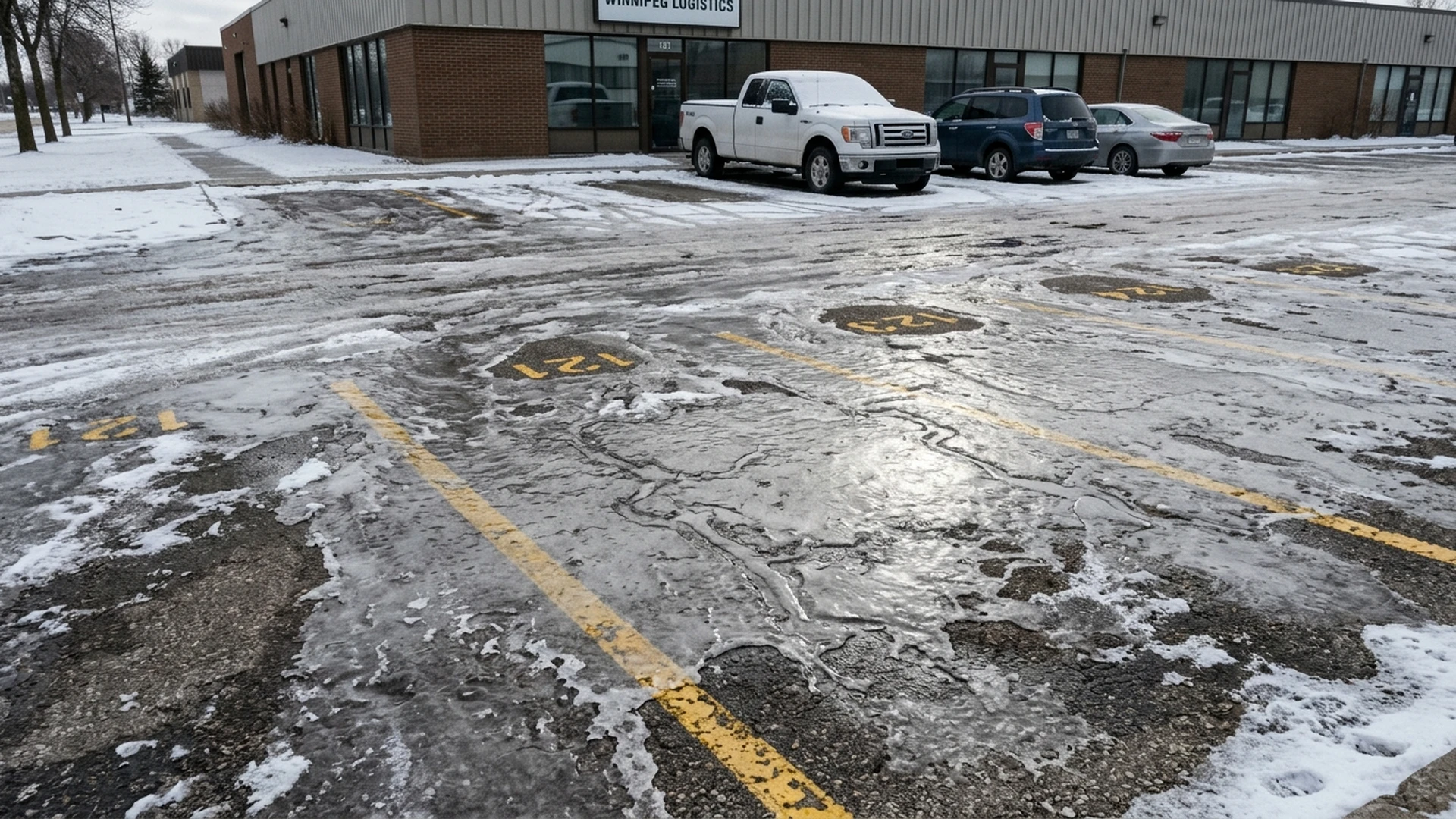
Plowing is triggered by accumulation. Ice control is triggered by conditions. A cold winter with steady snowfall generates plowing events on a fairly predictable pattern. A milder winter where temperatures hover near the freezing mark generates something different: snow that melts during the day and refreezes overnight, repeatedly, across the same surfaces.
That cycle produces ice, and ice is the larger liability exposure on a commercial property. A slip-and-fall claim doesn’t turn on how much snow fell that season. It turns on whether the surface was reasonably safe at the moment someone walked on it.
The practical implication for a contract: understand how ice control is triggered and priced separately from how plowing is, because the two can diverge significantly within the same winter.
Forecasters are watching an unusually strong El Niño. As of its September discussion, NOAA’s Climate Prediction Center has an El Niño Advisory in effect and puts the chance of a very strong event during the 2026-27 Northern Hemisphere fall and winter at greater than 90 percent.
NOAA’s own framing is the part worth carrying into a budget conversation: an event of that magnitude raises the probability of El Niño-consistent impacts without guaranteeing them, and NOAA’s regional outlooks cover the United States rather than the Prairies. Seasonal forecasts shift odds; they don’t script a winter. The sensible response is a contract that holds up whether the season runs mild, cold, or somewhere in between, not one budgeted around a single scenario.
| Item | Why It Matters |
|---|---|
| Fall cleanup, in scope or separate? | The most common seasonal-seam gap |
| Irrigation shutdown, who performs it, on what trigger? | Hard deadline set by freeze risk, often subcontracted |
| Snow service start, fixed date or first qualifying event? | A fixed date leaves a gap if snow arrives early |
| Ice control trigger, accumulation or conditions? | Particularly relevant this year given the forecast |
| Spring startup trigger | The same seam in reverse |
| Reporting and documentation | Supports both service verification and liability defence |
| Multi-year term and escalation | Affects pricing stability and contractor familiarity with the site |

Year-round contracts have an awkward renewal timing problem: the natural moment to review performance is after the winter, but the natural moment to sign for next season is well before it. For properties with any approval process beyond a single decision-maker, that means starting earlier than feels necessary.
Reviewing the growing season while it’s still fresh, and settling the winter scope before the season turns, is the sequence that avoids scrambling in October.
Lawn ‘N’ Order provides commercial grounds maintenance primarily in West Winnipeg and surrounding areas. For properties outside that area, call and we’ll confirm directly whether we can service the site.
Is a bundled year-round contract cheaper than separate contracts?
Not automatically. What it reliably buys is continuity, a single accountable contractor, and no seasonal coverage gap. Whether it’s cheaper depends on the specific quotes. Compare a bundled quote against the two separate quotes it replaces rather than assuming the bundle wins on price.
Should this year’s forecast change how I budget?
It’s a reason to look at how ice control is triggered and priced, not a reason to budget down. A winter spent closer to the freezing mark generates more freeze-thaw activity, which drives ice control rather than plowing. Budgeting on the assumption of an easy winter is the risk here.
What happens if the contractor’s performance is poor mid-season?
This depends entirely on what the contract says about performance standards and termination. It’s worth reading those clauses before signing rather than after a problem, since a year-round agreement locks in a longer commitment than a seasonal one.
Lawn ‘N’ Order provides year-round commercial grounds maintenance, primarily in West Winnipeg and surrounding areas. Get in touch to discuss scope and timing for your property.
Use the Free Calculator Book a ConsultationSend the address and a rough idea of scope. We'll walk it, take levels, and give you a written number you can compare line for line.
Keep reading
A plow truck, a pusher and a loader do three different jobs, and the pile you start in November is still there…
Read the article →
Holiday Light Installation Winnipeg: Book Before the Ground Freezes Quick Takeaways Holiday light installation in Winnipeg has a short window: crews install…
Read the article →
Who Clears the Sidewalk in Winnipeg? What the City Does and What You’re Responsible For Quick Takeaways Winnipeg is one of the…
Read the article →