
Parking Lot Snow Removal Winnipeg: Equipment & Staging
A plow truck, a pusher and a loader do three different jobs, and the pile you start in November is still there…
Read the article →
No weed control program eliminates weeds permanently from a Winnipeg lawn. The goal is management. Here is the honest breakdown of what each approach actually accomplishes for Winnipeg's four most common problem weeds: dandelions, crabgrass, creeping charlie, and quackgrass. Cultural control first, then the mechanical and chemical tools that support it.
No weed control program eliminates weeds permanently from a Winnipeg lawn. The goal is management: keeping weed pressure low enough that the desirable grass fills in and the lawn looks consistently good. Understanding what each approach actually accomplishes, and what its limitations are, is what separates a program that works from one that creates ongoing frustration.
The approach that works best in Winnipeg over the long term is not chemical or cultural or mechanical exclusively. It is the right combination of all three, applied at the right times for the specific weeds causing problems.
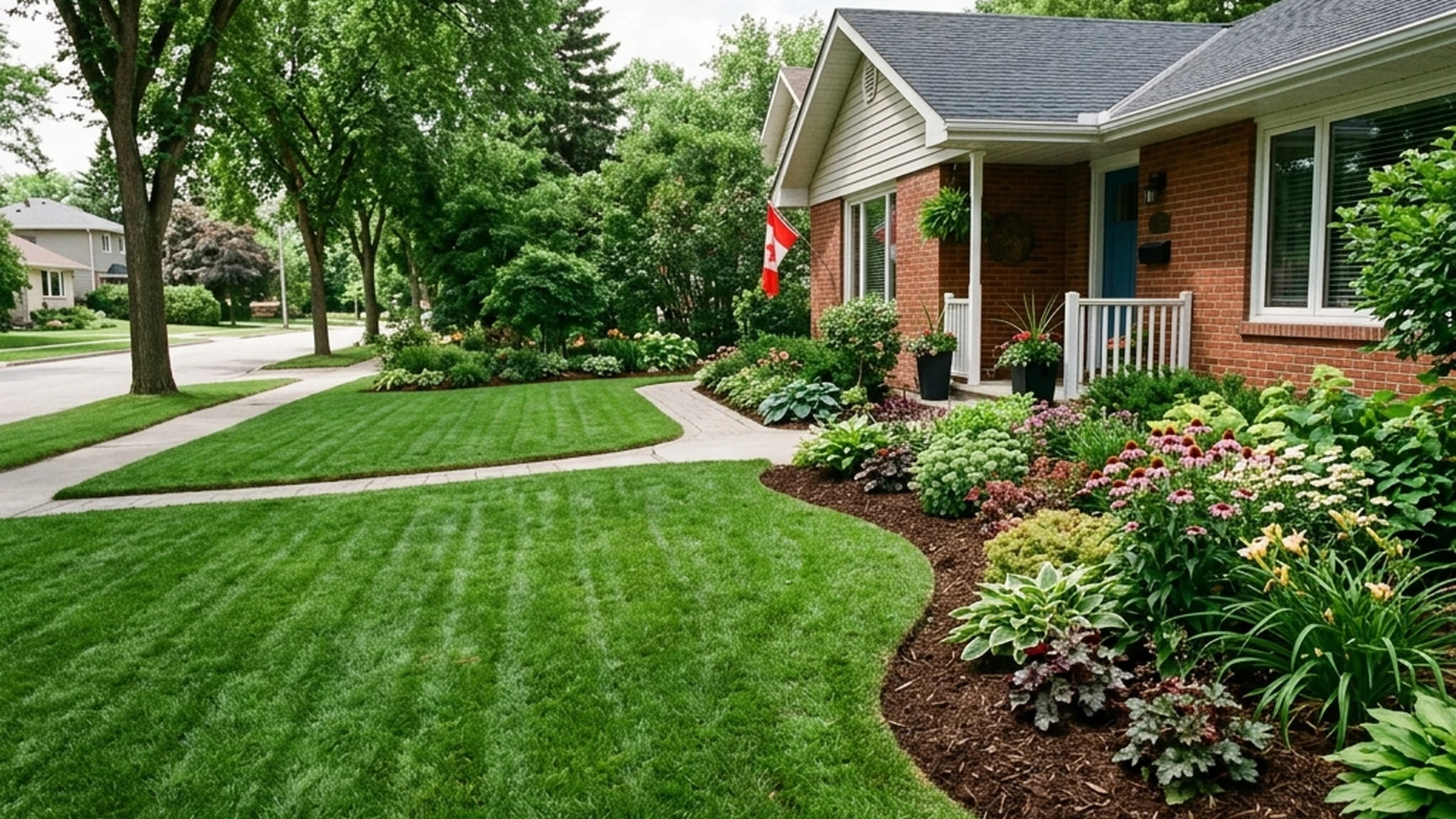
The most visible and most complained-about weed in Winnipeg lawns. Dandelions are tap-rooted perennials: a single plant has a deep taproot that must be removed entirely or it regrows. Mowing removes the flower heads and prevents seed spread but does nothing to the root. Hand removal with a weeding fork that extracts the full taproot is effective on individual plants. In heavy infestations, dandelions indicate a lawn that is thin or has bare areas where the seed can germinate. A lawn recovery program including aeration, overseeding, and fertilization reduces dandelion pressure over two to three seasons more durably than repeated weeding or herbicide application alone.
An annual grass weed that germinates from seed when soil temperatures reach approximately 10 to 13 degrees Celsius in late spring. It dies with the first frost but produces enormous quantities of seed before it does. The management principle for crabgrass is pre-emergent treatment: preventing germination before it occurs is far more effective than trying to eliminate established plants. Corn gluten meal, applied in late April to early May when forsythia is blooming, functions as a natural pre-emergent by inhibiting root development in germinating seeds. For full detail on crabgrass identification, life cycle, and Winnipeg-specific control timing, see our Crabgrass Winnipeg guide.
Creeping charlie is a low-growing perennial that spreads by both seed and stolons — the horizontal stems that root at nodes as they spread across the lawn. It thrives in shaded, moist areas where grass is thin. Cultural control means improving conditions so grass out-competes it: better drainage in wet areas, reduced shade where possible, and thickening the turf through aeration and overseeding with shade-tolerant grass varieties. Creeping charlie in full shade where grass genuinely cannot thrive is often best managed by converting the area to a shade-tolerant groundcover rather than fighting a losing battle.
Quackgrass is a perennial grass weed that closely resembles desirable lawn grasses and spreads by both seed and underground rhizomes. Standard selective herbicides that kill broadleaf weeds do not affect quackgrass because it is a grass. There is no selective control for quackgrass in an established lawn: any chemical that kills quackgrass also kills the surrounding desirable grasses. Control options are manual removal of the entire rhizome network, non-selective herbicide application to patches followed by reseeding, or patience combined with cultural practices that give desirable grasses competitive advantage. Quackgrass is best addressed in patches rather than uniformly.
Cultural weed control means maintaining the lawn in conditions that prevent weed establishment rather than responding to weeds after they appear. For Winnipeg’s clay lawns, the cultural practices that most directly reduce weed pressure are:
Mowing height. Mowing at 3 to 3.5 inches rather than lower keeps grass taller and shades the soil surface, which inhibits weed seed germination. Low mowing is the single cultural practice most associated with increased weed pressure.
Overseeding thin areas. Bare or thin areas are weed recruitment zones. Overseeding in fall fills gaps with desirable grass before weeds can establish. See our lawn aeration guide for how aeration and overseeding work together.
Core aeration. Relieving clay compaction improves grass root development, which creates a denser turf that outcompetes weeds for resources. Thin, stressed grass in compacted clay is far more susceptible to weed invasion than dense, healthy grass.
Fertilization timing. Feeding the grass at the right times, late spring and fall, strengthens the competitive grass rather than creating conditions that favor fast-germinating annual weeds.
Irrigation depth. Deep, infrequent watering encourages deep grass roots. Frequent shallow watering favors shallow-rooted annual weeds.
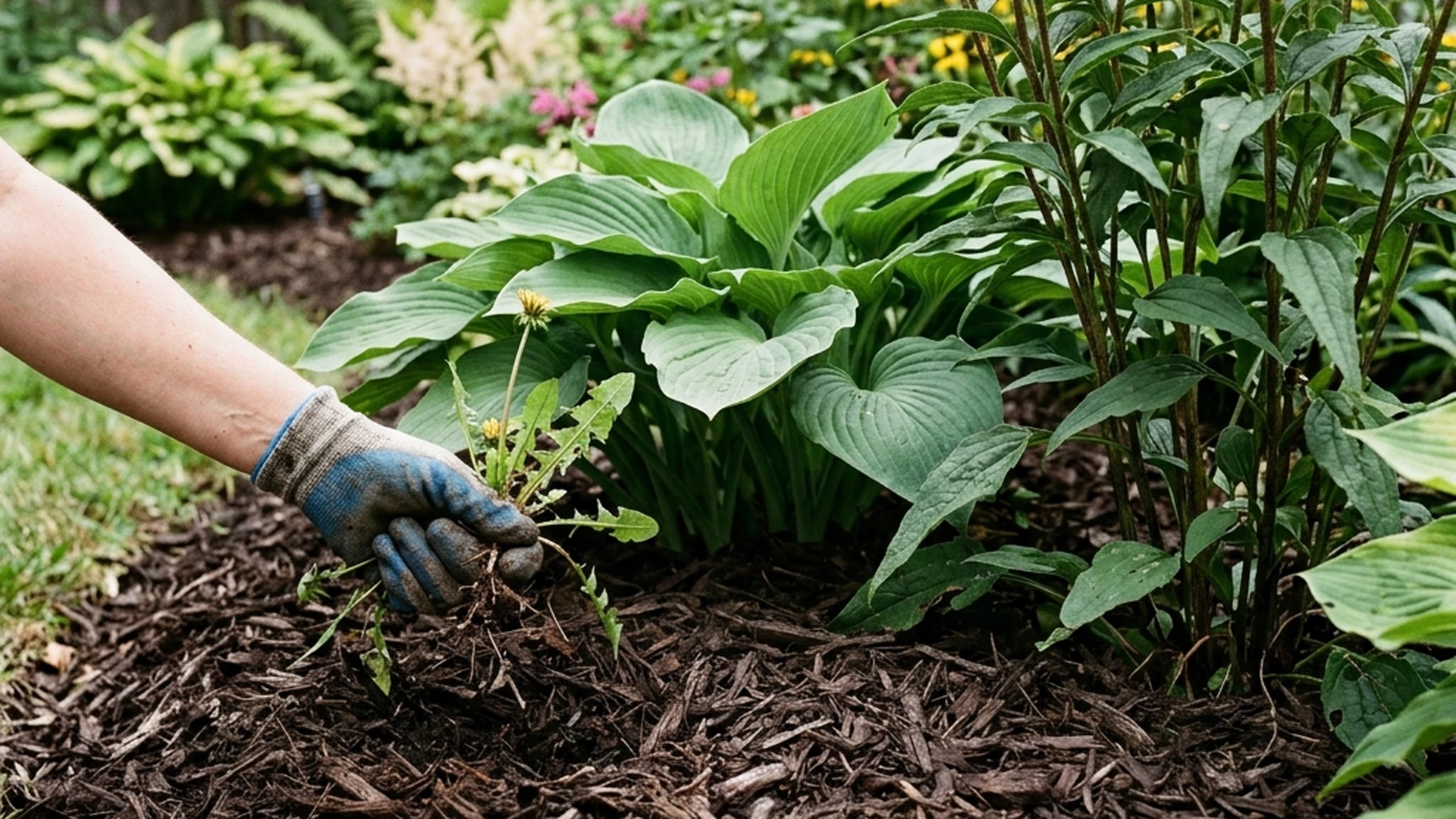
The most targeted and residue-free approach. Effective for dandelions when the full taproot is extracted, and for spot-removing small infestations before they spread. Not practical as the primary strategy for lawns with heavy weed pressure or for creeping weeds with extensive root networks. Tools that make the difference: a stand-up weeder with a forked extraction mechanism removes dandelion taproots more completely than a knife or hand fork. Weeding when soil is moist, not dry and hard, allows cleaner root extraction.
Two to three inches of mulch in garden beds suppresses weed germination by blocking light to the soil surface. It is the most effective weed management tool available for garden beds and reduces hand weeding requirements significantly. Maintained at the right depth, it keeps annual weed pressure manageable with periodic removal of the weeds that do emerge.

Manitoba repealed its cosmetic pesticide ban in late 2022, effective spring 2023. Health Canada-registered pesticides are currently permitted for residential lawn use in Manitoba, with restrictions in sensitive areas including schools, hospitals, daycare centres, municipal playgrounds, dog parks, and provincial parks. The current provincial government has indicated intent to reinstate restrictions; confirm current regulatory status before purchasing products. When using any herbicide: read the label completely, apply at the rates and timing specified, observe any buffer zones near water, and store and dispose of products according to label directions.
Products containing mecoprop, 2,4-D, or dicamba selectively kill broadleaf weeds (dandelions, creeping charlie, plantain, clover) without harming grass. Apply when weeds are actively growing and temperatures are between 10 and 27 degrees Celsius. Do not apply before rain or in wind conditions that could cause drift.
Pre-emergent products prevent weed seed germination rather than killing established weeds. Timing is critical: apply before soil temperatures reach the germination threshold for the target weed. For crabgrass, this is approximately 10 degrees Celsius at 5 cm depth, typically early to mid-May in Winnipeg.
A natural byproduct of corn processing that inhibits root development in germinating seeds. Apply 10 kg per 100 sq m when forsythia blooms in Winnipeg (late April to early May). Results build over multiple years of consistent application. Do not apply the same season you are overseeding, as it inhibits all seed germination including grass seed.
Weed control in garden beds operates differently from lawn weed control because the plant types, desired coverage, and tools available differ.
Is it worth using a weed and feed product on a Winnipeg lawn?
Weed and feed products combine a broadleaf herbicide with a fertilizer, applied at the same time by spreader. The concern in Winnipeg is timing: herbicide is most effective when weeds are actively growing in warm conditions, which is typically June. Fertilizer is most effective in late May or fall. Applying both at the same time is a compromise that serves neither function optimally. Two separate applications, each at the right timing, outperform a combined product for both weed control and lawn health.
Why do my dandelions come back every year even after I pull them?
Two reasons. First, dandelion taproots are deep and fleshy. Pulling the above-ground plant without extracting the root leaves enough root tissue for regrowth. A stand-up weeder that levers out the full root is more effective than pulling by hand. Second, dandelion seeds blow in from neighbouring properties and the broader environment. Even a lawn from which every existing dandelion is removed will receive new seed. The answer is a dense lawn that does not give those seeds a place to germinate, not just repeated weeding of existing plants.
Should I use a pre-emergent every year for crabgrass?
If crabgrass has been a recurring problem, annual pre-emergent application combined with thickening the turf through overseeding is the most effective approach. As the turf thickens, crabgrass pressure decreases because there is less bare soil for germination, and the pre-emergent application can be scaled back. The cultural goal is a lawn dense enough that the pre-emergent becomes a precautionary measure rather than a primary control.
Lawn ‘N’ Order designs seasonal lawn care programs for Winnipeg properties that include cultural, mechanical, and chemical weed management appropriate to the specific lawn conditions. Book a consultation to assess your property’s weed pressure and design a program that addresses the root causes, not just the visible symptoms.
Use the Free Calculator Book a Free ConsultationSend the address and a rough idea of scope. We'll walk it, take levels, and give you a written number you can compare line for line.
Keep reading

A plow truck, a pusher and a loader do three different jobs, and the pile you start in November is still there…
Read the article →
Holiday Light Installation Winnipeg: Book Before the Ground Freezes Quick Takeaways Holiday light installation in Winnipeg has a short window: crews install…
Read the article →
Who Clears the Sidewalk in Winnipeg? What the City Does and What You’re Responsible For Quick Takeaways Winnipeg is one of the…
Read the article →