
Parking Lot Snow Removal Winnipeg: Equipment & Staging
A plow truck, a pusher and a loader do three different jobs, and the pile you start in November is still there…
Read the article →
On Red River clay, aeration is not incremental — it is foundational. Spike aeration compresses Winnipeg clay rather than relieving it. Core aeration is the only type that works. Here is the fall timing window that produces the best results, how to pair it with overseeding for thin lawns, and what professional service costs across Winnipeg's suburban lot sizes.
Most lawn aeration guides describe the benefits in general terms: reduces compaction, improves water penetration, helps fertilizer reach roots. In a sandy or loamy soil, these benefits are real but incremental. In Winnipeg’s Red River clay, aeration is not incremental. It is foundational.
Red River clay is one of the densest native soils in Canada. It compacts readily under foot traffic, mower weight, and freeze-thaw cycling. Once compacted, clay forms a near-impermeable layer that water, air, and fertilizer cannot penetrate effectively. Roots hit the compacted layer and stop rather than growing deep. The lawn looks thin, drains slowly, and responds poorly to fertilization because the nutrients cannot reach the root zone.
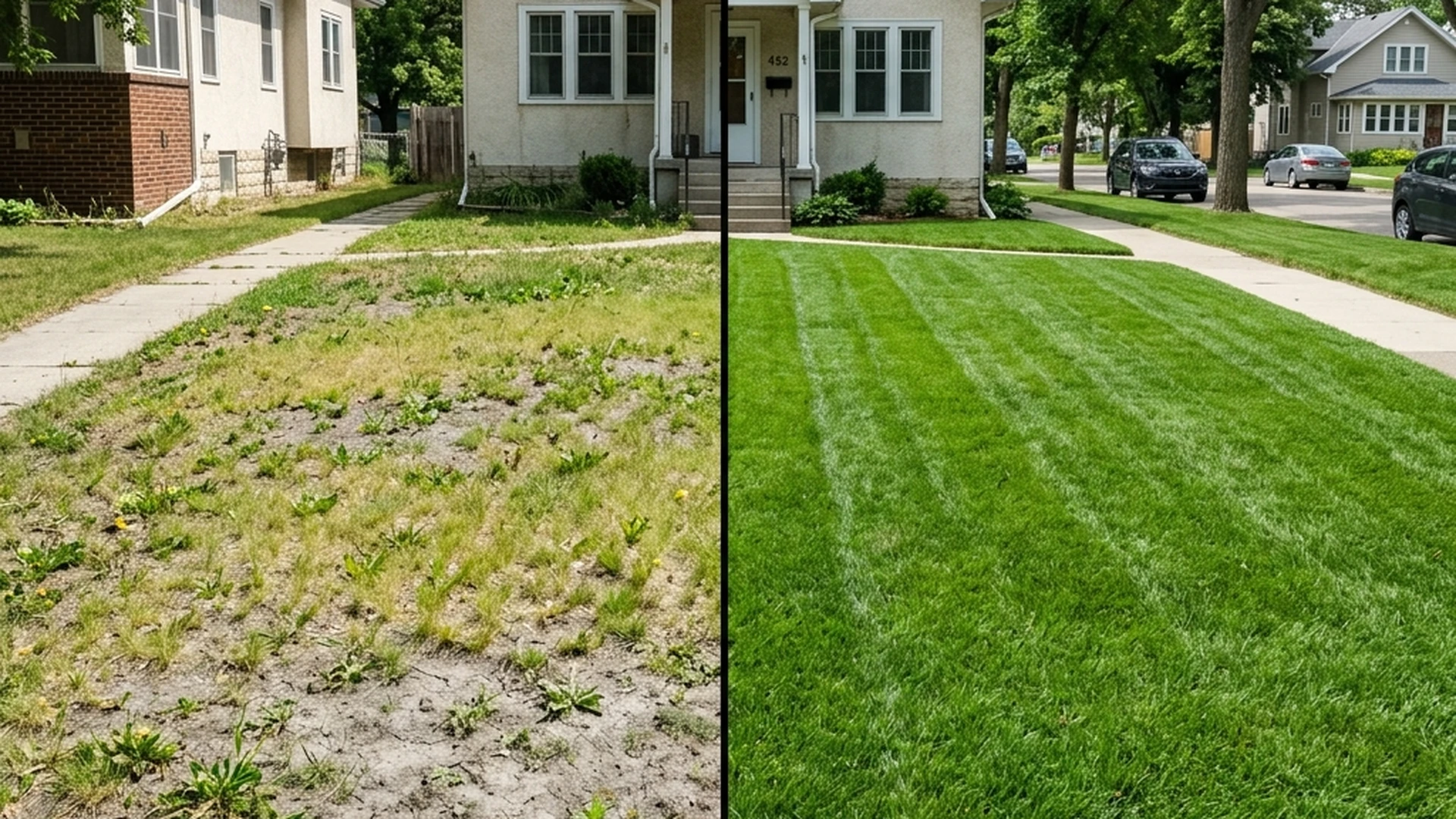
A single core aeration session on heavily compacted clay creates channels that break up this barrier. The improvement in water penetration, root development, and fertilizer effectiveness is often visible within one growing season.
Spike aerators push solid tines into the soil without removing any material. In clay, the particles compress and consolidate around the tine as it pushes through. The result is a hole surrounded by a slightly denser ring of compressed clay. You have not relieved compaction; you have redistributed and in some spots worsened it. Spike aeration provides essentially no benefit on Winnipeg’s clay soil. It is not a lower-cost alternative to core aeration.
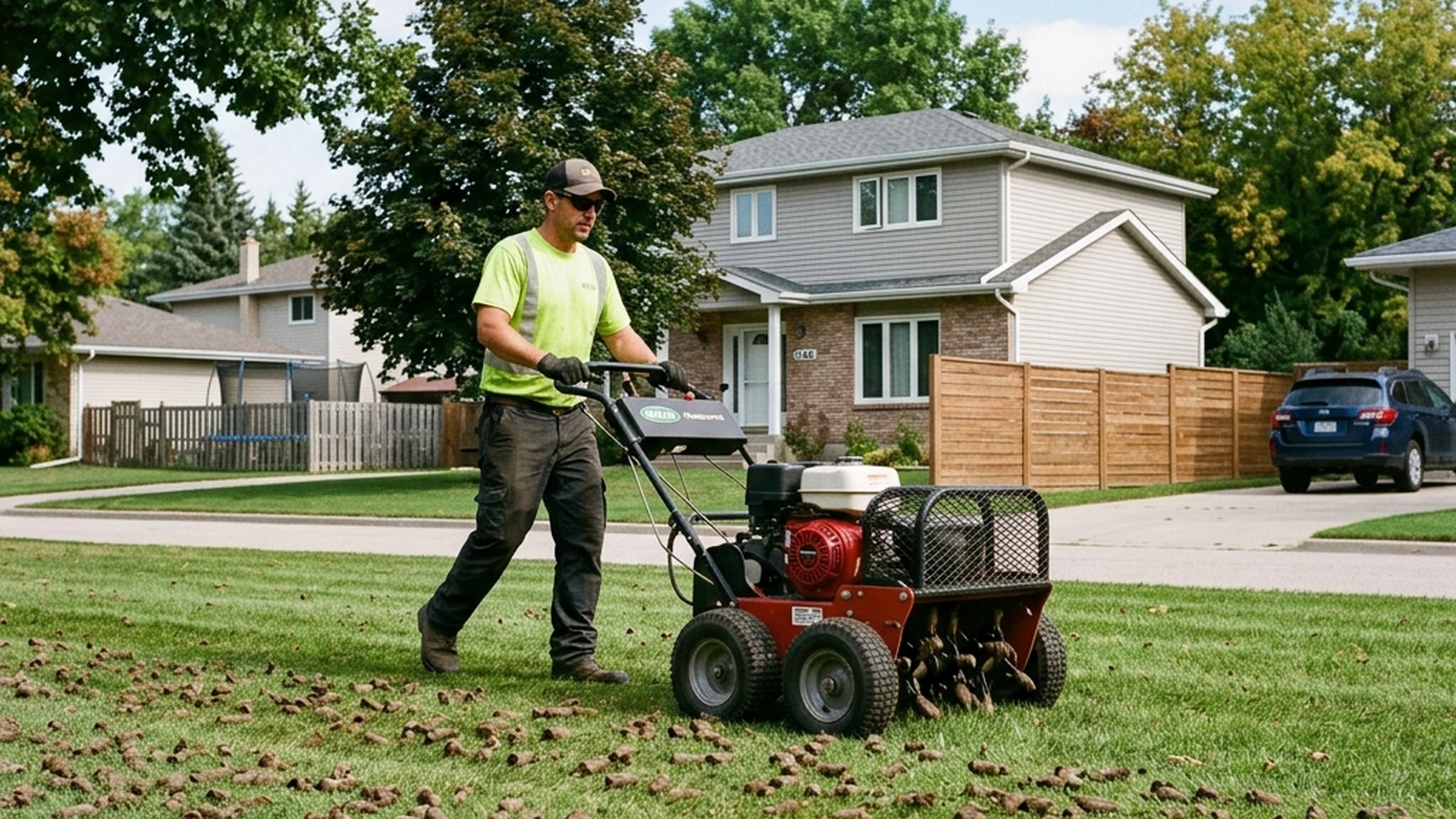
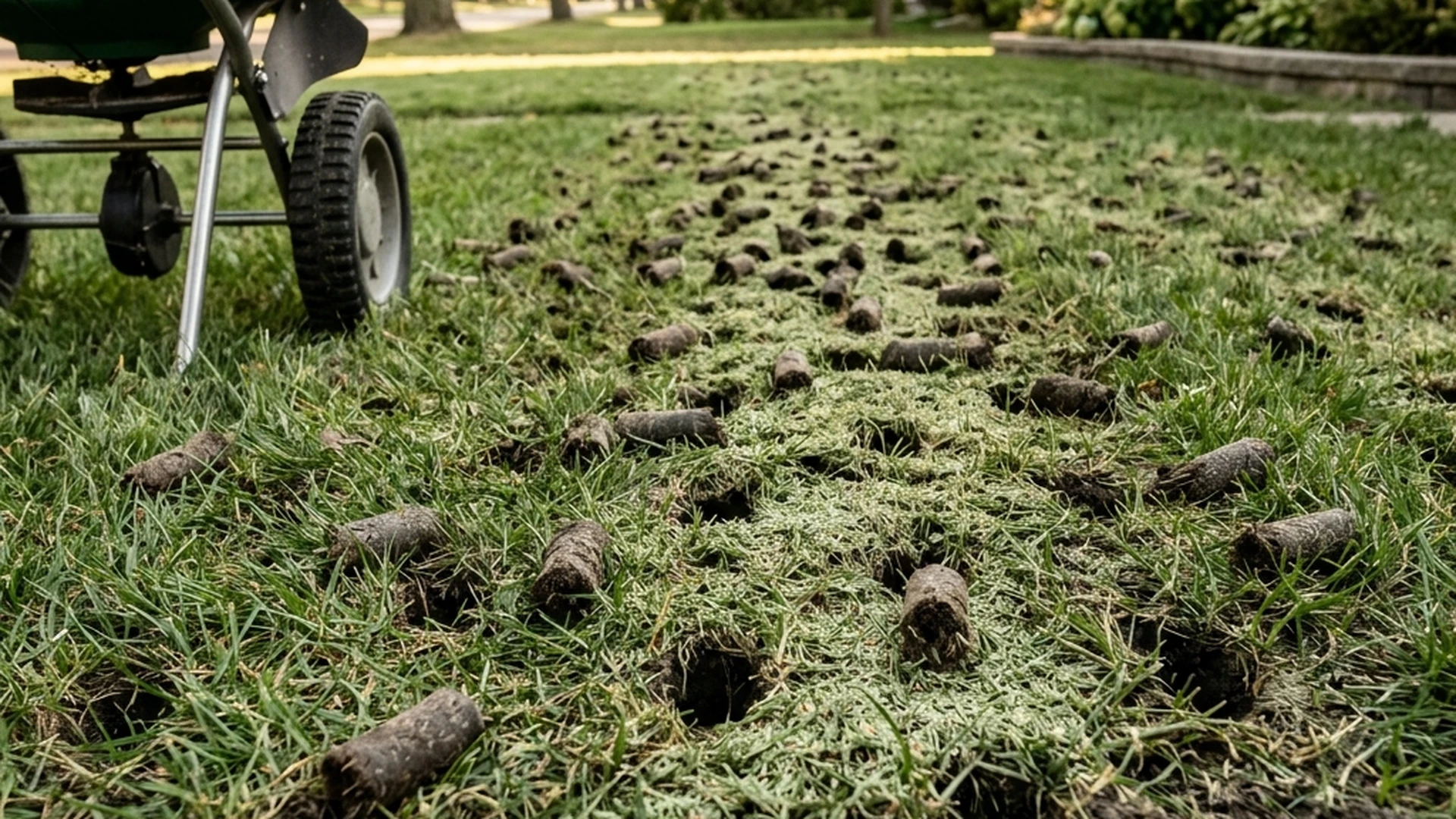
Core aeration uses hollow tines that punch into the soil and physically extract a plug of material, typically 3/4 inch in diameter and 2 to 4 inches deep. The open cores create direct channels for water, air, and fertilizer to reach below the compacted surface layer. They reduce density by removing material rather than compressing it. On compacted Winnipeg clay, cores should penetrate at least 2.5 to 3 inches for full effect.
The optimal aeration window for Winnipeg lawns is late August through September. Soil temperatures are still warm enough for active root growth, the grass is entering its fall recovery phase when it responds strongly to improved conditions, and there are six to eight weeks of growing season remaining before freeze-up for the plugs to break down. Fall aeration paired with overseeding is particularly effective. The open cores provide direct seed-to-soil contact in pockets that are protected from drying. Germination rates in core holes are significantly higher than seed scattered on compacted surface.
Spring aeration is possible and beneficial, but timing is more critical. The soil needs to be fully thawed, moist but not saturated, and the grass needs to be actively growing. Aerating too early in spring, when the soil is still wet from snowmelt, compresses the clay rather than coring cleanly. The right spring window in Winnipeg is typically mid to late May, once soil has dried from spring saturation and active growth is underway. Spring aeration is useful for addressing severe compaction before the summer stress period, but it does not pair as well with overseeding as fall because summer heat follows shortly after and stresses new seedlings.
How often to aerate: For a heavily compacted Winnipeg lawn on clay soil with regular foot traffic, annual core aeration is appropriate. For established lawns with moderate traffic, aeration every two to three years maintains the improvements.
Fall core aeration combined with overseeding is the most effective approach for thin or damaged Winnipeg lawns. Apply seed immediately after aeration while the cores are still open. Use a Zone 3-appropriate blend: a mix of creeping red fescue, Kentucky bluegrass, and perennial ryegrass performs well in Winnipeg’s climate and clay conditions. Apply at the overseeding rate of 35 to 45 grams per square metre for thin areas.
Applying a thin layer of compost or screened topsoil over the aerated lawn and working it into the cores accelerates the soil improvement process. The organic matter fills the core channels and gradually improves the clay structure below the surface. This is particularly effective on lawns where the clay is extremely dense and the plugs break down slowly.
Fertilizing within a week or two of aeration improves nutrient uptake significantly. The open cores provide direct pathways to the root zone rather than requiring nutrients to penetrate through the compacted surface. Fall fertilization after aeration is especially effective for promoting root development before freeze-up. See our lawn fertilization guide for the Manitoba-compliant NPK ratios that work on clay.
| Service | Typical Range | Notes |
|---|---|---|
| Professional core aeration, small yard (up to 3,000 sq ft) | $80 to $120 | Single family home, good access |
| Professional core aeration, medium yard (3,000 to 6,000 sq ft) | $120 to $175 | Standard suburban lot |
| Professional core aeration, large yard (6,000+ sq ft) | $175 to $250+ | Large properties, difficult access |
| Core aeration plus overseeding | $150 to $350 | Adds seed and application cost |
| Core aeration plus topdressing | $200 to $400+ | Adds compost/topsoil delivery and application |
| DIY core aerator rental | $60 to $100 per day | Machine rental from equipment rental yards |
Use the Lawn ‘N’ Order cost calculator to scope a full lawn care program including aeration, fertilization, and overseeding for your property. See our lawn care services page for what seasonal maintenance programs include.
Should I water before or after aeration?
Water the lawn thoroughly one to two days before aeration. Moist soil allows tines to penetrate more deeply and extract cleaner cores. Do not aerate immediately after heavy rain when soil is saturated, as wet clay pulls out in clumps rather than clean plugs. After aeration, return to normal watering frequency; the open cores will help water reach the root zone more effectively.
Should I leave the plugs on the lawn or rake them up?
Leave the plugs. They break down in two to four weeks and return organic matter and soil to the lawn. Raking them up removes the benefit of the material. The plugs look untidy for a few weeks but the visual effect is temporary. Mowing over them after they have dried slightly speeds up the breakdown.
Can I aerate a newly sodded lawn?
Wait at least one full growing season before aerating a newly sodded lawn. The sod needs time to establish roots and knit to the soil below before the disruption of aeration. Aerating too early can disturb the root establishment process and lift sod sections. For new sod on compacted clay, aerate the soil thoroughly before laying sod rather than after.
Core aeration is one of the highest-value lawn maintenance tasks for Winnipeg’s clay soil properties. Ask about a suitable service window and current availability for your property.
Book lawn aeration in Winnipeg Book a Free ConsultationSend the address and a rough idea of scope. We'll walk it, take levels, and give you a written number you can compare line for line.
Keep reading
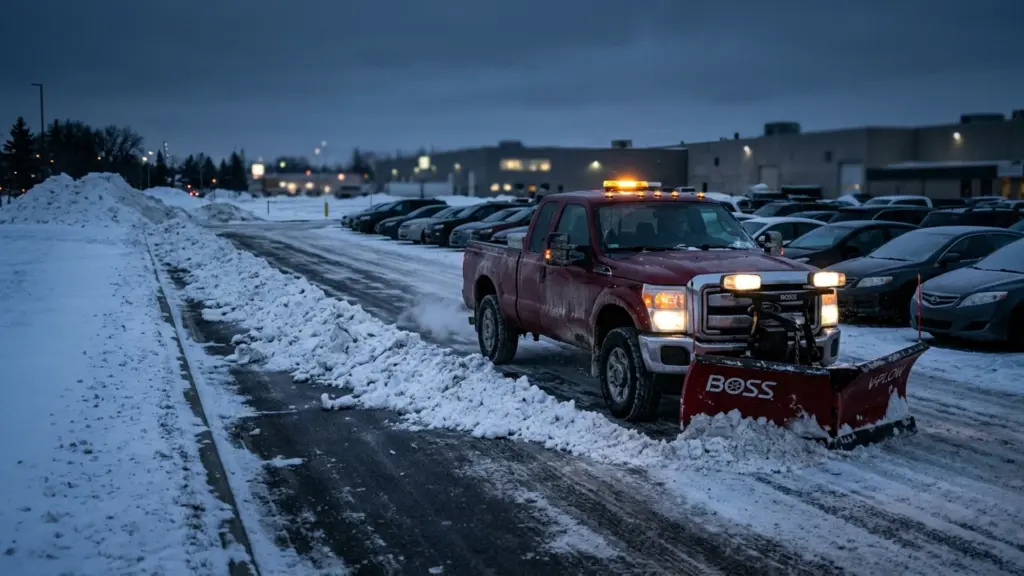
A plow truck, a pusher and a loader do three different jobs, and the pile you start in November is still there…
Read the article →
Holiday Light Installation Winnipeg: Book Before the Ground Freezes Quick Takeaways Holiday light installation in Winnipeg has a short window: crews install…
Read the article →
Who Clears the Sidewalk in Winnipeg? What the City Does and What You’re Responsible For Quick Takeaways Winnipeg is one of the…
Read the article →