
Parking Lot Snow Removal Winnipeg: Equipment & Staging
A plow truck, a pusher and a loader do three different jobs, and the pile you start in November is still there…
Read the article →
Prevent winter hardscape damage in Winnipeg. Learn about freeze-thaw cycles, salt scaling, and heaving. Expert protection strategies for patios, driveways, and concrete curbing.
Winnipeg experiences around 60 freeze-thaw cycles annually, placing it among the most punishing environments for hardscape materials in North America. Each cycle represents another opportunity for water infiltration, ice expansion, and cumulative damage that can destroy improperly installed or maintained surfaces within just a few seasons.
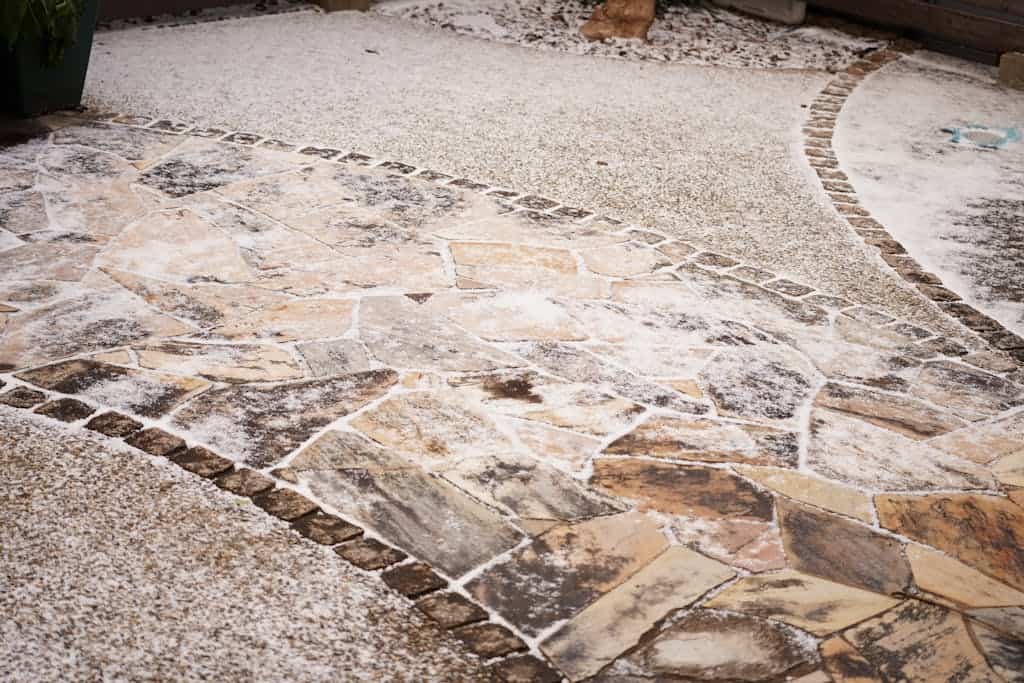
Most winter hardscape failures don’t appear suddenly; they develop gradually through repeated freeze-thaw stress, salt exposure, and moisture infiltration. Understanding damage mechanisms and implementing preventive strategies protects investments worth thousands to tens of thousands of dollars while extending hardscape lifespan by decades.
Water expands by approximately 9% when freezing according to physics principles, creating an expansive force exceeding 25,000 PSI according to Iowa State University research. When water infiltrates hardscape materials through cracks, joints, or porous surfaces, subsequent freezing generates pressure that fractures concrete, displaces pavers, and destroys structural integrity.
The accumulation effect makes freeze-thaw damage exponential rather than linear. Small cracks allow moisture penetration. Freezing expands these cracks. Larger cracks allow more water. Next freeze cycle expands damage further. University of Manitoba Engineering research shows that unrepaired hairline cracks can grow to several times their original width over a single winter through repeated freeze-thaw cycles.
Joint deterioration represents the primary entry point for damaging moisture. Paver joints filled with traditional sand erode with each rain and snowmelt, creating voids where water accumulates and freezes. The Interlocking Concrete Pavement Institute estimates that standard sand joints lose 20-30% of material annually in freeze-thaw climates, creating ever-larger moisture reservoirs.
Surface porosity in concrete and natural stone varies dramatically by material quality and finishing. Porous concrete can absorb 5-10% of its volume in water according to American Concrete Institute testing, moisture that becomes destructive ice during freeze cycles. Proper sealing reduces absorption by 70-90%, providing critical protection.
Edge vulnerabilities occur where hardscape meets soil, lawn, or other materials. These transition zones experience more dramatic temperature swings and moisture exposure than surface centers, making edges the first areas showing freeze-thaw damage. The National Research Council of Canada identifies inadequate edge restraint as a contributing factor in 60% of paver installation failures.
Frost heave occurs when moisture in base materials freezes and expands, lifting surface installations. Properly compacted, well-draining bases prevent this by limiting moisture accumulation in the frost-susceptible zone. Research from the Transportation Association of Canada demonstrates that inadequate base preparation accounts for 40% of hardscape structural failures in Prairie climates.
Surface scaling (flaking of the top concrete layer) results from salt exposure combined with freeze-thaw action. Sodium chloride penetrates concrete pores, lowering water’s freezing point while increasing freeze-thaw cycle frequency. Research indicates salt-exposed concrete experiences 50-70% more freeze-thaw events than protected surfaces, accelerating deterioration dramatically.
Asphalt driveways demonstrate flexibility that accommodates some freeze-thaw movement, but crack when water infiltrates through surface voids. The Asphalt Institute reports that water intrusion combined with freeze-thaw cycling reduces asphalt lifespan by 40-60% compared to properly sealed surfaces.
Concrete driveways offer durability but crack when experiencing freeze-thaw stress without proper protection. The rigid material cannot flex, making crack prevention through moisture exclusion critical rather than optional.
Late winter damage results from accumulated freeze-thaw cycles plus maximum frost depth penetration. Manitoba typically reaches maximum frost depth (1.5-1.8 meters) in February-March according to National Research Council data, creating peak stress on driveway bases coinciding with increased thaw-refreeze events as spring approaches.
Calcium chloride and sodium chloride create osmotic pressure within concrete pores, drawing moisture that creates additional freeze-thaw opportunities. Research from the Portland Cement Association indicates that salt-exposed concrete requires sealing every 2-3 years versus 4-5 years for protected surfaces, doubling maintenance frequency.
Alternative de-icing approaches include calcium magnesium acetate (less corrosive), sand for traction only, or heated driveway systems eliminating chemical needs entirely. While alternatives cost more per application or installation, they extend driveway lifespan significantly, often a 50-100% increase according to concrete industry studies.
Fall sealing applications prepare driveways for winter stress. Penetrating sealers fill concrete pores, preventing moisture infiltration that enables freeze-thaw damage. Proper sealing reduces water absorption by 70-90% according to International Concrete Repair Institute testing, providing dramatic protection for modest investment.
Snow removal technique affects damage accumulation. Metal plow blades scraping concrete surfaces create micro-scratches that accelerate deterioration. Plastic or rubber-edged tools preserve surface integrity while providing adequate clearing performance for residential applications.
Traditional joint sand washes away with each snowmelt and spring rain, creating gaps where water accumulates and freezes. Research from the Interlocking Concrete Pavement Institute shows standard sand joints require annual replenishment, indicating significant material loss, creating freeze-thaw vulnerability.
Polymeric sand contains binding agents that harden when activated with water, creating stable joints resisting erosion and moisture infiltration. Properly installed polymeric sand reduces joint degradation by 80-90% compared to traditional sand, providing multi-year protection with a single application.
Edge restraints prevent lateral paver movement from freeze-thaw forces. Inadequate or missing restraints allow pavers to shift and separate, creating moisture pathways and visual deterioration. The Canadian Landscape Standard specifies permanent edge restraint for all paver installations, recognizing the critical structural role.
Winter stress on edges multiplies when snow piles contact paver perimeters. The weight and moisture from melting snow create lateral pressure that inferior edge systems cannot resist, resulting in collapsed edges requiring extensive repair.
Individual pavers can lift from freeze-thaw action in base materials when drainage proves inadequate. Proper base preparation, minimum 6 inches of compacted limestone in the Winnipeg climate, prevents moisture accumulation that causes heaving. University of Manitoba research confirms that properly prepared bases eliminate 85-90% of frost heave issues.
Adequate surface slope (minimum 2% away from structures) prevents water pooling that creates freeze points. Even small depressions collecting water become ice formation sites, creating localized freeze-thaw stress points that progressively damage surrounding areas.
Continuous concrete curbing can shift from frost heave in surrounding soils. The linear structure transfers ground movement directly into visible displacement, making curbing particularly vulnerable to noticeable winter damage despite relatively small actual movement.
Proper installation, including adequate base depth (minimum 4-6 inches compacted limestone) and control joints every 8-10 feet provides movement accommodation, preventing destructive cracking. Research from the American Concrete Institute confirms that properly jointed curbing performs 300% better in freeze-thaw conditions than continuous installations without planned joints.
Snow blower and plow contact chips curbing edges, creating entry points for moisture and accelerating deterioration. Maintaining 6–8-inch clearance between equipment and curbing prevents mechanical damage while allowing adequate snow clearing.
Visibility marking using reflective stakes or flags helps equipment operators avoid contact, particularly valuable during night operations or low-visibility storm conditions when curbing becomes invisible under snow.
Direct salt contact accelerates concrete surface deterioration. Salt runoff from adjacent surfaces proves less damaging than direct application. Whenever possible, use sand for traction near curbing, reserving salt for areas where melting proves essential.
Sealing protection for curbing follows the same principles as other concrete. Fall application of penetrating sealer reduces moisture absorption and salt damage by 70-90%. The relatively small curbing surface area makes sealing cost-effective maintenance, preserving appearance and function.
December: Post-installation check for new projects, verify drainage systems are clear and functional before heavy snow arrives
January: Monitor for ice accumulation patterns indicating drainage issues, check that snow removal hasn’t damaged hardscape edges
February: Peak freeze-thaw period, inspect for new cracks or displacement requiring spring repair, verify snow piles haven’t overwhelmed edge restraints
March: Document any winter damage for repair planning, begin planning spring maintenance, including sealing and joint sand replacement
Shovel with plastic or rubber-edged tools rather than metal implements that scratch surfaces. These micro-scratches accumulate over seasons, accelerating overall deterioration rates.
Avoid snow piling directly against hardscape edges. Even slight contact creates moisture exposure and lateral pressure, contributing to deterioration. Designate snow storage areas away from vulnerable paver and curbing edges.
Clear water pathways after major melts. Ensuring proper drainage prevents refreezing in critical areas that could create the next damage cycle.
Small cracks appearing over winter require spring attention to prevent expansion. The old saying “crack left unsealed this fall means big repair next spring” proves true; minor issues become major problems through freeze-thaw progression.
Paver lifting or displacement indicates base issues requiring professional assessment. Surface symptoms often reflect more extensive subsurface problems, making expert evaluation a worthwhile investment, preventing catastrophic failure.
Edge movement or bulging suggests inadequate restraint. Address these issues immediately during the spring thaw before they progress further.
Contact professional hardscape contractors at Lawn ‘N’ Order when observing:
Early professional assessment prevents minor issues from escalating into major reconstruction projects, often saving 60-80% of eventual repair costs through timely intervention.
Winter damage prevention combines proper initial installation with ongoing maintenance and smart winter practices. Winnipeg’s extreme freeze-thaw conditions demand attention that milder climates don’t require, but informed homeowners can protect hardscape investments through decades of reliable service despite challenging conditions.
Understanding damage mechanisms, recognizing early warning signs, and implementing protective strategies transform potential problems into manageable maintenance rather than catastrophic failures. Your hardscape represents a significant property investment, and protection through proper winter care delivers returns many times exceeding the modest effort and cost required.
Concerned about winter hardscape damage or planning new installations built for Manitoba’s climate? Contact Lawn ‘N’ Order for professional assessment, maintenance services, or new construction designed specifically for Winnipeg’s demanding conditions. Our experience with hundreds of local installations provides the expertise to protect your investment through countless freeze-thaw cycles ahead.
Send the address and a rough idea of scope. We'll walk it, take levels, and give you a written number you can compare line for line.
Keep reading
A plow truck, a pusher and a loader do three different jobs, and the pile you start in November is still there…
Read the article →
Holiday Light Installation Winnipeg: Book Before the Ground Freezes Quick Takeaways Holiday light installation in Winnipeg has a short window: crews install…
Read the article →
Who Clears the Sidewalk in Winnipeg? What the City Does and What You’re Responsible For Quick Takeaways Winnipeg is one of the…
Read the article →