
Parking Lot Snow Removal Winnipeg: Equipment & Staging
A plow truck, a pusher and a loader do three different jobs, and the pile you start in November is still there…
Read the article →
Fiberglass pools install in days, not months. The shell arrives pre-built and engineered for Canadian winters by Azoria, and Lawn 'N' Order handles everything on your property from excavation to full landscape integration. Here is why fiberglass outperforms concrete and vinyl in Winnipeg's freeze-thaw conditions, what the installation timeline actually looks like, and how to budget for a complete project including the surrounding outdoor living space.
Lawn ‘N’ Order works with Azoria, the manufacturer behind the pool shells we install, to bring fiberglass pools to Winnipeg properties. Azoria designs and manufactures the fiberglass shell in a controlled factory environment, engineered specifically for Canadian climate conditions. Lawn ‘N’ Order handles everything that happens on your property: site assessment, excavation, base preparation, the pool installation itself, plumbing and equipment connection, and the surrounding landscape design that turns a pool shell into a finished backyard.
This reflects how fiberglass pool projects generally work across Canada: the manufacturer builds the shell to a consistent engineering standard, and a local, experienced installer handles the site-specific work that determines how well that shell performs once it is in the ground. For a Winnipeg property, the site-specific work — frost depth, soil type, drainage, and seasonal planning — is where 30-plus years of local landscaping experience makes the difference between a pool that performs for decades and one that develops problems within a few seasons. See our fiberglass pool installation in Winnipeg packages, including patios and landscaping.
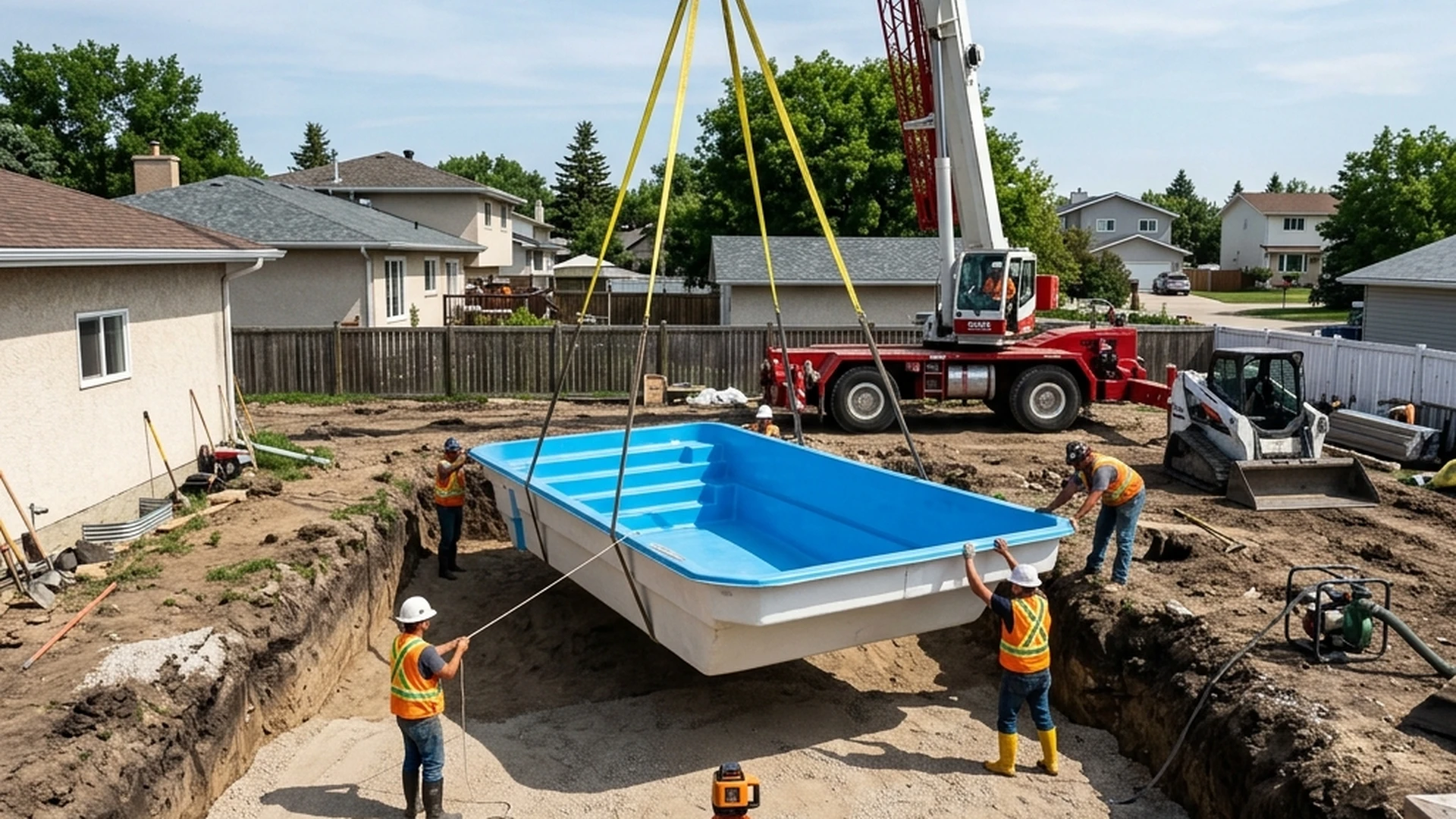
Winnipeg’s frost depth reaches approximately 4 feet, and the ground goes through dozens of freeze-thaw cycles each year. Any structure buried in that ground experiences real seasonal movement. How each pool type responds to that movement is the central technical difference between fiberglass, concrete, and vinyl liner construction.
A fiberglass pool shell is manufactured as a single flexible composite structure. When frost causes soil movement around the shell, the fiberglass flexes slightly rather than resisting the pressure rigidly. This flexibility is the core reason fiberglass pools have become the preferred option in cold-climate markets across Canada and the northern United States: the material absorbs seasonal ground movement instead of cracking under it. Properly installed on a compacted gravel base with adequate perimeter drainage, a fiberglass shell maintains its structural integrity through Winnipeg winters without the resurfacing or structural crack repair that concrete pools commonly require.
Concrete (gunite or shotcrete) pools are extremely strong in compression but lack the flexibility to absorb ground movement. As frost shifts the soil around a concrete shell, the rigid structure can develop hairline cracks in the plaster surface over time, and in more significant cases, structural cracking that requires expensive repair. Concrete pools also typically need resurfacing every 10 to 15 years and more frequent acid washing to manage algae growth on the porous plaster surface.
Vinyl liner pools use a flexible wall structure that tolerates some ground movement reasonably well, but the vinyl liner itself is a thinner, softer material than fiberglass gelcoat or concrete plaster. Liners typically require replacement every 7 to 10 years, and cold temperatures make vinyl more prone to brittleness and tearing if not winterized correctly.
| Factor | Fiberglass | Concrete | Vinyl Liner |
|---|---|---|---|
| Installation timeline | Days to a few weeks | 2 to 3 months | 3 to 4 weeks |
| Freeze-thaw performance | Flexes with ground movement | Prone to cracking | Tolerates movement; liner is the weak point |
| Surface maintenance | Non-porous gelcoat, minimal | Resurfacing every 10 to 15 years | Liner replacement every 7 to 10 years |
| Winter requirement | Lower water level only; never fully drain | Higher alkalinity management | Lower water level, careful liner inspection |
| Customization | Defined shapes from manufacturer line | Unlimited custom shapes | Flexible sizing, liner pattern options |
One of the most significant practical advantages of a fiberglass pool is project duration. Because the shell arrives pre-manufactured rather than being built on site, the on-property timeline is measured in days rather than months.
Site assessment and design consultation: 1 to 2 weeks (scheduling and planning, not on-site work)
Excavation, base preparation, and backfill: 1 to 3 days depending on site access and soil conditions
Pool shell placement: 1 day
Plumbing, electrical, and equipment installation: 2 to 5 days
Surrounding landscape, patio, and finishing work: 1 to 4 weeks depending on scope
The pool itself can be swimmable within two to four weeks of excavation starting. The surrounding landscape work — patio surfaces, privacy screening, lighting, and any additional outdoor living features — is typically the longer phase of the overall project.
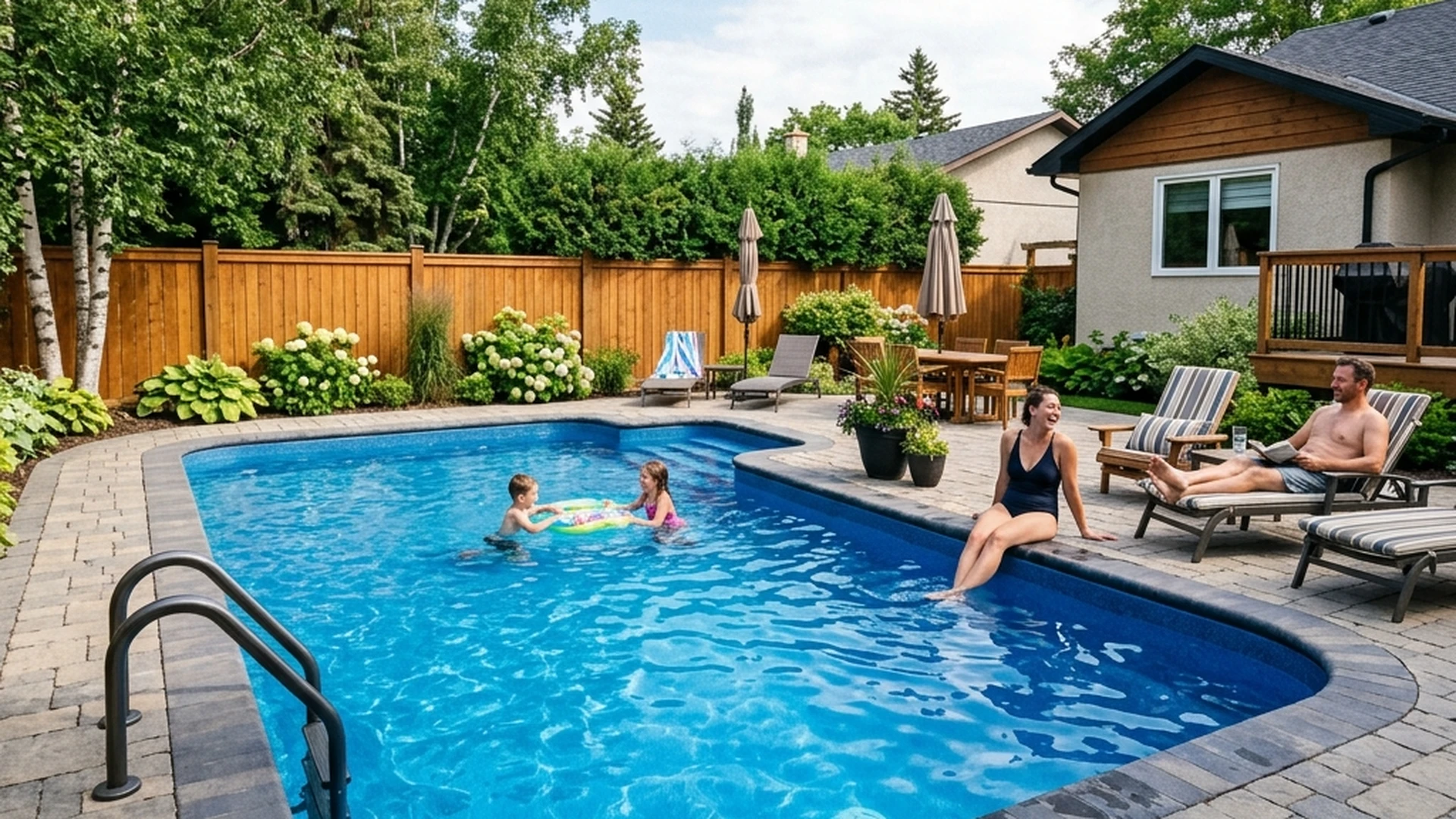
Total project cost depends heavily on pool size, site conditions, and the scope of surrounding landscape work. A complete pool package typically lands in the $50,000 to $130,000 range, depending on pool size, features, and the scope of surrounding landscape work. Projects with extensive landscape integration, a fully designed outdoor living space built around the pool, sit toward the upper end.
| Component | Typical Range |
|---|---|
| Pool shell (size and model dependent) | $30,000 to $60,000+ |
| Excavation, base preparation, and backfill | $8,000 to $20,000 depending on access and soil conditions |
| Plumbing, filtration, and equipment | $8,000 to $18,000 |
| Basic surrounding patio and coping | $10,000 to $25,000 depending on materials and area |
| Full landscape integration (privacy screening, lighting, outdoor living) | $15,000 to $50,000+ depending on scope |
Use the Lawn ‘N’ Order cost calculator to begin scoping your specific project, or book a site consultation for a detailed quote.
A pool shell in the ground is the start of the project, not the finish. The surrounding landscape design is what determines whether the pool functions well for the way you actually want to use the backyard.
The deck or patio surface around the pool needs to handle wet feet, provide adequate slip resistance, and tolerate Winnipeg’s freeze-thaw cycle without heaving or cracking. Interlocking pavers, natural stone, and properly reinforced concrete are the common choices, each with different cost, maintenance, and aesthetic profiles.
Most homeowners installing a pool want some degree of privacy from neighbouring properties. This typically combines fencing (often required by Winnipeg bylaw around pools regardless of privacy preference) with strategic planting: cedar hedges, ornamental grasses, or other Zone 3-appropriate screening that integrates the pool area into the broader landscape rather than leaving it as an isolated feature. See our privacy landscaping guide for screening options suited to Winnipeg’s climate.
Pool area lighting extends usable hours into the evening and is a meaningful design and safety consideration. Underwater pool lighting, deck-level path lighting, and feature lighting on surrounding landscape elements are typically planned together as part of the full project design.
The City of Winnipeg requires fencing around residential pools to specific height and gate specifications intended to prevent unsupervised access. Requirements address fence height, gate self-closing and self-latching mechanisms, and in some cases pool alarms or covers. Confirm current bylaw requirements with the City of Winnipeg before finalizing pool placement and fence design, as these requirements affect where the pool can be positioned on the property and what the surrounding fence design needs to include.
Do I need to drain my fiberglass pool for winter?
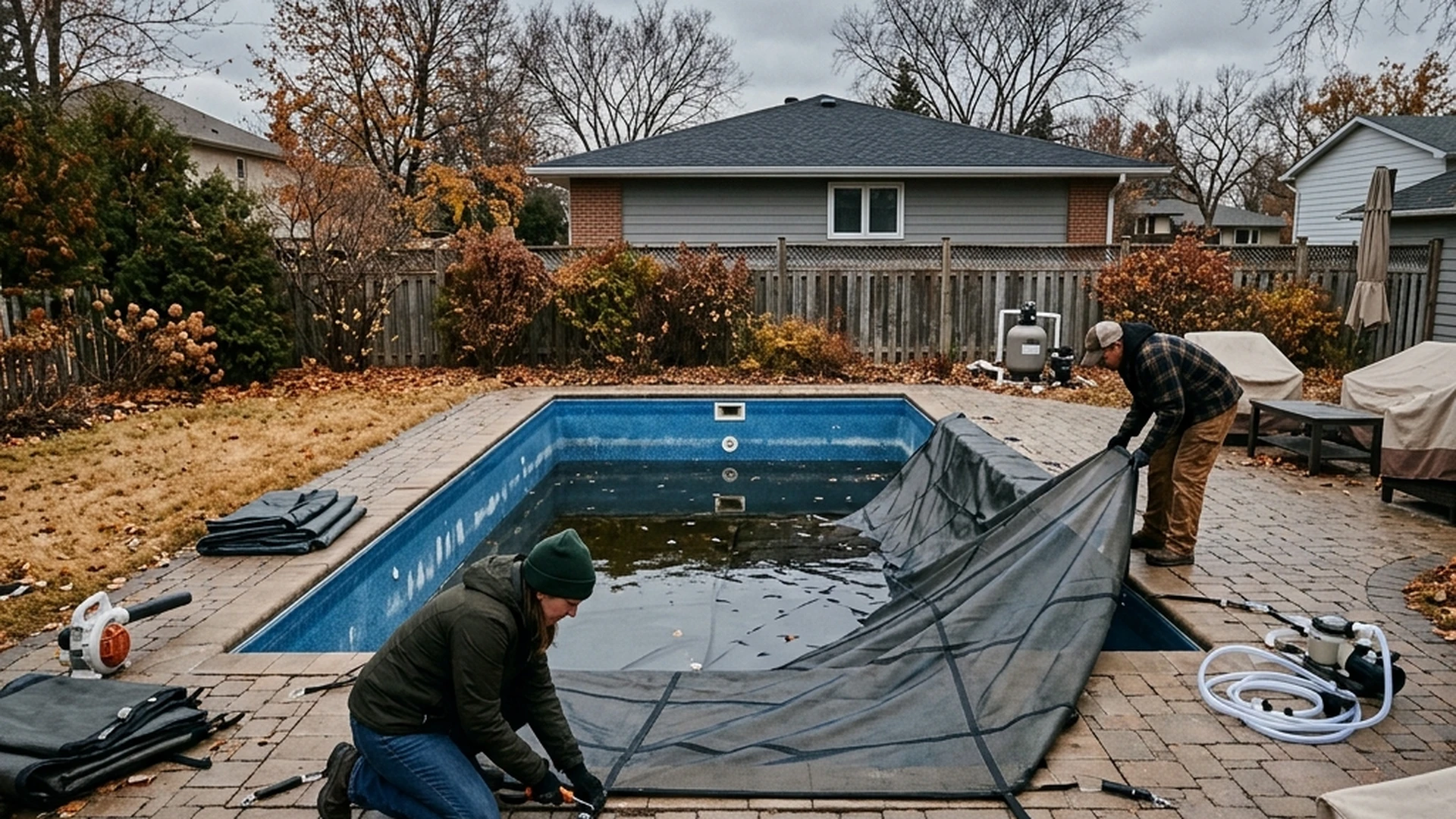
No. A fiberglass pool should never be fully drained, in winter or at any other time. Draining the shell removes the water weight that helps hold it stable in the ground and can compromise both the shell and the surrounding installation. Winterizing a fiberglass pool involves lowering the water level below the skimmer, balancing water chemistry, winterizing the plumbing and equipment to prevent freeze damage, and covering the pool. The shell itself stays full.
How long does the whole project take from start to finish?
The pool shell installation itself, from excavation to a swimmable pool, typically takes two to four weeks once work begins on site. The full project timeline including design consultation, permitting, and the surrounding landscape build is longer, often 6 to 12 weeks total depending on the scope of the landscape work and the time of year. Booking early in the season improves scheduling flexibility for a pool you want ready for summer.
Can a fiberglass pool be installed on a sloped or clay-heavy lot?
Yes, with appropriate site preparation. Winnipeg’s clay soil and varying lot grades are factored into the excavation and base design for every installation. Proper base preparation, drainage planning, and grading around the finished pool are standard parts of the process specifically because Winnipeg sites require this attention. A site assessment before the project begins identifies what specific preparation your property needs.
Lawn ‘N’ Order partners with Azoria to install fiberglass pools across Winnipeg, with full landscape integration handled by the same team that designs and builds the rest of your outdoor space.
Use the Free Calculator Book a Free ConsultationSend the address and a rough idea of scope. We'll walk it, take levels, and give you a written number you can compare line for line.
Keep reading

A plow truck, a pusher and a loader do three different jobs, and the pile you start in November is still there…
Read the article →
Holiday Light Installation Winnipeg: Book Before the Ground Freezes Quick Takeaways Holiday light installation in Winnipeg has a short window: crews install…
Read the article →
Who Clears the Sidewalk in Winnipeg? What the City Does and What You’re Responsible For Quick Takeaways Winnipeg is one of the…
Read the article →