
Parking Lot Snow Removal Winnipeg: Equipment & Staging
A plow truck, a pusher and a loader do three different jobs, and the pile you start in November is still there…
Read the article →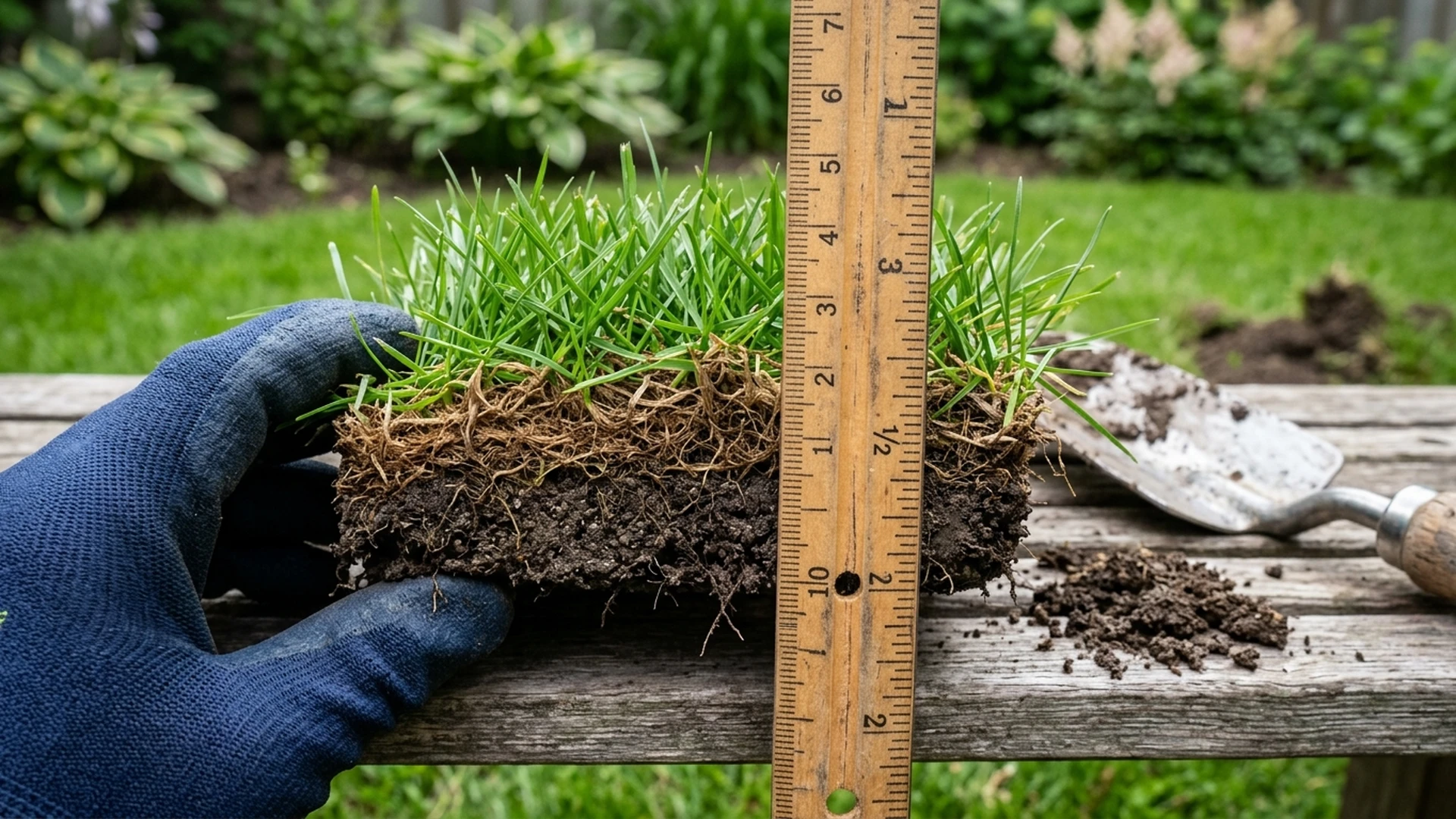
Dethatching is one of the most commonly recommended and most commonly unnecessary lawn services in Winnipeg. Cut a wedge of turf, measure the brown layer, and if it's under ½ inch the honest answer is to skip dethatching entirely and put the money toward aeration instead. Here's how to measure in five minutes, and why core aeration does more good than dethatching on most Winnipeg clay lawns.
Dethatching is one of the most commonly recommended and most commonly unnecessary lawn services in Winnipeg. It’s genuinely valuable on a lawn that has a real thatch problem, and actively counterproductive on a lawn that doesn’t, since it’s an invasive process that stresses turf that didn’t need the intervention.
The good news is that the diagnosis takes about five minutes and doesn’t require any professional equipment. Before booking a dethatching service or renting a power rake, measure what’s actually there.
Take a hand trowel or spade and cut a small wedge of turf, roughly 2 to 3 inches deep and a couple of inches across
Lift it out and look at the cross-section from the side
Between the soil surface and the base of the green grass blades, you’ll see a brown, spongy layer of dead and living stems and roots. That’s the thatch.
Measure that layer with a ruler
Do this in two or three spots around the lawn, since thatch accumulation isn’t always uniform
| Thatch Depth | What It Means | What to Do |
|---|---|---|
| Under ½ inch | Healthy. A thin thatch layer is beneficial: it acts as natural mulch, retains moisture, and insulates the soil | Nothing. Skip dethatching entirely |
| ½ to ¾ inch | Borderline. Starting to interfere with water and nutrient movement | A light raking may be enough; powered dethatching is likely overkill |
| Above ¾ inch | A genuine problem. Water, air, and fertilizer are being blocked from reaching the soil | Powered dethatching is justified |
| 1 inch or more | Significant. Roots are likely growing in the thatch rather than the soil | Dethatching needed, and expect visible recovery time |
A spongy feel underfoot and water pooling on the surface rather than soaking in are both secondary signs worth noticing, but they’re not a substitute for actually measuring. Both can also be caused by compaction, which is a different problem with a different solution.
This is the part most dethatching content skips, and it’s the most useful thing to understand about lawn care on Winnipeg’s clay soil.
Thatch is an organic accumulation problem. Compaction is a soil structure problem. On Winnipeg’s heavy clay, compaction is by far the more common limiting factor for lawn health, and core aeration is the treatment that addresses it. Most Winnipeg lawns that feel unhealthy, drain poorly, or struggle to green up are dealing with compacted clay rather than excessive thatch.
The practical implication for how you spend your lawn care budget:
If your thatch measures under ½ inch, skip dethatching entirely. Put the money toward aeration and overseeding instead. That’s the honest answer, and it’s the one that actually improves most Winnipeg lawns.
Aeration is also the intervention that addresses several of the fungal lawn problems common in Winnipeg, since compacted clay holding surface moisture creates the conditions those diseases need. See our lawn diseases guide for how aeration fits into managing dollar spot, necrotic ring spot, and related issues.
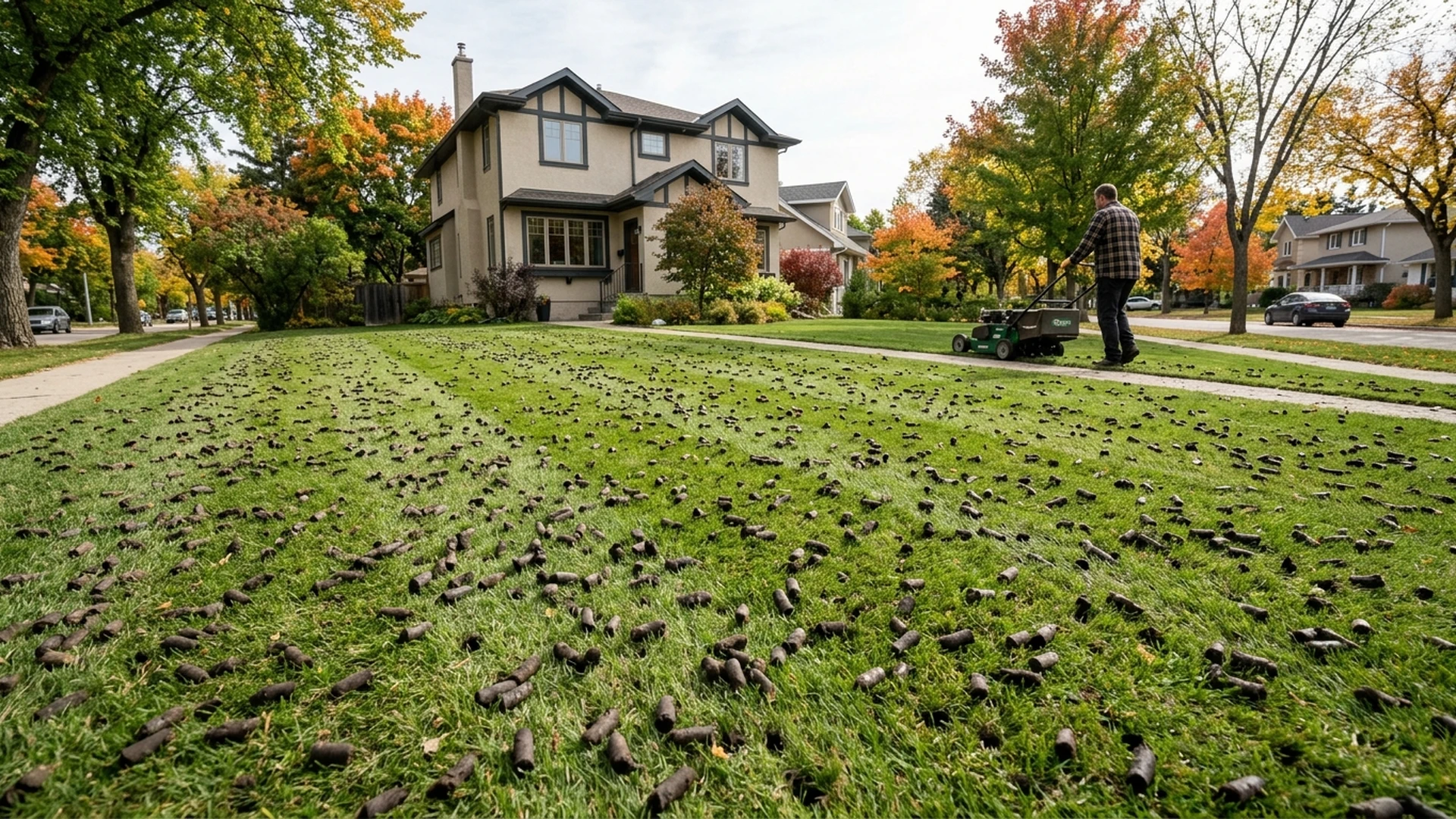
These three terms get used interchangeably in conversation, including by people selling the services. They’re different operations addressing different problems.
| Operation | What It Does | What Problem It Solves |
|---|---|---|
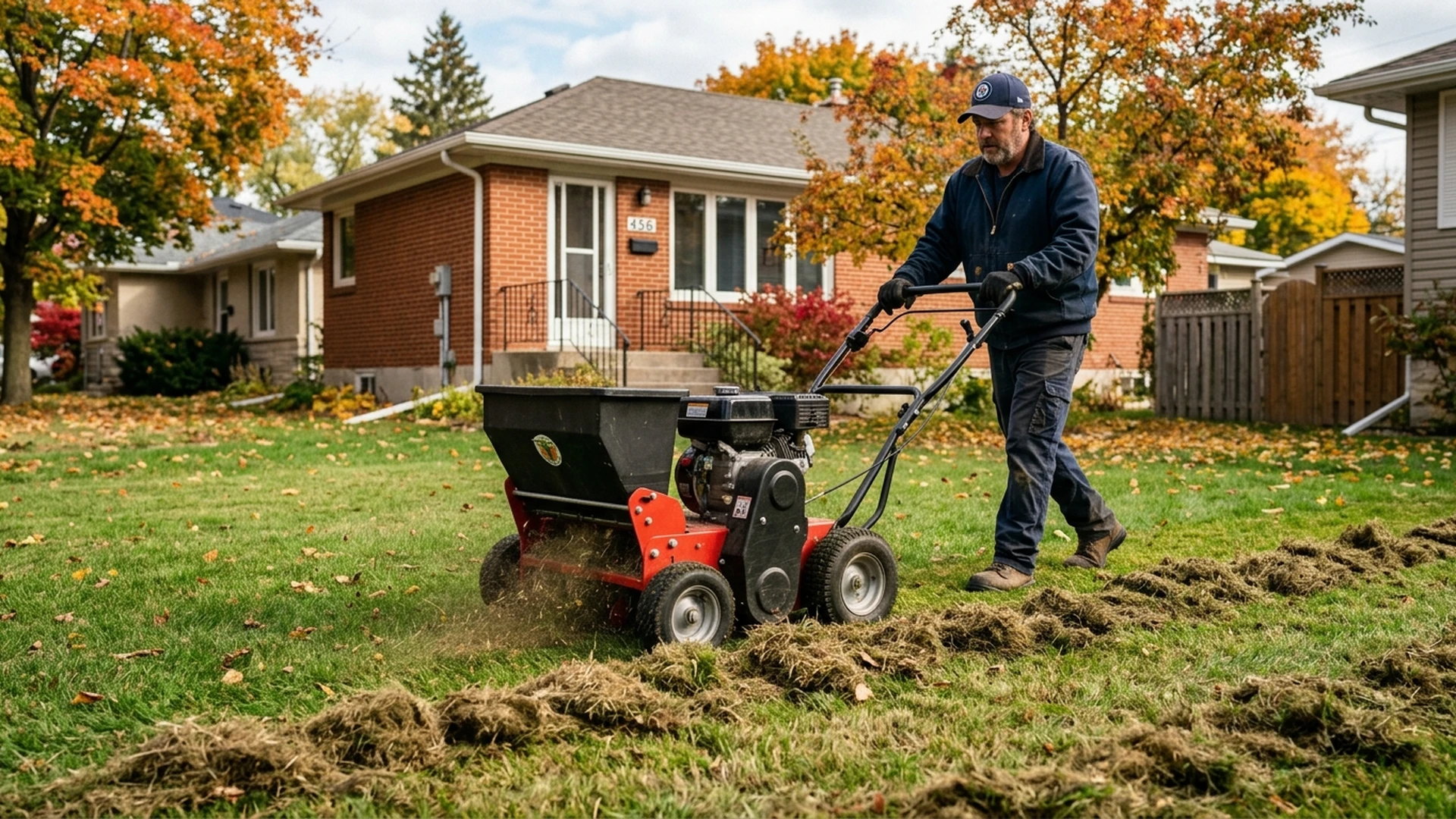
| Dethatching | Removes the accumulated organic thatch layer using vertical blades or a dethatching rake | Excess thatch blocking water, air, and nutrients |
| Power raking | A more aggressive mechanical version of dethatching, typically using flail blades | Heavier thatch accumulation; more stressful on turf |
| Core aeration | Pulls plugs of soil out of the lawn, leaving open channels | Soil compaction restricting root development and drainage |
The key distinction: dethatching and power raking remove material from the surface layer. Aeration opens up the soil below. On Winnipeg clay, the soil below is usually where the actual problem is.
If your measurement says dethatching is warranted, timing matters because it’s a genuinely stressful process for the lawn. Cool-season grasses, which is what Winnipeg lawns are, recover best when dethatching happens during active growth with enough season left to fill back in.
Late August into September is the best window for fall dethatching in Winnipeg. Soil is still warm enough to support active root growth and recovery, air temperatures have moderated from summer heat, and there’s enough remaining season for the lawn to recover and thicken before dormancy.
By October, you’re working against the calendar. The practical limit is roughly 3 to 4 weeks before the first hard frost, which gives the lawn a minimum recovery window. Dethatching later than that leaves thin, stressed turf going into winter with no time to fill in, which is worse than leaving the thatch in place for another season.
If you’ve measured a genuine thatch problem but you’re already past the fall window, waiting until spring is the better call. Spring dethatching, once the lawn is actively growing and the soil has dried from snowmelt, gives the turf a full season to recover. A rushed October dethatching that leaves the lawn thin going into a Manitoba winter isn’t a favour to the lawn.
Dethatching opens up the turf and exposes soil, which makes it a natural pairing with overseeding. If you’re dethatching in the fall window, overseeding immediately afterward takes advantage of the seed-to-soil contact the process creates. Watering consistently through the recovery period matters as much as it does after any seeding.
Dethatching rakes are available for small areas and manual work; powered dethatchers and power rakes can be rented. The tradeoff is physical effort and the risk of setting equipment too aggressively and damaging turf. For how to think about the DIY versus professional decision across lawn care generally, see our DIY vs professional lawn care guide.
My lawn feels spongy. Doesn’t that mean I need dethatching?
Not necessarily. A spongy feel can come from excess thatch, but it can also come from compacted soil holding moisture at the surface, which is a compaction problem that aeration addresses rather than a thatch problem. Measure before assuming. If the thatch measures under ½ inch and the lawn still feels spongy, compaction is the more likely culprit.
Should I dethatch and aerate in the same season?
You can, and if a lawn genuinely needs both, dethatching first and then aerating is the usual sequence. But for most Winnipeg lawns, this isn’t necessary. If the thatch measures under ½ inch, aeration alone is the right call. Doing both on a lawn that only needed one is unnecessary stress on the turf.
Does leaving grass clippings on the lawn cause thatch?
No, this is a persistent myth. Grass clippings are mostly water and decompose quickly; they don’t meaningfully contribute to thatch accumulation. Thatch is made up of stems, crowns, and roots, which contain decay-resistant compounds that break down slowly. Mulching clippings back into the lawn is actually beneficial and doesn’t need to be avoided out of thatch concerns.
Lawn ‘N’ Order assesses whether your lawn actually needs dethatching before recommending it, and will tell you if aeration is the better use of your budget.
Use the Free Calculator Book a Free ConsultationSend the address and a rough idea of scope. We'll walk it, take levels, and give you a written number you can compare line for line.
Keep reading
A plow truck, a pusher and a loader do three different jobs, and the pile you start in November is still there…
Read the article →
Holiday Light Installation Winnipeg: Book Before the Ground Freezes Quick Takeaways Holiday light installation in Winnipeg has a short window: crews install…
Read the article →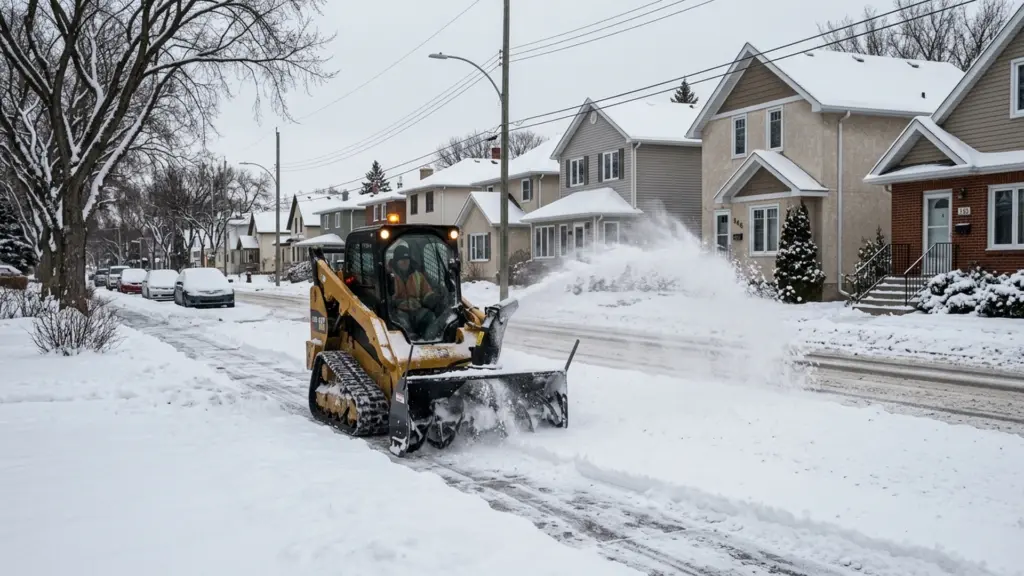
Who Clears the Sidewalk in Winnipeg? What the City Does and What You’re Responsible For Quick Takeaways Winnipeg is one of the…
Read the article →