Aeration vs Overseeding vs Topdressing Winnipeg
- These three are often sold as a package but they solve different problems. Aeration fixes compaction, overseeding fixes thinness, topdressing fixes soil quality.
- On Winnipeg’s clay, aeration is the one most lawns benefit from annually; the other two are situational
- If your lawn is thick and green but feels hard underfoot and sheds water, that’s compaction, and aeration alone addresses it
- If your lawn is thin, patchy, or losing ground to weeds, overseeding is the intervention, and doing it right after aeration is what makes it work
- Topdressing is the slowest and most expensive of the three, and it’s the right call when the underlying soil is the actual problem rather than the turf
Three Services, Three Different Problems
Fall lawn care quotes in Winnipeg frequently bundle aeration, overseeding, and topdressing together, and for some lawns that bundle is exactly right. For others it’s paying for two things to fix a problem that one thing solves.
The useful way to approach it is to work out what’s actually wrong with the lawn first, then pick the service that addresses it. Each of the three targets something specific.
| Service | Problem It Solves | What It Physically Does |
|---|---|---|
| Core aeration | Soil compaction | Pulls plugs of soil out, opening channels for air, water and roots |
| Overseeding | Thin or patchy turf | Introduces new grass seed into existing lawn |
| Topdressing | Poor soil quality or uneven surface | Spreads a thin layer of quality soil or compost over the lawn |
Diagnosing Your Lawn
Signs It’s Compaction
A compacted lawn can look reasonably healthy and still be underperforming. The signs:
- The ground feels hard underfoot, particularly in high-traffic paths
- Water pools or runs off rather than soaking in
- Grass struggles in the same areas year after year despite fertilizing
- A screwdriver pushed into moist soil meets resistance in the first few inches
On Winnipeg’s Red River clay, compaction is the default condition rather than the exception, which is why core aeration is the service most lawns here benefit from annually.
Signs It’s Thinness
Thin turf is a different problem with a different cause:
- Visible soil between grass plants
- Weeds establishing in gaps, since bare soil is where weed seed germinates
- Patchy areas from winter damage, pet spots, or heavy summer traffic
- A lawn that looked full three years ago and has gradually thinned
Thinness and compaction often coexist, because compacted soil is a hostile place for grass to fill in. That’s the situation where aeration and overseeding genuinely belong together rather than being upsold together.
Signs It’s the Soil
Sometimes neither the turf nor the compaction is the real issue. The soil itself is poor. Indicators:
- A very thin layer of topsoil over clay or construction fill, common on newer builds
- An uneven, lumpy surface that makes mowing awkward
- Soil that dries to concrete and cracks, or stays saturated for days
- A lawn that responds to fertilizer briefly and then declines again
What Each Service Is Actually For
Core Aeration
The highest-value routine service for most Winnipeg lawns. It relieves compaction, improves water and nutrient movement into the root zone, and creates the conditions for everything else to work. If a lawn is only getting one service, this is usually it.
How core aeration actually works
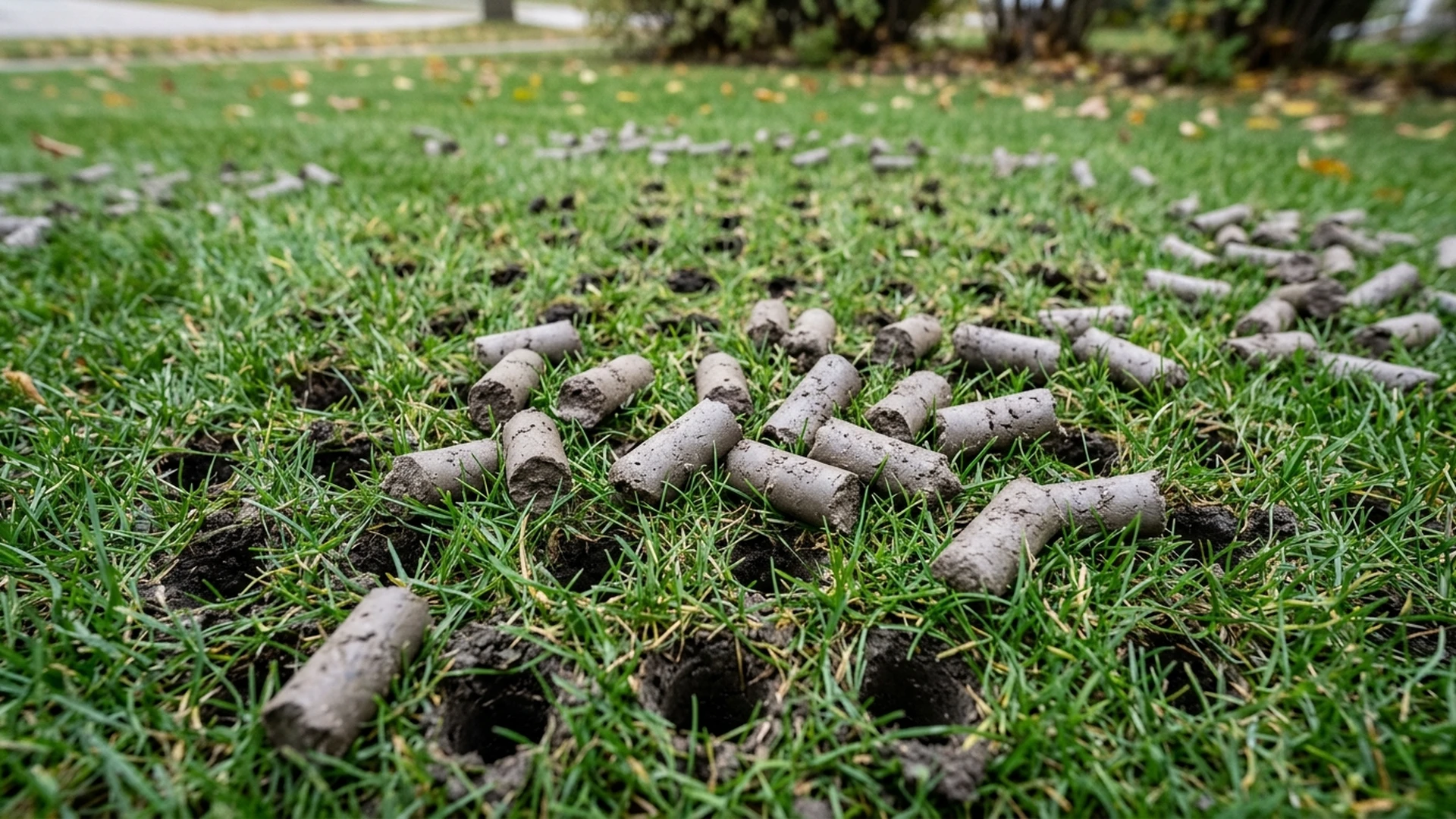
A core aerator pulls plugs of soil roughly 5 to 10 cm deep out of the lawn and drops them on the surface. What matters is the hole left behind: an open channel through the compacted upper soil layer that lets air, water, and fertilizer reach the root zone directly, and gives roots somewhere to expand into.
The plugs themselves are left on the lawn to break down over the following couple of weeks. Raking them off is a common instinct and a mistake. As they break apart they return soil and organic matter to the surface, which is a small topdressing effect at no extra cost.
Core aeration, not spike aeration
Spike aerators push a solid tine into the ground rather than removing a plug. On sandy soil that’s adequate. On Winnipeg’s clay it’s counterproductive, because forcing a solid spike into compacted clay compresses the soil around the hole and makes the compaction worse in that zone. Removing material is the point; displacing it is not. If a service quotes aeration, confirm it’s core aeration.
Timing and conditions
Late August through September is the window in Winnipeg. Soil is still warm enough to support recovery and root growth, and the summer heat stress has passed. Spring aeration is possible once the ground has dried from snowmelt, but fall generally produces better results because the lawn has a longer recovery runway before it’s under stress again.
Soil moisture matters more than most people expect. Aerating bone-dry clay produces shallow, broken plugs and puts unnecessary strain on the equipment; aerating saturated soil produces a smeared mess. Moist but not wet is the target, which usually means a day or two after a good rain or a deep watering.
How often
- Most Winnipeg lawns on clay: once a year, in fall
- High-traffic lawns, or lawns over construction fill: once a year is the minimum, and twice in a recovery year isn’t unreasonable
- Established lawns on lighter soil with low traffic: every two years is often enough
What it costs
Pricing scales with lawn area and access. A typical residential lot in Winnipeg usually falls in the low hundreds for a professional core aeration pass. Rental aerators are available if you’d rather do it yourself; the equipment is heavy and awkward to transport, so factor in a truck or trailer and a helper.
Overseeding
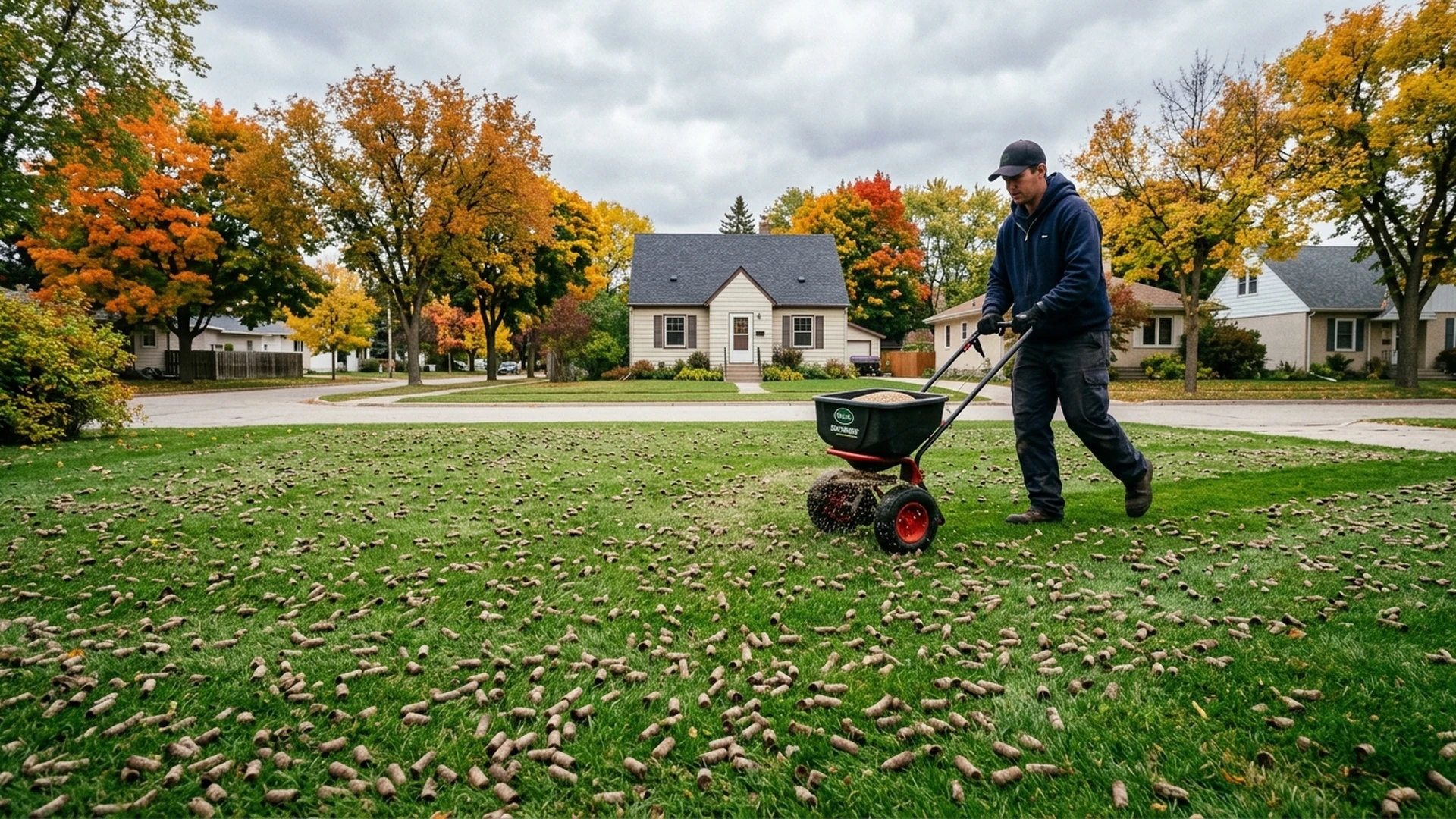
Overseeding introduces new grass into existing turf, and its success depends almost entirely on seed reaching soil. Broadcast onto a thick, compacted lawn, most of the seed never germinates. Broadcast immediately after core aeration, seed falls into the open holes and makes direct soil contact, which is the difference between overseeding that works and overseeding that doesn’t.
This is the one genuine case for pairing two of these services: aeration then overseeding, in that order, same day.
Topdressing
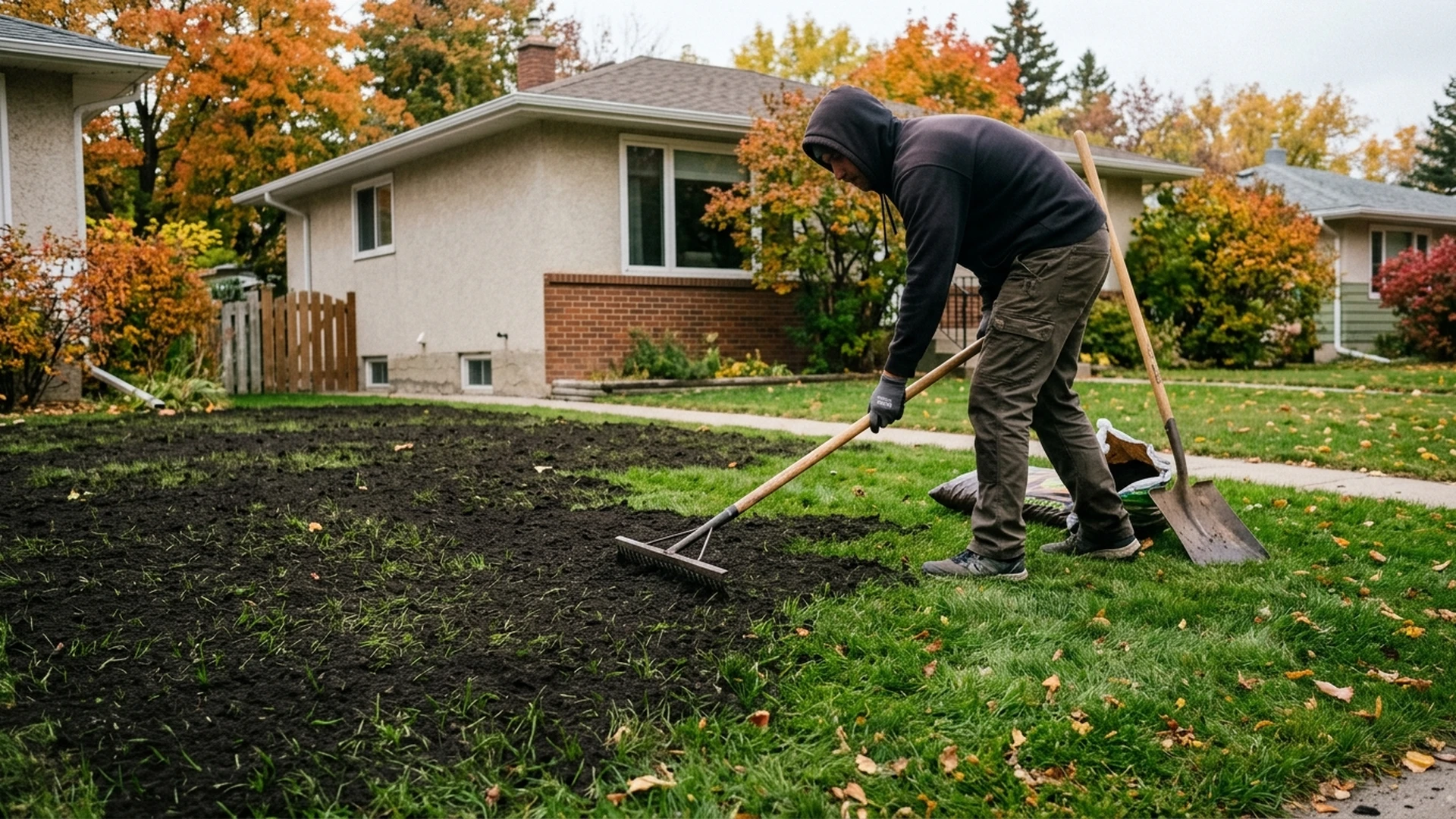
Topdressing spreads a thin layer of quality material, screened soil or compost, across the lawn surface. Over repeated applications it gradually improves the soil profile from the top down, and it levels minor surface irregularities.
It’s the slowest of the three to show results and the most expensive per application, because it involves moving significant material volume. It’s genuinely worth doing when the underlying soil is the limiting factor, and it’s overkill when the lawn simply needs air and seed.
Topdressing also pairs naturally with aeration, since material worked into open aeration holes reaches below the surface rather than sitting on top.
Which Combination Fits Your Lawn
| Lawn Situation | What It Needs |
|---|---|
| Thick and green, but hard underfoot and sheds water | Aeration alone |
| Thin or patchy, with visible soil and weeds moving in | Aeration plus overseeding |
| New build with a thin soil layer over clay or fill | Aeration plus topdressing, overseeding if also thin |
| Uneven and lumpy, otherwise reasonably healthy | Topdressing, levelling over repeated applications |
| Established, healthy, no obvious problem | Aeration as routine maintenance; the rest isn’t needed |
What About Dethatching?
Dethatching is a fourth service that gets grouped with these and solves yet another problem, excess organic buildup between the soil and the grass blades. It’s genuinely needed less often than it’s sold, and the test is a measurement you can do yourself in five minutes. See our dethatching guide for how to measure and decide.
Timing
All three are fall services in Winnipeg, and the window is broadly late August through September, while the soil is still warm enough for recovery and root development but the summer heat has passed.
Overseeding has the tighter window. New seed needs enough remaining season to germinate and establish before freeze-up. Pushing overseeding late in the fall means seed that germinates but doesn’t develop enough root mass to survive winter.
FAQ: Fall Lawn Services in Winnipeg
Should I just do all three to be safe?
Only if the lawn actually needs all three. Aeration plus overseeding is a common and genuinely useful pairing on a thin lawn. Adding topdressing on a lawn with decent soil is spending money on a problem you don’t have. The diagnosis is worth five minutes before the quote.
Can I overseed without aerating first?
You can, and germination will be poorer. Seed needs soil contact, and an established lawn’s canopy and thatch layer prevent most broadcast seed from reaching soil. If you’re paying for seed, aerating first is what makes that investment work.
How many years of topdressing before it makes a difference?
Topdressing is a multi-year improvement rather than a single-season fix. Meaningful change to the soil profile takes repeated annual applications. If the soil problem is severe enough that you want results in one season, that’s a case for more substantial soil work rather than topdressing.
Get an Honest Assessment
Lawn ‘N’ Order will tell you which of these your lawn actually needs, including when the answer is just aeration.
Use the Free Calculator Book a Consultation