
Parking Lot Snow Removal Winnipeg: Equipment & Staging
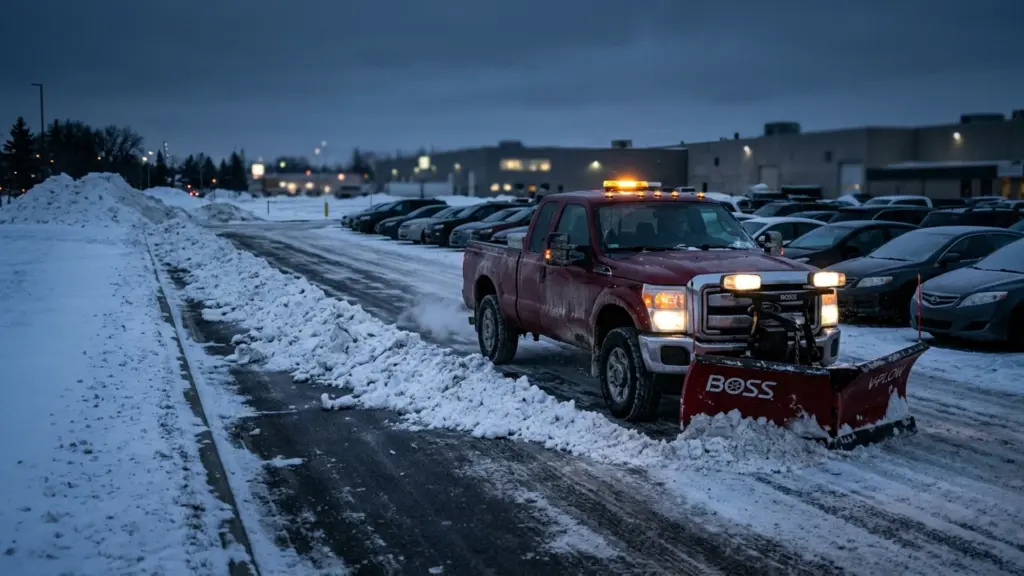
A plow truck, a pusher and a loader do three different jobs, and the pile you start in November is still there…
Read the article →
The surface tiles take a day to install. The base takes significantly longer — and it's the only part that determines whether your Winnipeg sport court is still flat in fifteen years. Here's what clay soil and 40 freeze-thaw cycles per winter demand, what it costs, and how to integrate a court into your backyard properly.
The surface tiles on a backyard sport court take a day to install. The base beneath them takes significantly longer, and it’s the only part of the project that determines whether your court will still be flat and level in fifteen years.
We see a lot of backyards in Winnipeg. Some of the courts we’re called to look at were installed five years ago, and the surface is already rippling, cracking, or heaving unevenly. Almost always, the cause is the same: the base wasn’t built for Winnipeg. The contractor did a fine job on the tiles; they just didn’t account for what Manitoba clay does through forty freeze-thaw cycles.
This guide explains what a properly built backyard sport court looks like in Winnipeg’s climate, what it costs, and how to integrate it into your backyard so it becomes the focal point of your outdoor space instead of an eyesore.
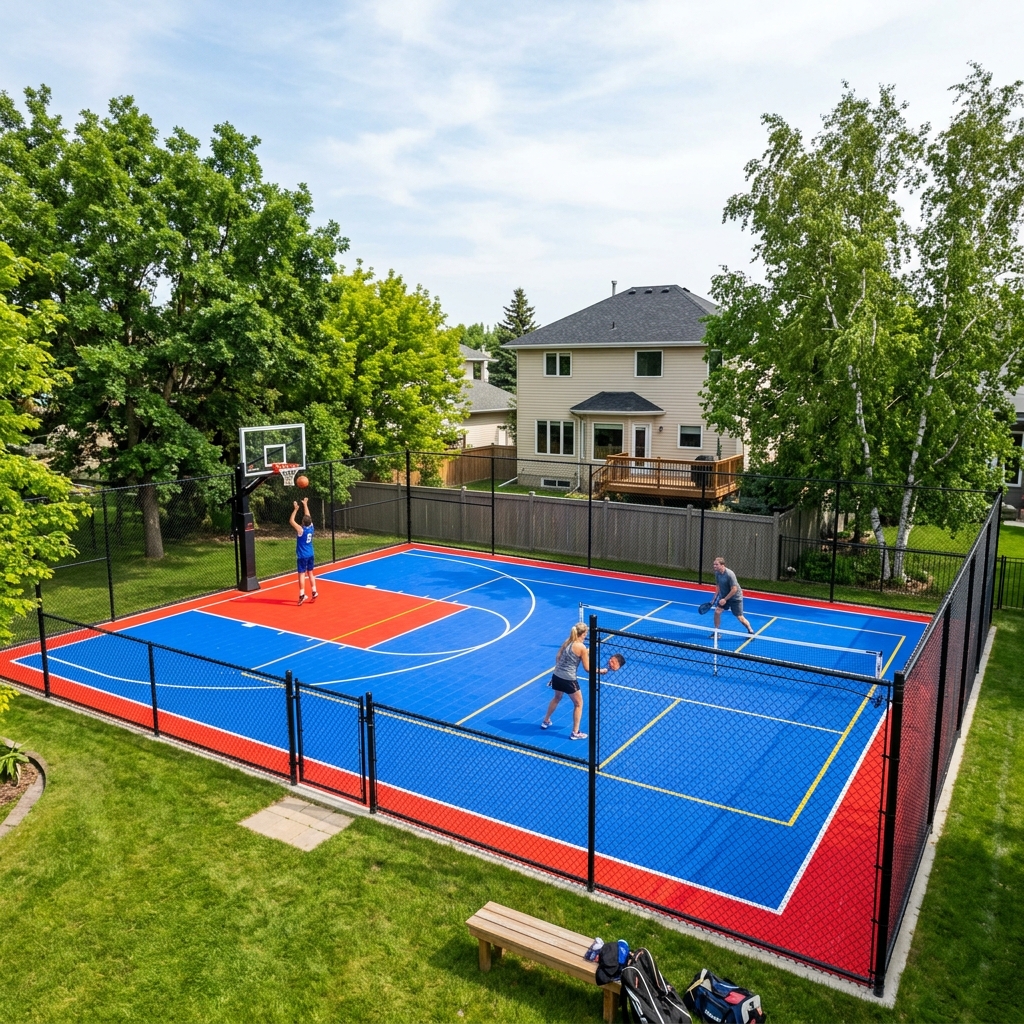
A backyard sport court is a hard-surface outdoor court designed for recreational play: typically basketball, pickleball, volleyball, or a combination of all three on a multi-sport layout. They range from a small half-court shooting pad to full multi-sport courts covering 1,500 to 2,000 square feet.
The surface itself is usually one of three things:
VersaCourt, SnapSports, and similar modular tile systems — plastic or polyethylene tiles that lock together over a prepared base. The leading choice for residential courts because the tiles have slight flexibility, which handles freeze-thaw movement better than rigid surfaces. Fully replaceable section by section if a tile is damaged.
A poured concrete slab with a painted performance surface. Extremely durable when the base is built correctly; prone to cracking when it isn’t. Common for tennis and dedicated pickleball courts. Requires the most rigorous base preparation.
Lower upfront cost, but more maintenance over time in freeze-thaw climates. Asphalt flexes more than concrete but also ruts, softens in summer heat, and oxidizes over time. Generally not our first recommendation for Winnipeg.
Winnipeg sits on an ancient lakebed. The underlying soil is heavy clay: dense, slow-draining, and unstable when the moisture content changes. Plant a 4-inch concrete slab directly on unprepared clay, and you’ve poured money into something that will shift, heave, and crack within a few winters.
A Winnipeg winter isn’t just cold: it’s a cycle. The shoulder seasons run through dozens of freeze-thaw events where soil alternately freezes, expands, and contracts. Each cycle exerts upward pressure on anything sitting above the frost line. A poorly prepared base heaves the slab; the slab cracks; the surface tiles separate; you’re rebuilding in five years.
Remove existing soil and organic material to a depth of 18 to 24 inches.
Compact 8 to 12 inches of clean crushed limestone to create a stable, free-draining foundation.
Grade the subbase to direct water away from the court: typically a 1% slope. Low-lying Winnipeg yards may require a perimeter drain connected to a discharge point. See our drainage solutions page for how we approach drainage on Winnipeg properties.
Pour a reinforced concrete base, minimum 5 inches thick. Steel rebar or wire mesh reinforcement is required.
Once the base has cured (minimum 28 days), install your surface tiles or apply your sport coating.
Get these steps right, and your court will still be flat in twenty years. Skip the crushed stone or pour a 3-inch slab, and you’re gambling.
Pickleball is the fastest-growing backyard sport in Canada right now and fits comfortably in yards that can’t accommodate a full basketball court.
| Sport | Recommended Size | Notes |
|---|---|---|
| Basketball half-court | 30 × 30 ft minimum | Fits most suburban yards |
| Basketball full court | 30 × 56 ft | Requires a large backyard |
| Pickleball | 30 × 60 ft | Regulation play area with run-off zone |
| Multi-sport (basketball + pickleball + volleyball) | 40 × 60 ft | Most popular residential configuration |
❄ Winnipeg winter bonus: A properly graded court with minimal lip edging can be flooded in November to create a backyard skating rink. Plan the orientation, slope direction, and water access point at the design stage, and you get two seasons of use from the same space.
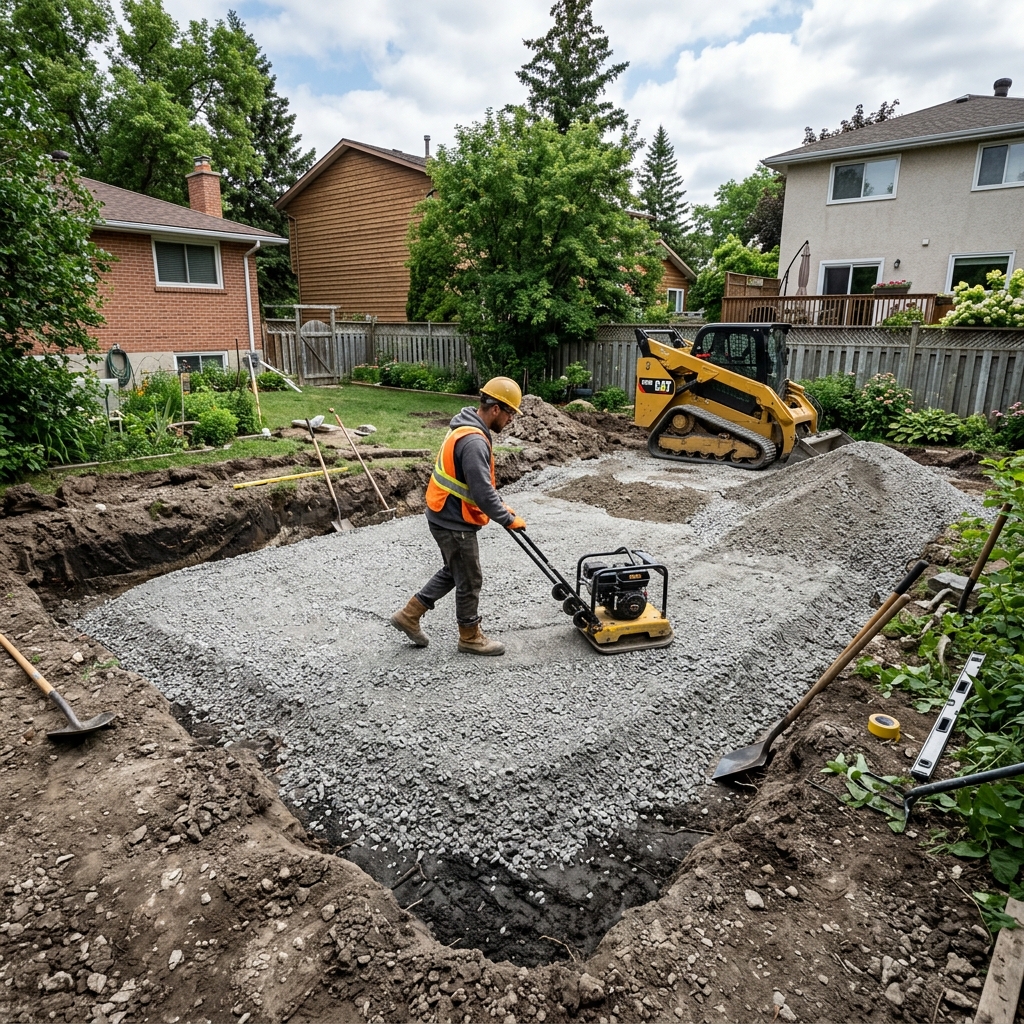
A standard multi-sport 40 × 60 ft court with modular tiles and a properly engineered base typically runs $22,000 to $40,000. A full build that includes perimeter fencing, LED court lighting, and surrounding landscaping integration runs $35,000 to $65,000 or more. The cost spread within each range is driven by site conditions: heavy clay soil requiring deeper excavation, thicker concrete for freeze-thaw durability, site grading on uneven lots, and drainage infrastructure on poorly-draining properties are all real variables that push projects toward the higher end.
| Project | Size | Estimated Cost |
|---|---|---|
| Modular tile half-court, basic base | 30 × 30 ft | $12,000–$20,000 |
| Multi-sport court, modular tiles, proper base | 40 × 60 ft | $22,000–$40,000 |
| Pickleball court, concrete base + acrylic surface | 30 × 60 ft | $25,000–$45,000 |
| Full court + fencing + lighting + landscaping | 40 × 60 ft | $35,000–$65,000+ |
Use the Lawn ‘N’ Order cost calculator to see how a sport court fits into your full backyard project budget alongside a patio, fencing, or lighting.
Orient the court to minimize direct sun in players’ eyes during peak-use hours. Keep it back from the house.
A 10-foot chain link fence is standard. Black vinyl-coated chain link reads cleaner than bare galvanized for street-facing yards.
LED court lighting mounted on fence poles extends usable hours. Winnipeg’s summer evenings are long and worth using.
Many Winnipeg backyards aren’t flat. Graded material often becomes a retaining wall along one or two sides: done well, this creates a natural raised seating area.
Design the court and an adjacent patio or seating area as a unit. The patio is where the BBQ, fire pit, and furniture go.
Assembling modular surface tiles once the base is prepared and the concrete has cured. Most tile systems click together without special tools.
Excavation, subbase compaction, concrete forming and pouring, and drainage design. The consequences of getting these wrong in Winnipeg’s climate are expensive: a full demo and rebuild costs as much as the original project.
How long does a properly built backyard sport court last in Winnipeg?
A sport court with a properly engineered base — full excavation to 18 to 24 inches, 8 to 12 inches of compacted crushed limestone, reinforced concrete slab at a minimum of 5 inches — should last 20 to 30 years with normal maintenance. Courts we’ve inspected that failed within 5 years almost always had a base that was either too shallow, used the wrong material, or skipped the crushed stone sub-base layer entirely.
Can a sport court be added to a backyard that already has a patio?
Yes, but the integration needs to be designed carefully. The court and patio need to share a consistent grade so water drains away from both. If the court goes in after a patio is already built, the excavation and grading work has to work around the existing hardscape. Building both at the same time is almost always more efficient and less expensive than sequencing them as separate projects.
What’s the minimum yard size for a backyard sport court in Winnipeg?
A basketball half-court needs 30 × 30 feet minimum — about 900 square feet of usable space. A pickleball court needs 30 × 60 feet for the play area plus a run-off zone. Most standard Winnipeg suburban lots can accommodate at least a half-court or pickleball court, depending on the existing layout of the yard, any existing structures, and municipal setback requirements.
Do backyard sport courts require a permit in Winnipeg?
The concrete slab itself typically doesn’t require a permit for residential use, but the fencing around the court often does if it exceeds 1.2 metres in height. Lighting that requires electrical work will require an electrical permit. Confirm specifics with the City of Winnipeg before starting, as requirements can vary based on property zoning and proximity to property lines.
Can the court be used as a skating rink in winter?
Yes, if designed for it from the outset. The court needs to be graded with a very slight slope in one direction — for flooding, you want a consistent slope toward one end, not the standard 1% away from centre that’s optimal for court play. The edging needs to be sealed to hold water. Access to a hose bib nearby is essential. Plan this at the design stage; retrofitting a court for flooding after the fact is possible, but creates compromises.
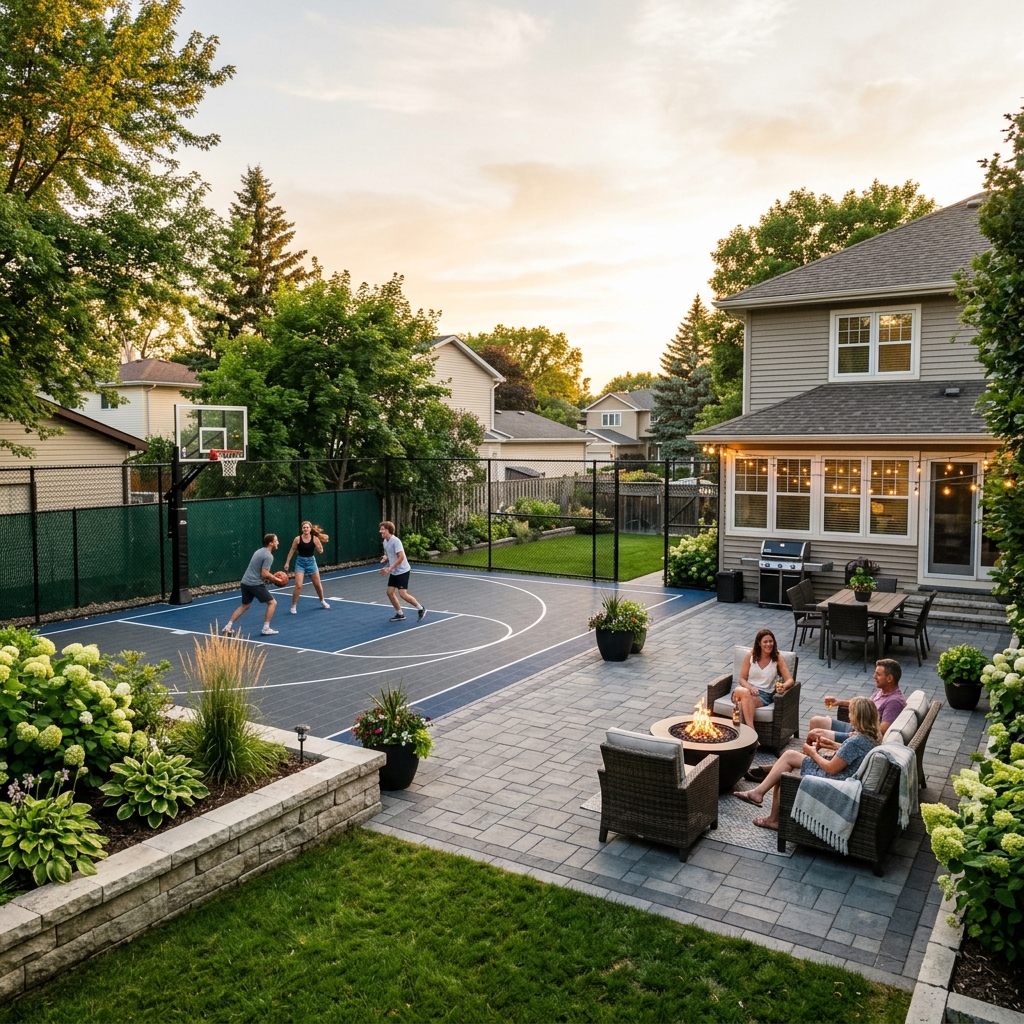
Lawn ‘N’ Order has been building Winnipeg yards since 1993. We’ve seen sports courts fail after two winters because the base wasn’t built for our clay and our climate — and we’ve built courts that are still flat and level after fifteen years because the foundation was done properly. Planning a full backyard renovation? Our residential design team can incorporate a sport court into a complete backyard plan: patio, court, lighting, and landscaping designed as one coherent space.
Use the Free Calculator Book a Free ConsultationSend the address and a rough idea of scope. We'll walk it, take levels, and give you a written number you can compare line for line.
Keep reading
A plow truck, a pusher and a loader do three different jobs, and the pile you start in November is still there…
Read the article →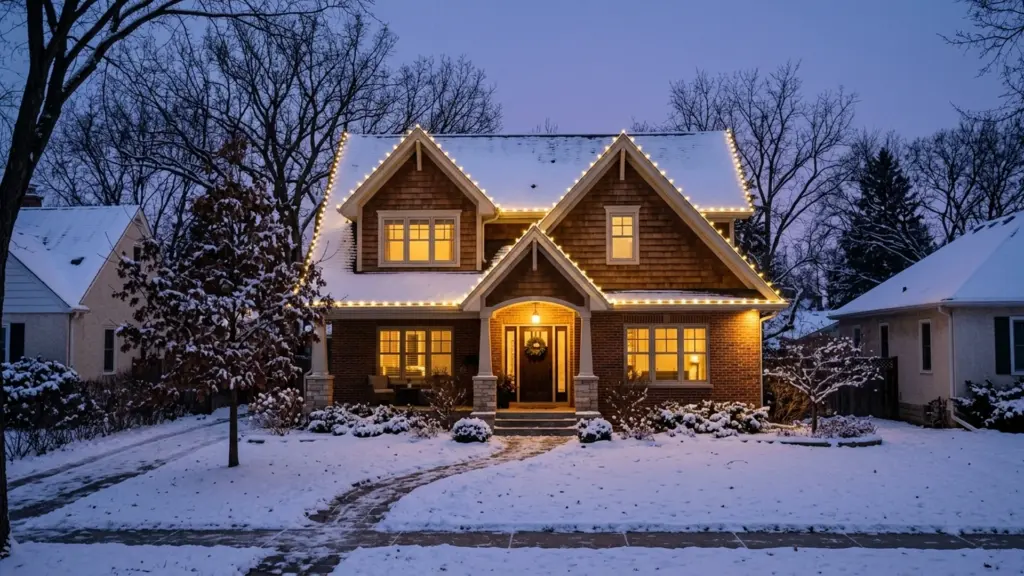
Holiday Light Installation Winnipeg: Book Before the Ground Freezes Quick Takeaways Holiday light installation in Winnipeg has a short window: crews install…
Read the article →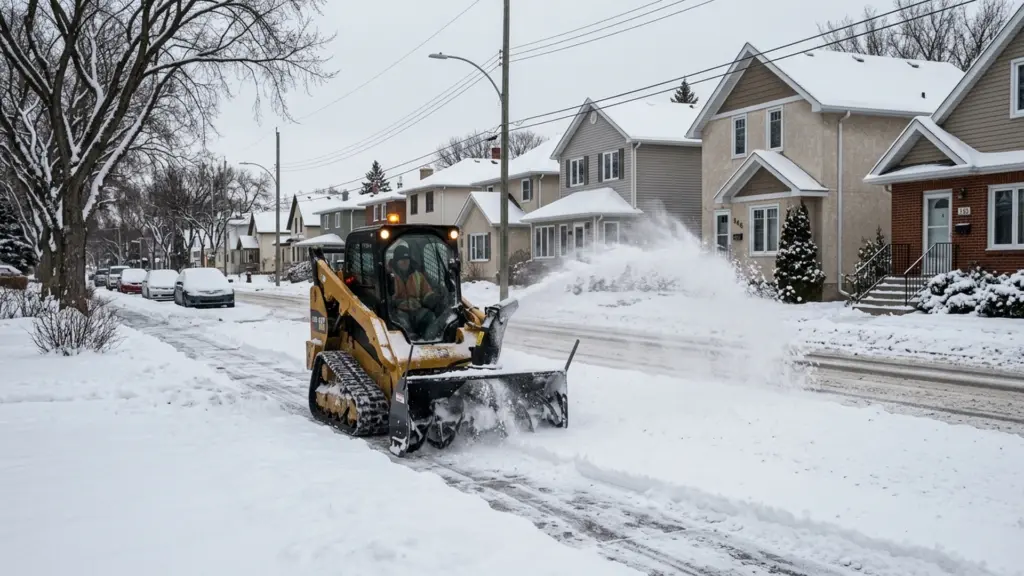
Who Clears the Sidewalk in Winnipeg? What the City Does and What You’re Responsible For Quick Takeaways Winnipeg is one of the…
Read the article →