
Parking Lot Snow Removal Winnipeg: Equipment & Staging
A plow truck, a pusher and a loader do three different jobs, and the pile you start in November is still there…
Read the article →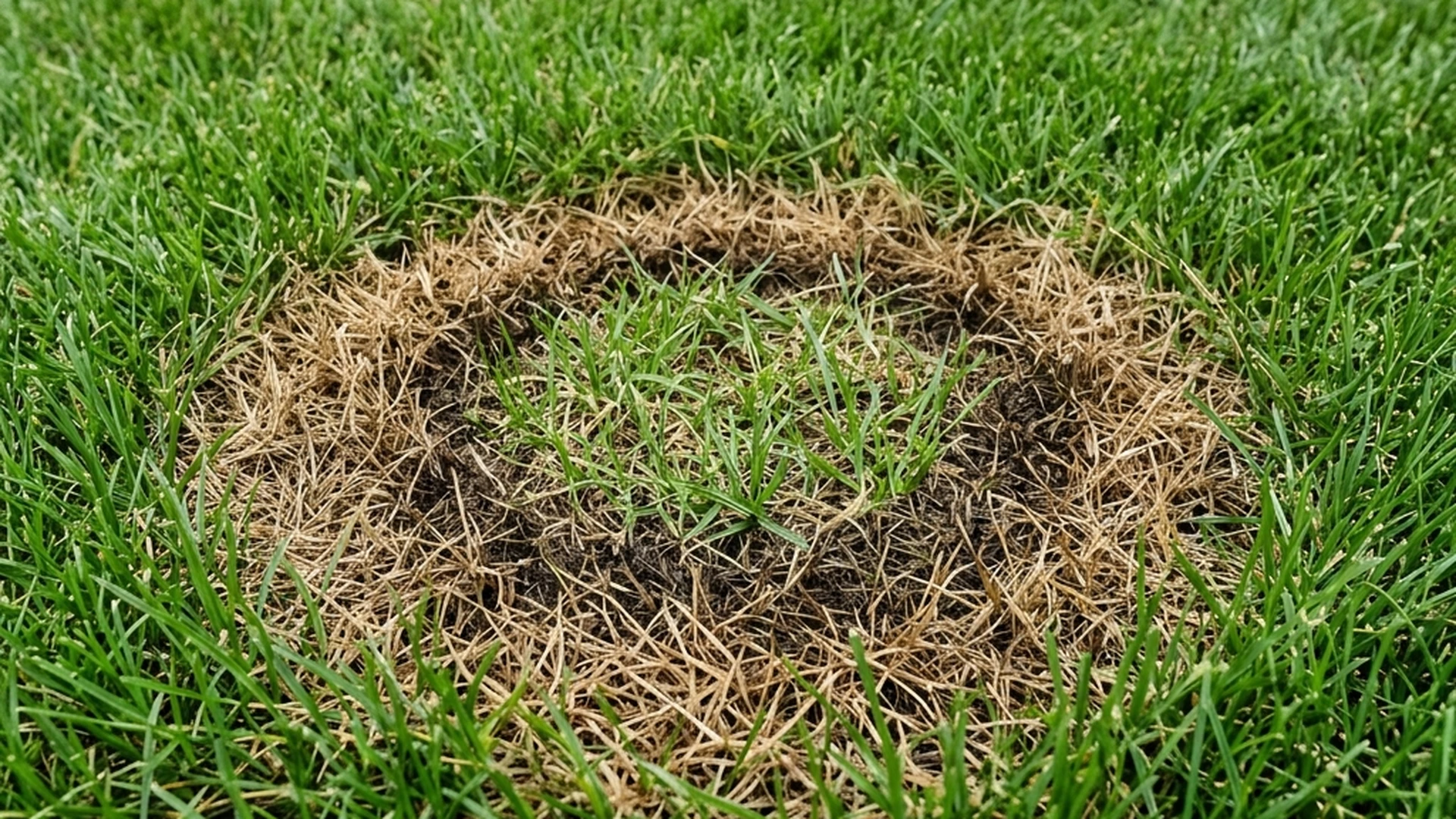
Necrotic ring spot attacks roots, not leaves, so by the time the frog-eye rings are visible in summer, the damage is already done. Dollar spot responds to a modest nitrogen correction more reliably than fungicide. Brown patch shows up here only during extended hot humid stretches. Here's how to tell Winnipeg's three most common growing-season lawn diseases apart, and why cultural correction outperforms chemical treatment for most of them.
Fungal diseases do not appear randomly. Each one has a specific set of conditions it requires to establish and spread: a temperature range, a moisture level, a host grass type, and often a contributing factor like compacted soil, excess nitrogen, or thatch accumulation. Understanding what triggered the disease is more useful than identifying the name alone, because the triggering conditions are what need to change.
Winnipeg lawns are dominated by Kentucky bluegrass, creeping red fescue, and perennial ryegrass, exactly the cool-season turf mix that most summer fungal diseases target. Identifying the disease, understanding what created the conditions for it, and correcting those conditions is the full treatment cycle. In most cases, the correction is cultural rather than chemical.
For snow mold, the separate fungal disease that appears in early spring after snow cover, see our Snow Mold in Winnipeg Lawns guide. This post covers the growing-season diseases.
Dollar Spot
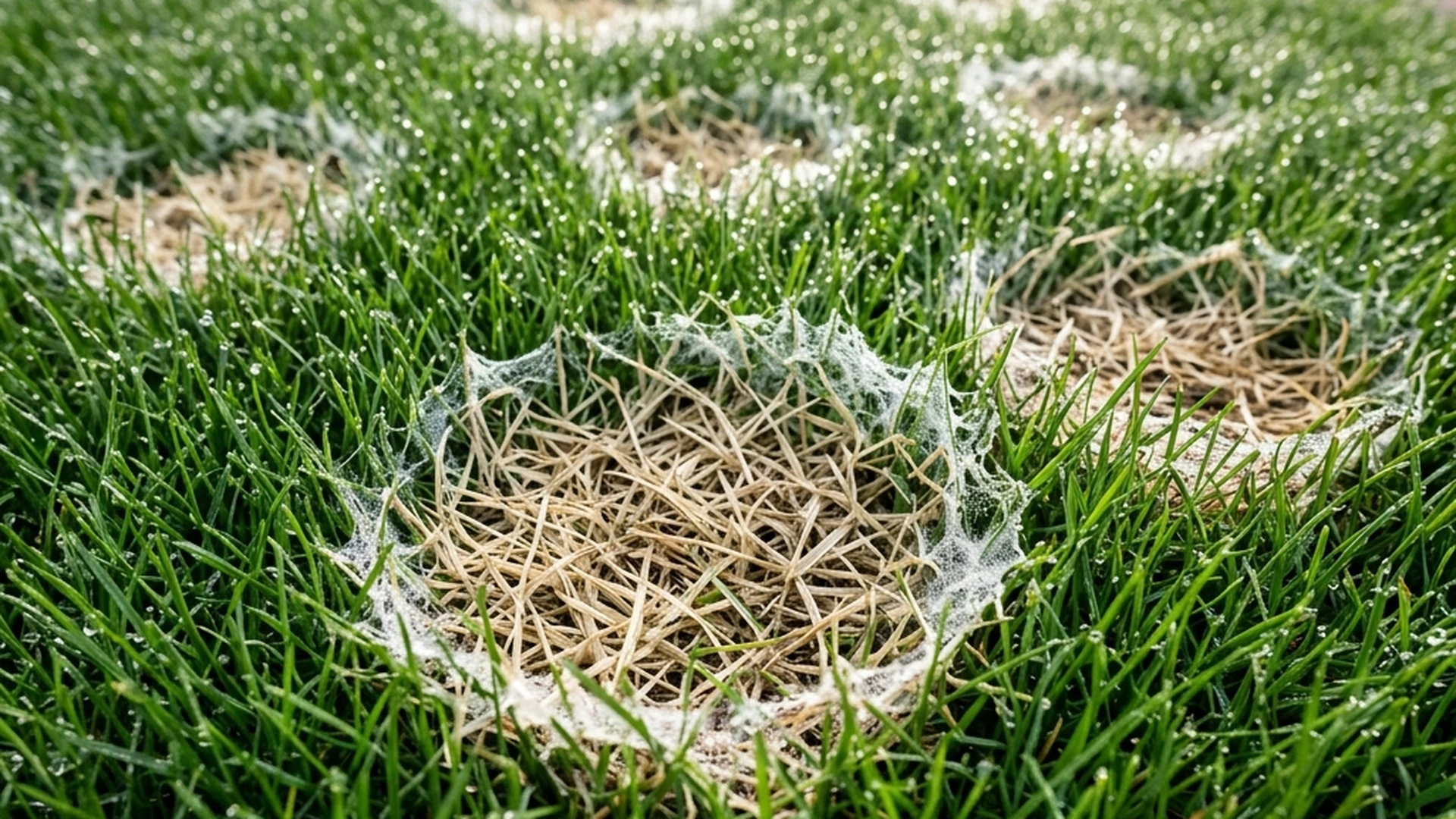
Dollar spot appears as small, roughly circular patches of bleached or straw-coloured grass, typically 2 to 6 inches in diameter. In the early morning when dew is present, a white cobwebby mycelium is visible on the affected grass blades at the edge of the patch. Individual grass blades in an affected patch show characteristic hourglass-shaped lesions: tan or bleached in the centre with reddish-brown margins, distinct from the browning patterns of other diseases or environmental stress.
Multiple dollar spot patches appearing close together can merge into larger irregular areas of damaged turf that look like a single large dead zone. The individual patches at the margin of the affected area are the diagnostic clue.
Dollar spot is active when soil moisture is low and daytime temperatures range from approximately 15 to 30 degrees Celsius, with high relative humidity and prolonged dew periods. In Winnipeg, this describes many June through August nights: dry soil from a dry spell, humid evening air, and overnight dew that keeps leaf surfaces wet for extended periods.
The disease is favoured by low nitrogen fertility. Lawns that are underfertilized or where the nitrogen has been depleted by leaching are significantly more susceptible than lawns maintaining adequate fertility. This is one reason the cultural response to dollar spot, a modest mid-season nitrogen application, is often more effective than fungicide.
Adequate nitrogen fertility. Dollar spot is strongly associated with nitrogen deficiency. A modest slow-release nitrogen application (not more than 0.5 kg N per 100 sq m) when dollar spot is active or when conditions favour it often resolves the outbreak without chemical treatment.
Morning irrigation. Water deeply and early enough that the grass surface dries before evening. Extended leaf wetness from afternoon or evening irrigation creates ideal conditions for dollar spot spread.
Aeration. Compacted clay soil produces surface conditions that hold moisture and favour dollar spot establishment. Core aeration improves drainage and air movement at the turf surface.
Avoid low mowing during active disease. Mowing height below 6 to 7 cm during dollar spot outbreaks increases stress and spread. Maintain mowing height at 7 to 8 cm during recovery.
Necrotic Ring Spot
Necrotic ring spot produces its most distinctive symptom on Kentucky bluegrass lawns: circular patches of dead or dying grass, typically 15 to 30 cm in diameter, with the characteristic feature that grass in the centre of the ring often recovers while the outer ring remains dead. This creates the “frog-eye” appearance, a green or recovering centre surrounded by a ring of straw-coloured dead turf.
The patches are usually 15 to 30 cm across in early stages and can expand to 60 cm or more as the disease progresses. The dead ring may persist through one or more seasons, with weeds and annual grasses filling in the bare areas if the turf does not recover.
Dollar spot kills leaf tissue. Necrotic ring spot kills roots. The causal fungus attacks the root system and crown of Kentucky bluegrass, colonizing roots in the cool, moist conditions of late spring and the disease expressing symptoms on the surface during the heat stress of summer. By the time the brown rings are visible in June and July, the root damage has already occurred.
This root-focused mechanism makes chemical fungicide treatment after visible symptoms appear largely ineffective, the damage is done. Cultural management that reduces predisposing stress and improves root conditions is what produces recovery. New growth from rhizomes gradually fills in the damaged rings over one to two seasons when conditions are corrected.
Necrotic ring spot is most severe on newly sodded lawns in the first two to three years, on compacted clay soils, and in areas with irrigation that keeps the surface consistently moist. Winnipeg’s clay soil and the common practice of frequent shallow watering create exactly the predisposing conditions this disease requires.
Deep, infrequent irrigation. Frequent shallow watering keeps the shallow root zone continuously moist, ideal conditions for the necrotic ring spot fungus. Shift to deep watering once every 5 to 7 days, allowing the surface to dry between applications.
Core aeration. Reducing clay compaction is the single most important cultural practice for necrotic ring spot management in Winnipeg. Annual fall aeration improves drainage and reduces the continuously moist shallow soil conditions the fungus prefers.
Avoid excess nitrogen in spring. High nitrogen rates in early spring push rapid top growth at the expense of root development, increasing the plant’s susceptibility. Apply nitrogen on the late spring and fall schedule, not in early spring.
Overseed with resistant varieties. Perennial ryegrass and creeping red fescue are significantly more resistant to necrotic ring spot than most Kentucky bluegrass cultivars. Overseeding thin and affected areas with a blend that includes these species diversifies the turf stand and reduces the proportion of susceptible plants.
For overseeding timing, blend recommendations, and establishment care for Winnipeg lawns, see our Overseeding Winnipeg guide.
Brown Patch: A Conditional Winnipeg Disease
Brown patch (caused by Rhizoctonia solani) is commonly featured in lawn disease guides across North America, but its relevance to Winnipeg lawns is more conditional than dollar spot or necrotic ring spot.
Brown patch requires sustained warm, humid conditions: nighttime air temperatures consistently above 18 to 20 degrees Celsius and prolonged leaf wetness. Winnipeg’s nights are generally cooler than this threshold through most of the summer, which is why brown patch is not the persistent problem here that it is in more humid, warmer markets. However, during extended hot humid periods, the kind of July or August stretch where nighttime lows stay above 18 degrees for a week or more, brown patch can appear, particularly on perennial ryegrass.
Kentucky bluegrass, the dominant grass in most Winnipeg lawns, is less susceptible to brown patch than perennial ryegrass or tall fescue. Brown patch on KBG lawns in Winnipeg is occasional rather than routine, and typically self-limiting once cooler conditions return.
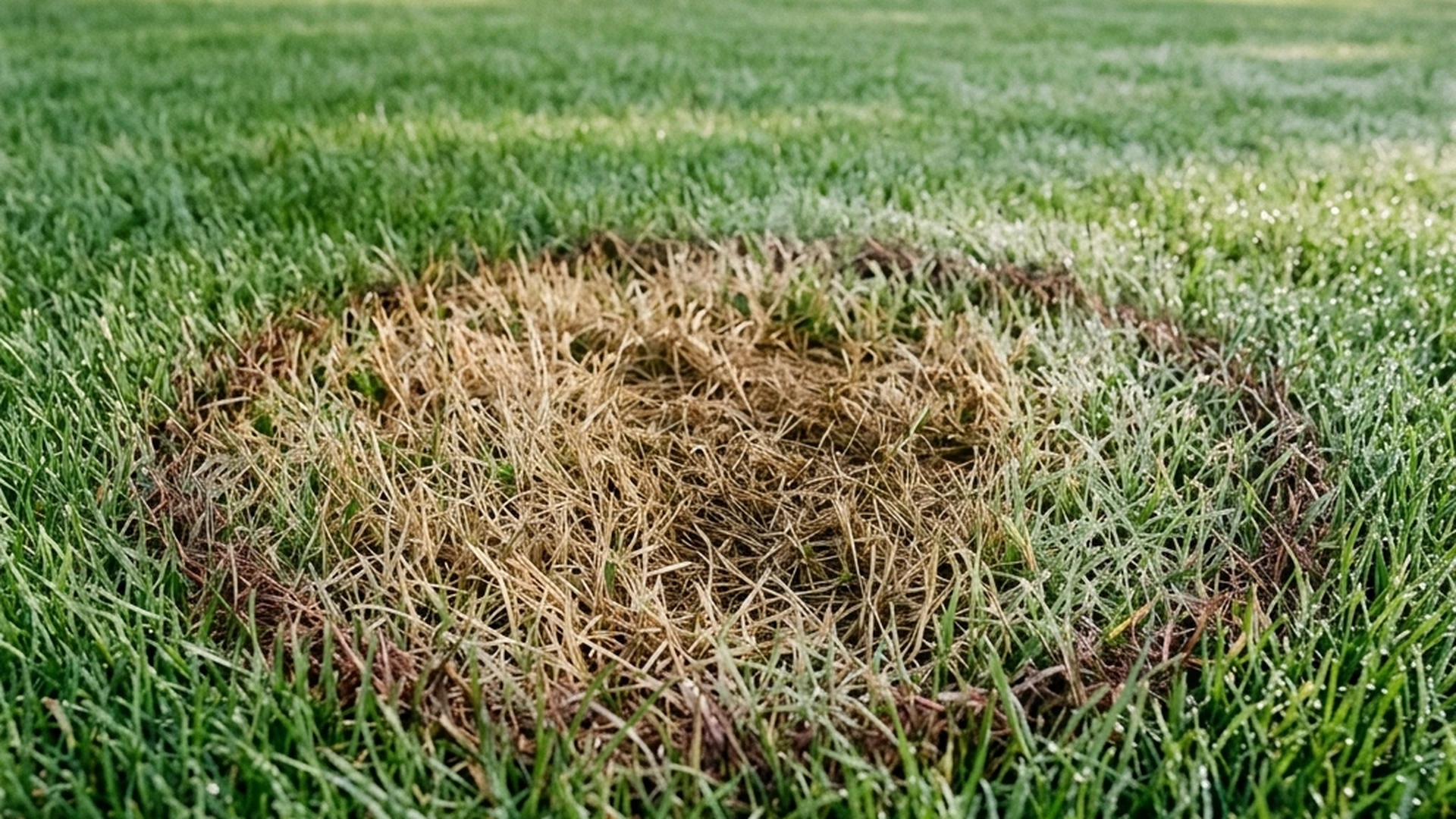
Brown patch produces roughly circular patches of light brown grass, typically 30 cm to several metres in diameter. The diagnostic signature in early morning conditions is a dark purplish “smoke ring” border around the patch, roughly 1 to 2 cm wide, visible when dew is present. This smoke ring fades by midday. Individual grass blades show irregular tan lesions with dark brown borders.
Monitor for brown patch during extended summer periods when overnight temperatures stay above 18 degrees Celsius and the lawn surface remains wet from dew or irrigation for more than 10 hours. If these conditions persist for 5 or more days in a row, brown patch conditions exist. Perennial ryegrass areas of the lawn are most likely to show symptoms.
The three diseases in this guide, and several others including fairy ring, red thread, and summer patch, can produce similar-looking symptoms at first glance. Before applying any fungicide, the pattern and timing of the damage are the most useful diagnostic tools.
Dollar spot: small coins of bleached grass with hourglass blade lesions, low-nitrogen conditions.
Necrotic ring spot: frog-eye rings, KBG in compacted clay, root zone damage.
Brown patch: large circular patches in hot humid periods, smoke ring border, ryegrass most affected.
Lawn care professionals with local experience can identify which disease is active and whether cultural or chemical management is appropriate. For most residential Winnipeg lawn disease situations, the cultural response is sufficient and the chemical option is the backup when cultural changes alone are not producing recovery.
Lawn ‘N’ Order’s lawn care programs include disease assessment and cultural management recommendations as part of seasonal maintenance. See our lawn care services page.
Can I just apply a fungicide and solve the problem?
Fungicide can suppress active disease during outbreak conditions, but it does not correct the underlying cultural conditions that allowed the disease to establish. A lawn treated with fungicide while the predisposing conditions remain in place will return to the same disease state once the fungicide wears off. Cultural correction, watering timing, aeration, mowing height, fertilization timing, is what produces lasting recovery. Fungicide is most useful as a tool to protect high-value turf during an active outbreak while cultural changes take effect.
How do I know if the brown patches in my lawn are disease or something else?
Drought, dog urine, grub damage, and fungal disease can all produce brown patches. The location, pattern, and timing narrow it down. Dog urine spots appear as dark green rings around a brown centre, typically in consistent locations. Drought damage affects the whole lawn uniformly in areas with poor irrigation coverage. Grub damage allows the turf to be rolled back like a rug in affected areas, revealing grub presence in the root zone. Fungal disease patches have characteristic margins, timing associated with specific weather conditions, and in many cases visible mycelium or spore signs at the margin.
Is it safe to let children and pets on a lawn treated with fungicide?
Read the specific product label for re-entry timing and precautions. Most lawn fungicide products specify a waiting period after application before the area is safe for children and pets. Manitoba’s current pesticide regulations require that Health Canada-registered products are applied according to label directions. Confirm current provincial pesticide rules with LNO or a licensed pesticide applicator before any chemical application.
Lawn ‘N’ Order provides lawn health assessments and seasonal care programs for Winnipeg properties.
Use the Free Calculator Book a Free ConsultationSend the address and a rough idea of scope. We'll walk it, take levels, and give you a written number you can compare line for line.
Keep reading
A plow truck, a pusher and a loader do three different jobs, and the pile you start in November is still there…
Read the article →
Holiday Light Installation Winnipeg: Book Before the Ground Freezes Quick Takeaways Holiday light installation in Winnipeg has a short window: crews install…
Read the article →
Who Clears the Sidewalk in Winnipeg? What the City Does and What You’re Responsible For Quick Takeaways Winnipeg is one of the…
Read the article →