Sump Pump Landscaping Winnipeg: Fix the Drainage Cause
- A sump pump removes water that has already reached your basement. Landscaping prevents that water from reaching the basement in the first place
- Most Winnipeg basement water problems are caused by grade that slopes toward the house, missing or damaged window well drainage, and downspouts that discharge too close to the foundation
- The fix is usually a combination of regrading, extending downspouts, and installing surface or subsurface drainage to direct water away from the foundation
- Clay soil makes Winnipeg drainage problems worse than they would be in markets with sandy soil: water that falls near the foundation stays near the foundation
- Lawn ‘N’ Order is Allan Block certified and MBNLA member with 30-plus years of drainage and grading work across Winnipeg’s clay-soil properties
The Sump Pump Is a Symptom, Not the Solution
A sump pump is an emergency device. It removes water that has already infiltrated your foundation drainage system and pooled in the sump pit. If the pump is running frequently during rain events or spring thaw, it is telling you something important: water is consistently reaching the point in your foundation system where it triggers the pump.
That is a drainage design problem. The pump manages the consequence; it does not address the cause. And in Winnipeg’s clay-heavy soil, where water that pools near the foundation has nowhere to go on its own, the cause is almost always in the landscape around the house.
Fixing the landscape drainage is what stops water from reaching the foundation in the first place. The sump pump becomes a backup for extreme events rather than routine operation. That shift extends the pump’s life, reduces the risk of failure during a critical event, and stops the ongoing moisture load on your foundation and basement.
The Four Most Common Landscaping Causes of Basement Water in Winnipeg
Grade Sloping Toward the House
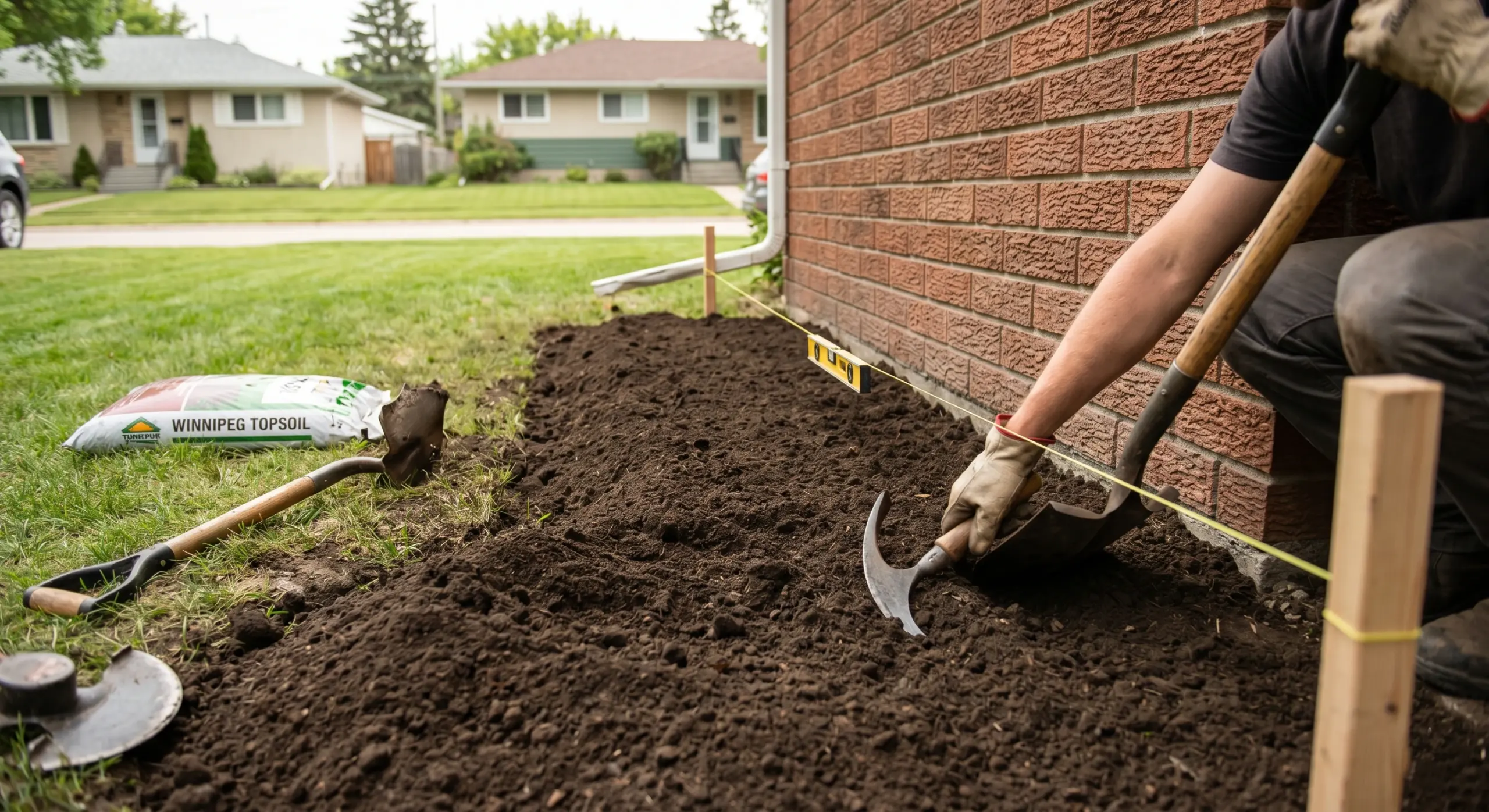
The ground around your foundation should slope away from the house at a minimum of 2% over the first 6 feet — roughly 1.5 inches of drop per foot. In Winnipeg’s older neighbourhoods, settled soil, added landscaping, and natural grade changes over decades frequently create areas where the grade runs flat or actually toward the house. When it rains, water follows the grade. If the grade runs toward the foundation, the water follows it there and begins saturating the clay immediately adjacent to the foundation wall. Clay retains that moisture for extended periods rather than draining it away, resulting in persistent hydrostatic pressure against the foundation. Correcting foundation grade is the single most impactful landscaping intervention for basement water problems.
Downspouts Discharging Too Close to the Foundation
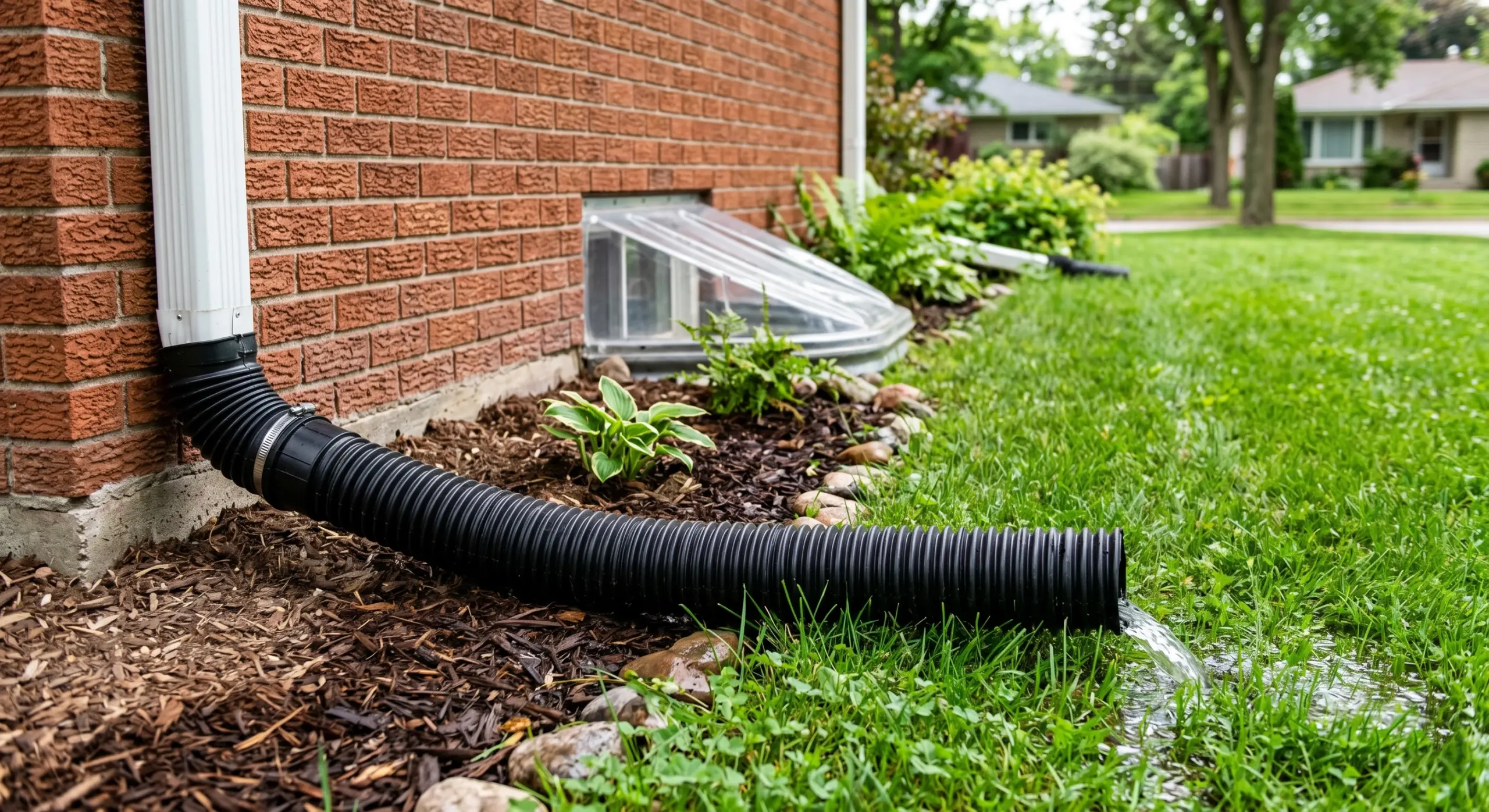
A standard eavestrough system collects all the rain that falls on the roof and concentrates it at the downspout discharge points. A typical Winnipeg house roof might collect 2,000 to 4,000 litres of water during a moderate rainfall. If the downspout discharges 12 inches from the foundation, all of that concentrated water lands immediately adjacent to the foundation and begins saturating the clay. Downspout extensions are one of the cheapest and most effective drainage interventions available: a flexible extension that moves the discharge point 6 to 8 feet from the foundation costs almost nothing and can dramatically reduce the water load on the clay adjacent to the foundation. Underground downspout connections that run to a daylight outlet well away from the house are a more permanent solution.
Window Wells That Hold Water
Below-grade window wells that are not properly drained become water collection points during rain events. Water fills the well, saturates the soil at the base, and eventually finds its way through the window frame or the foundation wall around it. Window well drainage requires a gravel-filled pit below the well that connects to the drainage system below, or a surface drain at the base of the well that redirects water away. A well cover, which most window wells should have, prevents rain from entering the well directly. Both elements together — proper subsurface drainage and a well cover — are what actually solve the window well problem.
Hard Surfaces That Direct Water Toward the Foundation
Driveways, walkways, and patios that are graded toward the house, or that are set at elevations that funnel surface runoff toward the foundation, contribute to the water load. A concrete or interlocking paver patio that pitches slightly toward the house directs all rain that falls on it toward the foundation rather than away from it. Correcting this requires either resetting the surface at the correct grade or installing perimeter channel drains that intercept and redirect the runoff.
The Landscaping Solutions That Actually Work
Foundation Regrading
Regrading around the foundation involves: removing existing sod and plantings within 6 feet of the house, adding compacted topsoil or clean fill to establish positive slope away from the foundation, grading to a minimum 2% slope over 6 feet (ideally 4 to 5% for clay soil), and re-sodding or planting to stabilize the new grade. In Winnipeg’s clay soil, the added soil needs to be placed and compacted in lifts rather than all at once to prevent settling. The finished grade should maintain positive slope through several freeze-thaw cycles without significant settling.
French Drain Installation
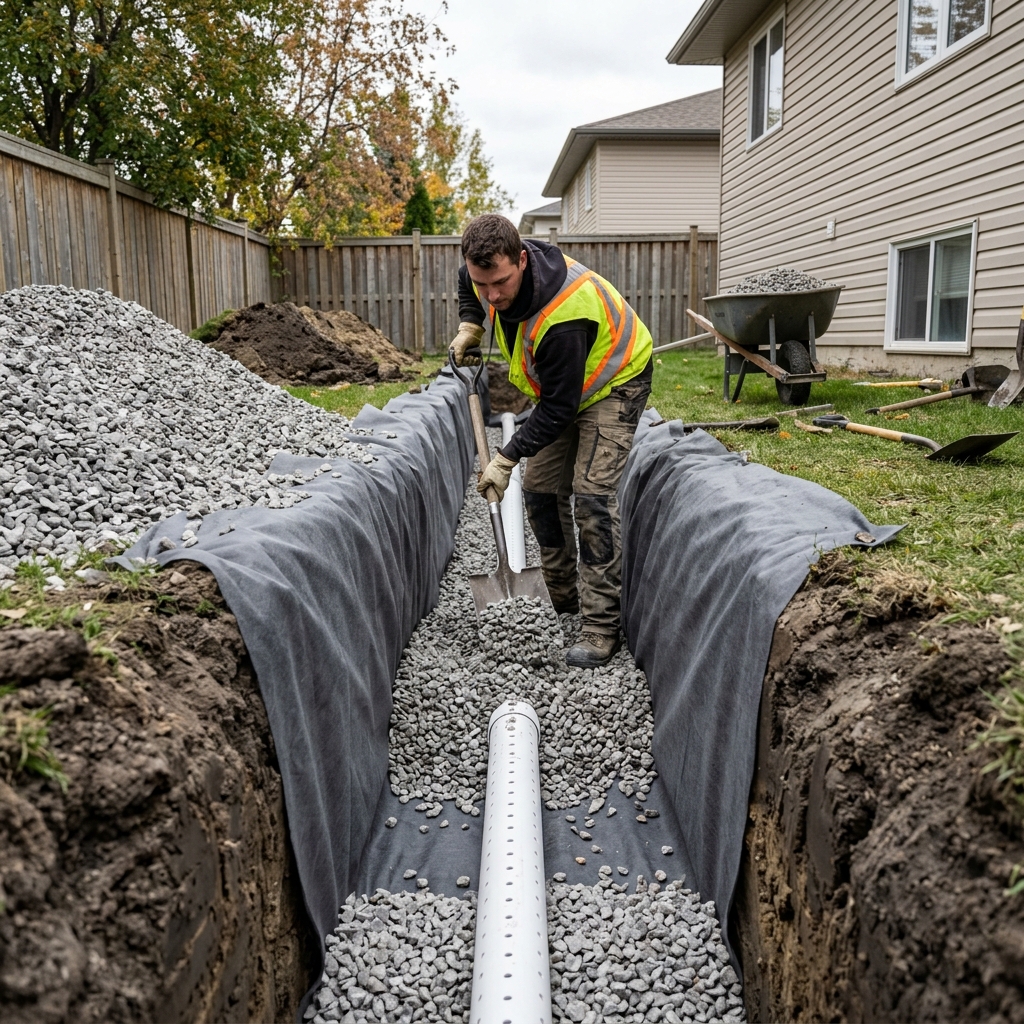
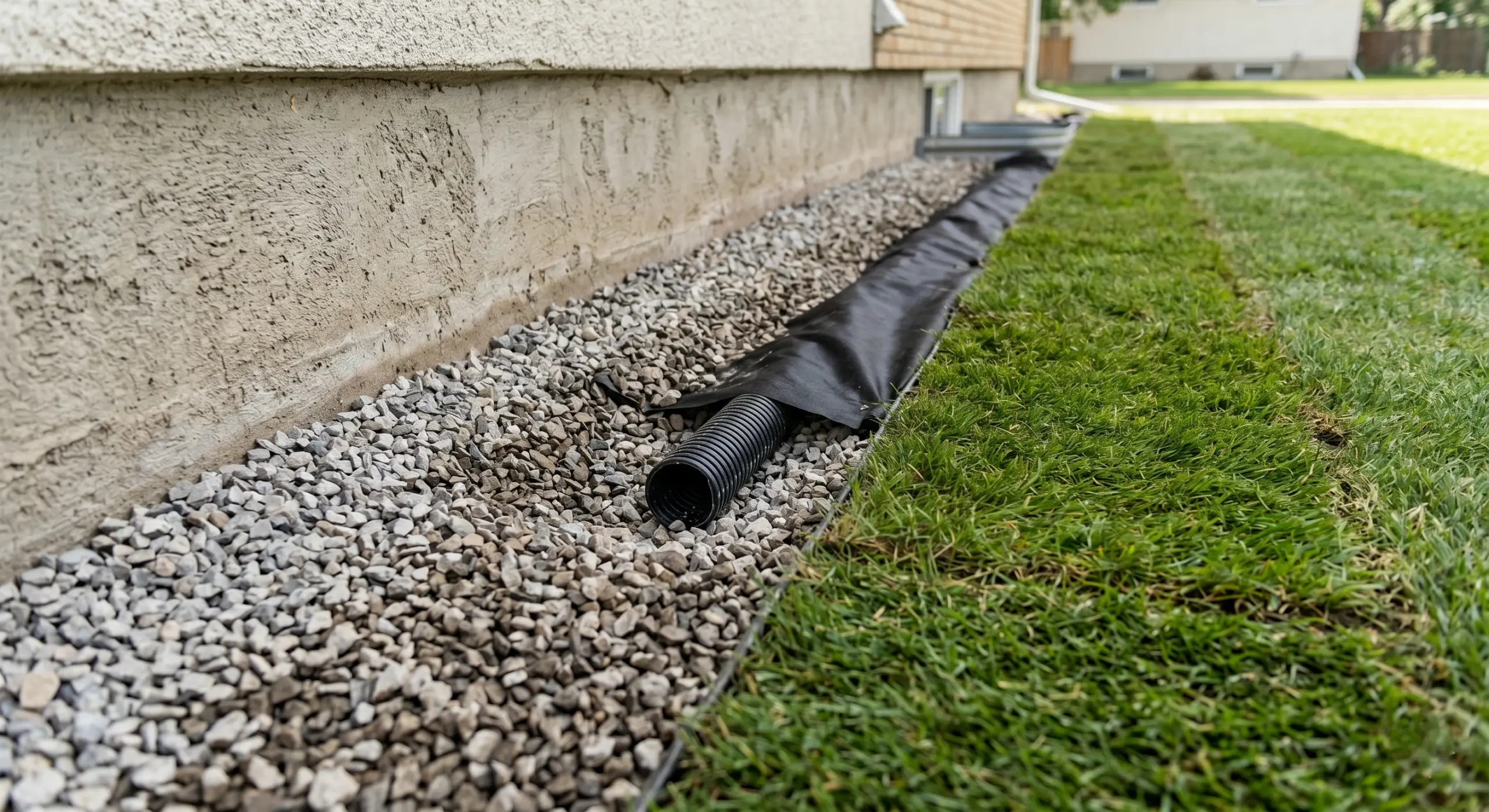
A French drain is a perforated pipe buried in a gravel-filled trench that intercepts subsurface water and redirects it to a daylight outlet or a collection point away from the foundation. For properties where surface regrading alone is insufficient because water enters through subsurface routes, a French drain provides a dedicated pathway for that water to exit the foundation zone. French drain installation in Winnipeg clay requires geotextile fabric wrapping the gravel to prevent clay migration into the drainage aggregate over time. A French drain installed without this fabric will eventually clog as clay works into the gravel. For full detail on drainage approaches for Winnipeg properties, see our drainage solutions guide.
Swale Design
A swale is a shallow, gently sloped channel designed to collect and direct surface runoff. In Winnipeg yards where water from neighbouring properties or from the rear of the lot drains toward the house, a properly designed swale intercepts that flow and redirects it to a suitable discharge point: the street, a boulevard drain, or a low area away from the foundation. Swales are the right solution for properties where the drainage problem is not just around the foundation but involves water moving across the property from elsewhere.
Raised planting beds against the foundation: Raised planting beds installed against the house foundation are a frequent cause of water problems that homeowners do not connect to their landscaping. A raised bed holds moisture against the foundation wall, eliminates positive grade away from the house, and creates a zone of sustained wet clay immediately adjacent to the foundation. If you have raised beds against the house foundation and basement moisture issues, the beds are a likely contributor. The fix is either removing the beds and regrading, or modifying them with a drainage gap between the bed and the foundation and ensuring the grade under the bed still slopes away from the house.
Integrating Drainage With Landscape Design
The most effective approach treats drainage not as a separate remediation task but as an integral part of the landscape design. Grade, patio pitch, downspout routing, planting bed placement, and hardscape layout all affect how water moves across the property. Designing all of these with drainage in mind from the start prevents the problems that require expensive remediation later.
Lawn ‘N’ Order integrates drainage assessment into every landscape project. Use the cost calculator at lawnnorder.ca/get-estimate to see grading, drainage, and related services, or book a site consultation to assess your specific water movement patterns. See also our retaining walls page for how drainage is integrated into tiered yard designs.
FAQ: Sump Pump and Drainage Landscaping in Winnipeg
My sump pump runs constantly during spring thaw. Is that normal?
Some sump pump activity during spring thaw is normal, particularly in Winnipeg’s rapid thaw conditions. However, a pump that runs continuously for days or activates frequently during normal rain events indicates more water is reaching the sump than should be, which points to a landscape drainage problem. A pump that works hard every spring is not a drainage system; it is a sign that the drainage system around the house needs attention.
How much does foundation regrading cost in Winnipeg?
Foundation regrading around a typical Winnipeg house runs $2,000 to $6,000 depending on scope: how much of the perimeter needs attention, how much soil needs to be added, whether existing plantings need to be removed and replaced, and whether the finished surface is sod, seed, or planting. A French drain adds $3,000 to $8,000 depending on length and discharge point complexity. Use the Lawn ‘N’ Order cost calculator to scope your specific project.
Can I add soil against my foundation myself?
You can add soil to improve grade yourself, but two important details apply. First, do not cover the weeping tile inspection port or the window well drainage opening when adding soil. Second, the added soil needs to be compacted in layers as you add it; simply piling loose soil against the foundation will settle unevenly and may settle back toward the house over one to two freeze-thaw cycles. For significant regrading, a compactor and proper technique produce results that hold.
Stop the Water Before It Reaches the Pump
Lawn ‘N’ Order has been solving drainage and grading problems on Winnipeg properties since 1993. Book a free consultation and we will walk your property, identify where water is entering the foundation zone, and recommend the landscape interventions that address the cause.
Use the Free Calculator Book a Free Consultation