Site Clearing Winnipeg: What Happens Before Construction
- Site clearing is the first step in any new landscape build: removing existing vegetation, old structures, debris, and preparing the ground before design work can be executed
- Calling Manitoba’s Click Before You Dig service is required before any excavation, and this needs to happen with enough lead time to not delay your project start
- Site clearing scope varies enormously: a lawn area that needs sod stripped is a different job than a lot with mature trees, an old shed, and buried debris from a previous era of construction
- What happens to cleared material, whether it is reused on site, recycled, or disposed of, affects both project cost and environmental impact
- A clear site assessment before work begins prevents the change orders and cost surprises that come from discovering buried problems mid-project
Why Site Clearing Is Its Own Project Phase
Every landscape design, a new patio, a retaining wall, a full backyard renovation, needs a cleared and prepared site before construction can begin. This sounds obvious, but the scope of what “clearing” actually involves is often underestimated at the planning stage, and it is where unexpected costs and schedule delays most commonly originate.
Site clearing is not just cutting the grass short. It can involve removing established sod, cutting down and disposing of trees and shrubs, demolishing old structures, locating and dealing with buried utilities, and hauling away material that has accumulated on a property over years or decades. Understanding the actual scope of your site before a design is finalized avoids the change orders that come from discovering a problem once work has already started.
What Site Clearing Actually Involves
Vegetation Removal
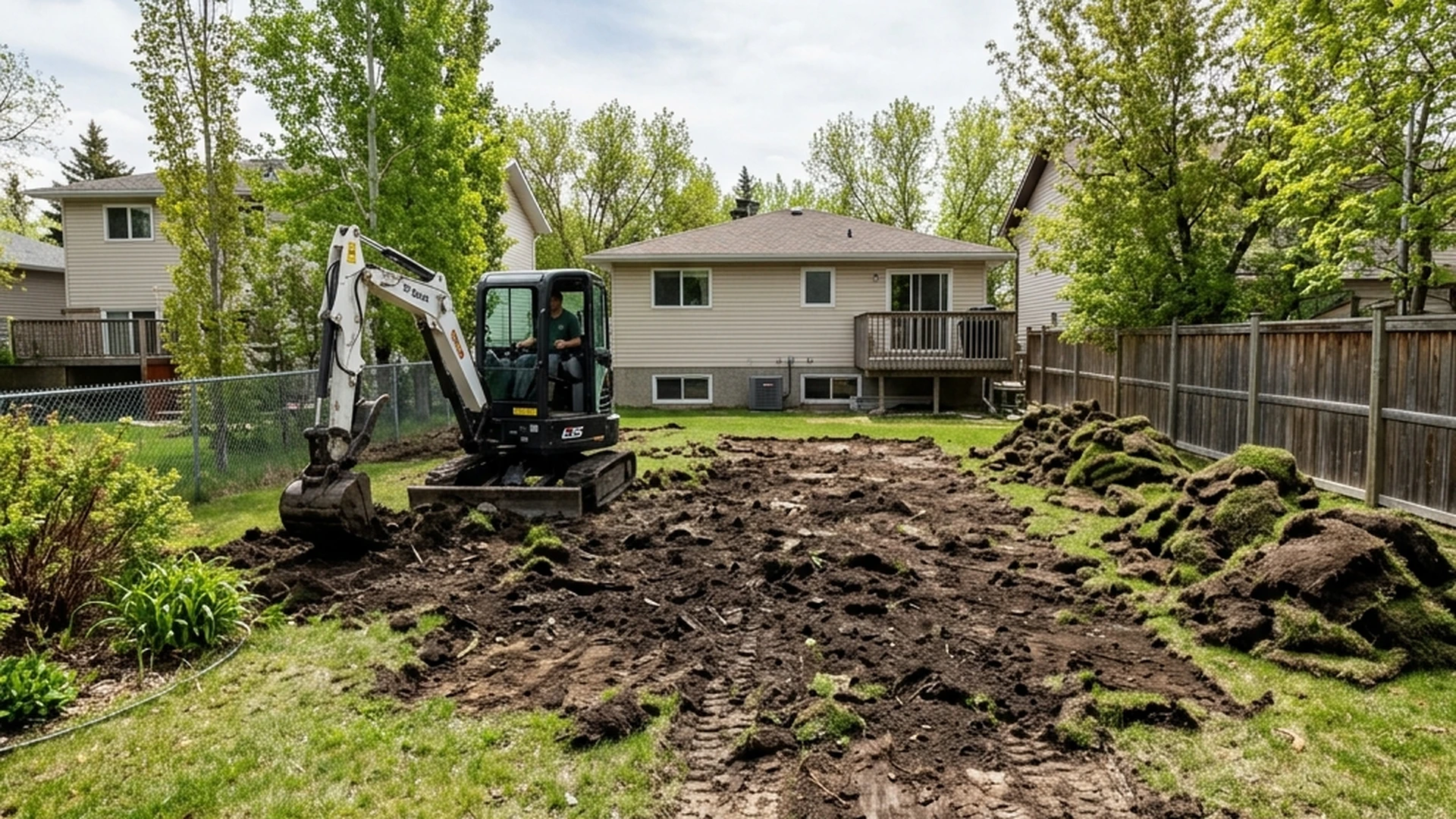
Existing sod, garden beds, shrubs, and trees that fall within the new design footprint need to be removed. Sod removal is usually straightforward with the right equipment; tree removal scope depends heavily on size, species, and whether the stump is being pulled or ground down. For elm trees specifically, Manitoba’s Forest Health Protection Act regulates disposal; see our tree and branch removal waste guide for the elm-specific rules that apply if your site clearing involves removing an elm.
Structure Demolition
Old sheds, dilapidated fences, unused concrete pads, and other existing structures on the property often need to come down before a new design can be built. This ranges from a straightforward fence teardown to a more involved shed demolition that may include a concrete pad requiring its own disposal decision. See our shed demolition guide for what this specific type of clearing involves.
Grading and Ground Preparation
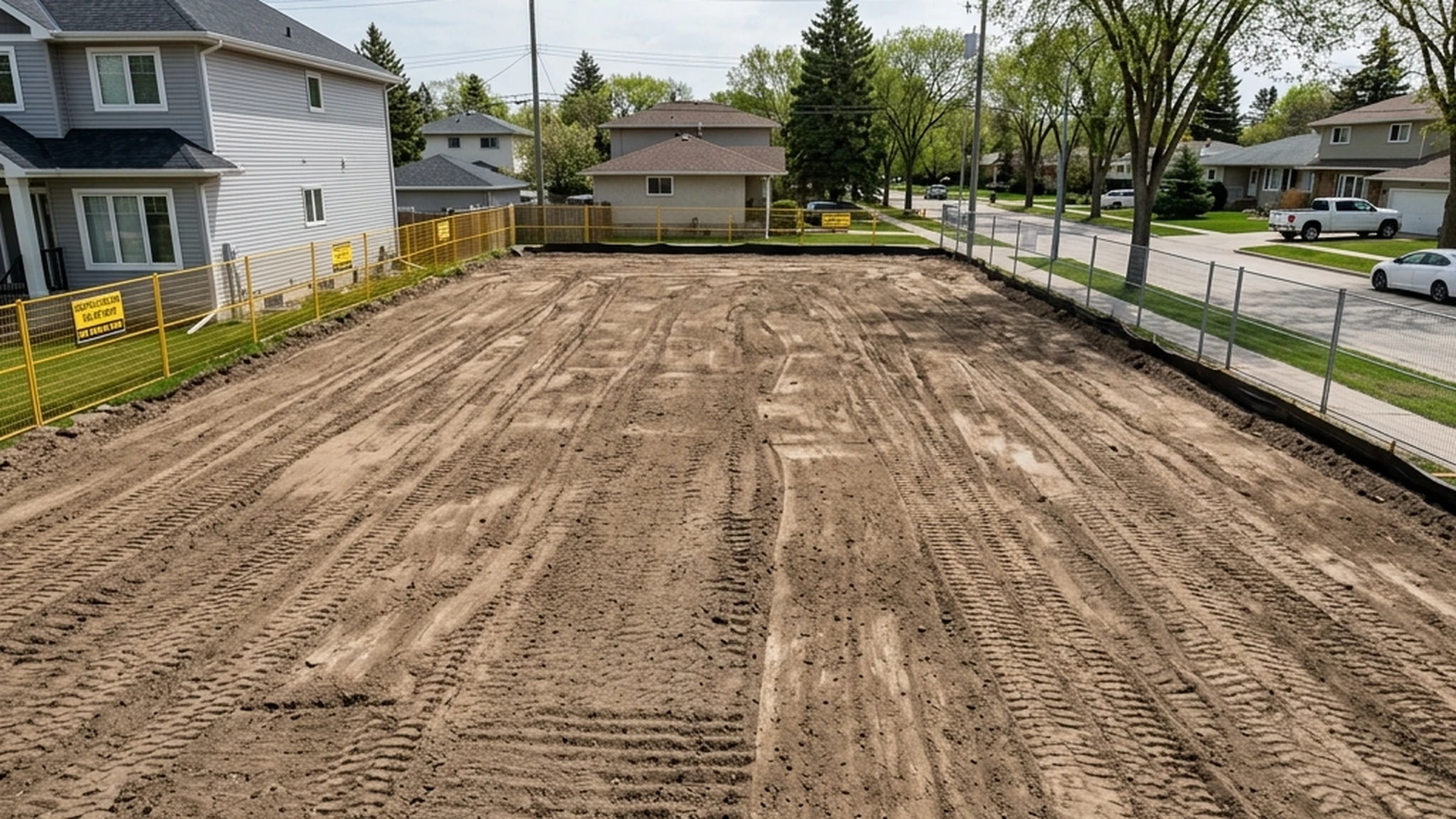
Once vegetation and structures are cleared, the site often needs grading correction before new construction begins, particularly if drainage issues exist or if the new design requires a different elevation profile than the existing yard. This is frequently the point where a drainage problem that was previously masked by established lawn becomes visible and needs to be addressed before proceeding.
Debris and Accumulated Material Removal
Properties that have not been actively maintained, or that are being prepared for sale or major renovation, sometimes have accumulated debris beyond what is immediately visible: old landscaping materials, buried construction debris from a previous renovation, or general accumulated junk. This needs to be identified and cleared as part of the site preparation.
Underground Utilities: The Step That Cannot Be Skipped
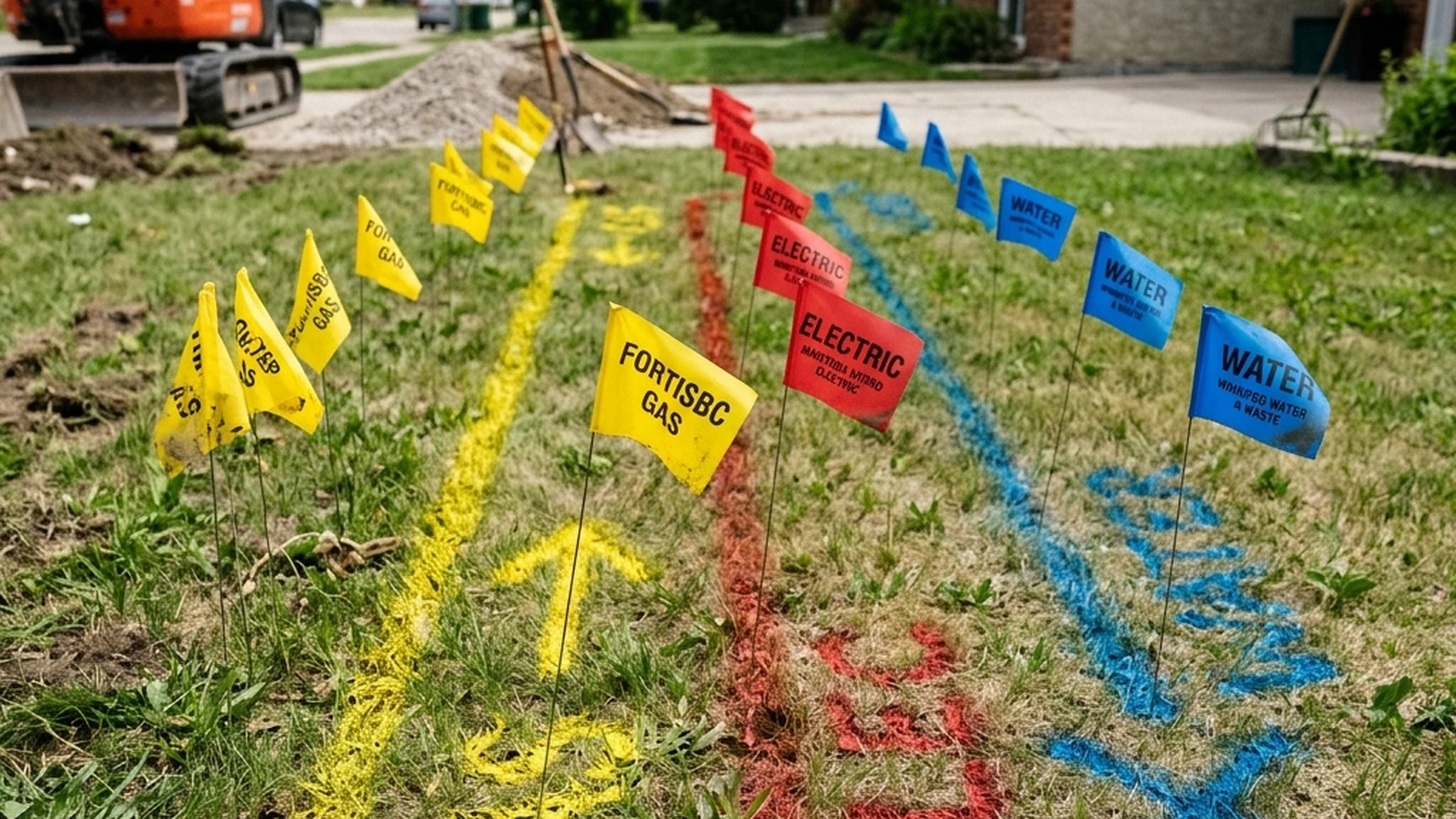
Before any excavation work begins, Manitoba law requires a locate request through Click Before You Dig Manitoba (dial 811 or submit online), which coordinates the marking of underground utility lines, gas, electrical, water, and telecommunications, on your property. This is not optional guidance; it is a legal requirement, and excavating without a current locate can result in utility damage, service interruptions to your property or your neighbours’, and personal liability for the cost of repairs.
The locate request needs lead time, typically a minimum number of business days before the requested excavation date, so this needs to be factored into your project schedule from the start rather than requested the week you intend to break ground. For a project with a firm start date, submit the locate request as soon as the excavation scope and location are confirmed.
What Happens to the Cleared Material
Where cleared material goes affects both the cost of your project and its environmental footprint. Different material types have different appropriate destinations.
| Material Type | Typical Destination |
|---|---|
| Sod and topsoil | Reused on site if possible (fill, regrading); otherwise disposed as yard waste |
| Tree and shrub debris (non-elm) | Standard bin disposal, or wood recycling for clean material |
| Elm wood specifically | Regulated disposal only: chip on site, take to Brady Road, or burn with a permit; never a standard bin |
| Concrete and masonry from demolished structures | Recycling facilities like Rakowski or Paragon for clean material; general bin for mixed loads |
| General construction debris and old landscaping materials | Standard C&D bin disposal |
For the full detail on concrete and brick recycling options in Winnipeg, see our concrete and brick disposal guide. For tree debris and the specific elm wood regulations, see our tree and branch removal waste guide. For large-scope site clearing projects generating substantial debris volume, a rental bin sized appropriately for the project, or in some cases cartage service for very large volumes, is the practical disposal solution; see Ecobins & Cartage’s bin rental options.
Sequencing a Site Clearing Project
Site assessment and scope confirmation. Walk the property, identify what needs to come out, what stays, and any suspected underground or hidden issues (old foundations, buried debris, drainage problems masked by existing lawn).
Submit the utility locate request. This needs to happen early enough that the locate is complete before excavation is scheduled to start.
Structure demolition and vegetation removal. Existing sheds, fencing, trees, and shrubs come out first, generating the bulk of the disposal volume for most projects.
Debris and material disposal. Sort and route cleared material appropriately: reuse on site where practical, recycle what can be recycled, and dispose of the remainder through appropriately sized bin rental or cartage.
Grading and final ground preparation. Once the site is clear, final grading corrections are made before new construction begins.
FAQ: Site Clearing in Winnipeg
How long does site clearing typically take before construction can start?
This depends heavily on scope. A straightforward lawn area clearing for a patio project might take a day or two. A property requiring tree removal, old structure demolition, and significant grading correction can take a week or more, plus the lead time required for the utility locate request before any excavation begins. Building the utility locate lead time into your project schedule from the outset avoids an unexpected delay right before construction is meant to start.
Do I need a permit for site clearing itself, separate from the construction that follows?
Clearing vegetation generally does not require a permit. Demolishing structures, sheds, decks, fences, may or may not require a permit depending on size and type; confirm with the City of Winnipeg Permits and Inspections branch for your specific structure. The construction that follows the clearing, a retaining wall, an outdoor kitchen, a pergola, has its own permit requirements separate from the clearing itself.
What if site clearing reveals a problem I did not know about, like buried debris or a drainage issue?
This is a common reason site clearing sometimes costs more than initially estimated. A property that has not had recent excavation work can hide old foundations, construction debris from a previous era, or drainage problems that established lawn was masking. A contractor experienced in site clearing should flag areas of concern during the initial assessment where possible, and should have a clear change order process for addressing anything discovered once clearing is underway.
Start With a Site Assessment
Lawn ‘N’ Order handles site clearing as the first phase of any landscape build across Winnipeg, from vegetation and structure removal through grading and preparation for new construction.
Use the Free Calculator Book a Free Consultation