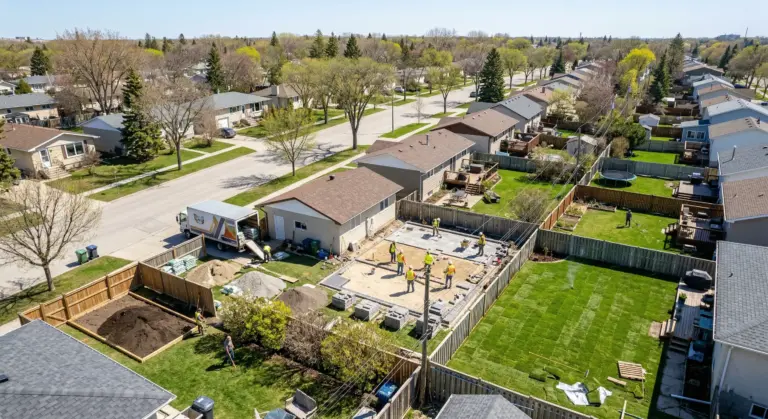
Flooded Yard Winnipeg: What to Do in the First 48 Hours
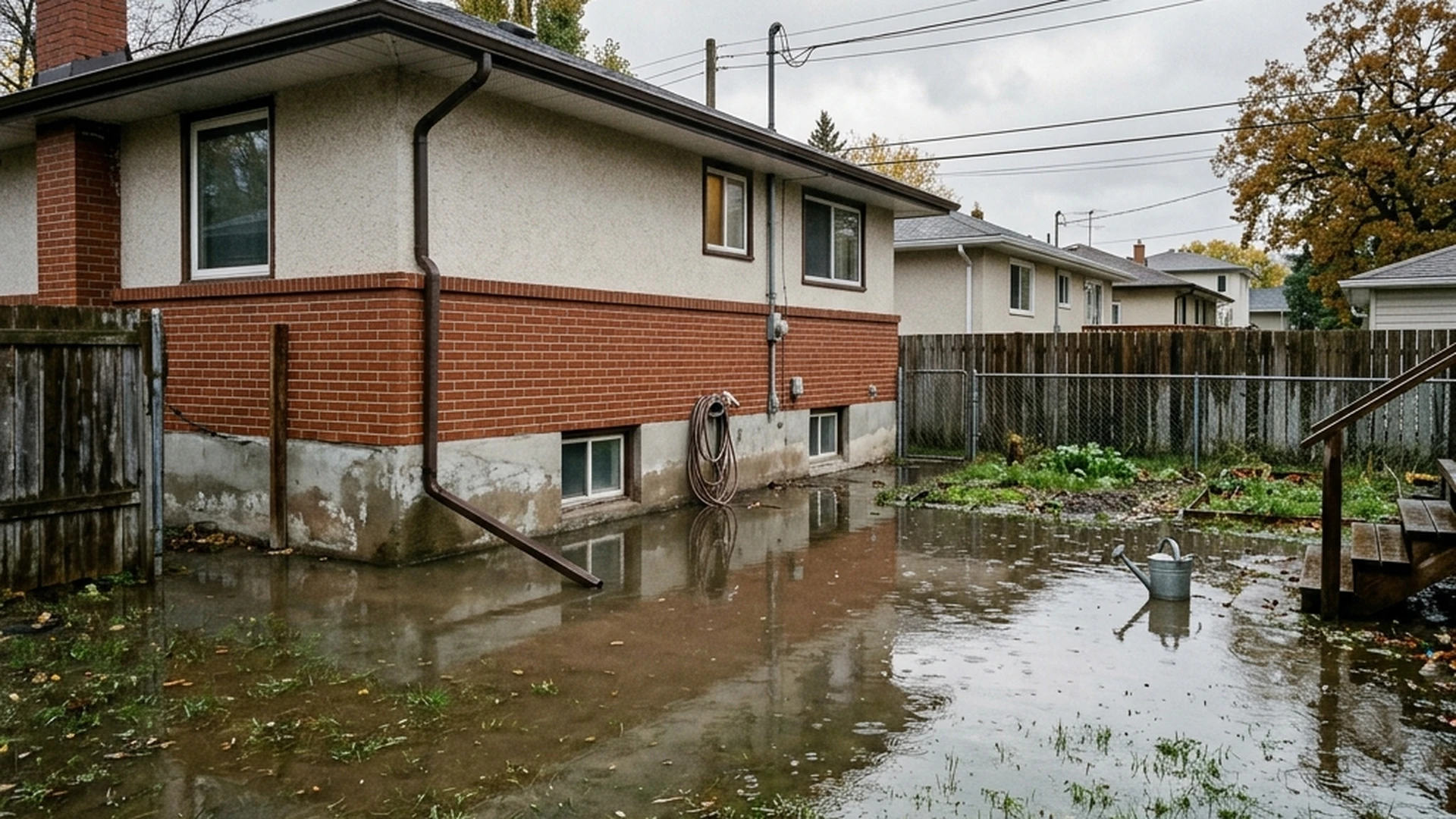
- Standing water in a Winnipeg yard after a major storm is normal for the first 12 to 24 hours on clay soil. Water near the foundation is not normal at any point and needs attention now.
- Hour 1: stay off the lawn, document everything with photos before anything moves or drains, and check your sump pump discharge
- The 48-hour rule: if water is still standing more than 48 hours after the storm, the yard has a drainage problem that needs to be addressed before the next event
- Most post-storm yard flooding traces back to three causes: grade sloping toward the house, downspouts discharging too close to the foundation, or compacted clay with nowhere to drain
- This post covers the yard. If water entered your basement, that is a separate problem requiring water mitigation services, not landscaping.
The June 9 Storm Was a Stress Test for Winnipeg Yards
The storm that moved through Winnipeg on the evening of June 9 produced conditions that pushed residential drainage systems hard. Environment Canada recorded wind gusts of 94 km/h at the Winnipeg airport. Hail ranging from nickel to near-tennis-ball size was reported across the city. Rainfall totalled 117 millimetres at The Forks in a matter of hours, a figure that represents roughly double Winnipeg’s average monthly June rainfall in a single event. Further north, Stonewall received 250 millimetres.
The result in neighbourhoods across the city: overloaded storm drains, abandoned vehicles on flooded streets, and yards that absorbed more water in a few hours than they would typically receive across several weeks.
If your yard is sitting under water this morning, you are not dealing with a systemic failure. You are dealing with a yard that was hit with more water than most drainage systems are designed to handle in that timeframe. The question is how your yard responds over the next 24 to 48 hours, and what that tells you about whether a deeper problem exists.
This post addresses flooded yards and the drainage landscape around the house. If water entered your basement during the storm, that is a water mitigation situation requiring professional equipment and assessment. Contact a licensed water damage restoration company. The yard drainage work that prevents basement water from recurring is what Lawn ‘N’ Order addresses. The water that is already in the basement is not.
Why Winnipeg Clay Makes Flooding Linger
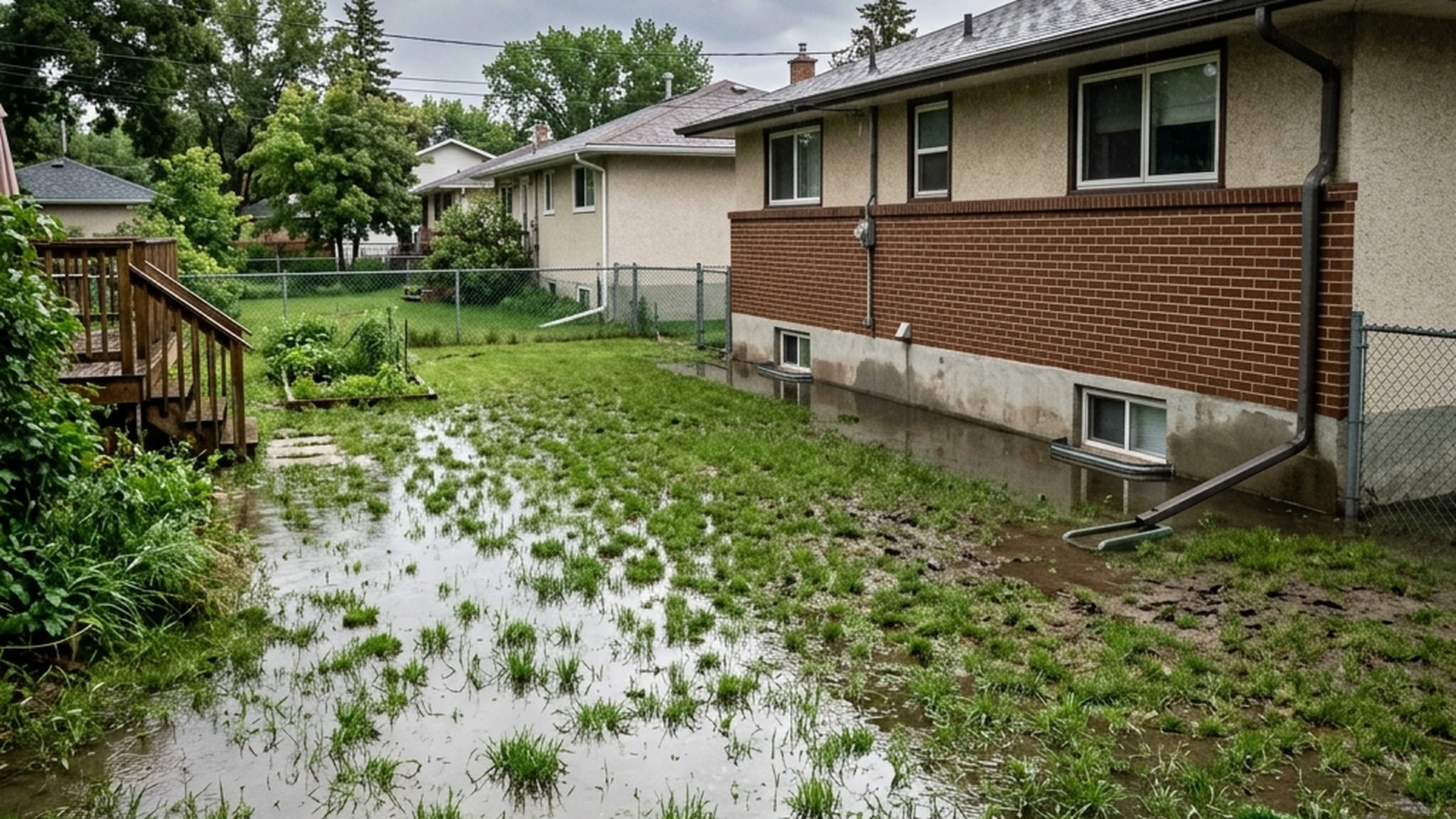
Most of Winnipeg sits on Red River clay, a soil type that does not drain freely. Clay absorbs moisture slowly, holds it for extended periods, and when it is already saturated, additional water has essentially nowhere to go. After a 117mm rainfall event, the clay subsoil across much of the city was already at or near field capacity before the heaviest rain arrived.
This is why standing water in Winnipeg yards after a storm like last night’s can persist for 24 to 36 hours even in yards that do not have structural drainage problems. The clay is full. It will drain, but not quickly. See our drainage solutions guide for a full explanation of how clay soil drainage behaves and what remediation looks like.
The compounding factor is compaction. Clay that has been compressed by foot traffic, mower weight, and freeze-thaw cycling drains even more slowly than undisturbed clay. If parts of your yard are draining notably slower than others, compaction is likely the reason.
What to Do Right Now
Hour 1: Stay Off the Lawn and Document Everything
The most important thing to do with a waterlogged lawn in the first hour is nothing. Do not walk on saturated clay. Every step compresses the soil and creates compaction that slows drainage for weeks after the water is gone. Keep pets and children off the saturated lawn until the surface water has drained and the lawn has had 24 to 48 hours to dry out.
Before anything drains or moves, take photos. If any insurance or damage claim becomes relevant, documentation taken in the hours after the storm is far more useful than photos taken two days later.
- Water level against the foundation wall at multiple points around the house, with the foundation visible
- All downspout discharge points and where the water is going from each one
- The lowest points in the yard where water is pooling
- Any window wells that are holding water
- Visible damage to planted areas, hardscape, or edging
- Any areas where water appears to be flowing toward rather than away from the structure
Check Your Sump Pump Discharge
If your home has a sump pump, go outside and find where the discharge pipe exits the house and where it terminates. During a significant rainfall event, a sump pump discharge that is blocked, overloaded, or discharging onto already-saturated ground directly adjacent to the foundation can contribute to water accumulation rather than relieving it. Confirm the discharge point is clear of debris, is functioning, and is directing water at least 6 feet away from the foundation. If the discharge is pooling near the house rather than flowing away, this is a drainage design issue to address after the emergency phase has passed. See our sump pump landscaping guide for how this fits into the broader drainage picture.
Clear Debris From Downspouts and Drains
Wind at 94 km/h moves a significant amount of debris: leaves, branches, and other material that can block downspouts, window well drains, and surface drainage paths. Check all downspout openings at grade level and clear any blockages. If a downspout is blocked and the eavestrough is overflowing against the foundation, clearing it is a high-priority task even in the rain. Check any window wells for accumulated debris blocking the drain at the base. A blocked window well drain can cause window well flooding that puts pressure against basement windows.
How Long Should Standing Water Take to Drain?
The 48-Hour Rule: In Winnipeg’s clay soil, standing water after a rainfall event of this magnitude can be expected to persist for up to 24 hours in yards with normal drainage. The 48-hour threshold is the diagnostic point. If water is still visibly standing in your yard 48 hours after the rainfall has ended, and the weather has been dry in the interim, the yard has a drainage problem that is not going to resolve on its own. The storm revealed the problem; it did not create it.
The 48-hour tolerance applies to low points in the yard that are away from structures. Any water pooling directly against the foundation wall, any water entering window wells, or any visible seepage at the base of the foundation wall requires attention regardless of how long it has been sitting. These conditions should not be left to drain passively.
What the Storm Told You About Your Yard
A major rainfall event is the most honest assessment of your yard’s drainage that you will get. The areas that flooded, the duration they held water, and where the water flowed all reveal exactly where the drainage design has weaknesses. The patterns to note:
Water running toward the foundation: this is a grading problem. The ground around the house is not sloped away from the foundation at the required 2% minimum gradient. This is the most consequential drainage failure and should be prioritized for remediation. See our foundation drainage guide for what regrading involves.
Standing water in the same low spot every time it rains: this is a topographic issue. The low spot either needs to be filled and regraded, or a drainage channel or French drain needs to direct water out of it.
Erosion channels from last night’s rainfall: the water flow velocity was high enough to move soil. This indicates areas where concentrated flow is not being managed and where erosion will compound with each subsequent event.
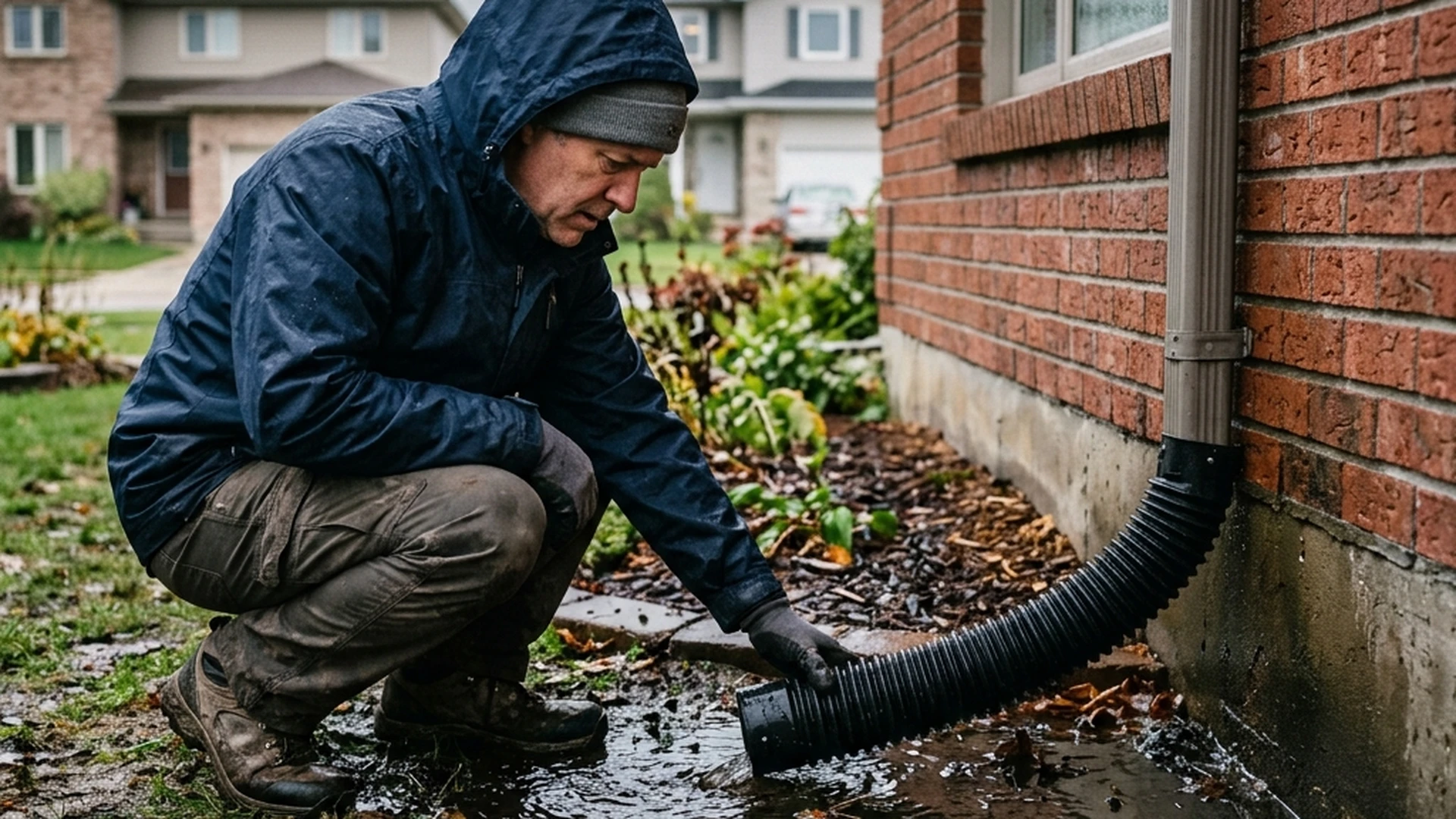
Water pooling under the eavestroughs at multiple points: the downspouts are overwhelmed or discharging too close to the house. Downspout extensions or underground discharge lines are the fix.
The DIY Diagnostic: What a Soil Test Hole Tells You
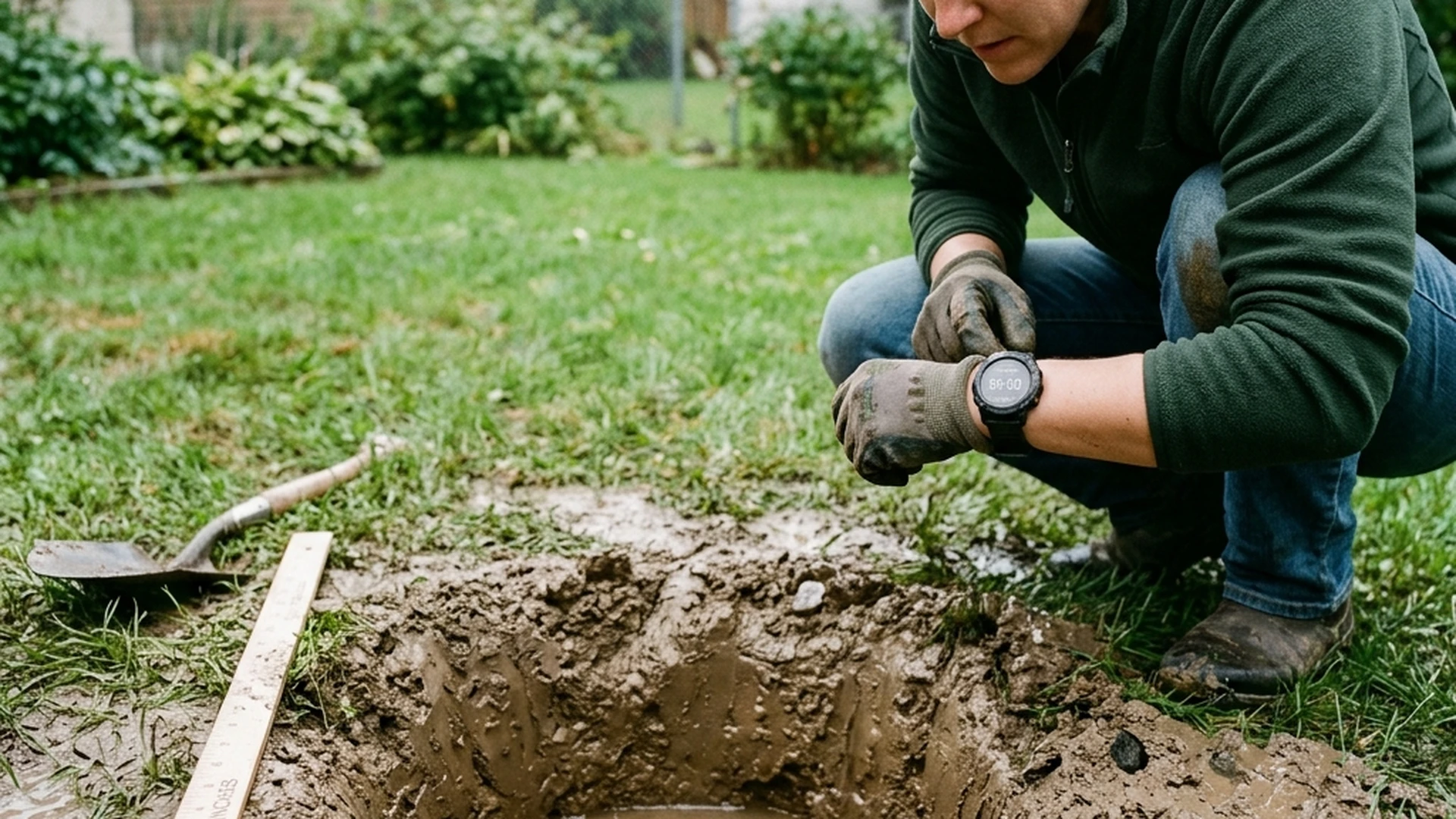
Once the surface water has drained and you can walk on the yard without sinking, a simple percolation test tells you how your soil is draining at depth. This is useful for identifying where genuine clay compaction is limiting drainage versus where the flooding was simply a volume problem the soil will recover from.
How to do it: dig a hole approximately 12 inches (30 cm) deep and 6 inches wide in the area of concern. Fill the hole completely with water and note the time. Record how long the water takes to drain completely.
| Drainage Time | What It Means | Next Step |
|---|---|---|
| Under 1 hour | Good drainage for clay. The soil is performing reasonably well and standing water after a major event is primarily a volume issue. | Monitor. No immediate action needed beyond downspout checks. |
| 1 to 4 hours | Moderate drainage. The clay has significant compaction or structural issues. Major events will continue to produce standing water. | Aeration and organic matter improvement will help. Consider professional assessment if flooding recurs. |
| Over 4 hours | Poor drainage. There is a clay barrier or structural problem preventing water from moving through the soil profile. | Professional drainage assessment is warranted. This will not improve on its own. |
Run this test in two or three different areas of the yard, including the worst-flooding area and an area that drained relatively quickly. The comparison is informative.
Quick Wins You Can Do This Week
Extend downspouts. Move downspout discharge points at least 6 feet from the foundation. Flexible downspout extensions cost under $30 at any hardware store and can be installed in 15 minutes. This is the highest-impact, lowest-cost drainage intervention available.
Clear window well covers or install them. If window wells collected water during the storm, covers prevent direct rainfall from entering the wells. Cover installation is a DIY task.
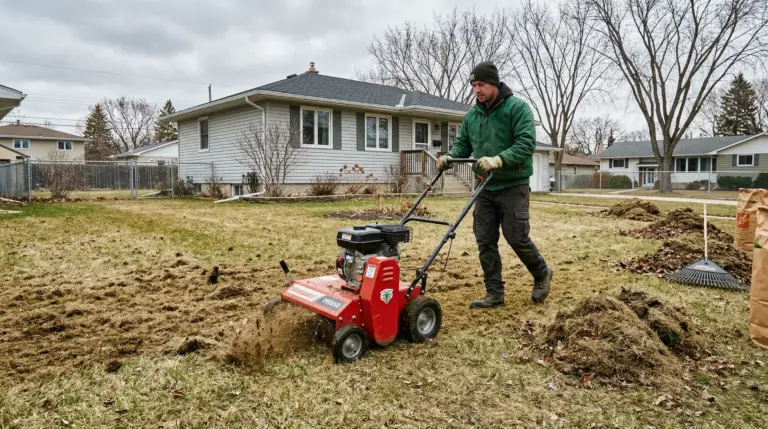
Do not till or aerate the lawn for 2 to 3 days. Waterlogged clay is particularly susceptible to compaction from equipment. Wait until the lawn has dried adequately before any mechanical work.
Resist the urge to add soil to low spots immediately. Adding soil to low spots is the right long-term fix, but doing it over saturated ground that has not yet drained creates additional compaction. Wait for the yard to dry, then address grading.
When Is It Time to Call a Drainage Professional?
If the percolation test shows drainage over 4 hours, if water is pooling adjacent to the foundation, if the same areas flood with every significant rainfall, or if last night’s storm revealed erosion or grade problems that go beyond a downspout extension, a professional drainage assessment is the right next step.
A Lawn ‘N’ Order drainage assessment covers: slope and grade measurement around the foundation, identification of drainage failure points, downspout and surface drainage review, and a recommended remediation plan. See our drainage solutions page for what the assessment covers and how we approach drainage on Winnipeg’s clay-soil properties.
The landscape drainage for Winnipeg winters guide covers the longer-term context of how drainage behaves through Winnipeg’s seasonal cycles. This post is the immediate action guide; that post is the system design reference.
Protect Your Yard Before the Next Storm
Last night’s event will not be the last major storm this summer. Manitoba’s storm season runs through August, and events of 80 to 100+ mm in a few hours are not historically unusual for Winnipeg. The difference between yards that drain in 12 hours and yards that hold water for 48 hours is almost always a combination of grade, downspout discharge points, and clay compaction, all of which are correctable.
Lawn ‘N’ Order has been solving drainage and grading problems on Winnipeg clay-soil properties since 1993. Book a free site consultation and we will walk your property, identify where water is collecting and why, and give you a clear plan for what needs to change before the next event. For properties with broader landscape damage from last night’s storm, our landscape build team and property maintenance division both handle storm recovery work across Winnipeg.
Book a Free Drainage Assessment
Lawn ‘N’ Order has been solving drainage and grading problems on Winnipeg clay-soil properties since 1993. We will walk your property, identify where water is collecting and why, and give you a clear remediation plan before the next event.
Use the Free Calculator Book a Free Consultation