
Parking Lot Snow Removal Winnipeg: Equipment & Staging
A plow truck, a pusher and a loader do three different jobs, and the pile you start in November is still there…
Read the article →
Winnipeg averages 60+ freeze-thaw cycles per year. Poured concrete is a rigid material — it cracks when clay soil moves, and in Winnipeg, the soil will move. Here's the honest 20-year comparison of interlocking stone vs concrete, what the base requirements actually are, and which one is the more defensible long-term investment for most Winnipeg homeowners.
If you’re planning a new driveway or walkway in Winnipeg, the material you choose isn’t just a matter of taste or budget. It’s a matter of how well that material can withstand one of the most punishing climates in Canada for hardscape installations.
Winnipeg averages more than 60 freeze-thaw cycles per year. That means the ground — and anything built on it — goes through 60 or more rounds of freezing solid and then thawing out, over and over, every single fall and spring. Add in the fact that Winnipeg sits on the ancient lakebed of glacial Lake Agassiz, which left behind heavy, expansive clay soil that moves with every change in moisture, and you have conditions that age hardscape materials faster here than in almost any other major Canadian city.
The choice between interlocking stone and poured concrete isn’t one where you can simply pick whatever looks best on a Pinterest board. This is a decision that has real, long-term consequences for your property, and we’ve seen both done right and done wrong across more than 3,200 client projects since 1993. Here’s the honest breakdown.
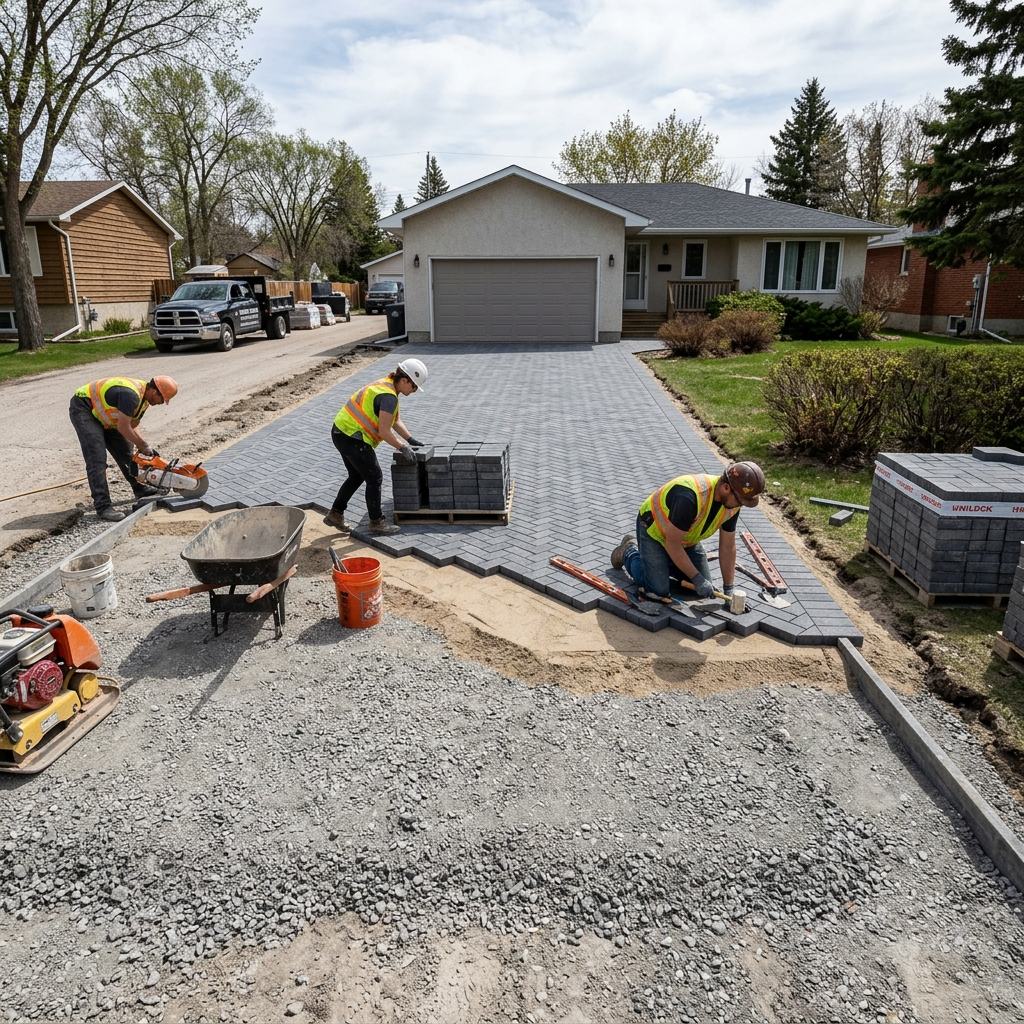
To understand why material selection matters so much here, you need to understand the three forces working against any hardscape installation in Winnipeg.
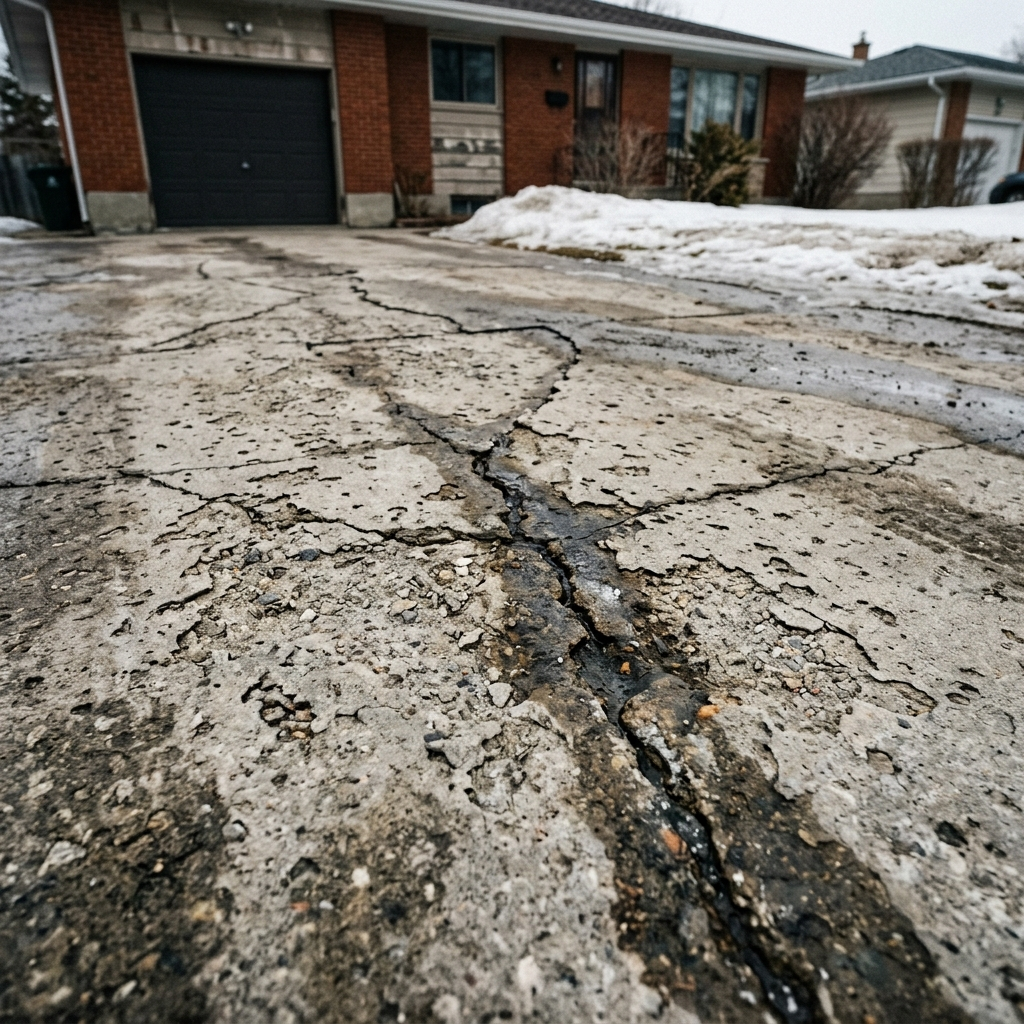
Water expands by approximately 9% when it freezes. In a poured concrete slab, any moisture that penetrates a hairline crack or surface void will freeze, expand, and force that crack wider. Over 60 of these cycles per year, a small surface crack becomes a structural one within a few seasons. This is not a construction defect; it’s physics. Poured concrete is a rigid material, and rigid materials crack when the ground beneath them shifts and heaves.
Most of Winnipeg sits on thick deposits of clay left behind when glacial Lake Agassiz drained thousands of years ago. Clay soil is highly expansive: it swells when it absorbs moisture and contracts when it dries out. That constant movement puts enormous lateral pressure on any rigid slab sitting on top of it. Even with proper base preparation, Winnipeg’s clay soil will find ways to work against a poured concrete installation over time. This is also why proper drainage is so critical here. If water can’t move away from the base, it saturates the clay and accelerates movement. See our drainage solutions page for how we address this as part of hardscape builds.
The City of Winnipeg uses significant quantities of sand and salt on roads and sidewalks through the winter. That salt-laden sand gets tracked onto driveways and walkways, and on poured concrete, it’s corrosive. Salt accelerates the chemical breakdown of concrete’s surface layer — a process called spalling — which creates a rough, flaking surface that traps more moisture and accelerates the freeze-thaw damage cycle. Once concrete starts to spall, the deterioration compounds quickly.
Interlocking concrete pavers are manufactured units, typically 60mm to 80mm thick, installed over a compacted granular base with sand bedding. The joints between individual pavers are filled with polymeric sand, which locks the surface together while still allowing minimal movement between units.
The fundamental advantage of interlocking stone in a freeze-thaw climate is flexibility. When the ground moves — and in Winnipeg, it will move — individual pavers can shift slightly without cracking. That same ground movement that would fracture a poured concrete slab is distributed across hundreds of joints in an interlocking surface, with no single point of catastrophic failure.
The repair advantage is also significant and often underestimated at purchase time. When a poured concrete section cracks and needs replacement, you’re looking at saw-cutting, breaking out a section, forming and pouring new concrete, and hoping the colour match is close enough. With interlocking stone, damaged or settled pavers can be lifted, the base re-compacted or adjusted, and the same pavers reset — often in a few hours rather than a few days.
On the aesthetics side, the range of colours, shapes, and patterns available in modern paving stone products is genuinely impressive. Tumbled pavers, large-format slabs, ashlar patterns, and contrasting border courses all give homeowners design flexibility that poured concrete simply can’t match without decorative scoring or staining.
Interlocking stone costs more upfront than poured concrete in most Winnipeg market quotes. The base preparation requirements are also substantial. Joint maintenance is an ongoing reality: polymeric sand in the joints will need to be refreshed over time, and weeds can establish in neglected joints. Edge restraints — which hold the perimeter of the installation together — need to be properly installed and occasionally inspected.
If the base is not built correctly, interlocking surfaces can develop ruts, waves, and settled areas that require re-levelling. The paver material itself is durable; base failures are the most common source of interlocking driveway problems in this city.
Poured concrete is the familiar grey slab: monolithic, smooth or broom-finished, and installed as a continuous rigid surface. It’s been the default driveway and walkway material across North America for decades, and it has genuine advantages in the right climate.
A freshly poured concrete driveway is clean, consistent, and structurally strong. Snow removal is straightforward: there are no joints to catch a plow blade or hand shovel. The initial installation cost is typically lower than interlocking stone. For interior applications like garage floors and basement floors, concrete is usually the right call because the temperature and moisture environment is controlled.
The honest answer is that poured concrete is fighting an uphill battle against Winnipeg’s climate from the moment it’s placed. Even properly installed concrete with expansion joints and adequate thickness will begin showing surface deterioration — from salt, sand, and freeze-thaw cycling — within five to ten years in many Winnipeg installations. Without expansion joints installed at appropriate intervals, large slab cracking often appears sooner.
The repair economics also shift unfavourably over time. A cracked concrete slab section requires saw-cutting the damaged area, breaking it out, re-forming, and pouring new concrete. Colour matching between old and new concrete is nearly impossible once the original slab has weathered. Many homeowners end up with a patchwork driveway that looks worse than the original crack did.
| Category | Interlocking Stone | Poured Concrete |
|---|---|---|
| Durability (Winnipeg climate) | High — flexes with freeze-thaw movement | Moderate — rigid slab prone to cracking over time |
| Repairability | Excellent — individual pavers lifted and reset | Difficult — section removal and pour required; colour matching poor |
| Upfront Cost | Higher ($15–$25+ per sq ft installed) | Lower ($12–$18 per sq ft installed) |
| Long-Term Cost | Lower — targeted repairs, no full replacement | Higher — cracking and spalling often leads to full replacement |
| Maintenance | Joint sand refresh every few years; weed management | Sealing recommended; crack repair as needed |
| Aesthetics | Wide range of colours, patterns, and styles | Clean and consistent; limited design variation without added cost |
| Snow Removal | Good — some care needed around joint edges | Slightly easier — smooth, uninterrupted surface |
This is where Winnipeg hardscape installations differ most significantly from what you might read in general guides written for milder climates. Base depth requirements here are not optional extras: they are the difference between an installation that lasts 25 years and one that fails in five.
Winnipeg’s frost penetration depth reaches approximately 4 feet. That means the ground below a driveway can freeze solid well below the surface. Any water trapped in granular base material at that depth will freeze, expand, and heave the surface above it.
For interlocking driveways in Winnipeg, a properly engineered base typically includes a minimum of 300mm (about 12 inches) of compacted granular A or granular B base material, depending on subgrade conditions. In areas with poor drainage or particularly heavy clay, experienced contractors often go deeper. The base must be mechanically compacted in lifts, with geotextile fabric separating the granular base from the native clay subgrade to prevent migration. Cutting corners on base depth is the single most common cause of premature interlocking driveway failure in this city.
Poured concrete in Winnipeg also requires a well-prepared granular base — typically a minimum of 150mm — plus expansion joints placed no more than every 3 to 4 metres to allow for thermal movement. Proper grading and drainage around any hardscape installation is equally critical. See our drainage solutions page for how drainage is integrated into hardscape builds.
Cost figures in Winnipeg will vary based on project size, site access, material selection, and subgrade conditions, but here are realistic ranges based on current market pricing.
It’s worth doing the full 20-year math when comparing costs. A poured concrete driveway that needs a full replacement at year 12 to 15 — which is a realistic outcome in Winnipeg without exceptional luck — will cost more in total than an interlocking installation that requires only localized re-levelling work over the same period. Use the Lawn ‘N’ Order cost calculator to see driveway and patio costs alongside any other project elements you’re considering.
Permit note: The City of Winnipeg requires a permit for new driveway construction and, in some cases, for driveways that exceed specific width thresholds or extend into the boulevard. Before starting any driveway project, confirm current permit requirements with the City of Winnipeg’s Permits and Inspections branch. An experienced contractor will handle this process as part of the project scope.
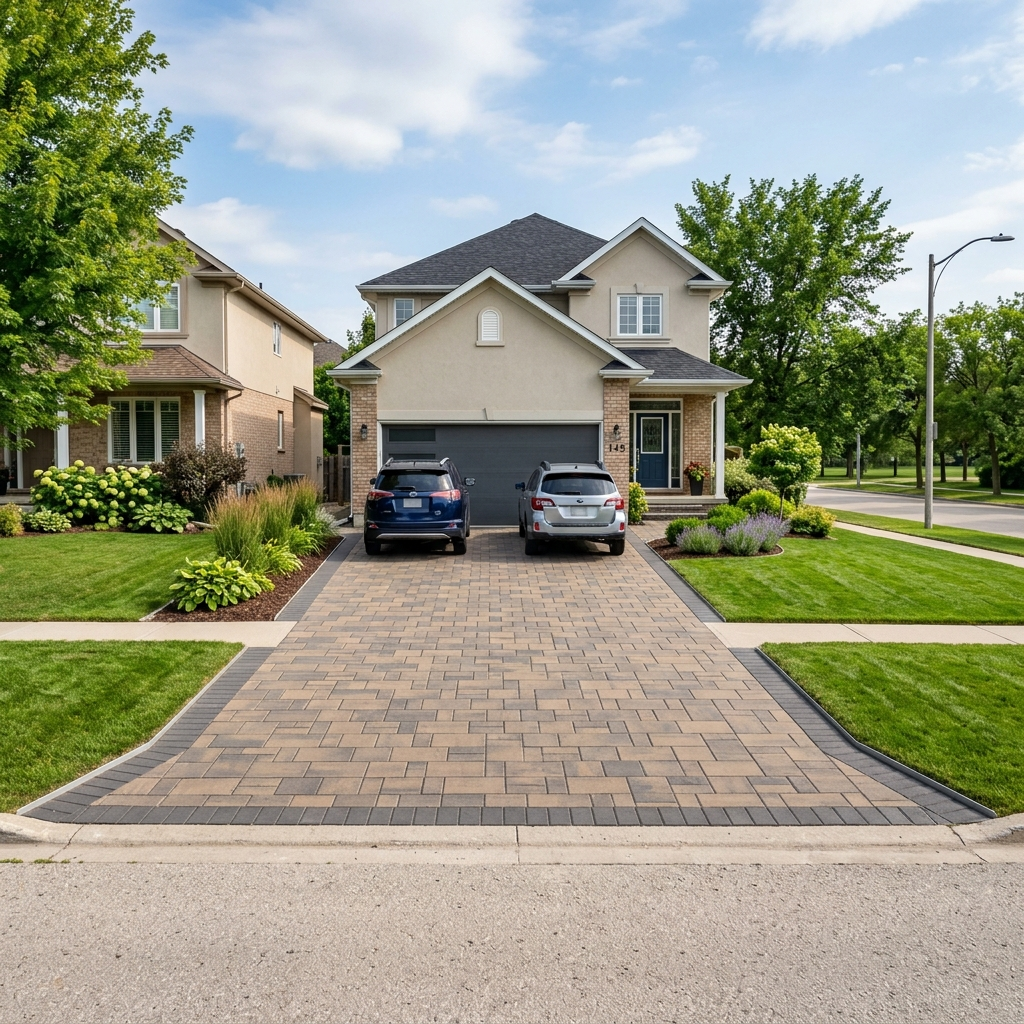
There’s no single right answer for every homeowner, but the honest guidance we give after 30-plus years in Winnipeg looks like this.
For most Winnipeg homeowners building a new driveway or primary walkway on a residential property with standard clay subgrade conditions, interlocking stone is the more defensible long-term investment. The upfront cost premium is real, but so is the performance gap over a 20-year horizon in this climate. See our patios and walkways page for examples of interlocking installations across Winnipeg.
How long does an interlocking driveway last in Winnipeg?
When properly installed with an engineered granular base and quality paving stone products, an interlocking driveway in Winnipeg can realistically last 25 to 40 years before major work is needed. The pavers themselves are extremely durable: most deterioration issues trace back to base failures or inadequate edge restraint, not the pavers. Individual settled or damaged sections can be repaired without disturbing the rest of the surface.
Why does poured concrete crack so quickly in Winnipeg?
Winnipeg’s combination of deep frost penetration, heavy clay soil that expands and contracts with moisture, and 60-plus freeze-thaw cycles per year creates conditions that stress rigid concrete slabs from multiple directions simultaneously. Expansion joints help but can’t eliminate the problem entirely. Road salt accelerates surface spalling, which opens pathways for moisture to penetrate and worsen freeze-thaw damage. Most Winnipeg concrete driveways will show significant cracking within 10 to 15 years even with proper installation.
Can interlocking stone be used for a sloped driveway in Winnipeg?
Yes, with appropriate design considerations. Slopes require careful attention to base drainage to prevent water from tracking along the surface and pooling at the bottom. Edge restraints and base compaction are especially important on grades. Slopes above approximately 10% can present challenges for both materials, and your contractor should assess the specific grade before recommending a solution.
What is polymeric sand and does it need to be replaced?
Polymeric sand is a jointing sand mixed with binding agents that harden when wet, locking paver joints together and resisting weed growth and insect infiltration. In Winnipeg’s climate, polymeric sand typically holds up well for 5 to 10 years before joints start to show erosion or weed infiltration. Refreshing the joints is a straightforward maintenance task — far less involved than concrete crack repair.
Winnipeg is a genuinely demanding climate for hardscape, and the material decisions you make now will determine what your driveway or walkway looks like — and what it costs to maintain — 10 and 20 years from now. Lawn ‘N’ Order has been installing interlocking driveways, walkways, and patios across Winnipeg since 1993. We understand this soil, this frost depth, and the base preparation standards that actually hold up here over time. Visit our Landscape Build page to learn more about our process or to schedule a consultation.
Use the free cost calculator to see driveway pricing alongside any other project elements — patio, walkway, grading. Then book a site consultation so our team can assess your specific subgrade, drainage conditions, and base requirements.
Use the Free Calculator Book a Free ConsultationSend the address and a rough idea of scope. We'll walk it, take levels, and give you a written number you can compare line for line.
Keep reading
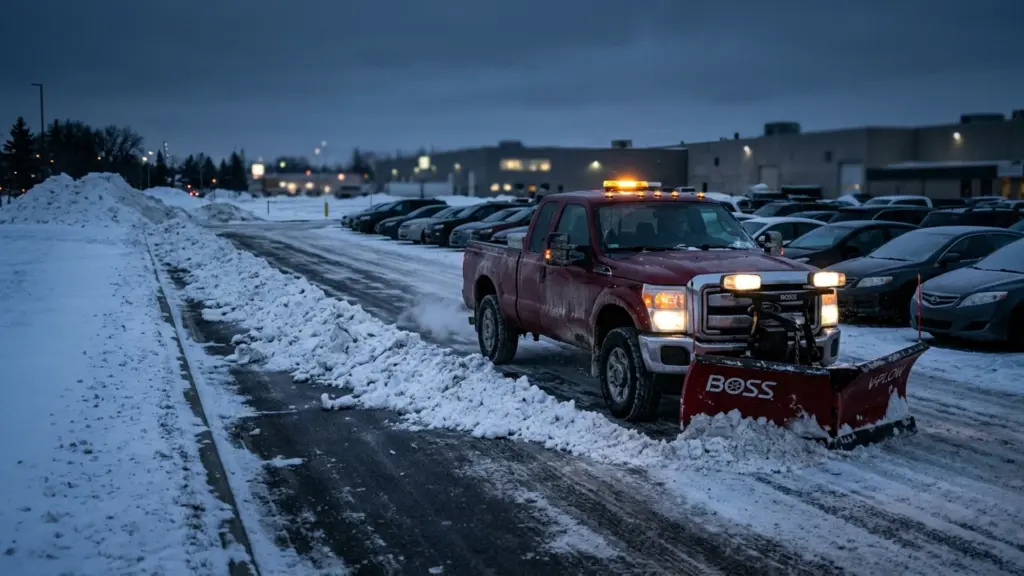
A plow truck, a pusher and a loader do three different jobs, and the pile you start in November is still there…
Read the article →
Holiday Light Installation Winnipeg: Book Before the Ground Freezes Quick Takeaways Holiday light installation in Winnipeg has a short window: crews install…
Read the article →
Who Clears the Sidewalk in Winnipeg? What the City Does and What You’re Responsible For Quick Takeaways Winnipeg is one of the…
Read the article →