Drainage Solutions Winnipeg: Stop Standing Water
Quick Takeaways
- Surface drainage and foundation drainage systems work together; fixing one without addressing the other often fails
- Winnipeg’s clay soil creates hydrostatic pressure against foundation walls, making proper drainage critical
- Proper grading requires minimum 3% slope away from your foundation
- Weeping tile and sump pump systems handle groundwater, French drains and grading handle surface water
- Most DIY drainage failures come from incorrect slope, inadequate depth, or poor material choices
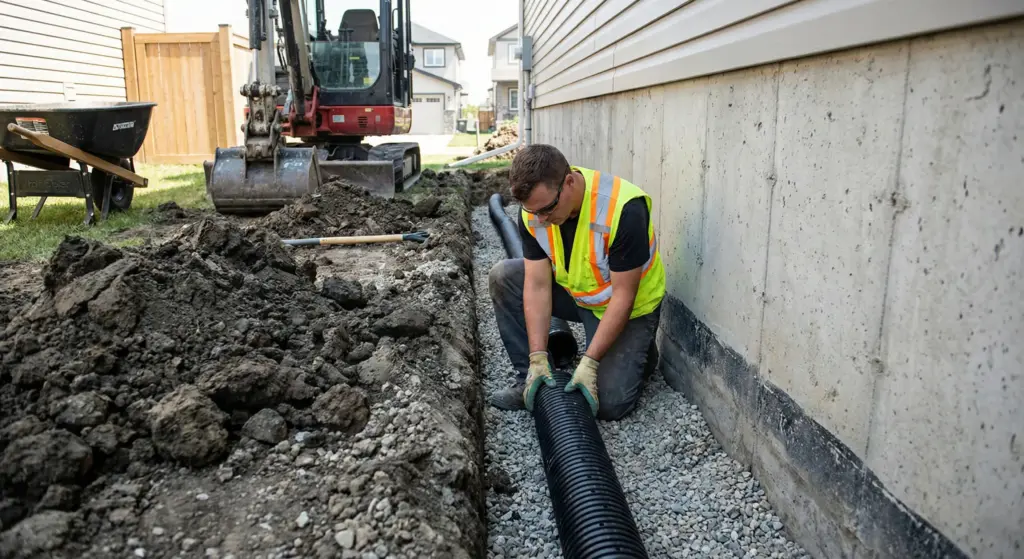
After every spring thaw and summer storm, the same Winnipeg yards flood while others stay dry. The difference isn’t luck. It’s drainage.
Standing water does more than ruin your lawn. It seeps toward foundations, drowns plant roots, breeds mosquitoes, and turns backyards into muddy wastelands. If you’re dealing with puddles that stick around for days, soggy spots that never quite dry, or water creeping toward your basement, you need landscape drainage solutions designed for our climate.
Why Drainage Problems Are Common in Winnipeg
Spring Thaw and Heavy Clay Soil
Winnipeg sits on some of the heaviest clay soil in Canada. Clay doesn’t absorb water the way sandy or loamy soil does. Instead, water pools on the surface, waiting for somewhere to go. Combine that with the massive water release during spring snowmelt, and you have perfect conditions for flooding.
The freeze-thaw cycles we experience from March through May make things worse. Ground that was frozen solid suddenly thaws from the top down, creating a layer of saturated soil sitting on top of frozen ground that can’t absorb anything. Water has nowhere to go but sideways—toward your foundation or into low spots in your yard.
Clay Backfill and Hydrostatic Pressure: The Real Foundation Threat
When your home was built, the excavation around the foundation was backfilled, usually with the same clay soil that was removed. This clay backfill is often loose and more porous than the undisturbed soil around it, creating a pathway for water to flow directly toward your foundation walls.
When that clay becomes saturated, it expands. This creates hydrostatic pressure—the force of water-saturated soil pushing against your foundation. In Winnipeg’s heavy clay, this pressure can crack foundation walls, force water through joints and cracks, and cause long-term structural damage.
This is why both surface drainage and foundation drainage matter, and why a comprehensive approach often works better than addressing just one.
What’s Causing Your Drainage Problem?
Before investing in elaborate drainage systems, identify the root cause of your water problems. Often, the solution is simpler than you think.
Downspouts are a common culprit. If they discharge directly at your foundation, extending them 4-6 feet away can solve the problem immediately. Check that gutters aren’t clogged and that downspouts direct water to areas where it can drain naturally.
Low spots that collect water might be addressed by simply adding topsoil to level them. Survey your yard after rain to identify where water pools and trace where it’s coming from.
If your basement is wet and your sump pump runs constantly, surface drainage improvements alone may not solve the problem. You may need to address both the weeping tile system around your foundation and the exterior grading that’s directing water toward your house.
Understanding Foundation Drainage Systems
What Is Weeping Tile and How Does It Work?
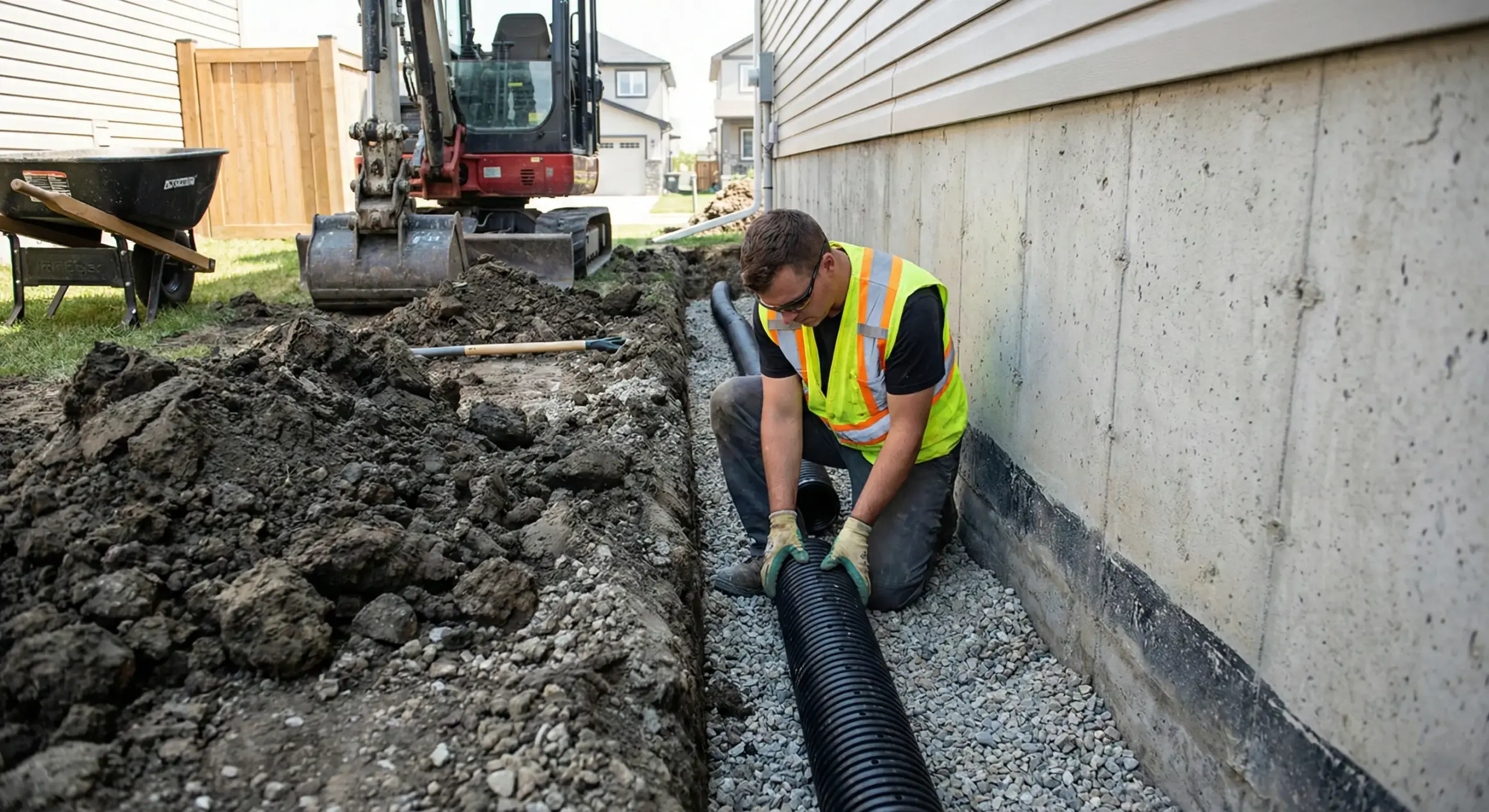
Weeping tile (also called perimeter drainage or foundation drain) is a perforated pipe system installed around your foundation’s footing. Despite the name, modern weeping tiles are usually corrugated plastic pipe with slits or holes that allow groundwater to enter.
The system collects water that accumulates in the soil around your foundation and directs it away, either to a sump pit inside your basement or to an exterior discharge point. Properly functioning weeping tile intercepts groundwater before it can build up pressure against your foundation walls.
In Winnipeg’s older homes, weeping tiles were often clay pipes that cracked and collapsed over time. Even newer plastic systems can become clogged with sediment, roots, or soil particles. A failed or blocked weeping tile is one of the most common causes of basement moisture problems in our market.
Sump Pump Systems: Managing Groundwater
Sump pumps work in conjunction with weeping tile systems. Water collected by the weeping tile flows to a sump pit (a basin below the basement floor), where a pump activates when the water level rises. The pump then discharges this water away from your foundation.
Many homeowners don’t realize that improving exterior grading alone may not resolve water issues if the sump system is undersized, failing, or improperly discharged. A sump pump that discharges too close to the foundation simply recirculates the same water. Proper discharge should extend at least 6 feet from the foundation, directing water to an approved drainage outlet in accordance with municipal guidelines.
If your sump pump runs constantly during the spring thaw, it’s a sign that groundwater pressure is high. Surface drainage improvements can reduce this load by keeping rain and snowmelt from saturating the soil around your foundation in the first place.
Surface Drainage Solutions for Winnipeg Properties
French Drains: Underground Water Redirection
French drains are one of the most effective solutions for persistent surface water problems. The system consists of a perforated pipe buried in a gravel-filled trench that collects water and channels it away from problem areas.
Installation involves digging a trench with a slight slope (about 1 inch per 8 feet), laying landscape fabric to prevent soil clogging, adding gravel, placing the perforated pipe, and covering with more gravel and topsoil. The water enters through the gravel, flows into the pipe, and exits at an approved drainage outlet.
French drains work well along foundation walls, at the base of slopes, and in areas where surface water consistently collects. They’re invisible once installed, maintaining your landscape’s appearance while solving the drainage problem underground.
Grading and Regrading: Working with Your Yard’s Slope
Sometimes the simplest solution is adjusting the slope of your yard. Proper grading ensures water flows away from your home rather than toward it. You need a minimum 3% slope away from your foundation for effective drainage—roughly 3 inches of drop over 10 feet.
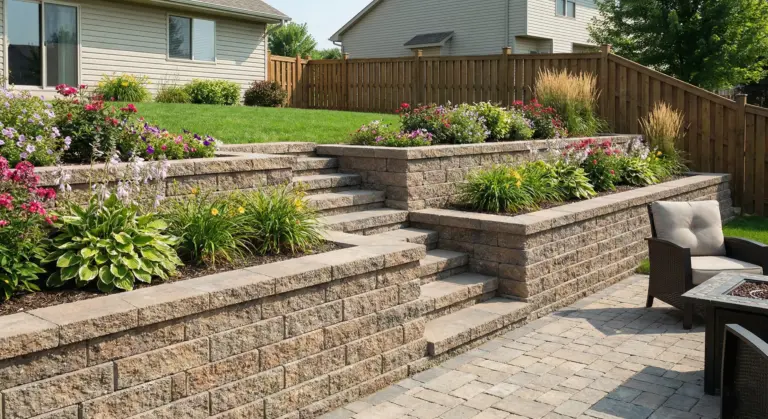
Regrading involves adding or removing soil to create the proper slope. It’s often combined with other solutions, like retaining walls, when significant grade changes are needed. Even small adjustments to your yard’s contour can dramatically improve how water moves across your property.
Catch Basins and Yard Drains
Catch basins are buried containers with slotted covers that collect surface water and redirect it through underground pipes. They’re particularly useful in low spots where water naturally accumulates.
The system works by gravity. Water flows into the catch basin, travels through connected pipes, and discharges to a proper outlet point. Multiple catch basins can be connected to create a comprehensive drainage network.
Dry Creek Beds and Rain Gardens: Function Meets Beauty
Not every drainage solution needs to be hidden. Dry creek beds and rain gardens turn water management into landscape features that enhance your property’s appearance.
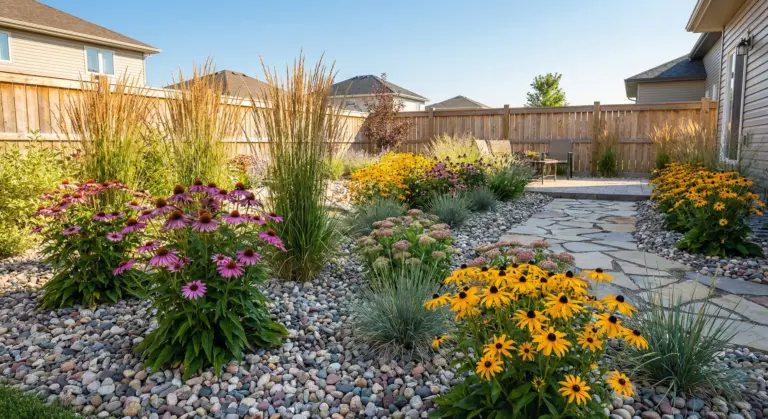
A dry creek bed is essentially a shallow drainage channel lined with river rock and stones. It guides water away from problem areas while looking like a natural streambed. When dry, it adds visual interest. When wet, it functions as an attractive water feature.
Rain gardens are depressed planting areas designed to collect and absorb runoff. Native plants with deep root systems help water infiltrate the soil rather than running off. A well-designed rain garden can handle significant water volume while providing habitat for pollinators and adding colour to your landscape.
Integrating Drainage with Hardscaping
Drainage shouldn’t be an afterthought when planning patios and walkways. In fact, hardscape projects offer the perfect opportunity to solve drainage problems while enhancing your outdoor living space.
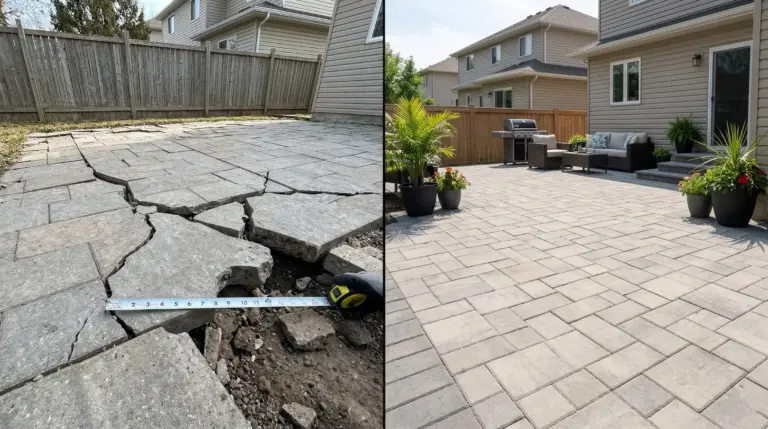
Paver patios can be designed with an integrated slope that directs water away from your foundation and toward drainage infrastructure. Channel drains (also called trench drains) installed at the edge of patios collect runoff before it can pool or flow toward the house.
For properties with serious drainage challenges, permeable pavers allow water to infiltrate directly through the patio surface, reducing runoff entirely. This approach works particularly well when combined with a properly prepared gravel base that acts as a reservoir.
Solve Your Drainage Problems for Good
At Lawn N Order, we design and install drainage systems built for Winnipeg’s challenging conditions. From French drains and catch basins to complete landscape builds with integrated drainage, we’ll help you find the solution that works for your property.
Schedule Drainage Assessment Get Free Estimate