Outdoor Kitchen Contractor Questions Winnipeg: What to Ask
- An outdoor kitchen combines masonry, gas, electrical, and often plumbing work: confirming a contractor’s licensing and trade coordination is a different vetting process than hiring for a standard patio
- Gas connections must be completed by a licensed gas fitter, and asking who specifically handles this, and whether they are on staff or subcontracted, reveals a lot about how the project will actually run
- Winterization responsibility and warranty terms are commonly left vague in verbal discussions and should be confirmed in writing before signing
- Asking to see completed local projects, ideally through a full winter cycle, tells you more than a portfolio of summer photos alone
- A contractor who cannot answer these questions clearly and specifically is showing you how the rest of the project will go
Why Outdoor Kitchen Projects Need a Different Vetting Process
A standard patio project involves one trade discipline done well: masonry or paving installation. An outdoor kitchen project involves masonry construction, gas line installation and connection, electrical circuits for lighting and appliances, and in some designs, plumbing for a sink. Each of these disciplines has its own licensing requirements, and how a contractor coordinates them, whether in-house or through subcontractors, has a direct effect on project timeline, quality consistency, and who is accountable if something goes wrong.
This guide is a practical list of questions to ask any contractor you are considering for an outdoor kitchen project in Winnipeg, along with why each question matters. For the outdoor kitchen build itself, appliance selection, and cost ranges, see our outdoor kitchen builders guide. For the specific considerations that apply when the kitchen sits under a roof structure, see our covered outdoor kitchen guide.
Licensing and Trade Coordination
Questions to Ask
Who handles the gas connection, and are they a licensed gas fitter?
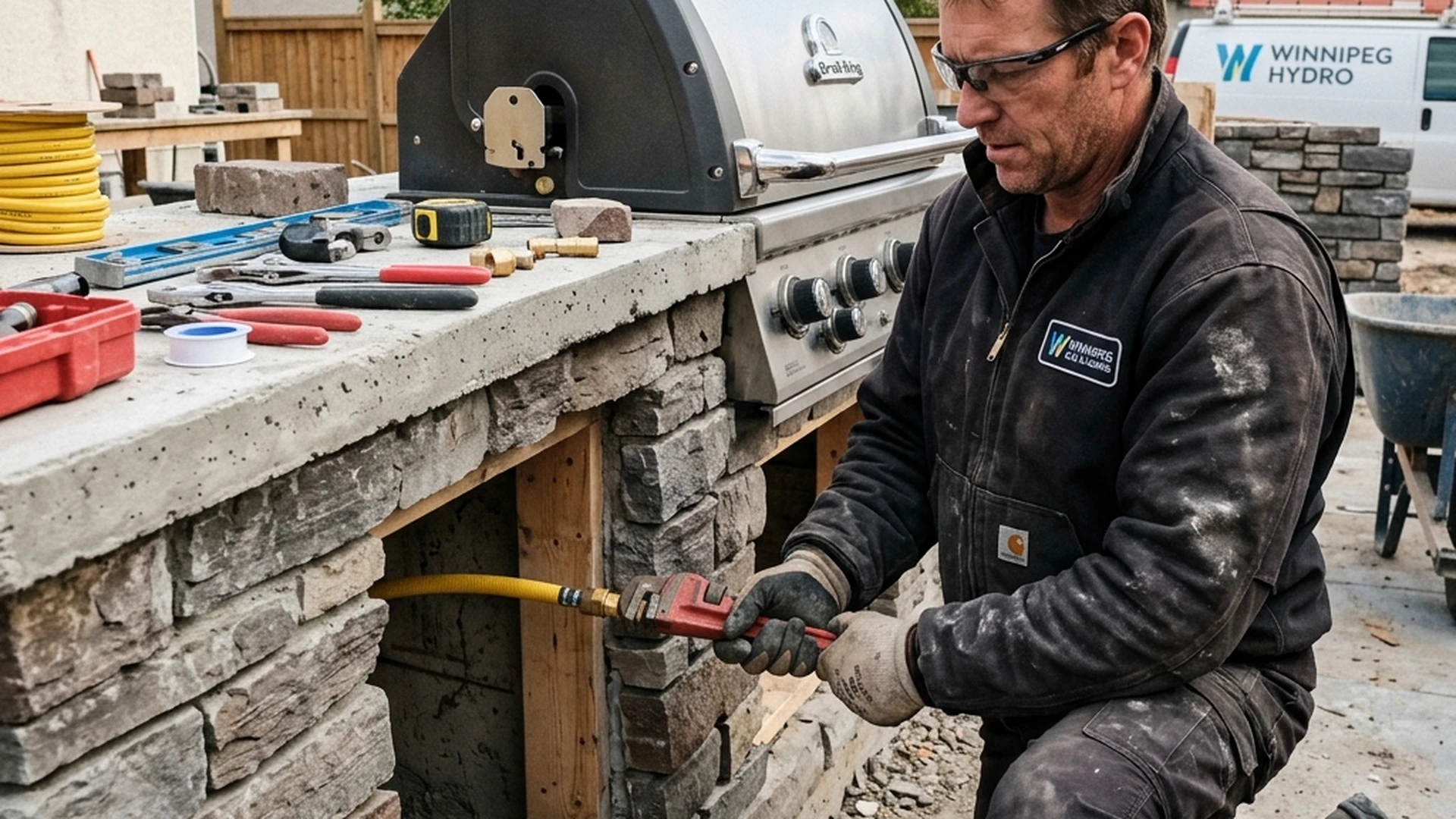
Any gas-fired appliance, grill, side burner, pizza oven, requires a connection completed by a licensed gas fitter in Manitoba. Ask specifically whether this is an in-house licensed fitter or a subcontracted one, and ask to see the licence. A contractor who is vague about who actually does the gas work, or suggests it can be handled informally, is a serious concern.
Who handles the electrical work, and is it a licensed electrician?
Circuits for outdoor refrigeration, lighting, and any powered appliances need to be installed to code by a licensed electrician. As with gas work, confirm whether this is in-house or subcontracted, and how the coordination between the masonry contractor and the electrician is managed on site.
Will this project need a City of Winnipeg building permit?
Depending on the structure size, whether it is covered, and the gas appliance load, a permit is often required. A contractor experienced with outdoor kitchen construction should be able to answer this confidently for your specific design, and should be willing to pull the permit or confirm you understand your responsibility to do so.
How do the different trades coordinate on site and in the schedule?
A project with masonry, gas, and electrical work happening in sequence needs a defined schedule so that, for example, gas line rough-in happens before the masonry base is finished, not after. Ask how the contractor manages this sequencing and who is responsible if a delay in one trade pushes back the others.
Materials and Construction Approach
Questions to Ask
What base and structural materials are used for the kitchen counter and cabinetry?
Outdoor kitchen cabinetry needs to be built from materials that tolerate Manitoba’s freeze-thaw cycle: typically concrete block or a purpose-built modular outdoor kitchen frame system, not standard interior cabinet construction. Ask specifically what the base structure is made from and how it is designed to handle seasonal moisture and temperature swings.
What countertop material is recommended, and why?
Not every countertop material suited to an interior kitchen performs well outdoors in Winnipeg. Ask the contractor to explain the tradeoffs between options like granite, quartzite, and concrete specifically for exterior freeze-thaw exposure, rather than accepting a generic recommendation without the reasoning behind it.
How is the appliance clearance to any roof or structure above confirmed?
If the kitchen will sit under a pergola, gazebo, or pavilion, gas appliance clearance requirements from the manufacturer apply directly to the structure above. A contractor should be checking this against the specific appliance model, not estimating.
Winterization and Long-Term Maintenance
Questions to Ask
What is the winterization protocol for this specific kitchen, and who is responsible for it?
Winterization requirements vary by what appliances and plumbing are included: draining any water lines, protecting gas connections, covering appliances, and in some designs, removing certain components entirely for winter storage. Ask the contractor to walk through the specific winterization steps for your design, and confirm whether this is something you do yourself, something they offer as a service, or something not addressed at all in the contract.
What is the warranty on the masonry work, and what is the warranty on the appliances?
These are typically two separate warranties: the contractor’s warranty on their construction work, and the manufacturer’s warranty on any appliances installed. Ask for both in writing, including what specifically each one covers and for how long. A verbal assurance of “we stand behind our work” is not the same as a written warranty term.
What maintenance does the masonry or stone veneer require over time?
Different stone and veneer products have different long-term maintenance needs, sealing schedules, joint maintenance, and so on. Ask what the specific product you are choosing requires and how often, so you know what ongoing care is expected.
If a contractor cannot clearly answer who handles the gas connection, whether a permit is needed, or what the winterization protocol is, without checking or deflecting, that is a meaningful signal about how clearly the rest of the project will be planned and executed. These are not advanced or obscure questions; they are basic project management questions that an experienced outdoor kitchen contractor should answer readily.
References and Local Experience
Questions to Ask
Can I speak with a previous client about their experience, particularly around trade coordination and timeline?
A reference conversation focused specifically on how well the gas, electrical, and masonry trades were coordinated, and whether the project stayed on schedule, tells you more than a general “were you happy with the results” question.
How many outdoor kitchens has this company completed in Winnipeg specifically?
Experience with the specific climate and code requirements of Manitoba matters more than general outdoor construction experience. A contractor who has built primarily patios and is newer to full outdoor kitchen construction may still do good work, but understanding their specific track record with this project type is useful information.
Pricing and Contract Clarity
Beyond the technical questions above, a clear written contract and pricing structure protects both parties. Ask for a detailed written quote that breaks down materials, labour, and any subcontracted trade work separately, rather than a single lump sum with no itemization. Ask what happens if unexpected site conditions (poor soil, existing utility conflicts) are discovered once work begins, and how change orders are priced and approved. For a broader understanding of what drives outdoor kitchen project cost, see our outdoor kitchen builders guide, and use the Lawn ‘N’ Order cost calculator to get a starting sense of scope for your specific project before comparing detailed quotes.
FAQ: Hiring an Outdoor Kitchen Contractor in Winnipeg
Should I hire separate contractors for the masonry, gas, and electrical work myself, or use one company that coordinates all of it?
Both approaches can work, but they carry different risk profiles. A single company that coordinates all trades (whether in-house or through their own subcontractor relationships) typically offers simpler project management and clearer accountability if something goes wrong. Self-coordinating separate contractors can sometimes save money but puts the scheduling and quality-coordination burden on you. For most homeowners, a single accountable contractor is the more manageable approach, provided you have confirmed how they handle the licensed trade work.
How do I verify a gas fitter or electrician is actually licensed?
Ask to see the licence directly, and if you want independent confirmation, Manitoba’s licensing bodies maintain public registries for verifying active licensing status of gas fitters and electricians. A contractor who is confident in their trade relationships should have no hesitation providing this information.
What should be in writing before I sign a contract?
At minimum: an itemized scope of work and materials, a payment schedule tied to project milestones, the warranty terms for both construction and appliances, who is responsible for permits, and the process for handling any change orders or unexpected site conditions discovered during construction. Verbal assurances on any of these points should be confirmed in writing before work begins.
Ask Us These Questions
Lawn ‘N’ Order builds outdoor kitchens across Winnipeg with licensed gas and electrical trade coordination handled as part of the project. Book a consultation and ask us everything on this list.
Use the Free Calculator Book a Free Consultation