Condo Board Landscaping Winnipeg: Budgets, Contracts & Pitfalls
- Condo landscaping contracts in Winnipeg are annual recurring costs that most boards underbudget by 20 to 30 percent when they don’t account for seasonal variables
- The most common contract failure is a scope gap: what the board thinks is included and what the contractor is actually obligated to do are different things
- Reserve fund contributions for hardscape replacement, irrigation, and tree removal are frequently underfunded until the cost hits unexpectedly
- A multi-year agreement with a reputable contractor is almost always better than annual re-tendering for boards that want consistent quality and predictable costs
- Lawn ‘N’ Order manages commercial and condominium landscaping contracts across Winnipeg through the Florensic Unit maintenance division
The Condo Landscaping Problem Most Boards Discover Too Late
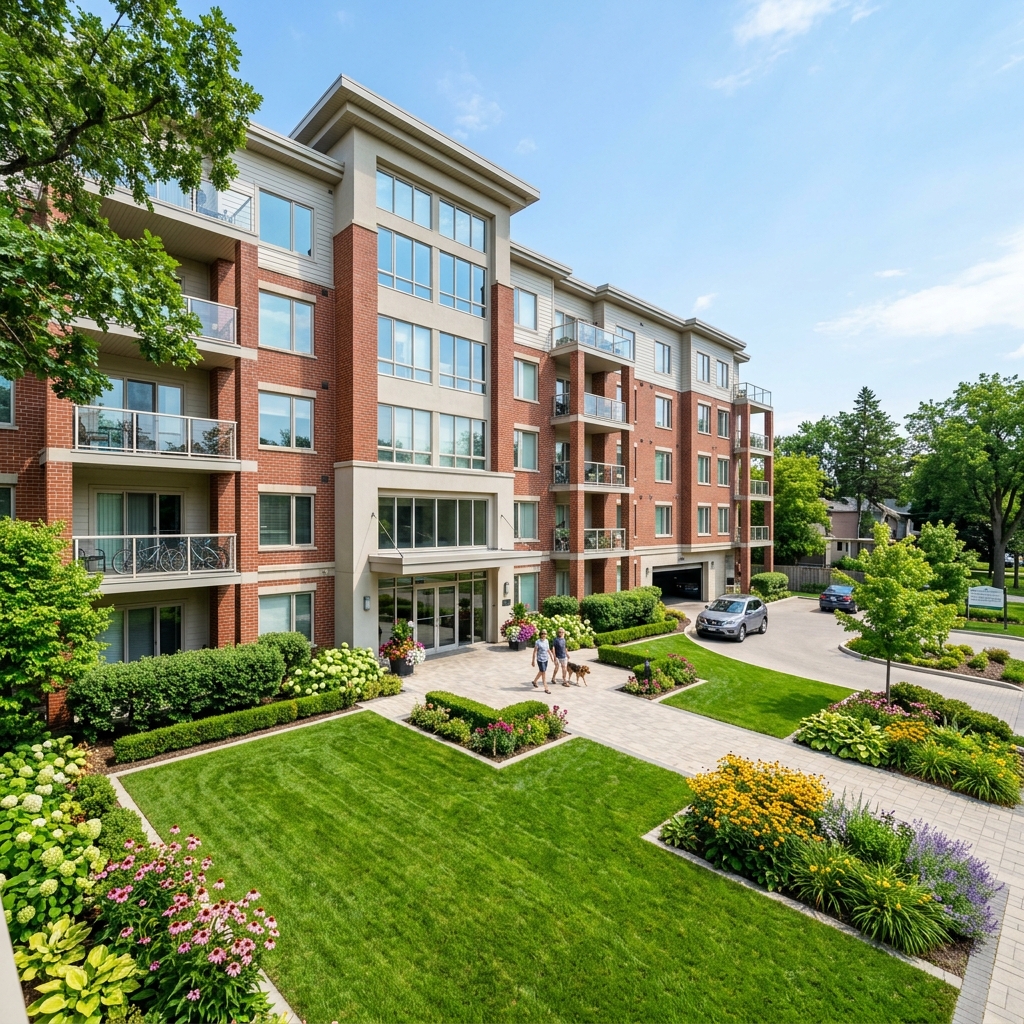
A condominium corporation’s landscaping commitment does not end when the development is built. It begins there. The lawn, trees, perennial beds, irrigation systems, and hardscape that come with a new development all have maintenance requirements, replacement timelines, and seasonal variables that create ongoing costs the board is responsible for forecasting and funding.
Most condo boards in Winnipeg manage this reasonably well during the first few years, when everything is new and maintenance demands are predictable. The problems typically emerge at years five to eight, when the first wave of significant costs arrives: trees that have grown into utility lines, irrigation components that need replacement, pavers that have settled and need re-levelling, and perennial beds that have outgrown their original design.
The boards that navigate this well are the ones who understood the full cost profile from the start. The boards that struggle are the ones who budgeted for routine maintenance but not for the lifecycle costs of the landscape assets they inherited. Lawn ‘N’ Order has held commercial and condominium landscaping contracts in Winnipeg since the early 2000s. What follows is what we have seen work, what we have seen fail, and what boards should be asking before they sign.
What a Full-Scope Condo Landscaping Contract Covers
Landscaping contracts for condominium properties typically fall into three tiers of scope. Knowing which tier you are buying matters more than the per-visit price.
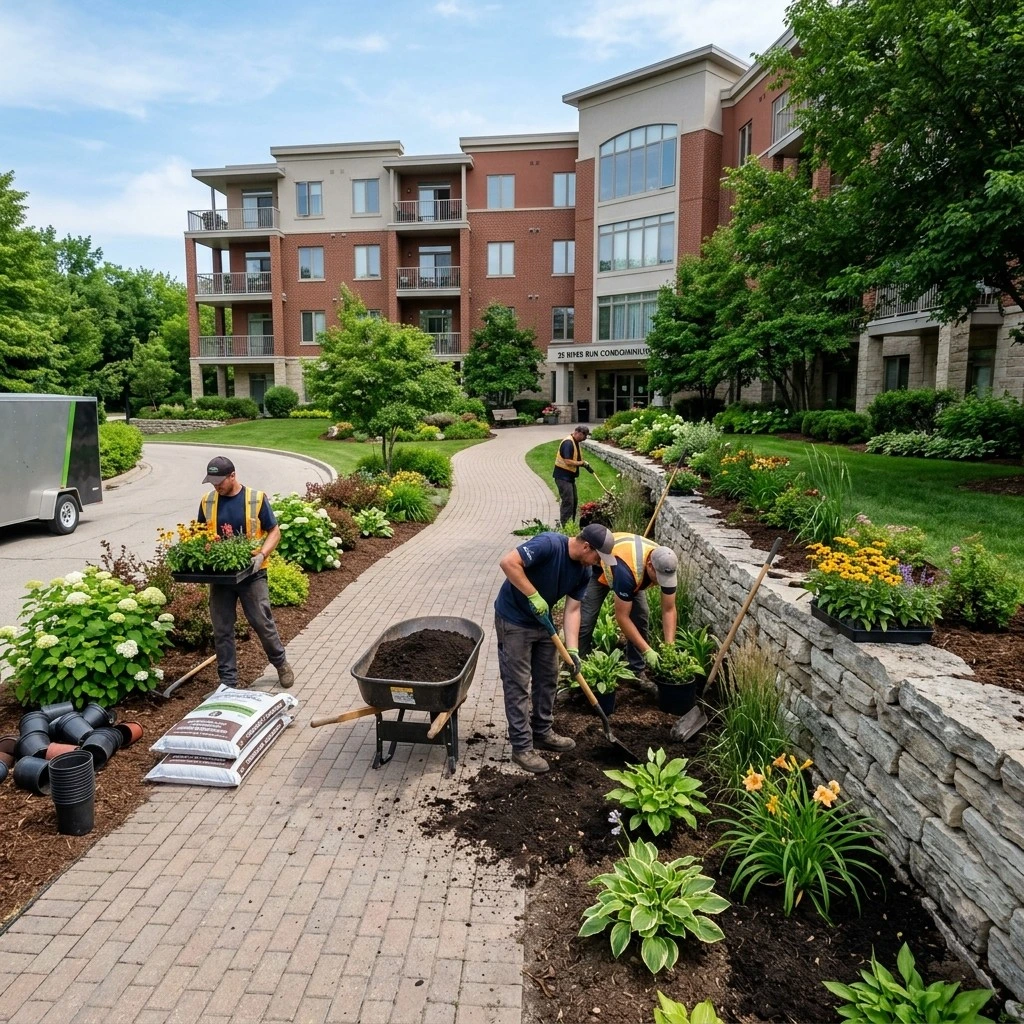
Basic Grounds Maintenance
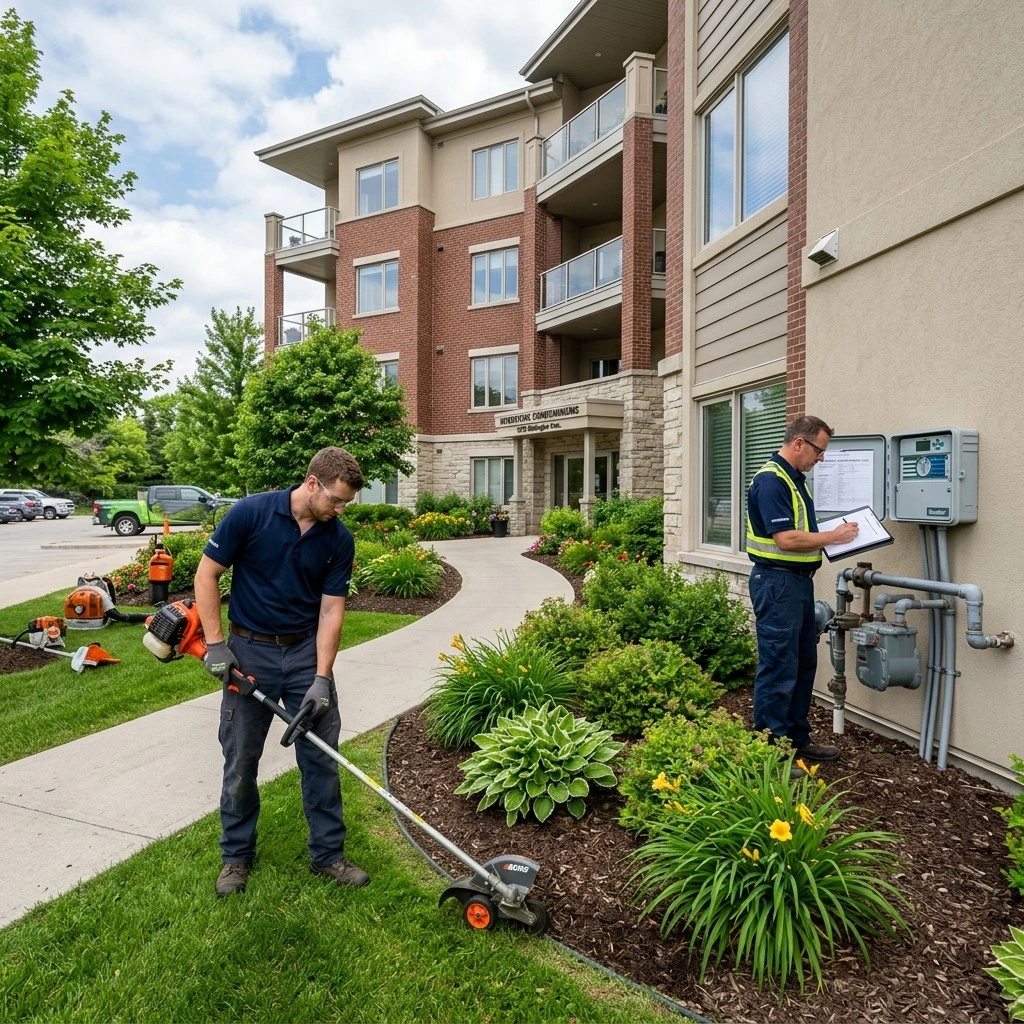
- Lawn mowing on a defined schedule (typically weekly during growing season)
- String trimming around edges, curbing, and structures
- Blowing of hard surfaces after mowing
- Seasonal cleanups: spring debris removal and fall leaf collection
This is the minimum. It keeps the property tidy but does not address bed maintenance, irrigation management, fertilization, or any horticultural work.
Full Grounds Maintenance
- Everything in Tier 1
- Garden bed maintenance: weeding, edging, deadheading
- Shrub trimming and shaping on a seasonal schedule
- Fertilization program: lawn and bed applications
- Irrigation system startup, seasonal adjustments, and winterization
- Mulch refresh on a defined schedule
The appropriate minimum for a condominium property with significant landscaping. Maintains what exists but does not include reactive work, replacements, or enhancements.
Full Grounds Management
- Everything in Tier 2
- Plant health monitoring and spray programs as needed
- Tree and shrub pruning on a proper horticultural schedule
- Annual landscape review with written recommendations
- Coordination of subcontractors for irrigation repair, arborist work, and hardscape maintenance
- Snow removal (often separate but sometimes bundled)
What well-managed condo properties actually need. The annual landscape review and written recommendations protect the board and support reserve fund planning.
The Most Common Contract Gaps That Cost Boards Money
The Scope Gap
The most frequent source of dispute between condo boards and landscaping contractors is scope. The board believes the contract covers something. The contractor’s scope of work does not include it. Common scope gaps include: reactive work like replanting dead annuals or replacing winter-killed shrubs; irrigation repairs beyond basic startup and winterization; tree pruning above a certain height; removal of storm-damaged branches; and snow removal from secondary paths not explicitly named in the contract. The solution is specificity. Every service should be defined, not implied. “Garden bed maintenance” is not a scope definition. “Weekly weeding and deadheading of all defined bed areas from May long weekend through September 30, with annual before and after photographs” is a definition.
The Seasonal Variable Problem
Winnipeg’s weather creates annual cost variability that flat-rate contracts struggle to accommodate. A wet spring means more mowing cycles. A dry summer means more irrigation run time and higher water costs. An early frost compresses the fall cleanup window. The contract should specify how seasonal variation is managed: either a fixed fee that absorbs reasonable variation, or a base fee with defined rates for additional service calls above a threshold.
The Tree Liability Gap
Trees on condominium common property are the board’s responsibility. A tree that drops a branch on a resident’s vehicle, a tree whose roots damage underground infrastructure, or a tree that fails structurally during a storm: these are all liability events that the board may be responsible for if they cannot demonstrate that the trees were regularly assessed and maintained. Proper arboricultural care — including an ISA-certified arborist assessment every two to three years — is the documentation that protects the board. Most basic landscaping contracts do not include arborist services.
Reserve Fund Considerations for Landscape Assets
Manitoba’s Condominium Act requires condominium corporations to maintain a reserve fund for major repair and replacement of common elements. Landscape assets are common elements. They have finite lifespans and replacement costs that should be reflected in the reserve fund study. Reserve fund studies that do not include landscape assets leave the board exposed to special assessments when replacement costs arrive.
| Asset | Typical Lifespan | Replacement Cost Range |
|---|---|---|
| Irrigation system components | 8–15 years | $5,000–$25,000+ depending on system size |
| Interlocking paver walkways and courtyards | 20–30 years | $15–$25+ per sq ft |
| Perennial beds (full refresh) | 7–12 years | $8–$20 per sq ft |
| Mature tree removal (per tree) | As needed | $500–$3,000+ |
| Retaining walls | 20–40 years | $150–$350+ per linear ft |
| Irrigation controller systems | 10–15 years | $1,500–$5,000 |
A qualified landscaping contractor can provide a landscape asset inventory and replacement cost estimates that feed into the reserve fund study. See our landscape design services for how Lawn ‘N’ Order supports reserve fund planning on managed properties.
Tendering vs Multi-Year Agreements
Condo boards face pressure to demonstrate due diligence through competitive tendering. There is a real tension between tendering discipline and the practical value of continuity with a contractor who knows the property.
The Case for Annual Tendering
Annual tendering keeps costs competitive. It prevents a contractor from becoming complacent. It gives the board leverage if service quality declines. For boards where budget pressure is the primary concern and the property is relatively standard, tendering every two to three years is reasonable.
✓ The Case for Multi-Year Agreements
A contractor who has managed a specific condominium property for multiple years has knowledge that a new contractor does not: which irrigation zones run long, which areas drain poorly in spring, which beds are problematic, and which residents have strong opinions. That institutional knowledge has real value. Multi-year agreements also allow for genuine landscape improvement planning rather than just maintenance. Practical recommendation: tender every three to five years to maintain competitive discipline, but weight contractor experience with the property seriously in the evaluation.
FAQ: Condo Landscaping in Winnipeg
What should a condo landscaping contract cost per unit per month?
As a rough reference: basic grounds maintenance on a typical Winnipeg condo property runs $15 to $40 per unit per month during the active season. Full grounds management including irrigation, fertilization, and bed maintenance runs $35 to $80 per unit per month. Snow removal is typically a separate line item. These figures are starting points for budgeting, not quotes; actual pricing depends entirely on the specific property.
How should boards evaluate landscaping contractor proposals?
Look at specificity of scope, not just total price. A proposal that defines services precisely is more valuable than a lower-priced proposal with vague language. Ask for references from comparable condominium properties the contractor currently serves, and call those references asking specifically about communication, responsiveness to issues, and whether the scope delivered matched what was proposed. Verify that the contractor carries adequate commercial liability insurance and Workers’ Compensation coverage.
What is the board’s liability if a resident is injured on common landscaping?
The board has a duty of care to maintain common elements in a reasonably safe condition. For landscaping, this means: walkways and paths clear of hazards, trees regularly assessed for structural risk, seasonal maintenance performed, and documented evidence that these obligations were met. Working with a contractor who provides written service records and seasonal inspection reports is the board’s best protection. Consult the corporation’s legal counsel on specific liability questions.
Talk to Lawn ‘N’ Order About Your Property
Lawn ‘N’ Order manages commercial and condominium landscaping contracts across Winnipeg through the Florensic Unit — our dedicated commercial maintenance division. We offer annual and multi-year agreements, written seasonal reports, and landscape asset assessments that support reserve fund planning. Contact us to discuss your property’s specific requirements.
Use the Free Calculator Book a Consultation