
Parking Lot Snow Removal Winnipeg: Equipment & Staging
A plow truck, a pusher and a loader do three different jobs, and the pile you start in November is still there…
Read the article →
Winnipeg is Zone 3b with 120 frost-free days and heavy clay soil. Most flower bed guides are written for somewhere warmer. Here's what actually works — the right 70/30 perennial-to-annual mix, how to amend clay so plants don't fail by year two, and the bloom succession plan that keeps the bed going from May to frost.
Most flower bed guides are written for somewhere else. A mild Pacific Northwest climate, a mid-Atlantic spring that lasts three months, a USDA Zone 6 where lavender grows like a weed. You read them, get excited, buy the plants, and by year two, half of them are gone.
Winnipeg is Zone 3b. Your last frost is typically mid-May. Your first frost arrives around late September. Between those two dates, you have roughly 120 days to make something beautiful happen — in clay soil that compacts in summer, cracks when dry, and heaves whatever you’ve planted when it freezes.
This guide covers what actually works here. The right plants, the right soil prep, and the design principles that turn a Winnipeg flower bed into something that gets better every year instead of sadder.
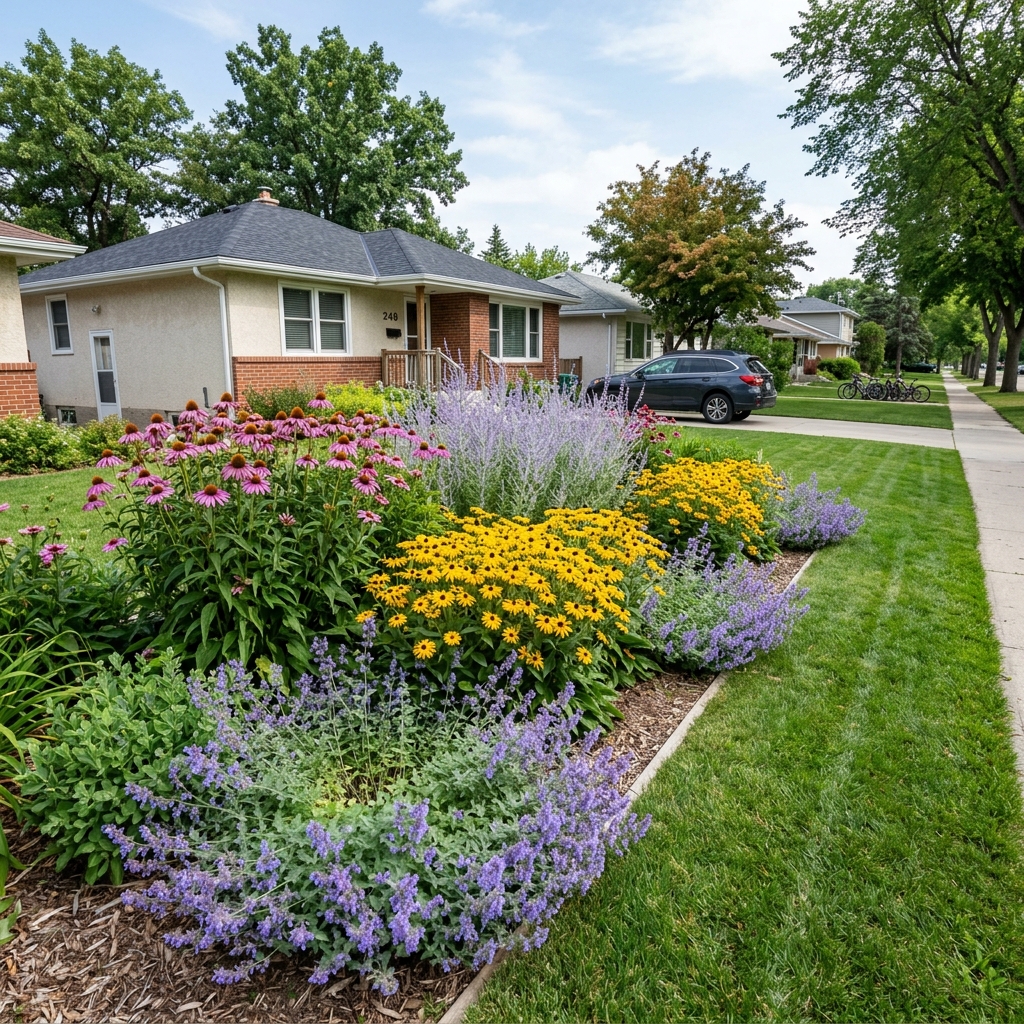
At 120 days, you need bloom succession — plants timed so that as one finishes, the next picks up. Miss this, and you’ll have a beautiful bed in July and bare soil in May and September.
Winnipeg sits on an ancient lakebed. Plant a root ball into unamended clay, and you’ve essentially buried it in a bucket — water pools, roots suffocate, plants languish. This is why Winnipeg flower beds often look great in year one and disappointing by year two.
Through the shoulder seasons, the ground repeatedly freezes and thaws, heaving plant crowns upward and exposing roots to desiccation and cold. Proper mulching and planting depth make the difference.
The right approach for Winnipeg is roughly 70% perennials, 30% annuals.
Perennials are the bed’s backbone. They return each year, spread gradually, and get better with age. Choose varieties rated Zone 3 or hardier — there’s no negotiating with a Winnipeg January. Annuals are the colour layer. They fill the gaps between perennials, provide season-long bloom from May through September, and let you change colour themes from year to year. Never plant annuals until after the May long weekend.
Rule of thumb: Plant all annuals after the May long weekend — no exceptions in Winnipeg.
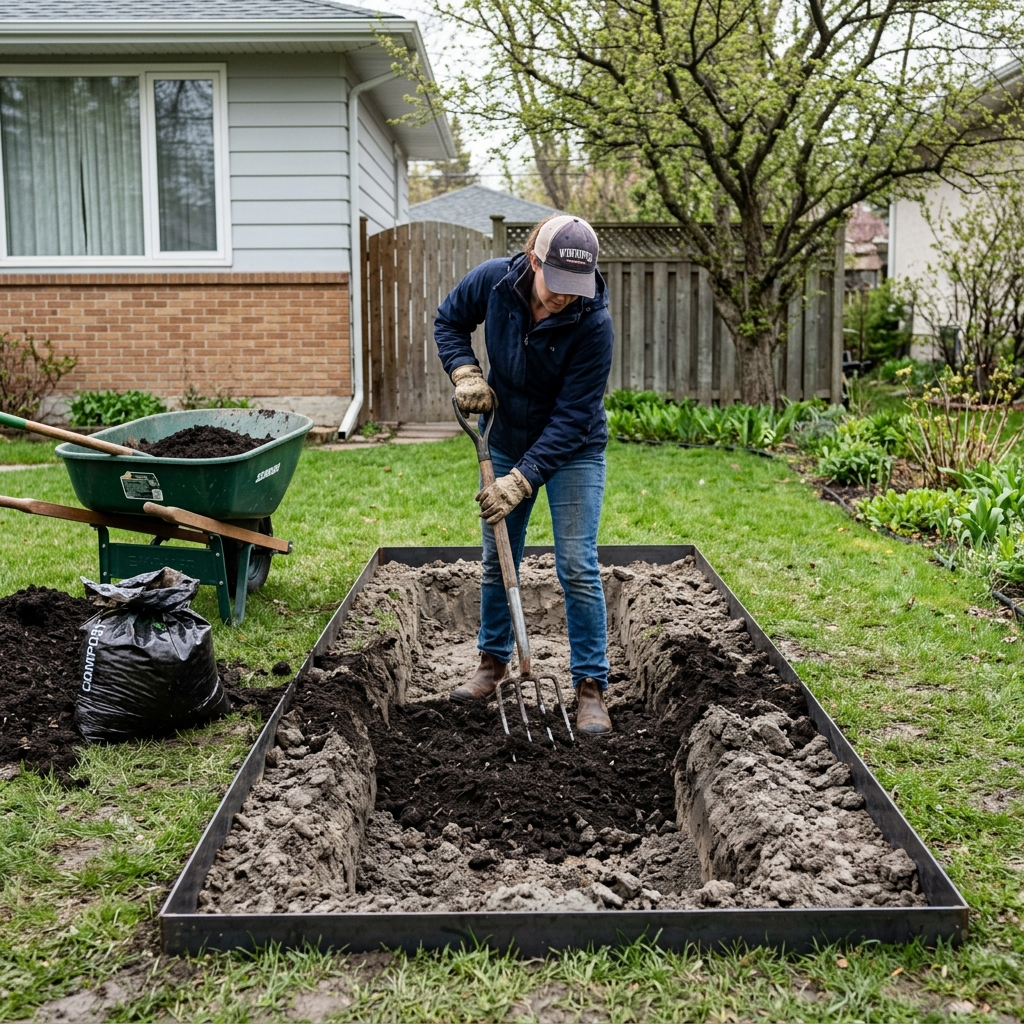
Concrete curbing is the most durable option — it doesn’t heave, rot, or shift. Metal landscape edging works well for DIY installs.
Remove 8–10″ of existing clay. Mix it roughly 50/50 with compost and a small amount of coarse sand or pea gravel. Don’t use fine sand alone — mixing sand and clay creates something close to concrete.
Perennial crowns should sit at or very slightly above the soil surface. Winnipeg’s freeze-thaw heaves plants upward; planting deep results in crowns heaving too high.
Apply 2–3″ of shredded bark or wood chip mulch. Insulates roots from freeze-thaw, retains moisture through dry summers, suppresses weeds. Keep mulch away from plant crowns.
Tallest (2.5ft+) at the back: Russian sage, aster, tall coneflower. Medium (1–2ft) in the middle: daylilies, bee balm, Siberian iris. Low (under 1ft) at the front: creeping phlox, catmint, alyssum.
Ensure something blooms in each period: May–June, July–August, and August–September. A bed that peaks in July and fades by Labour Day is a wasted opportunity.
Two or three colours repeated throughout the bed. Purple coneflower + yellow black-eyed Susan + white alyssum is a classic prairie combination.
Plant perennials at half their mature spread apart. Sparse in year one, filled in by year two, dense and lush by year three.
Coneflower, black-eyed Susan, wild bergamot, and prairie dropseed are Manitoba natives. Once established, they need almost no supplemental watering, fertilizing, or fussing.
A south-facing dry bed with ornamental rock and drought-tolerant plants (sedum, creeping phlox, hens-and-chicks, catmint) looks great from June through October with almost no maintenance.
If your yard has serious drainage problems, a raised bed solves the issue entirely. Fill with quality topsoil and compost, and you’re gardening in ideal conditions regardless of what’s underneath.
How deep should I plant perennial bulbs in Winnipeg?
Spring bulbs (tulips, daffodils, crocus) should be planted at 3 times their diameter deep — typically 6 to 8 inches for tulips and daffodils, 3 to 4 inches for crocus. Deeper planting in Winnipeg’s climate helps protect bulbs from the most extreme freeze-thaw cycles near the surface. Mark bulb locations so you don’t accidentally dig them up during spring bed prep.
My perennials look dead in spring. Are they gone?
Probably not. Perennials rated for Zone 3 are built to survive Winnipeg winters, and most will look completely dead through April and into early May. Before concluding anything is lost, wait until mid-May and look for new growth at the crown — the point where the plant meets the soil. If you see green emerging, the plant is alive. Only dig out plants that show no crown growth by late May.
How do I keep grass from growing into my flower beds?
A physical edge barrier is the most reliable long-term solution. Concrete curbing provides a permanent, non-degrading edge that grass roots can’t cross. Metal landscape edging is a good DIY alternative. Whatever edging you use, install it deep enough that it extends below the grass root zone — at least 4 to 6 inches. Mulch maintained at 2 to 3 inches also suppresses grass encroachment from above. Re-edge every spring as needed.
Which perennials spread aggressively and need to be managed?
Several popular Winnipeg perennials spread vigorously and can take over a bed if left unchecked. Bee balm (Monarda), tansy, yarrow, and lily of the valley are the main ones to watch. Divide them every 2 to 3 years in spring or fall to keep them in bounds. Russian sage stays in a clump and doesn’t spread aggressively. Coneflower self-seeds but is easy to manage by deadheading before seeds mature.
Can I plant trees and shrubs in the same bed as perennials?
Yes, with planning. Trees and shrubs are the structural layer above perennials in a layered planting design. The key is accounting for the mature spread of the woody plants — a shrub that looks small at planting will eventually shade out the perennials beneath it. Use shrubs at the back of beds and choose perennials for the mid and front zones that can handle the eventual shade increase as the shrubs mature.
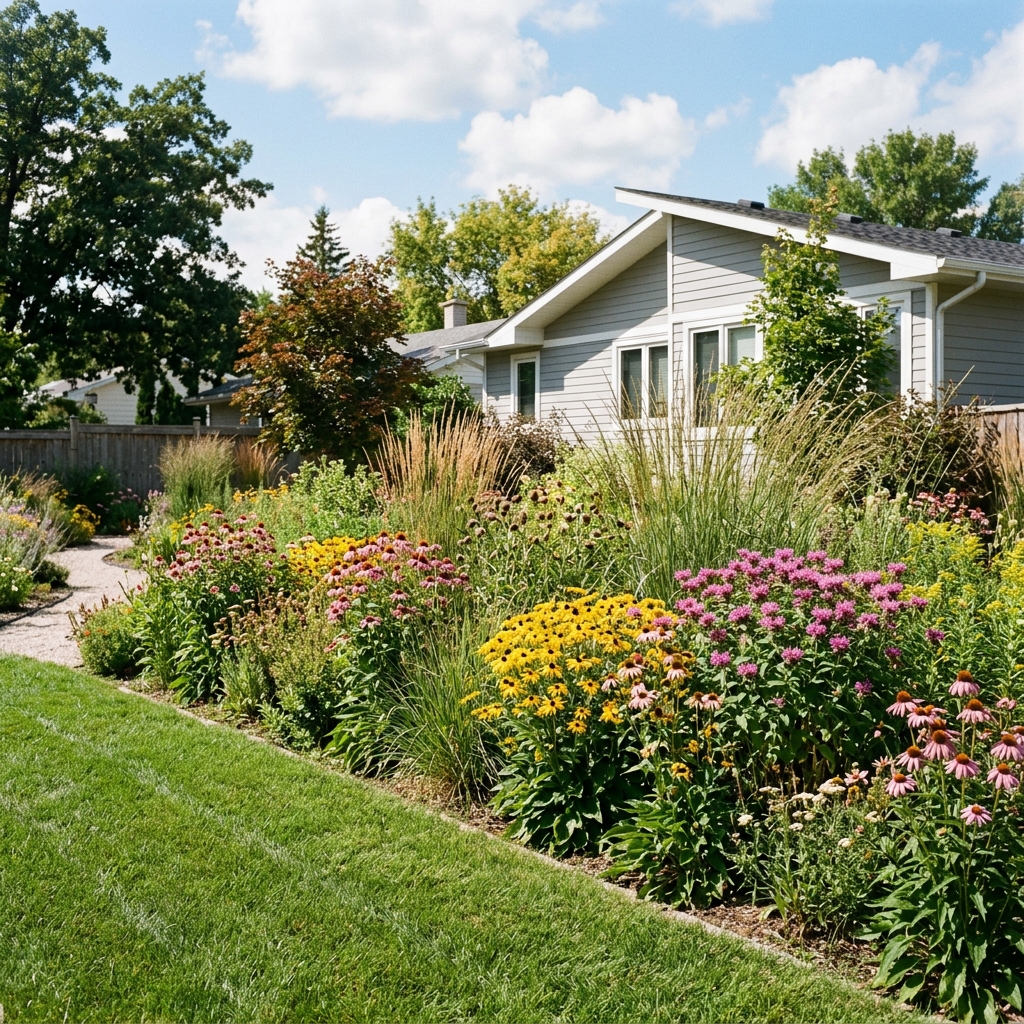
Some flower bed projects are straightforward enough to DIY. Call Lawn ‘N’ Order when:
Lawn ‘N’ Order has been designing and building Winnipeg yards since 1993. Our designers select plants through 30+ years of knowing what survives a Manitoba winter and what doesn’t.
Our landscape design team can walk you through plant selection, bed layout, and soil preparation for your specific yard — choosing through the lens of 30+ years of knowing what actually thrives in Winnipeg’s Zone 3b climate.
Use the Free Calculator Book a Free ConsultationSend the address and a rough idea of scope. We'll walk it, take levels, and give you a written number you can compare line for line.
Keep reading

A plow truck, a pusher and a loader do three different jobs, and the pile you start in November is still there…
Read the article →
Holiday Light Installation Winnipeg: Book Before the Ground Freezes Quick Takeaways Holiday light installation in Winnipeg has a short window: crews install…
Read the article →
Who Clears the Sidewalk in Winnipeg? What the City Does and What You’re Responsible For Quick Takeaways Winnipeg is one of the…
Read the article →