Lawn Care Services Winnipeg: What’s Included & How to Choose
- Lawn care services in Winnipeg typically include mowing, fertilization, aeration, and seasonal cleanup
- Zone 3 climate dictates specific timing: late April start, September wind-down, with peak season June through August
- DIY lawn care costs less upfront but demands 4–6+ hours weekly during peak growing season
- Professional services start around $40–60 per cut for mowing, $2,500–4,000+ annually for full programs
- The right service level depends on your time, budget, and what you want your lawn to look like
Your lawn takes a beating every Manitoba winter. Five months under snow, freeze-thaw cycles that heave the soil, and a short growing season that leaves little room for recovery. When spring finally arrives, the clock starts ticking.
Lawn care services in Winnipeg exist to solve a specific problem: getting your lawn healthy and keeping it that way within our 130-day growing window. But what exactly do these services include? What should you pay? And does it make sense for your situation, or are you better off doing it yourself?
This guide breaks down everything involved in professional lawn care, the Winnipeg-specific calendar you need to follow, and how to decide what’s right for your property.
What Professional Lawn Care Services Actually Include
Basic Lawn Maintenance
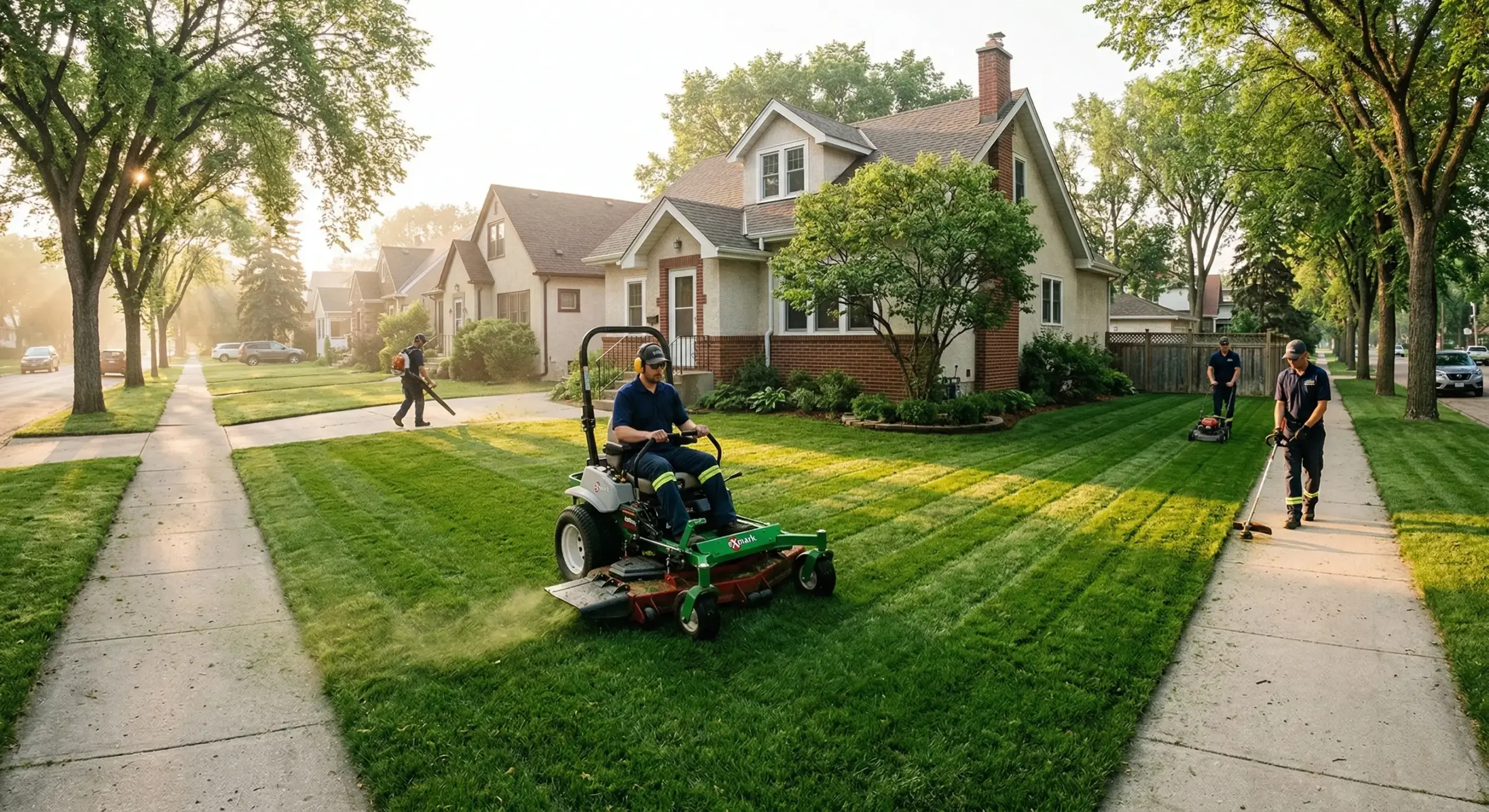
At its core, basic lawn care means regular mowing. In Winnipeg, that translates to weekly cuts during peak season (June through August) and every 10–14 days in spring and fall when growth slows.
But mowing is more than just cutting grass. Professional services include edging along sidewalks and driveways, trimming around obstacles, and cleaning up clippings. The details matter. Cutting height matters too. Manitoba lawns do best at 3 to 3.5 inches — tall enough to shade roots and retain moisture during summer heat.
Understanding Manitoba Grass Types
Most Winnipeg lawns are Kentucky bluegrass, either pure or blended with fine fescues. Kentucky bluegrass thrives in our Zone 3 climate, handles cold winters well, and recovers from damage through spreading rhizomes. Fine fescue blends add shade tolerance and drought resistance.
Knowing your grass type affects fertilization timing, mowing height, and overseeding choices. Kentucky bluegrass prefers slightly higher cuts and responds well to fall fertilization. Fescue blends tolerate lower mowing but need less nitrogen. A professional service identifies what’s in your lawn and adjusts care accordingly.
Fertilization Programs
Grass needs food, and timing that food delivery is everything in our climate. A typical fertilization program includes:
- Spring starter (late April/May): High nitrogen blend to kickstart green-up after dormancy
- Summer maintenance (June/July): Balanced nutrition to sustain growth through the peak season
- Fall winterizer (September): Potassium-heavy formula that strengthens roots before winter
Winnipeg’s clay-heavy soil also affects fertilization. Clay holds nutrients differently than sandy soil. It’s one reason generic advice from warmer climates doesn’t always apply here.
Aeration and Overseeding
Core aeration is arguably the most important service for Winnipeg lawns. Our clay soil compacts easily, especially after months of snow pressure. Compacted soil means grass roots can’t access water, oxygen, or nutrients effectively.
Aeration punches small holes throughout the lawn, removing soil plugs and creating channels for air and water. The ideal window is spring (once ground thaws) or fall (before freeze-up). Many lawn care programs include one annual aeration. Heavily compacted lawns benefit from twice-yearly treatment.
Overseeding goes hand-in-hand with aeration. Thin spots get filled in with fresh grass seed — typically Kentucky bluegrass or a bluegrass-fescue blend suited to our climate — and the aeration holes provide perfect seed-to-soil contact for germination.

Seasonal Services
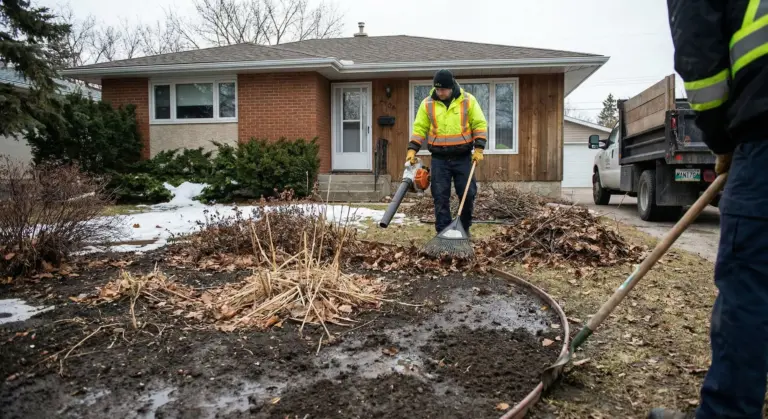
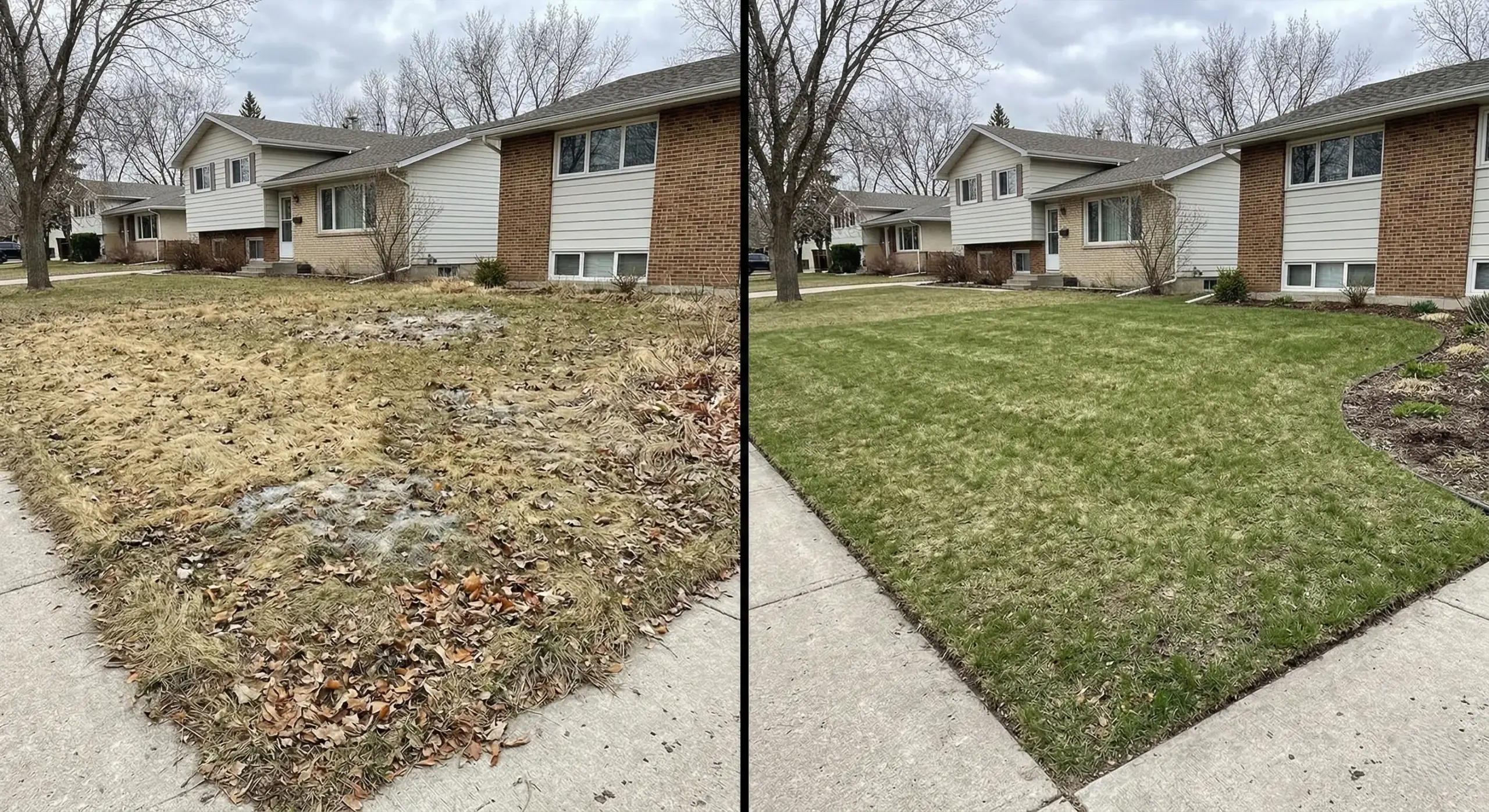
Spring cleanup and power raking remove winter debris and thatch buildup. This single service often makes the biggest visible difference after a Manitoba winter.
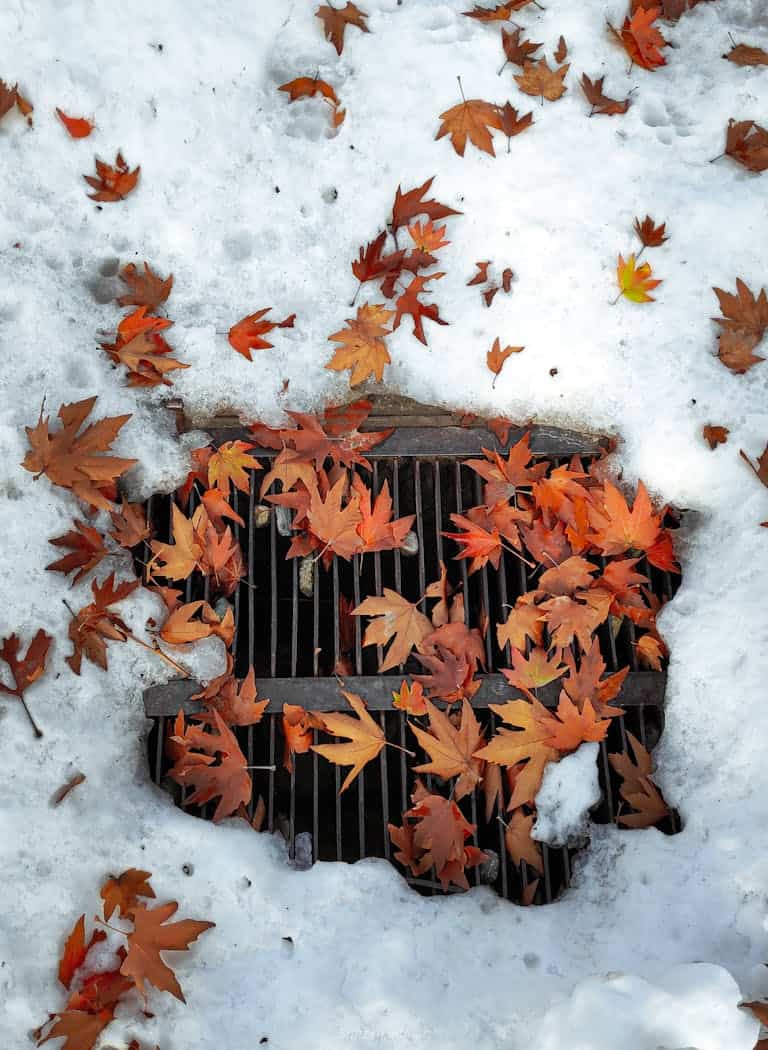
Fall cleanup handles leaf removal and prepares the lawn for winter dormancy. Leaving leaves on the lawn invites snow mold and other fungal problems come spring.
The Winnipeg Lawn Care Calendar: What Happens When
- Spring cleanup and debris removal
- Power raking to remove thatch (if needed)
- First fertilizer application
- Aeration (spring window)
- Overseeding bare patches
- Mowing frequency: Weekly at 3 to 3.5 inches
- Watering: 1 to 1.5 inches per week (including rain)
- Weed management as needed
- Last mow of the season (slightly lower cut)
- Fall fertilization (winterizer)
- Core aeration (fall window)
- Leaf cleanup and removal
DIY vs. Professional Lawn Care: The Real Comparison
What DIY Lawn Care Actually Involves
Doing it yourself isn’t just mowing. It’s equipment maintenance, fertilizer storage and timing, troubleshooting problems, and staying on schedule even when life gets busy.
- Equipment costs: A decent mower runs $400–800+. Add a trimmer, edger, spreader, and rake. Aerator rental costs $50–100 per day. Total first-year investment can easily hit $1,000+
- Time commitment: Expect 4–6+ hours weekly during peak season for an average lot — mowing, trimming, edging, cleanup, and general maintenance. Add time for fertilizing, aerating, and seasonal tasks
- Knowledge required: Knowing when to fertilize, how to identify diseases, what to do about pests, and how to adjust for weather conditions. This takes time to learn
DIY makes sense if you enjoy yard work, have flexible time, and want complete control over your lawn. Some people genuinely find it relaxing. Others find it a never-ending chore. For more on this decision, see our DIY vs. professional lawn care guide.
Why Homeowners Choose Professional Service
- Consistent scheduling: Your lawn gets maintained on schedule regardless of your work travel, family obligations, or weekend plans
- Commercial equipment: Professional mowers cut cleaner and faster than residential equipment. The results are visibly different
- Expertise: Trained crews spot problems early and know how to address Winnipeg-specific challenges like clay compaction and snow mold
- Time back: 4–6 hours weekly becomes zero hours. That’s 100+ hours per season you get back for family, hobbies, or rest
Think of it as insurance for your outdoor investment. Your lawn represents real value. Maintaining it properly protects that value, and professional service removes the risk of missed treatments or incorrect timing that can set a lawn back significantly.
Cost Comparison
| Approach | Annual Cost | Time Investment | Results |
|---|---|---|---|
| Full DIY | $500–800 | 150+ hours | Variable |
| Mowing only (pro) | $1,500–2,500 | Low | Good |
| Full program (pro) | $2,500–4,000+ | None | Excellent |
How Much Do Lawn Care Services Cost in Winnipeg?
Per-Service Pricing
| Service | Typical Range |
|---|---|
| Mowing (per cut) | $40–$60+ (varies by lot size) |
| Core aeration | $100–$200 |
| Power raking | $150–$300 |
| Fertilization (per application) | $50–$100 |
| Spring / fall cleanup | $200–$500 |
Package Pricing
Most lawn care providers offer bundled programs that make more economic sense than à la carte services:
| Package | What’s Included | Seasonal Cost |
|---|---|---|
| Basic | Mowing + 2 fertilizations | $1,500–$2,500 |
| Enhanced | + Aeration, seasonal cleanup | $2,500–$3,500 |
| Premium | Full service, all-inclusive | $3,500–$4,500+ |
What Affects Pricing
- Lot size and complexity
- Frequency of service
- Additional services included
- Property accessibility
- Current lawn condition
How Do You Choose a Lawn Care Provider?
Questions to Ask
- What exactly is included in your standard service?
- How do you handle weather delays or schedule changes?
- What products do you use? (Some homeowners have preferences on organic vs. conventional)
- Do you offer contracts or pay-as-you-go options?
- What’s your response time if I notice a problem?
- Are you insured?
Warning Signs
- No clear pricing structure
- Can’t explain their fertilizer program or timing
- No proof of insurance
- High-pressure sales tactics
- Significantly lower price than competitors (often means cut corners)
Frequently Asked Questions
How often should my lawn be mowed in Winnipeg?
Weekly during peak season (June through August). Every 10–14 days in spring and fall when growth slows. The goal is never to remove more than one-third of the grass blade in a single cut.
Is professional lawn care worth it or should I do it myself?
It depends on your situation. If you value your weekends and want consistent, expert results, professional service often pays for itself in time saved and lawn health. If you genuinely enjoy yard work and have the time, DIY can work well. Many homeowners fall somewhere in between — handling mowing themselves but hiring out aeration and fertilization.
What’s the most important lawn care service in Winnipeg?
Core aeration ranks highest for long-term lawn health due to our heavy clay soil. Compaction is your lawn’s biggest enemy here. Regular aeration addresses that directly. Fertilization comes second because timing matters so much in our short season.
When should I start lawn care in spring?
Wait until soil temperature reaches about 10°C and ground is no longer waterlogged — typically mid to late April, sometimes early May depending on the year. Working on frozen or saturated ground does more harm than good.
Can I hire someone just for mowing and do the rest myself?
Absolutely. Many homeowners take this hybrid approach. Professional mowing frees up your weekends while you handle fertilization and other tasks on your own schedule. Most providers are flexible about customizing service packages.
Ready to Reclaim Your Weekends?
Winnipeg’s short growing season leaves little room for error. Getting professional help means your lawn gets the right treatment at the right time, every time.
At Lawn ‘N’ Order, we don’t believe in one-size-fits-all lawn care. Our property maintenance programs are built around your property’s specific needs and your budget. Want full-service care? We can do that. Prefer to handle mowing yourself but need help with aeration and fertilization? We’ll build a custom package that fits.
Contact us to discuss your lawn care needs. We’ll assess your property, understand your goals, and recommend a program that makes sense for your situation.
Get a Custom Lawn Care Quote
We’ll assess your property, understand your goals, and recommend a program that makes sense for your situation and budget.
Contact Us Today View Maintenance Programs