Zone 3 Perennials Winnipeg: Designer’s Picks by Garden Type
- Zone 3 means your last frost is typically mid-May and your first frost arrives around late September — about 120 days to work with
- The right perennials depend on your garden type, not just your zone: a sunny border needs different plants than a shaded foundation bed or a low-maintenance side yard
- Prairie natives like coneflower, black-eyed Susan, and wild bergamot are the most reliable Winnipeg perennials — they evolved for this soil, this climate, and this rainfall
- Clay soil is the biggest limiting factor: most perennials survive a Winnipeg winter but struggle in clay that drains poorly. Soil preparation matters more than plant selection
- A designed perennial bed has bloom succession from May through October: something always in flower, nothing ever bare
Why Most Perennial Lists Do Not Work Here
Search for perennials for Zone 3 and you will find lists. Long lists. Alphabetical lists. Lists organized by colour or height. Most of them will technically work in Winnipeg from a hardiness standpoint. What those lists do not tell you is which plants perform well in heavy clay soil, which ones look their best in the specific light conditions of a Winnipeg yard, and which ones actually extend the season instead of peaking in July and leaving you with bare beds in May and September.
After 30 years of designing and installing gardens across Winnipeg, the question our designers ask is not which perennials survive here. It is which perennials thrive here, in the specific conditions of your specific garden type. The answers differ significantly depending on whether you are planting a sunny south-facing border, a foundation bed under roof overhang, a low-maintenance side yard, or a naturalized area along the back fence.
This guide organizes plant selection by garden type rather than zone. Use it to build a bed that suits your actual conditions, not just your postal code.
Before Plant Selection: Fix the Soil
This section comes first because no plant list compensates for heavy clay that pools water and compacts under foot traffic. Winnipeg’s clay soil is the single biggest limiting factor for perennial performance, and it is entirely correctable before planting.
For any new perennial bed: remove 8 to 10 inches of existing clay. Replace with a blend of screened topsoil and compost, roughly 60/40 by volume. Add a small amount of coarse sand or pea gravel to improve drainage. Do not use fine sand alone; mixing fine sand and clay creates something close to concrete.
Planting depth matters: Perennial crowns should sit at or slightly above the finished soil surface, not buried deep. Winnipeg’s freeze-thaw cycle heaves plants upward — planting at the right depth means they end up at the right depth after the first winter. Ditchfield Supplies carries screened topsoil, 4-way blend, and compost suitable for perennial bed preparation. See ditchfieldsoils.ca/soil-black-dirt-clean-fill for product options and delivery.
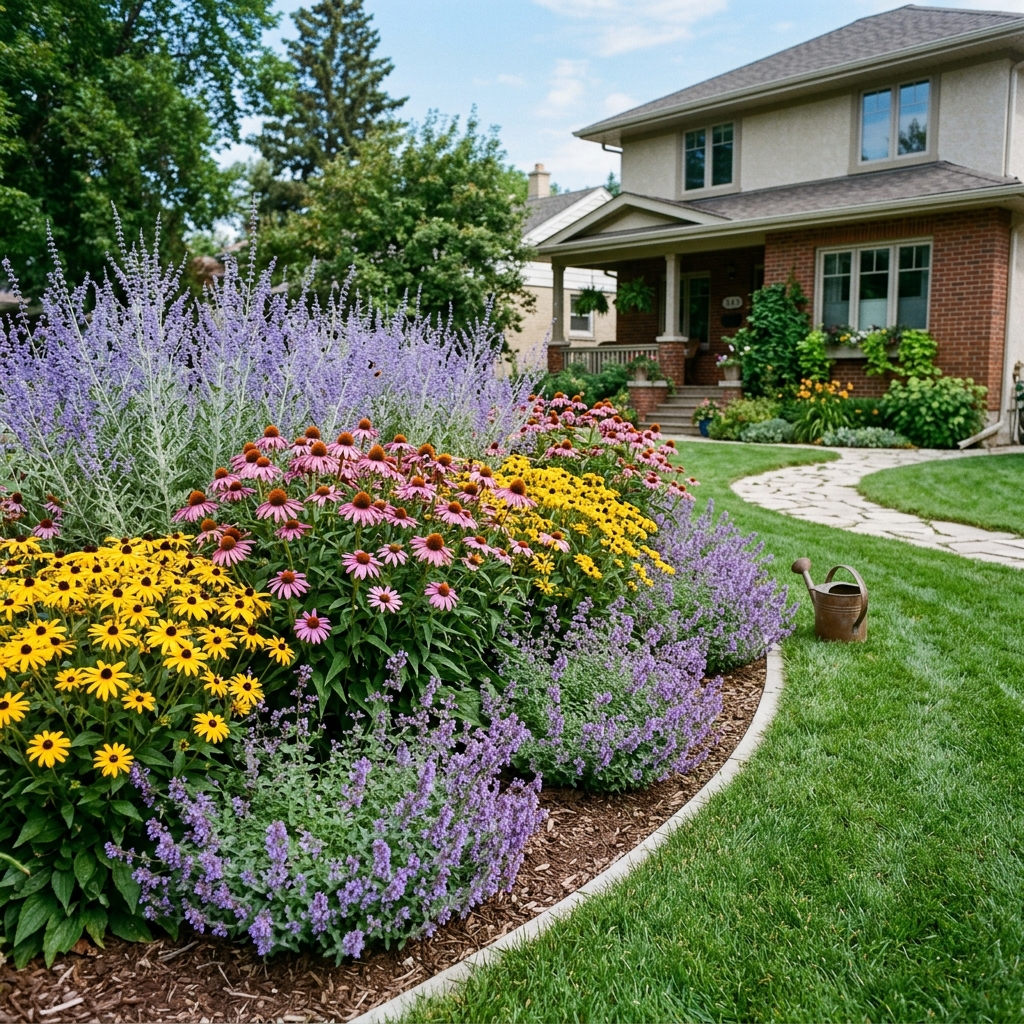
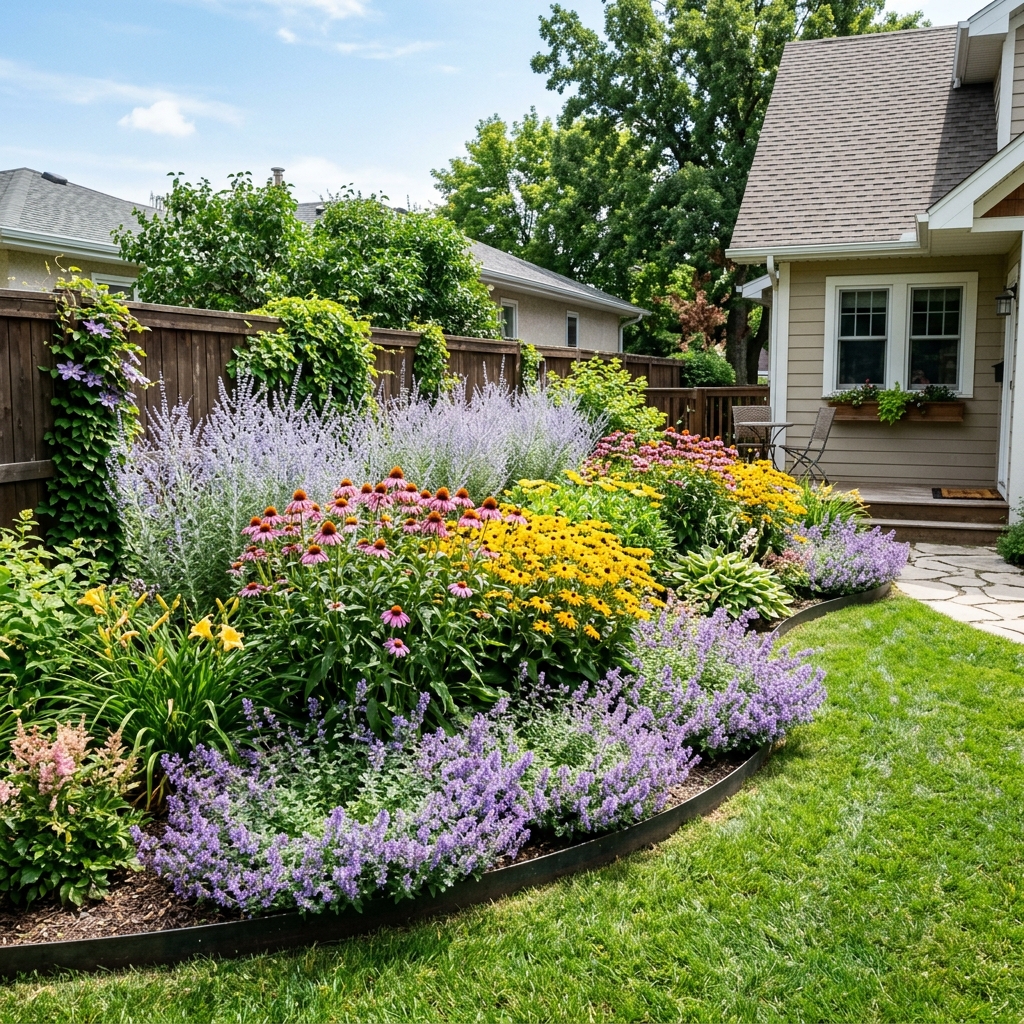
A sunny south or west-facing border is the highest-performing garden type in Winnipeg. Full sun, good air circulation, and heat from reflected light create conditions that suit prairie plants naturally. This is where the most visually spectacular perennial combinations work best.
Purple Coneflower (Echinacea purpurea) — A prairie native that requires almost no attention once established. Drought-tolerant, long-blooming from July through September, and beloved by pollinators. Leave the seed heads standing through winter for goldfinch feeding. Available in purple, pink, orange, and white.
Black-Eyed Susan (Rudbeckia fulgida) — Another prairie native. Bright yellow with dark centres, blooming July through October, making it one of the longest-blooming perennials for this climate. Spreads gradually to fill space.
Russian Sage (Perovskia atriplicifolia) — Tall, airy, silvery-blue from August until frost. One of the few plants that genuinely thrives in Winnipeg’s dry prairie summers. Creates the back layer of a sunny border.
Catmint (Nepeta ‘Walker’s Low’) — Soft lavender-blue flowers from June through September. Drought-tolerant, deer-resistant, and perfect for the front edge of a sunny border. Cut back by half after the first flush and it rebounds for a second bloom.
Sedum ‘Autumn Joy’ — Structural interest from August through winter. Turns from green to pink to copper as the season progresses. Provides the late-season anchor that most sunny borders lack.
Daylilies (Hemerocallis) — Available in hundreds of varieties. Look for re-blooming types like ‘Happy Returns’ or ‘Stella d’Oro’ for extended season. Incredibly tough in clay soil once established.
| Period | What Blooms |
|---|---|
| May to June | Catmint, Siberian iris, creeping phlox at border edges |
| July to August | Coneflower, black-eyed Susan, daylilies, bee balm |
| August to frost | Russian sage, sedum, aster, late daylily re-bloomers |
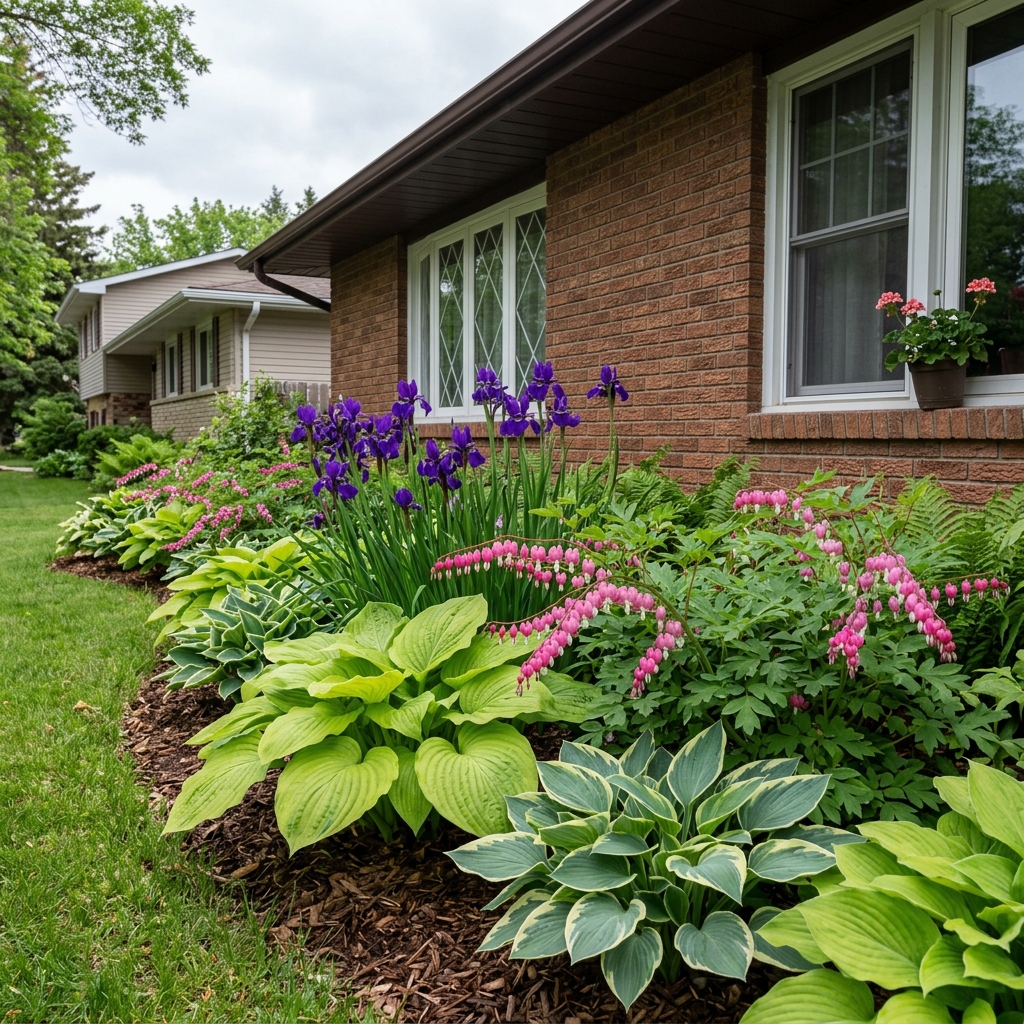
Foundation beds on the north or east side of a house are the most challenging garden type in Winnipeg. Limited sun, roof overhang that creates a rain shadow, and reflected cold from the house foundation all make plant selection critical. The wrong plants struggle visibly. The right ones thrive.
Siberian Iris (Iris sibirica) — More reliable than bearded iris in clay and shade. Upright foliage provides structure year-round. Purple, blue, or white flowers in late May to early June. Does not require division as frequently as bearded types.
Bleeding Heart (Dicentra spectabilis) — Heart-shaped pink or white flowers in late May. Tolerates deep shade and the dry conditions under roof overhang. Goes dormant by midsummer; plan plants behind it to fill the gap.
Astilbe — Feathery plumes in white, pink, or red from July to August. One of the few perennials that actually prefers consistent moisture, making it a good choice for foundation beds where eaves drip in spring. Needs reliable moisture; do not plant in dry shade.
Hosta — The reliable workhorse of shaded Winnipeg beds. Grown primarily for foliage rather than flowers. Wide range of sizes and leaf patterns. Slug management is the main maintenance task.
Lungwort (Pulmonaria) — Early spring bloom in blue, pink, or white — one of the first perennials to flower in Winnipeg. Attractive spotted foliage through the season. Tolerates dry shade better than most spring bloomers.
The side yard between houses, the utility strip along the fence, and the narrow bed between the garage and the property line: these are the spaces where homeowners want plants that look after themselves. Low water, minimal division required, and no need for staking.
Wild Bergamot (Monarda fistulosa) — Manitoba native. Lavender-pink flowers July to August, loved by pollinators. Spreads readily, which is an asset in areas you want to fill and forget. More restrained than the ornamental bee balm varieties.
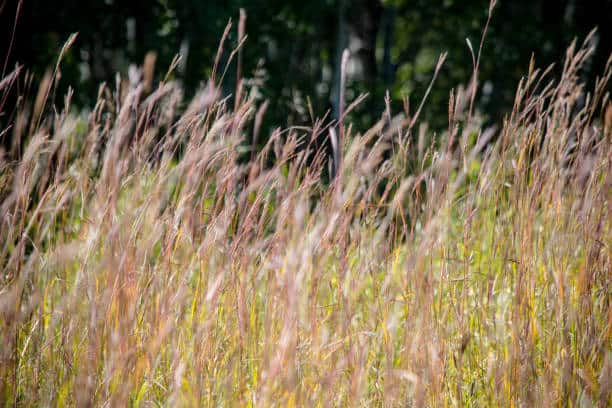
Prairie Dropseed (Sporobolus heterolepis) — A native grass with an elegant arching form and a faint popcorn scent when in bloom. Extremely low maintenance once established. Provides structure through winter.
Creeping Phlox (Phlox subulata) — Carpet of pink, purple, or white in May. Evergreen groundcover the rest of the season. Suppresses weeds effectively in narrow strips. Plant 18 inches apart and it fills in within two seasons.
Karl Foerster Grass (Calamagrostis ‘Karl Foerster’) — Upright ornamental grass that stays in place without spreading aggressively. Feathery plumes in summer, structural bronze in fall and winter. Reliable in Zone 3.
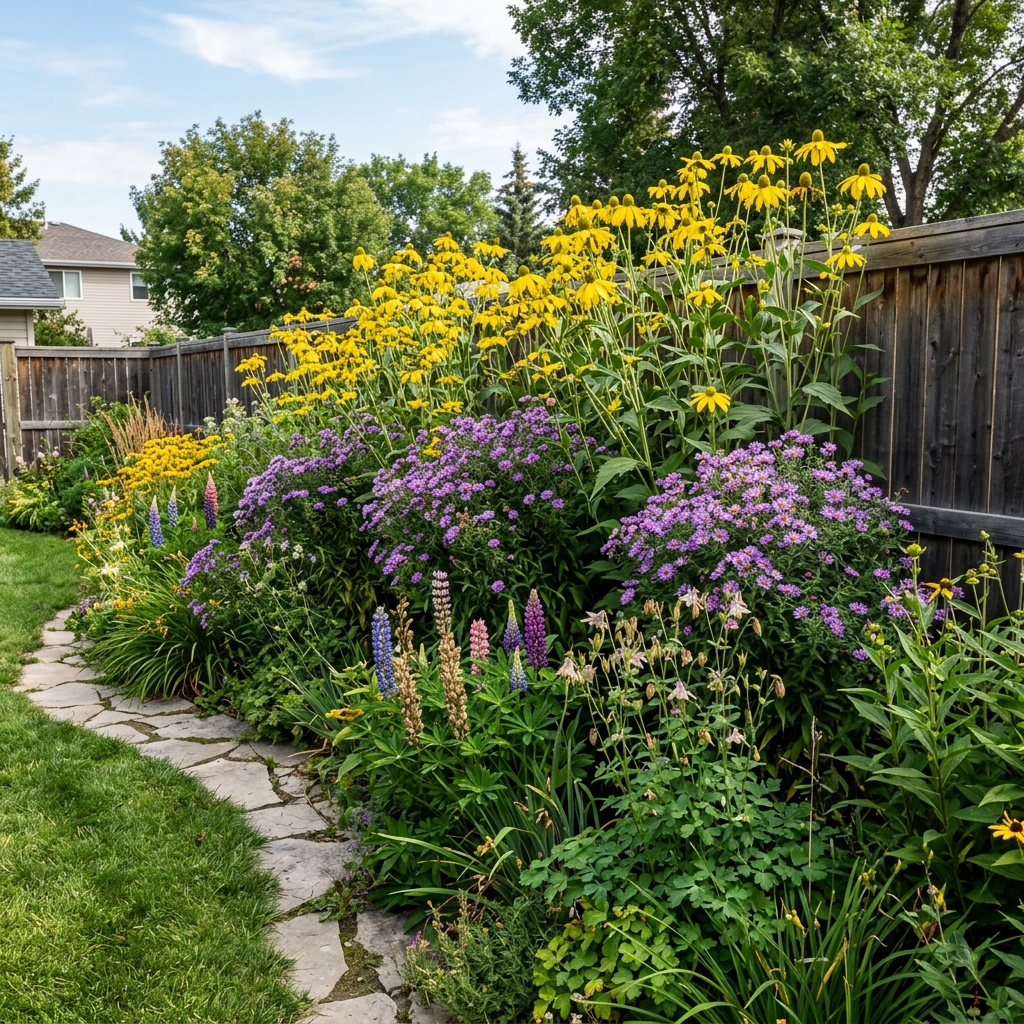
A naturalized back-of-property bed is where Winnipeg’s prairie heritage becomes a design asset. Tall, bold, wildlife-friendly plantings that require minimal intervention and look better every year as they establish and spread.
Tall Coneflower (Rudbeckia nitida or R. laciniata) — Taller than the standard black-eyed Susan, reaching 5 to 6 feet. Bold yellow flowers in August and September. Excellent at the back of a naturalized area.
Aster (Symphyotrichum) — Purple or pink daisy-like flowers from August through frost. One of the last nectar sources for pollinators before winter. Tall and somewhat floppy; stake if needed or let it lean on neighbours.
Lupins — Stunningly colourful vertical spires all summer. Self-seeds readily in naturalized areas, giving you more plants every year. Thrives in Winnipeg’s dry prairie climate.
Wild Columbine (Aquilegia canadensis) — Native to Manitoba. Delicate red and yellow flowers in late May. Self-seeds prolifically, filling in bare areas over time. No maintenance required.
The Design Principles That Make It Work
Any garden type benefits from three structural decisions that most homeowners skip when they plant a bed:
Layer by Height
Tallest plants at the back, medium in the middle, groundcover at the front. This prevents taller plants from shading out shorter ones and gives each plant appropriate airflow.
Plan Bloom Succession
At least one plant blooming May to June, multiple in July to August, and at least one carrying through September to frost. A bed that peaks in July and goes bare by Labour Day is a wasted opportunity.
Mulch After Planting
2 to 3 inches of shredded bark insulates crowns from freeze-thaw, retains moisture through dry summers, and suppresses weeds. Keep mulch pulled back from plant crowns to prevent rot.
For perennial bed design integrated with your existing or planned hardscape — patio edges, retaining walls, and curbing — our landscape design team at Lawn ‘N’ Order develops planting plans specific to your site conditions.
FAQ: Zone 3 Perennials in Winnipeg
When is the right time to plant perennials in Winnipeg?
Spring planting after the May long weekend is the safest window for most perennials. Soil temperatures above 10 degrees Celsius support root establishment before summer heat arrives. Fall planting works well for hardy perennials if done 6 to 8 weeks before the first hard frost — typically by mid-September — giving roots time to establish before the ground freezes. Avoid planting during July heat peaks.
Which perennials need dividing and how often?
Most clump-forming perennials benefit from division every 3 to 5 years to maintain vigour and control spread. Daylilies, hostas, Siberian iris, and asters are the most common candidates. Divide in early spring as growth emerges or in early fall while soil is still warm. Replant divisions immediately and water in well. Russian sage, coneflower, and prairie natives generally do not need regular division.
How do I keep perennials through a Winnipeg winter?
Hardy Zone 3 perennials survive Winnipeg winters without special treatment in most cases. The two interventions that genuinely help: mulch crowns with 2 to 3 inches of shredded bark before the ground freezes to reduce freeze-thaw heaving, and avoid cutting back all perennials in fall. Leaving seed heads and stems standing through winter provides insulation for crowns, habitat for overwintering insects, and structural interest in the garden. Cut back in spring once new growth is visible.
Design Your Perennial Beds with Lawn ‘N’ Order
Lawn ‘N’ Order has been designing and building Winnipeg gardens since 1993. Our designers select perennials filtered through 30 years of knowing what performs in Winnipeg’s clay, in our specific frost calendar, and in the light conditions of a typical Manitoba yard. Book a free consultation and tell us what type of space you are working with — we will design something that looks good in May and keeps improving every year.
Use the Free Calculator Book a Free Consultation