
Parking Lot Snow Removal Winnipeg: Equipment & Staging
A plow truck, a pusher and a loader do three different jobs, and the pile you start in November is still there…
Read the article →
Most Winnipeg lawns look worse in late April than they actually are. Snow mould, vole runways, and bare patches all follow identifiable patterns — and most of them recover on their own with the right timing. Here's how to read the damage and what to do about each type.
After 30 years of assessing Winnipeg lawns in spring, there’s a reliable pattern to what we find. Every property is different, but the damage types are consistent. Manitoba winters are long, cold, and heavy with snow, and all three of those factors leave marks.
The good news: most spring lawn damage looks worse than it is. The matted, grey-brown surface you’re staring at in late April is usually recoverable with the right approach and the right timing. The damage that isn’t recoverable is rarer than homeowners fear, and it’s identifiable early.
Here’s how to read what you’re looking at, and what each type of damage actually requires.
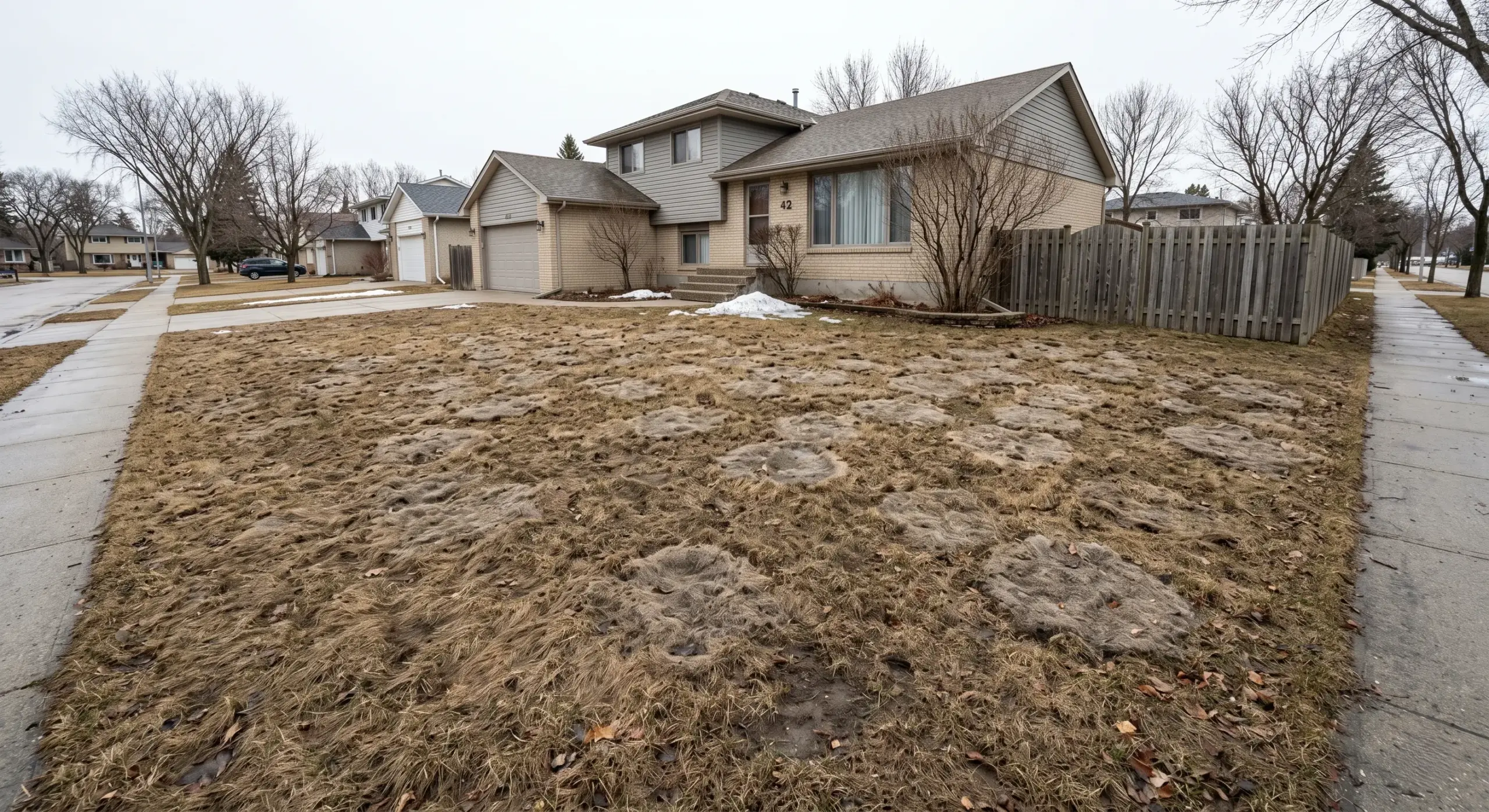
Snow mould is a fungal disease that develops under snow cover, particularly in areas where snow sits for extended periods. It shows up as circular patches of matted, discoloured grass, sometimes with visible grey or pink mycelium (the fuzzy growth).
Grey snow mould (Typhula blight) is by far the more common type in Winnipeg and is rarely a serious problem. The fungus affects leaf blades but not roots. Once snow recedes and the grass gets sunlight and airflow, it recovers on its own in most cases. Light raking to break up the matted surface and improve air circulation is the only intervention usually needed.
Pink snow mould (Microdochium patch) is the more serious variety — it can affect the crown and roots, not just the blades. Affected areas are slower to recover and may not fill in on their own. If pink mycelium is present and patches aren’t greening up by mid-May, overseeding those spots with compatible grass seed is the fix.
The diagnostic question: push the matted grass aside and look at the base. If the crown tissue is still firm and light-coloured at the centre, the grass is alive and will recover. If the crowns are dark, soft, and rotting, those spots need reseeding.
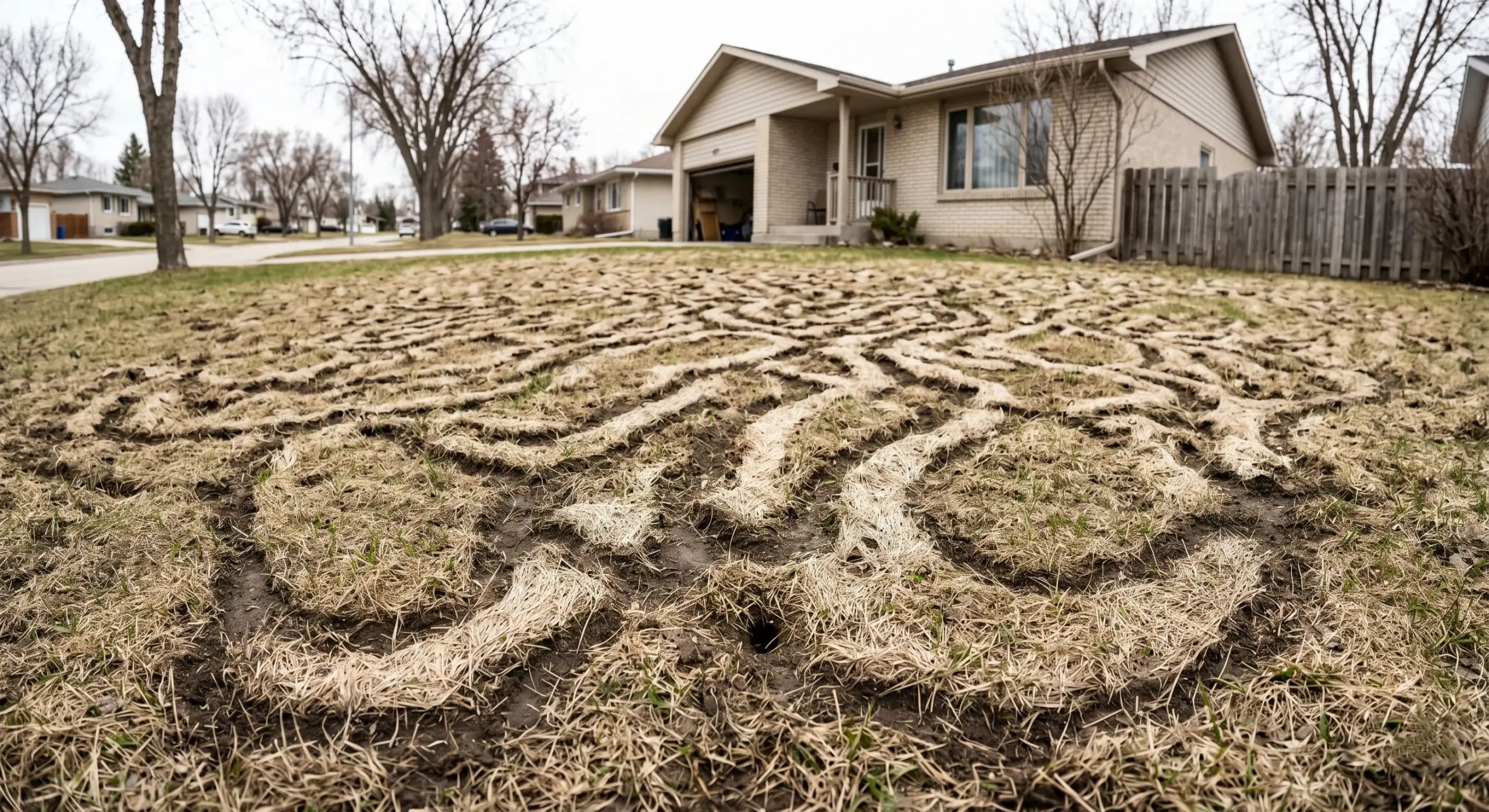
Voles — small rodents that look like fat mice — tunnel under snow during winter, feeding on grass roots and crowns. When the snow melts, their runway systems become visible: narrow, winding paths of chewed-down or completely bare grass, typically 2–3 cm wide, running in irregular patterns across the lawn.
Vole damage looks dramatic when it covers a significant area, but the fix is straightforward: rake out the dead material in the runways, lightly loosen the soil surface, overseed with a compatible grass mix, and keep the area moist until germination. Most vole-damaged areas fill in within 4 to 6 weeks under good conditions. Extensive damage covering large sections may benefit from a light topsoil application before seeding to improve the seedbed.
In years with significant winter rain-then-freeze events, or in yards with drainage problems, ice sheets can form over the lawn. When ice sits on grass for extended periods, it depletes oxygen and can suffocate root systems. Affected zones tend to be in low areas where water pools and then freezes.
Ice-affected areas are often distinguishable by their location (low spots, areas near downspouts) and by the fact that the surrounding lawn greens up while these zones stay brown even into May. Core aeration over compacted ice-affected areas helps restore oxygen movement. If the crowns are dead, overseeding is necessary.
Compaction is a separate but related issue. After months of snow weight and freeze-thaw cycles, Winnipeg’s clay soil is at its most compacted in spring. This slows green-up even in healthy lawn areas. Core aeration is the most effective single thing you can do for a compacted Winnipeg lawn.
Bare patches at the end of winter have multiple possible causes: voles, snow mould, ice damage, dog traffic, or simply thin areas going into winter that didn’t survive. Before treating, identify which category you’re in. Vole patches have the characteristic runway pattern. Snow mould patches are roughly circular. Ice damage zones correlate with low spots. Dog damage is usually in consistent locations.
The fix for most bare patches is the same regardless of cause: loosen the soil surface, add a thin layer of topsoil (about 1 cm) if the soil is compacted or depleted, overseed with a compatible mix, and keep moist through germination. For large areas, calculating the topsoil quantity correctly matters.
The timing matters more than most homeowners realize. Overseeding when soil temperatures are below 8°C produces poor germination and wastes seed. Core aeration on still-frozen or waterlogged ground causes compaction rather than relieving it. Patience in late April pays off in June.
| When | Conditions | What to Do |
|---|---|---|
| Late April | Ground thawed, soil still cold (<5°C) | Rake snow mould, assess damage, don’t seed yet |
| Early May | Soil 5–8°C, lawn starting to green | Core aeration, light raking, begin fertilizing |
| Mid-May | Soil 8–12°C, active growth starting | Overseed bare patches, apply topsoil where needed |
| Late May | Soil above 12°C, full growth | Second fertilizer application, fill any remaining gaps |
| June | Full growing season | First mow, maintain 3-inch height, water as needed |
For significant overseeding or topsoil repair work, getting the quantity right up front saves a second trip.
Use 1 cm (approximately 0.4 inches) of screened topsoil as a seedbed over bare areas.
For larger lawn restoration projects, Ditchfield Supplies’ topsoil delivery covers quantities and delivery options. For projects combining lawn repair with broader landscaping work, use the Lawn ‘N’ Order cost calculator to see how lawn restoration fits into the full project budget.
Overseeding rates for bare patches run higher than maintenance overseeding. For bare soil, use approximately 35–45 grams per square metre. For thin (not bare) areas, 15–20 grams per square metre is appropriate. Grass seed from a Manitoba-appropriate blend — containing creeping red fescue, Kentucky bluegrass, and perennial ryegrass — performs significantly better than generic seed mixes not formulated for Zone 3 conditions.
A Lawn ‘N’ Order spring cleanup goes beyond raking. Our assessment identifies what’s cosmetic and what requires active treatment — which matters because the wrong intervention on snow mould (overseeding too early, for example) can create worse outcomes than letting it recover naturally.
Our spring service covers debris removal, power raking to remove thatch and break up mould patches, core aeration for the compacted clay soil that defines most Winnipeg properties, and a property condition report that identifies what needs follow-up attention. For properties with significant bare patch coverage, we integrate topsoil and overseeding recommendations with the cleanup.
Timing note: Spring cleanup slots fill up fast in April and May. Book your spring cleanup now to secure a date before peak season backlog builds.
My lawn looks completely dead after winter. Should I be worried?
Probably not yet. Winnipeg lawns often look entirely brown and lifeless through most of April, then green up surprisingly fast once soil temperatures rise. Before concluding that areas are dead, wait until mid-May. Push a screwdriver into the soil — if it slides in easily and the soil is moist, the conditions are right for recovery. Pull a small plug of turf and check whether the crown tissue is firm and light-coloured (alive) or dark and mushy (dead). Most brown lawns have far more living grass than they appear to.
Should I apply fertilizer as soon as the snow melts?
No. Fertilizer applied to cold, dormant soil runs off or locks up rather than feeding the grass. Wait until the lawn is actively growing — soil temperatures above 8°C and grass is visibly greening. In Winnipeg, that’s typically early to mid-May. A slow-release nitrogen fertilizer in early May, followed by a second application in late May or early June, is the pattern that produces the best results for Manitoba grass types.
How do I stop vole damage from happening next winter?
Vole populations cycle and aren’t fully predictable, but a few practices reduce damage. Keep the lawn cut short going into winter — voles prefer tall grass for cover. Avoid heavy mulching around the base of trees and shrubs adjacent to the lawn. Clear away debris piles that provide overwintering habitat. Some homeowners use hardware cloth cylinder guards around tree bases in areas with consistent vole pressure.
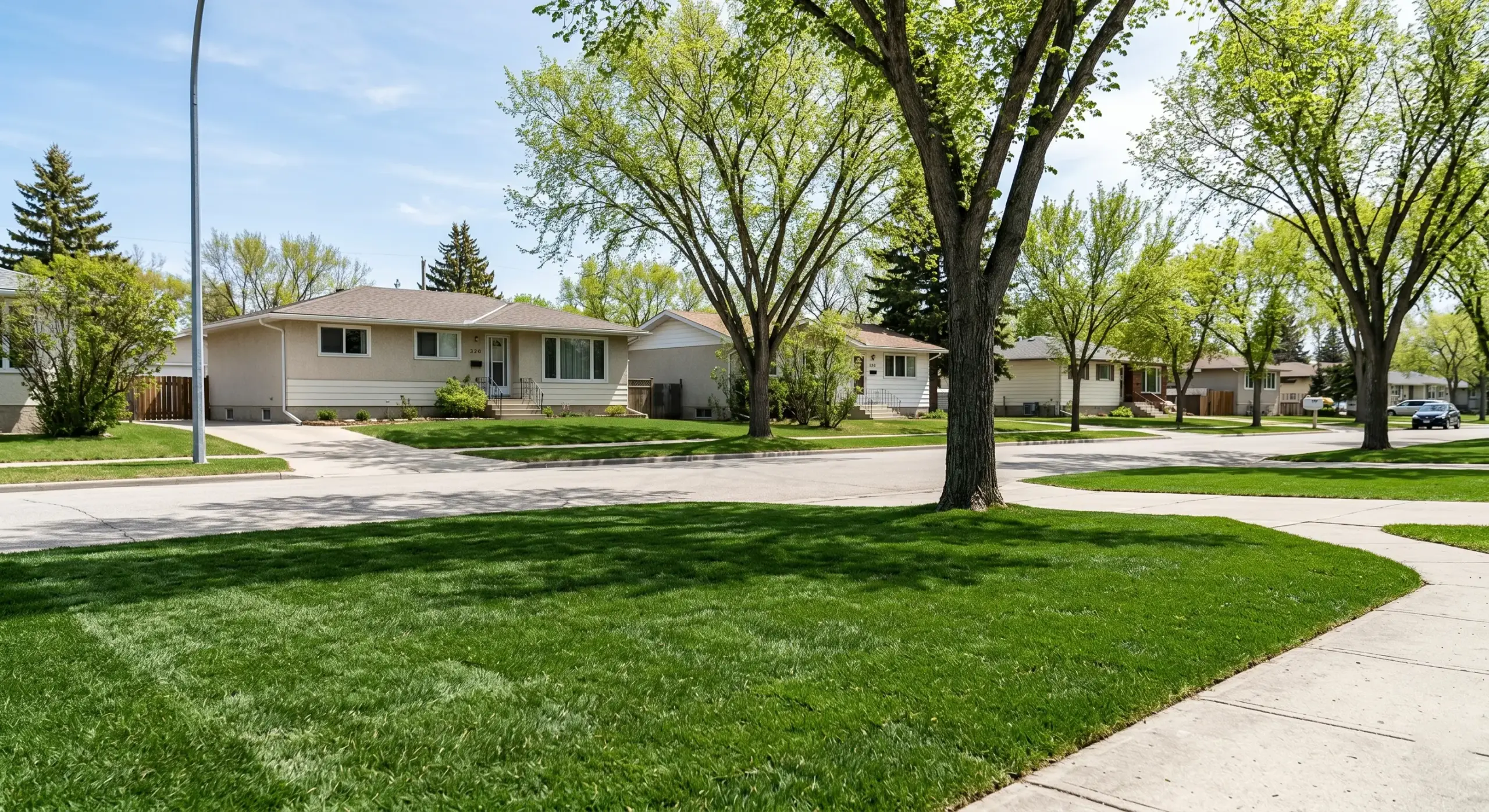
Spring is the window that sets up the entire growing season. A lawn that goes into June aerated, overseeded where needed, and fertilized on the right schedule performs dramatically better through Winnipeg’s summer heat. Book your spring lawn care service or use the cost calculator to see what a complete spring service looks like for your property size.
Use the Free Calculator Book Spring CleanupSend the address and a rough idea of scope. We'll walk it, take levels, and give you a written number you can compare line for line.
Keep reading
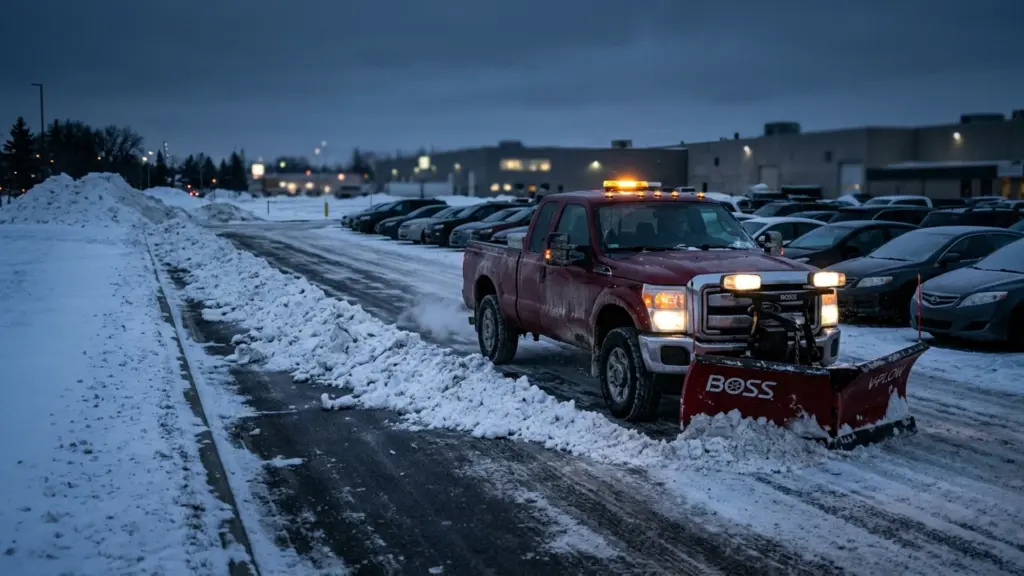
A plow truck, a pusher and a loader do three different jobs, and the pile you start in November is still there…
Read the article →
Holiday Light Installation Winnipeg: Book Before the Ground Freezes Quick Takeaways Holiday light installation in Winnipeg has a short window: crews install…
Read the article →
Who Clears the Sidewalk in Winnipeg? What the City Does and What You’re Responsible For Quick Takeaways Winnipeg is one of the…
Read the article →