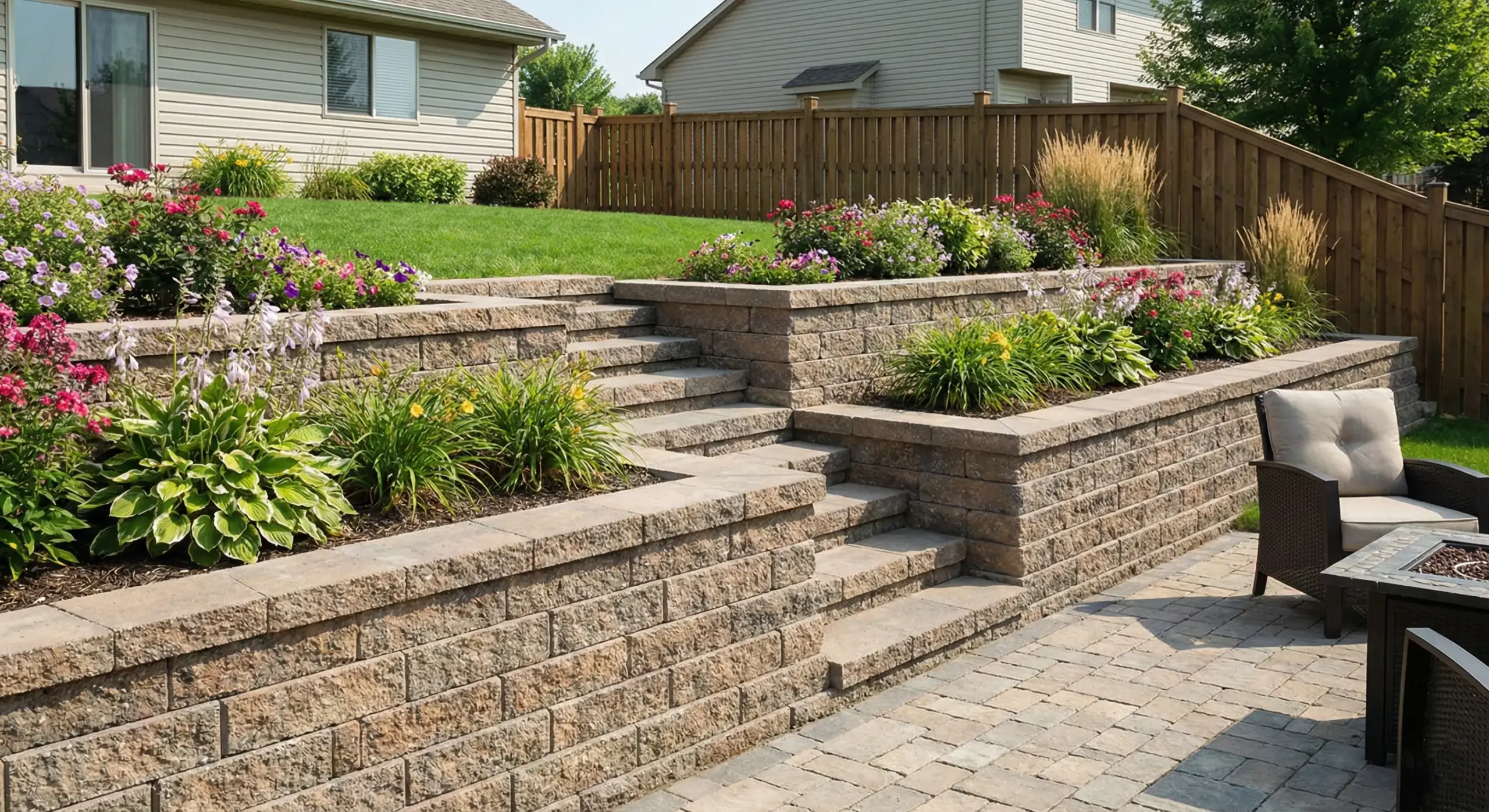
Retaining Wall Contractors Winnipeg: What to Know Before You Build
- Retaining wall costs in Winnipeg range from $35–$65 per square foot installed
- Walls over 4 feet typically require engineering and building permits
- Drainage behind the wall is the single most important factor for longevity
- Manitoba’s freeze-thaw cycles demand specific construction techniques
- Material choice affects both appearance and performance in our climate
A retaining wall does one job: hold back soil. Sounds simple enough. But in Winnipeg, where the ground freezes deep and thaws unpredictably, building a wall that actually lasts requires specific knowledge and techniques.
The difference between a retaining wall that stands for decades and one that fails within years often comes down to contractor selection. Not every landscaper understands the engineering principles involved, and not every contractor builds for Manitoba conditions.
This guide covers what you need to know before hiring retaining wall contractors in Winnipeg — understanding the basics helps you ask the right questions and recognize quality work versus shortcuts that lead to failure.
Why Retaining Walls Face Extra Challenges in Winnipeg
The Freeze-Thaw Factor
Ground in Winnipeg freezes to depths of four to six feet. When soil freezes, it expands. When it thaws, it contracts. This cycle repeats dozens of times each spring and fall, putting enormous pressure on any structure in or near the ground.
A retaining wall built without accounting for frost heave will move. Blocks shift. Walls lean. Eventually, the whole structure fails. Proper landscape design in Winnipeg anticipates these forces and builds to resist them.
Spring Runoff and Hydrostatic Pressure
Every spring, melting snow saturates the soil. On sloped properties, this water flows downhill and collects behind retaining walls. The pressure of water-logged soil pushing against a wall — called hydrostatic pressure — is the number one cause of retaining wall failure.
Proper drainage solutions behind the wall aren’t optional. They’re essential. Any contractor who doesn’t discuss drainage in detail probably doesn’t understand what makes walls fail.
The Importance of Proper Base Preparation
In Winnipeg’s clay soil conditions, proper base preparation is non-negotiable. Quality installations include 6–12 inches of compacted granular base material below the first course of block. This base provides a stable, level footing that won’t shift; promotes drainage under the wall; and creates a buffer between the wall and frost-susceptible native clay. Skipping or skimping on base preparation is one of the most common shortcuts that leads to premature wall failure.
Retaining Wall Types for Manitoba Properties
Concrete Block Systems (Allan Block, Barkman, Techo-Bloc)
Manufactured concrete blocks are the most popular choice for residential retaining walls in Winnipeg. Systems like Allan Block, Barkman, and Techo-Bloc use interlocking designs that rely on gravity and setback angles for structural stability. These products are engineered specifically for segmental retaining walls, and come with manufacturer specifications for base preparation, drainage, and maximum heights.
Best for: Most residential applications, walls under 4 feet, consistent appearance, proven performance.
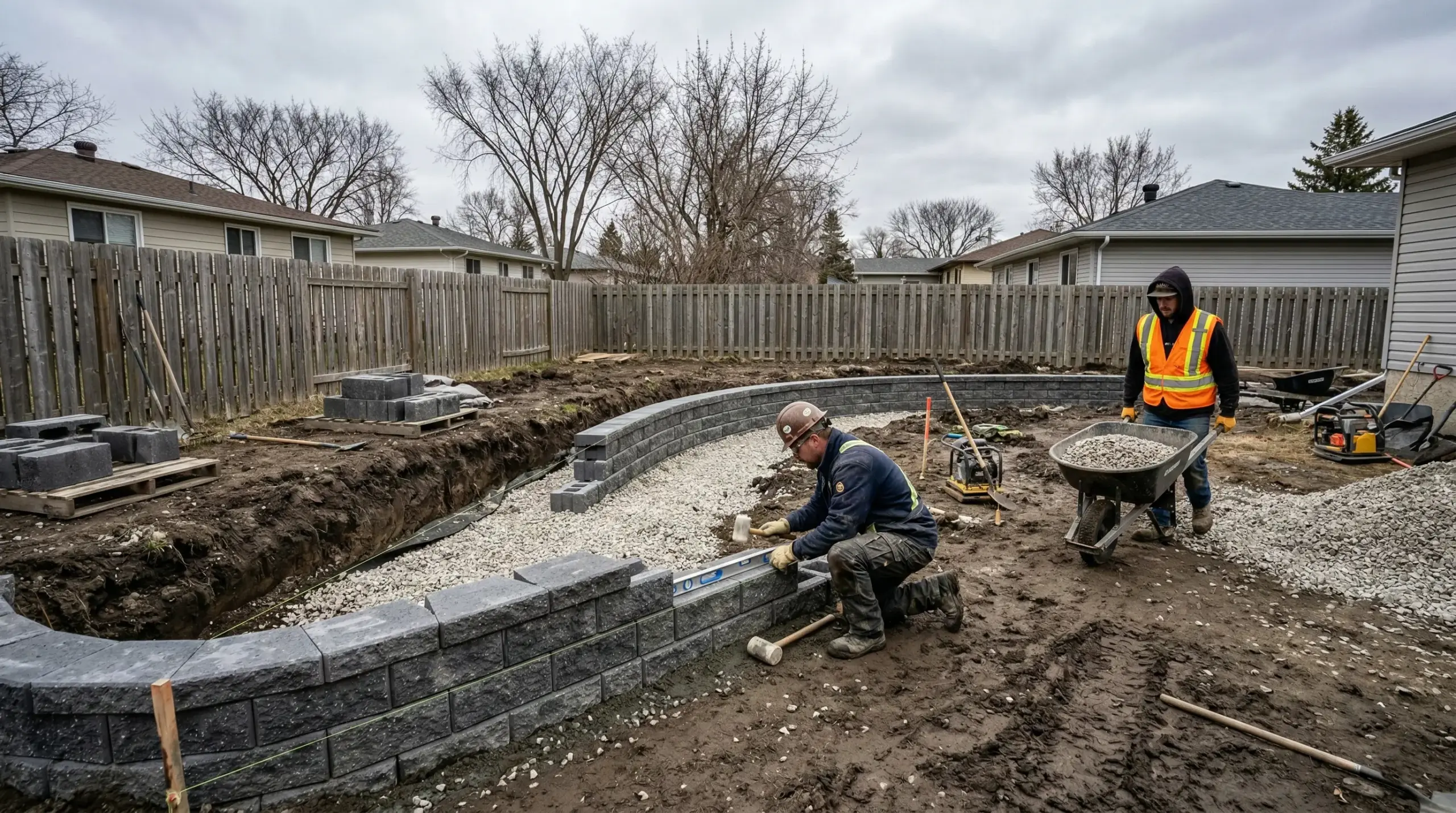
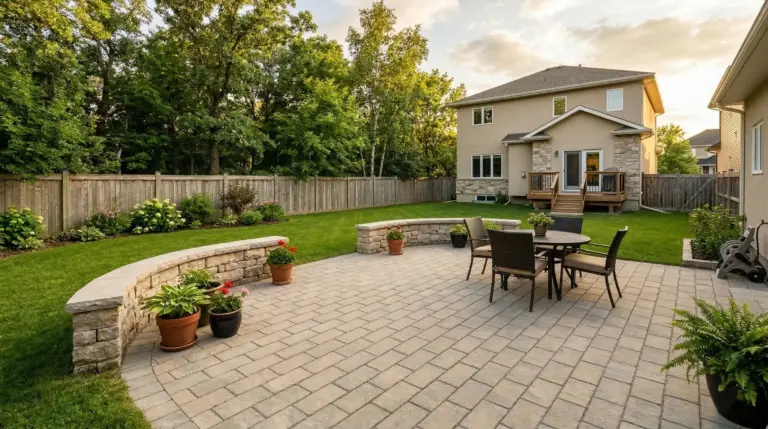
A segmental concrete block retaining wall installed in Winnipeg — engineered for Manitoba’s freeze-thaw cycles with proper base preparation and drainage behind the wall.
Geogrid Reinforcement for Taller Walls
Walls exceeding certain heights — typically 3–4 feet depending on the block system and soil conditions — require geogrid reinforcement for structural stability. Geogrid is a high-strength polymer mesh laid horizontally between block courses and extending back into compacted soil behind the wall.
This reinforcement creates a “reinforced soil mass” where the wall and the soil behind it work together as a unified structure. Proper geogrid installation requires careful attention to manufacturer specifications: correct grid selection for the load, proper embedment lengths (often 60–100% of the wall height extending back into the hillside), and correct compaction of backfill over each layer. Walls that need geogrid but don’t have it — or have it installed incorrectly — are at high risk of failure.
Natural Stone Walls
Natural stone creates distinctive, high-end retaining walls. Limestone and granite are common choices in Manitoba. These walls require skilled masons who understand how to select, place, and interlock irregular stones for structural integrity. Natural stone costs more and takes longer to install, but the aesthetic appeal is unmatched — and the material handles freeze-thaw cycles well when properly installed.
Best for: High-visibility areas, premium landscapes, matching existing stonework.
Timber and Railroad Tie Walls
Pressure-treated timber and railroad ties create rustic-looking walls at lower cost. However, they have limitations. Wood eventually rots, even pressure-treated lumber. Typical lifespan is 15–20 years before replacement becomes necessary. Timber walls also have lower structural capacity than stone or block systems.
Best for: Budget projects, garden terracing, rustic aesthetics, temporary applications.
What Retaining Walls Cost in Winnipeg
| Wall Type | Cost per Sq Ft | 50 Sq Ft Wall |
|---|---|---|
| Timber / Railroad Tie | $20 – $35 | $1,000 – $1,750 |
| Concrete Block | $35 – $55 | $1,750 – $2,750 |
| Natural Stone | $50 – $80+ | $2,500 – $4,000+ |
Major cost components include materials, base preparation (excavation and compacted gravel), drainage components (perforated pipe, drainage gravel, geotextile fabric), geogrid reinforcement for taller walls, labour (typically 40–60% of total project cost), and engineering and permits for walls over 4 feet.
When Do You Need Permits and Engineering?
In Winnipeg, retaining walls over 4 feet (measured from bottom of footing to top of wall) typically require a building permit. Walls this tall also need engineering drawings stamped by a licensed engineer.
This isn’t bureaucracy for its own sake. Walls over 4 feet are holding back significant soil loads. Engineering ensures the design accounts for soil type, drainage, frost depth, and structural loads. The permit process verifies proper construction.
What to Look for in Retaining Wall Contractors
Questions to Ask Before Hiring
- How will you handle drainage behind the wall?
- What base preparation do you use, and how deep?
- How deep do you excavate for the footing?
- Do you follow manufacturer specs for the block system?
- Will this wall require geogrid reinforcement?
- Can you provide references for walls you built 5+ years ago?
- What warranty do you offer on the work?
Warning Signs to Watch For
- No discussion of drainage in the proposal
- Vague descriptions of base preparation
- Suggesting to skip permits for tall walls
- No mention of geogrid for walls approaching 4 feet
- Price significantly lower than all other quotes (shortcuts are likely)
- No photos of completed projects or references available
- Unwilling to put warranty terms in writing
Why Drainage Is the Most Critical Factor
More retaining walls fail from poor drainage than any other cause. When water accumulates behind a wall, hydrostatic pressure builds. Saturated soil weighs more than dry soil. In winter, water trapped behind the wall freezes and expands.
Proper drainage includes:
- Drainage gravel: 12+ inches of clean gravel behind and under the wall
- Perforated drain pipe: At the base of the wall, directing water away
- Geotextile fabric: Separates drainage gravel from native soil to prevent clogging
- Weep holes or gaps: Allow water to escape through the wall face
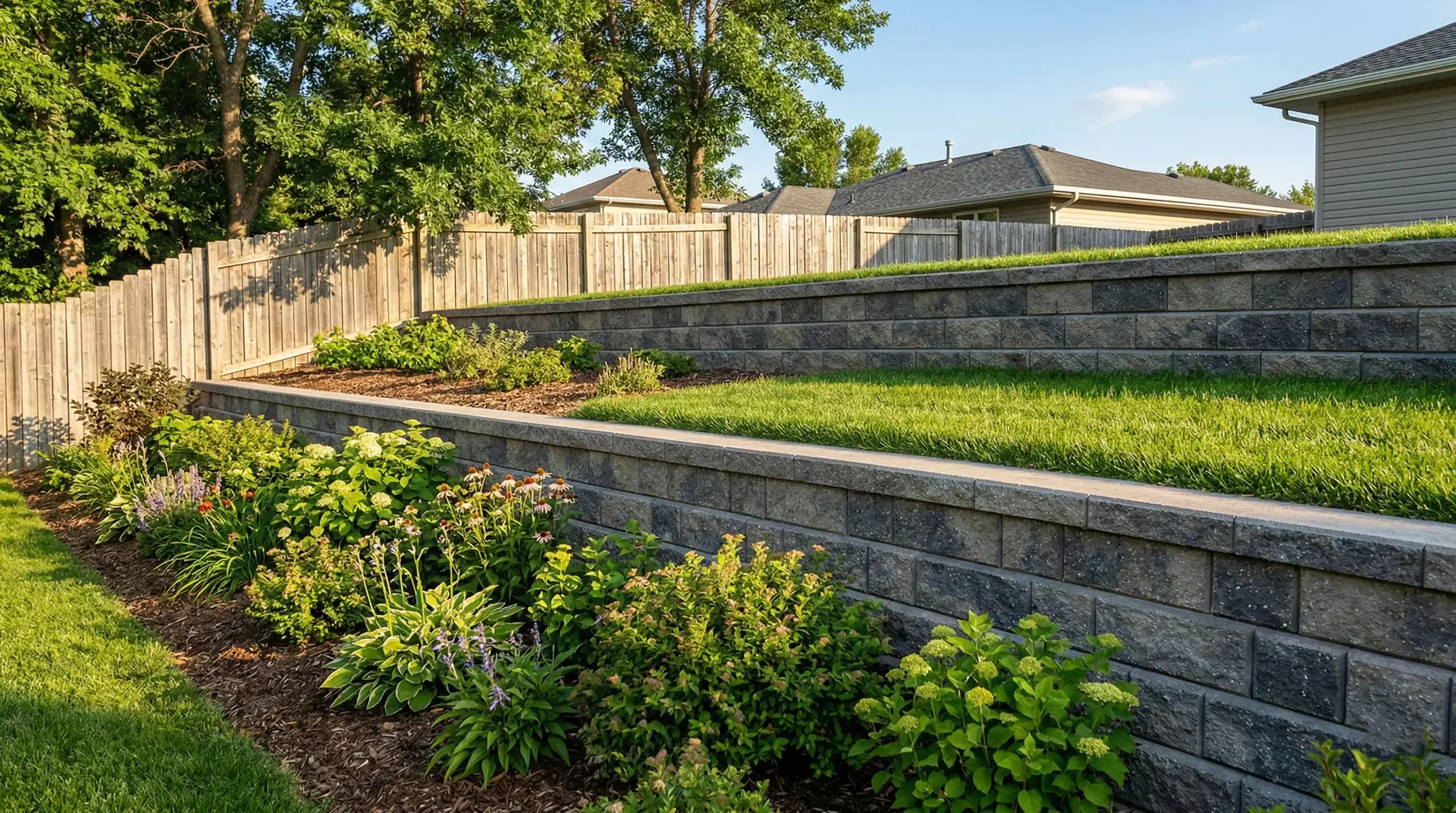
A properly built retaining wall in Winnipeg: correct base depth, drainage gravel layer, and block setback all working together to handle decades of Manitoba freeze-thaw cycles.
For walls near building foundations, drainage coordination becomes even more critical. The wall’s drainage system may need to tie into existing foundation drainage (weeping tile) or direct water away from sump pump discharge points. A qualified contractor will assess the full drainage picture — not just the wall in isolation.
Frequently Asked Questions
How long should a properly built retaining wall last?
Concrete block and natural stone walls built with proper drainage and base preparation should last 50+ years with minimal maintenance. Timber walls typically last 15–20 years before needing replacement.
Can I build a retaining wall myself?
Short walls under 2 feet are manageable DIY projects for handy homeowners. Walls between 2–4 feet require significant knowledge and equipment. Walls over 4 feet should always be professionally built due to engineering requirements and failure risks.
What time of year is best for building retaining walls?
Late spring through early fall when the ground isn’t frozen. Avoid building during freeze-thaw periods in spring and late fall. Summer provides the most stable conditions for base preparation and proper compaction.
My existing retaining wall is leaning. Can it be repaired?
Sometimes. Minor leaning may be addressed by improving drainage. Significant movement usually means foundation failure, and the wall needs rebuilding. A professional assessment can determine whether repair is viable or replacement is necessary.
Build It Right the First Time
Retaining walls represent significant investments. A properly built wall adds value to your property and solves grade challenges for decades. A poorly built wall becomes an expensive problem within years.
At Lawn ‘N’ Order, our retaining wall services are built for Manitoba conditions. We understand frost depth, drainage requirements, base preparation, geogrid reinforcement, and the engineering principles that determine whether walls stand or fall. Our approach starts with proper site assessment and ends with walls that perform for decades.
Get a Retaining Wall Quote
We’ll assess your site, explain your options, and provide a detailed quote that covers everything required for lasting results.
Request a Free Assessment