Winter-Ready Landscape Lighting: Protecting Your Fixtures in Winnipeg’s Harsh Climate
Winter in Winnipeg isn’t just cold—it’s a relentless test for every outdoor element of your property. While most homeowners focus on protecting plants and hardscaping, landscape lighting often gets overlooked until a fixture fails or a wire gets damaged. With temperatures dropping to -40°C and an average of around 120–125 cm of snow annually, according to Environment Canada data, your outdoor lighting faces unique challenges that demand proactive winter preparation.

Why Winnipeg Winters Are Brutal on Landscape Lighting
Manitoba’s freeze-thaw cycles create the perfect storm for lighting damage. When daytime temperatures hover around -5°C and plunge to -25°C at night, moisture trapped in fixtures expands and contracts repeatedly. This cycle cracks lenses, loosens seals, and allows water infiltration that freezes into damaging ice.
Research insight: Studies from cold-regions laboratories and the National Research Council of Canada show that repeated freeze–thaw cycling significantly accelerates deterioration of outdoor components when they are not properly winterized.
Add snow accumulation, road salt spray, and frost heave that shifts ground-buried wiring, and you have a maintenance challenge that goes far beyond simply changing bulbs.
Winnipeg’s short winter days also mean your lighting runs 14-16 hours daily from November through February—nearly double the summer usage. This extended operation increases wear on components while simultaneously exposing them to extreme conditions.
Common Winter Damage to Outdoor Lighting Systems
Fixture Deterioration
Ice buildup on lens covers blocks light output and creates pressure that can crack protective casings. Moisture that seeps into fixtures during autumn rains freezes solid, expanding and damaging internal components. Even high-quality fixtures rated for outdoor use can fail without cold-climate specifications.
Wiring Vulnerabilities
Frost heave—the upward movement of soil as groundwater freezes—can lift buried cables toward the surface or sever connections entirely. Snow removal equipment frequently damages shallow wiring, especially along driveways and walkways.
Critical depth requirement: A University of Manitoba frost-penetration study and municipal data show Winnipeg’s frost depth commonly reaches 1.5–1.8 m, and can exceed 2 m in severe winters—well beyond typical landscape-lighting burial depths.
Snow Burial Hazards
Low-mounted path lights and well lights disappear under snowdrifts, becoming safety hazards and targets for snow blowers. Buried fixtures also lose their function entirely, creating dark spots that defeat the purpose of winter lighting.
Essential Winter Protection Strategies
Choose Cold-Climate Rated Equipment
Standard outdoor fixtures won’t survive Manitoba winters. Look for fixtures with IP65 or IP67 ratings (indicating complete dust and water protection) and cold-temperature certifications down to -40°C.
Cold-climate LED fixtures perform exceptionally well in low temperatures and typically use about 75% less energy than incandescent lamps, while maintaining stable light output even during deep freezing.
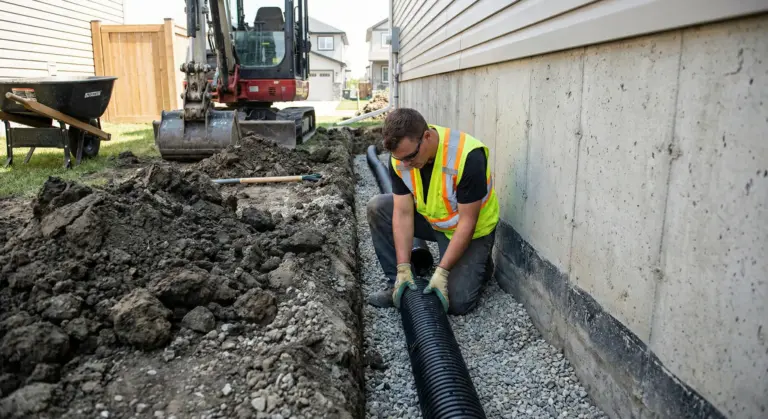
Bury Wiring Below Frost Line
Manitoba’s electrical code requires buried wiring to sit at least 45 cm deep, but for landscape lighting in frost-prone areas, aim for 60-75 cm where practical.
- Using PVC conduit for all buried runs adds modest cost (typically under a few dollars per meter) but greatly reduces damage from frost movement and incidental digging
- Mark conduit routes on property maps to avoid accidental digging
- Consider running wiring under existing hardscaping for additional protection
Install Protective Markers
Before the first major snowfall, place reflective marker stakes 15-30 cm away from each ground-level fixture. These $3-5 stakes prevent snow removal equipment damage and help you locate buried lights. This simple step can save hundreds in repair costs throughout winter.
Implement a Seasonal Maintenance Schedule
Late October/Early November:
- Test all fixtures and clean lenses
- Inspect seals and tighten connections
- Apply silicone grease to junction boxes to prevent moisture infiltration
After Major Snow Events:
- Clear fixtures within 24 hours
- Brush off ice accumulation
- Verify that snow hasn’t covered wiring access points
Early March (Spring Thaw):
- Conduct thorough inspections for frost heave damage
- Check all connections for corrosion
- Adjust fixture angles that may have shifted
Smart Design for Winter Longevity
Elevation Matters
Position key safety lights—such as those illuminating steps, walkways, and entry areas—at least 60 cm above typical snow accumulation. Wall-mounted fixtures eliminate snow burial issues entirely while providing reliable illumination regardless of snow depth.
Material Selection
Stainless steel, marine-grade aluminum, and powder-coated cast brass resist salt corrosion far better than standard metals. While these fixtures cost 30-50% more initially, they typically last 2-3 times longer in harsh climates, making them more economical over a decade.
For comprehensive winter landscaping strategies, explore our seasonal landscape maintenance services.
Strategic Placement
Avoid placing low-voltage fixtures in high-traffic areas where snow plows operate. Instead, use elevated wall sconces or post-mounted lights that sit above blade height. If illuminating driveways is essential, consider edge-mounted directional fixtures that mount to permanent structures rather than ground installations.
Your Winter Lighting Checklist
Fall Preparation (September-October)
- Inspect all fixtures for cracks, loose components, or seal deterioration
- Clean lenses and remove debris from fixture housings
- Test all bulbs/LEDs and replace any showing dimness
- Waterproof all junction boxes with silicone rated for -40°C
- Adjust timer settings for shorter daylight hours
- Photograph fixture locations before snow cover for spring reference
Why Winter-Ready Lighting Matters
Beyond aesthetics, properly maintained landscape lighting enhances safety during Manitoba’s long dark season. Safety studies show that improving lighting in dark walkway areas significantly reduces slip-and-fall risk, especially where ice and snow are present.
Large-scale studies of outdoor lighting have found around 30% fewer outdoor nighttime crimes in well-lit areas compared with unlit control sites, highlighting the security value of consistent exterior lighting.
The investment in winter-ready lighting systems pays dividends in reliability, safety, and longevity. While standard fixtures might only last 3–5 years in Winnipeg’s climate, properly specified and maintained cold-climate lighting can often provide a decade or more of dependable service.
Protecting Your Landscape Investment
Winter tree and shrub care represents insurance protecting landscape investments that took years or decades to establish. Understanding Winnipeg’s specific winter threats enables strategic protection, preserving plants through our challenging conditions.
Concerned about winter landscape protection or planning new plantings designed for Manitoba’s climate?
Contact Lawn ‘N’ Order